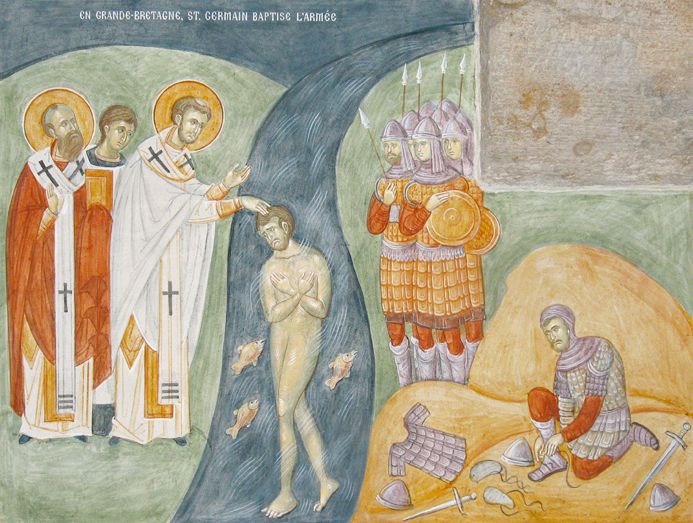
St. Germanus of Grandval is a significant figure in Christian mythology, particularly known for his contributions to the early Church and his role in promoting Christianity in various regions. He is often celebrated for his piety, leadership, and dedication to the faith. His life and deeds offer valuable insights into the challenges faced by early Christians and the ways in which they overcame these obstacles. Understanding St. Germanus involves delving into his historical context, the miracles attributed to him, and the legacy he left behind.
Historical Context of St. Germanus
To appreciate the life of St. Germanus of Grandval, it is essential to understand the historical context in which he lived. Born in the 6th century, Germanus was part of a time when the Christian Church was still solidifying its foundations in Europe. The fall of the Western Roman Empire had left a power vacuum, leading to the rise of various kingdoms and tribal groups. These groups often practiced pagan religions, which posed a significant challenge to the spread of Christianity.
 St. Germanus Of Auxerre
During this period, many missionaries traveled throughout Europe to convert the pagan populations. St. Germanus was one of those missionaries, and his work took him to various regions where he preached the gospel and established communities of believers. His efforts were crucial in areas that were resistant to Christianity, as he employed a mix of theological arguments and compassionate outreach to win converts.
Germanus’s life also coincided with significant political changes. The Merovingian dynasty in what is now France was establishing its power, and the Church was becoming increasingly intertwined with political affairs. This relationship between church and state was often fraught with tension, but Germanus navigated these waters with a focus on spiritual leadership rather than political ambition. His commitment to the Church’s mission helped to lay the groundwork for future Christian leaders.
Life and Early Years
 St. Germanus I
The early years of St. Germanus are shrouded in some mystery, but it is widely accepted that he was born in the region of Grandval, France. His family was likely of noble descent, which provided him with opportunities for education and connections within the Church. From a young age, Germanus exhibited a deep commitment to his faith, often engaging in acts of charity and service to those in need.
As he grew older, Germanus felt a calling to a more dedicated life of service. He decided to enter a monastery, where he could focus on prayer, study, and the spiritual development of others. This decision was significant, as monasteries during this time were centers of learning and culture, preserving texts and teachings that might otherwise have been lost. Germanus’s time in the monastery also equipped him with the knowledge and skills necessary for his future missionary work.
In addition to his spiritual education, Germanus developed strong leadership qualities. He was known for his ability to inspire those around him, encouraging others to embrace a life of faith and service. His early experiences in the monastery laid the foundation for his later accomplishments as a bishop and missionary. His dedication to spiritual growth and leadership would become hallmarks of his life and ministry.
 St. Germaine Cousin
Missionary Work
St. Germanus’s missionary work was marked by a tireless commitment to spreading the message of Christianity. After becoming a bishop, he traveled extensively throughout France and beyond, preaching to both Christians and non-Christians alike. His approach was characterized by a deep sense of compassion and understanding for the people he encountered. He believed that effective evangelism required not only preaching but also listening and addressing the concerns of the people.
One of the most notable aspects of Germanus’s missionary work was his ability to perform miracles. Many accounts describe how he healed the sick, cast out demons, and even raised the dead. These miracles served to authenticate his message and draw attention to the power of faith. People were often more willing to listen to his teachings when they witnessed these extraordinary acts, which further solidified his reputation as a holy man.
In addition to performing miracles, Germanus also focused on establishing churches and communities of believers. He understood that for Christianity to take root, it needed to be organized and supported by local congregations. He worked diligently to train local leaders, ensuring that the faith would continue to thrive long after he was gone. His efforts in this area were crucial in areas where Christianity was just beginning to gain a foothold.
Miracles Attributed to St. Germanus
The life of St. Germanus is rich with accounts of miracles that illustrate his deep faith and the divine favor he enjoyed. These miracles not only demonstrate his holiness but also served to inspire others in their faith. One of the most famous miracles attributed to him occurred when he healed a blind man. According to the accounts, Germanus prayed fervently for the man’s sight, and after a period of intense prayer, the man was able to see again. This event attracted many followers and reinforced Germanus’s role as a powerful spiritual leader.
Another remarkable miracle involved the multiplication of food. During a time of famine, Germanus was traveling with a group of followers who were in desperate need of sustenance. He prayed over a small amount of food, and miraculously, it multiplied to feed the entire group. This event not only met their immediate physical needs but also served as a powerful reminder of God’s provision and care for His people.
St. Germanus is also credited with calming storms at sea. On one occasion, he was aboard a ship that encountered a violent storm. The crew was terrified, but Germanus remained calm and prayed for the storm to cease. Remarkably, the winds died down, and the sea became still. This miracle not only saved the lives of those on board but also served as a testament to the power of faith and prayer.
Legacy of St. Germanus
The legacy of St. Germanus of Grandval is profound and far-reaching. His commitment to spreading Christianity and his many miracles left an indelible mark on the regions where he ministered. Even after his death, stories of his life and works continued to inspire countless individuals. Many communities in France and beyond claim him as their patron saint, celebrating his feast day with great reverence.
Germanus’s influence can also be seen in the establishment of various churches and monastic communities that were founded in his name. These institutions played a critical role in the further spread of Christianity and the preservation of Christian teachings. They became centers of learning, culture, and charity, reflecting the values that Germanus espoused throughout his life.
Moreover, St. Germanus is often remembered for his emphasis on education and the importance of teaching the faith. He believed that knowledge was essential for spiritual growth and sought to ensure that future generations were well-versed in the tenets of Christianity. This commitment to education has had lasting effects, as many of the schools and monasteries founded in his name continue to operate today, promoting Christian values and teachings.
Veneration and Feast Days
St. Germanus of Grandval is venerated in various Christian traditions, particularly within the Catholic Church. His feast day is celebrated on May 28, a day when many faithful gather to honor his memory and reflect on his contributions to the Church. On this day, special services and celebrations are held, often including readings from Scripture, prayers, and communal meals.
Throughout history, numerous churches and cathedrals have been dedicated to St. Germanus, serving as places of worship and pilgrimage for those seeking his intercession. Many believers turn to him in times of need, asking for his prayers and guidance. The stories of his miracles continue to inspire faith, and many people report experiencing answered prayers after invoking his name.
In addition to his local veneration, St. Germanus’s influence extends to broader Christian traditions. His life and teachings are often included in hagiographies, which are biographies of saints that serve to educate and inspire the faithful. These texts highlight his virtues and the importance of living a life of service, prayer, and compassion.
St. Germanus of Grandval remains a significant figure in Christian mythology, representing the spirit of missionary work and the transformative power of faith. His life is a testament to the enduring legacy of early Christian leaders who dedicated themselves to spreading the gospel and serving their communities. Through his miracles, teachings, and unwavering commitment to Christ, Germanus continues to inspire believers around the world.