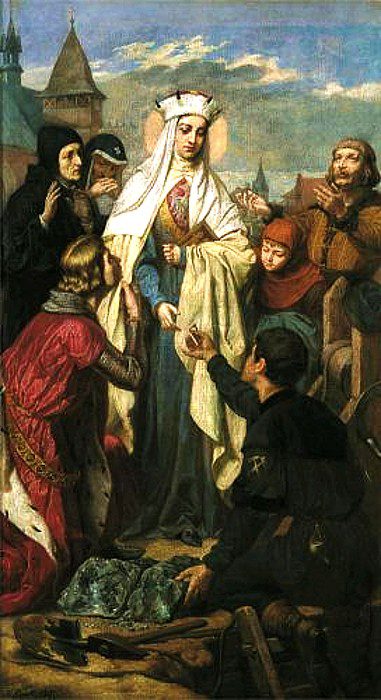
St. Cunigunde is a significant figure in Christian mythology, particularly within the context of medieval European history. She is often celebrated for her piety, her contributions to the Church, and her role as a queen. Born around the late 10th century, Cunigunde was the daughter of a noble family, and her life was deeply intertwined with the political and spiritual landscapes of her time. Her legacy extends beyond her royal status; she is remembered for her devout faith and her commitment to helping the poor and the needy. St. Cunigunde’s story reflects the values of her era and the importance of faith in shaping one’s life and actions.

The Early Life of St. Cunigunde
Cunigunde was born into a noble family, and her early life was marked by privilege and education. Growing up in a noble household, she was likely well-versed in the customs and traditions of her time. Her parents instilled in her a sense of duty and responsibility, which would later guide her actions as a queen. Despite her noble upbringing, Cunigunde showed a profound inclination towards spirituality from a young age. She often engaged in acts of charity and showed kindness to those less fortunate than herself. This early display of compassion set the foundation for her later life as a saint.
As she matured, Cunigunde’s beauty and intelligence attracted the attention of many suitors. However, she was not interested in a life centered solely on royal duties and social status. Instead, she sought a partner who shared her values and commitment to faith. This desire led her to marry Henry II of Bavaria, a man known for his own devoutness and dedication to the Church. Their union was not only a political alliance but also a partnership based on mutual respect and shared spiritual goals. Together, they would navigate the complexities of ruling while remaining committed to their faith.
The Marriage of St. Cunigunde and Henry II
The marriage between Cunigunde and Henry II was a significant event in the history of medieval Europe. Their union symbolized the merging of noble bloodlines and the strengthening of political ties. However, beyond the political implications, their marriage was deeply rooted in faith. Both Cunigunde and Henry II were committed to the Christian values of the time, and they sought to embody these principles in their reign. They became known for their efforts to promote the Church and support various religious institutions throughout their kingdom.
 St. Crispin And St.Crispinian
One of the notable aspects of their marriage was their shared commitment to charity. Cunigunde and Henry II often engaged in philanthropic activities, helping the poor and supporting the construction of churches and monasteries. Their dedication to these causes earned them respect and admiration from their subjects. Cunigunde, in particular, was known for her hands-on approach to charity, often visiting the sick and providing for those in need. This commitment to helping others would become a defining characteristic of her legacy.
St. Cunigunde’s Contributions to the Church
Throughout her life, St. Cunigunde made significant contributions to the Church, reflecting her deep faith and commitment to Christianity. She was instrumental in the establishment of several monasteries and churches, which played a vital role in the spiritual life of the community. Cunigunde’s efforts were not limited to mere financial support; she actively participated in the planning and construction of these religious institutions. Her dedication to the Church was recognized by her contemporaries, and she became a beloved figure among the clergy and laity alike.
One of the most notable contributions of St. Cunigunde was her support for the Cluniac Reform Movement. This movement sought to address issues of corruption and laxity within the Church, promoting a return to traditional monastic values. Cunigunde’s advocacy for these reforms demonstrated her commitment to the purity of the faith and her desire to see the Church thrive. She worked closely with reform-minded clergy, offering both financial and moral support to their efforts. This collaboration helped to strengthen the Church’s influence in society and foster a renewed sense of devotion among the faithful.
 St. Cosmas
The Legacy of St. Cunigunde
The legacy of St. Cunigunde extends far beyond her lifetime. After her death, she was canonized by the Church, recognizing her virtuous life and contributions to Christianity. Her feast day is celebrated on March 3rd, and she is honored as a saint in various Christian traditions. The impact of her life continues to be felt in the Church and among the faithful, as her story serves as an inspiration for many.
St. Cunigunde’s legacy is also evident in the numerous churches and institutions named in her honor. These establishments serve as a reminder of her commitment to faith and charity, encouraging future generations to follow in her footsteps. Many communities celebrate her life through various religious observances, highlighting her importance as a role model for living a life of service and devotion. The values she embodied—compassion, charity, and unwavering faith—remain relevant today, making her a timeless figure in Christian mythology.
St. Cunigunde in Art and Literature
The life and legacy of St. Cunigunde have been depicted in various forms of art and literature throughout history. Artists have created paintings, sculptures, and stained glass windows that capture her essence and highlight her contributions to the Church. These artistic representations often emphasize her piety, compassion, and royal status, illustrating the duality of her life as both a queen and a saint.
In literature, St. Cunigunde’s story has been told in hagiographies, which are biographies of saints that highlight their virtues and miraculous deeds. These texts serve to inspire the faithful and provide insights into the spiritual life of the saint. Many of these writings emphasize her dedication to charity and her role in promoting the Church, further solidifying her status as a revered figure in Christian mythology. Through these artistic and literary works, St. Cunigunde’s legacy continues to be celebrated and remembered.
The Influence of St. Cunigunde on Modern Christianity
St. Cunigunde’s influence can still be felt in modern Christianity, particularly in the way her life exemplifies the ideals of faith and service. Many contemporary Christians look to her as a model of how to live a life dedicated to God and the community. Her commitment to charity and her efforts to promote the Church serve as a reminder of the importance of these values in today’s world. In an age where individualism often takes precedence, Cunigunde’s story encourages believers to prioritize service to others.
Moreover, the teachings and principles associated with St. Cunigunde continue to be relevant in discussions about social justice and community service within the Church. Her life serves as a call to action for Christians to engage with the needs of the poor and marginalized. Many religious organizations draw inspiration from her example, promoting initiatives that align with her commitment to charity and compassion. In this way, St. Cunigunde’s legacy endures, shaping the values and actions of modern believers.
Celebrations and Commemorations of St. Cunigunde
St. Cunigunde’s feast day is celebrated on March 3rd, and various religious communities commemorate her life through special services and events. These celebrations often include prayers, hymns, and reflections on her contributions to the Church and society. Many congregations take this opportunity to engage in charitable activities, reflecting Cunigunde’s commitment to helping those in need. This practice serves as a tangible expression of her legacy, encouraging the faithful to embody her spirit of service.
In addition to religious observances, some communities host festivals and gatherings in honor of St. Cunigunde. These events often feature food, music, and activities that bring people together to celebrate their shared faith and the values that Cunigunde represented. Such gatherings foster a sense of community and provide an opportunity for individuals to reflect on their own commitment to service and charity. Through these celebrations, St. Cunigunde’s influence continues to inspire and unite believers.
St. Cunigunde’s Place in Christian History
St. Cunigunde occupies a significant place in Christian history, particularly in the context of medieval Europe. Her life and contributions reflect the intertwining of faith and politics during a time when the Church played a central role in society. As a queen, Cunigunde navigated the complexities of her position while remaining steadfast in her devotion to God and the Church. Her story illustrates the challenges and triumphs of living a life of faith in a tumultuous era.
Moreover, St. Cunigunde’s canonization and the continued veneration of her memory highlight the importance of saints in Christian tradition. Saints serve as models of virtue and holiness, providing believers with examples to emulate. Cunigunde’s life demonstrates how one can balance the responsibilities of leadership with a deep commitment to faith and service. Her legacy continues to be a source of inspiration for Christians seeking to navigate their own spiritual journeys in today’s world.
The Spiritual Teachings of St. Cunigunde
St. Cunigunde’s life is rich with spiritual teachings that resonate with believers today. One of the central themes of her story is the importance of charity. Throughout her life, Cunigunde exemplified the belief that serving others is a fundamental expression of one’s faith. Her commitment to helping the poor and marginalized serves as a powerful reminder that true devotion is manifested through action. This teaching encourages Christians to look beyond themselves and actively engage in acts of kindness and service.
Another significant aspect of St. Cunigunde’s spirituality is her unwavering faith in God. Despite the challenges she faced as a queen, Cunigunde remained steadfast in her belief and trust in God’s plan. Her life teaches the importance of relying on faith during difficult times, illustrating that spiritual strength can help overcome adversity. This message is particularly relevant in today’s world, where many individuals grapple with uncertainty and hardship. St. Cunigunde’s example encourages believers to remain grounded in their faith, even when faced with challenges.
The Importance of St. Cunigunde in Today’s Society
In today’s society, the importance of St. Cunigunde’s life and teachings cannot be overstated. Her commitment to charity and service is a call to action for individuals and communities alike. In a world often marked by division and inequality, Cunigunde’s example serves as a reminder of the power of compassion and generosity. Many organizations and individuals draw inspiration from her legacy, engaging in various charitable initiatives that aim to address social issues and uplift those in need.
Additionally, St. Cunigunde’s story highlights the role of women in the Church and society. As a queen and a saint, she navigated the complexities of her position with grace and strength. Her life challenges traditional notions of gender roles and demonstrates that women can be powerful agents of change within their communities. This aspect of her legacy resonates with contemporary discussions about women’s leadership and empowerment in both religious and secular contexts. St. Cunigunde’s life encourages women to embrace their roles as leaders and advocates for justice and compassion.
Conclusion: The Enduring Legacy of St. Cunigunde
St. Cunigunde’s enduring legacy is a testament to the power of faith, service, and compassion. Her life serves as an inspiration for countless individuals seeking to live out their beliefs in meaningful ways. Through her contributions to the Church, her commitment to charity, and her unwavering faith, Cunigunde exemplifies the values that continue to resonate with Christians today. As her story is celebrated and remembered, it encourages believers to embody her spirit of service and compassion in their own lives.