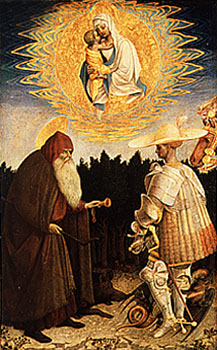
St. Anthony the Abbot, also known as St. Anthony of Egypt, is a prominent figure in Christian mythology. He is often recognized as the father of monasticism and has had a significant influence on the development of Christian spirituality. Born in the late 3rd century in the city of Coma in Egypt, St. Anthony’s life was marked by a deep commitment to his faith and a desire to live a life of solitude and prayer. His journey into the desert, where he sought to escape the distractions of the world, has inspired countless individuals to pursue a similar path of spiritual discipline and reflection.
The Early Life of St. Anthony
St. Anthony was born into a wealthy family, which allowed him a comfortable upbringing. However, after the death of his parents, he inherited their fortune. It was during this time that he felt a calling to live a more austere life. He was profoundly influenced by the teachings of the Gospel, particularly the story of the rich young man who was told by Jesus to sell all his possessions and follow Him. This biblical passage ignited a fire in Anthony’s heart, prompting him to give away his wealth and dedicate his life to serving God.
 St. Anthony The Great
After distributing his inheritance, St. Anthony began to withdraw from society. He sought solitude in the desert, believing that this would allow him to focus more on his relationship with God. Living in isolation, he faced numerous challenges, including physical hardships and spiritual temptations. The desert was not just a barren land; it was also a place where he encountered various demonic forces that sought to disturb his peace. Despite these challenges, he remained steadfast in his commitment to his spiritual journey.
The Desert Experience
St. Anthony’s time in the desert was marked by intense spiritual struggles. He believed that by confronting these challenges, he could attain a deeper understanding of God and his own faith. The temptations he faced were not merely physical but also psychological, often manifesting as visions and inner turmoil. Many stories recount how he was tormented by demons, which he fought off through prayer and fasting. His resilience during these trials became a testament to his faith and devotion.
During his years in the desert, St. Anthony developed a reputation for holiness and wisdom. People began to seek him out for guidance and spiritual counsel. Despite his desire for solitude, he became a spiritual leader for many who were drawn to his teachings and lifestyle. This led to the establishment of a community of monks around him, marking the beginning of organized monasticism in Christianity. St. Anthony’s way of life became a model for future monks, emphasizing the importance of community, prayer, and asceticism.
 St. Anthony Of The Caves
The Teachings of St. Anthony
St. Anthony’s teachings centered on the importance of faith, prayer, and self-denial. He believed that to truly follow Christ, one must be willing to sacrifice worldly pleasures and desires. His life was a living example of this principle, as he dedicated himself to a life of simplicity and devotion. He often encouraged his followers to focus on their spiritual growth rather than material possessions.
One of his most famous sayings is, “The time is coming when people will go mad, and when they see someone who is not mad, they will attack him, saying, ‘You are mad; you are not like us.'” This statement reflects his understanding of the spiritual state of humanity and the challenges faced by those who seek to live a righteous life in a world filled with distractions and temptations. St. Anthony urged his followers to remain steadfast in their faith and to seek God above all else.
 St. Anthony Of Padua
Key Principles of St. Anthony’s Teachings
- Isolation for Spiritual Growth: Emphasizing the need for solitude to connect with God.
- Confronting Temptation: Understanding that spiritual struggles are part of the journey.
- Community and Brotherhood: Encouraging the formation of monastic communities for mutual support.
- Prayer and Fasting: Advocating for regular prayer and fasting as essential practices for spiritual life.
The Legacy of St. Anthony
St. Anthony’s impact on Christianity is profound and far-reaching. His life and teachings laid the foundation for monasticism, which became a vital aspect of Christian spirituality. Monasteries that followed his example flourished throughout the centuries, providing a space for prayer, reflection, and community living. His influence can be seen in the Rule of St. Benedict and other monastic guidelines that emphasize a balanced life of work, prayer, and study.
His legacy extends beyond monasticism. St. Anthony is often invoked as the patron saint of various causes, including the protection against evil spirits and the healing of ailments. Many Christians turn to him in times of trouble, seeking his intercession and guidance. His feast day, celebrated on January 17, is observed by many with special prayers and rituals, highlighting his enduring significance in the Christian faith.
St. Anthony in Art and Culture
St. Anthony’s life and teachings have inspired countless works of art, literature, and music throughout history. Artists have depicted him in various forms, often portraying his struggles against demons and his commitment to a life of solitude. One of the most famous depictions is by the artist Hieronymus Bosch, who illustrated the spiritual battles faced by St. Anthony in a series of surreal and vivid paintings.
In literature, St. Anthony’s life has been a subject of many biographies and spiritual writings. These texts often explore his inner life, the challenges he faced, and the wisdom he imparted to his followers. His story has also been woven into the fabric of various cultures, with different interpretations and representations of his life and legacy.
Modern Relevance of St. Anthony
In today’s fast-paced world, the teachings of St. Anthony remain relevant. Many people seek spiritual guidance amidst the chaos of modern life. His emphasis on solitude, prayer, and self-discipline resonates with those who yearn for a deeper connection with their faith. St. Anthony’s life serves as a reminder of the importance of stepping back from worldly distractions to focus on one’s spiritual journey.
Furthermore, St. Anthony’s teachings on community and brotherhood are particularly significant in a time when many feel isolated and disconnected. His example encourages individuals to seek out supportive communities where they can grow in their faith and share their experiences with others. The modern monastic movements that have emerged in various forms echo the principles established by St. Anthony, emphasizing the need for spiritual discipline and communal support.
St. Anthony the Abbot’s life and teachings continue to inspire countless individuals on their spiritual journeys. His commitment to faith, his struggles against temptation, and his establishment of monastic communities have left an indelible mark on Christian spirituality. As people navigate the complexities of modern life, the wisdom of St. Anthony serves as a guiding light, reminding them of the importance of faith, community, and the pursuit of a deeper relationship with God.