WORLD
WORLD
Síbilja

Síbilja is not a securely attested goddess, giantess, valkyrie, or other independent figure in the surviving mythology of medieval Scandinavia. The name appears in some modern lists of “Norse gods and beings”, but those lists do not establish a continuous ancient tradition. No well-known myth in the Poetic Edda, the Prose Edda, or the principal Icelandic sagas gives Síbilja a clearly defined identity, genealogy, cult, or set of supernatural attributes.
Name and identity
The spelling Síbilja is unusual in standard presentations of Old Norse mythology. Related forms such as Sibylja, Sibilja, or Sibylla may also be encountered, but variation in spelling does not by itself demonstrate that the forms belong to an ancient Norse name. In the absence of a secure manuscript context, the origin and intended meaning of the name remain uncertain.
The most obvious association is with the word sibyl, a term used in the Greek and Roman worlds for a female prophet or oracle. Sibyls later became important in Christian and medieval literature, where pagan prophetesses could be presented as announcing religious truths or foretelling events connected with biblical history. That tradition spread widely through medieval Europe. A name resembling Sibyl could therefore enter a Scandinavian text or modern interpretation through learned European culture rather than through pre-Christian Norse religion.
This possibility should not be confused with evidence for a Norse goddess named Síbilja. A similar-sounding name may reflect a later translation, a modern formation, a corrupted transcription, or confusion with another female supernatural figure. Without a specific early source, the name cannot be assigned a reliable traditional meaning.
The Norse cultural setting
Pre-Christian Norse religion was not organized around a single canon of scripture or a uniform list of deities. Religious beliefs differed across regions and periods, and much of what is known was written down after the conversion of Iceland and Scandinavia to Christianity. The surviving material includes mythological poems, prose retellings, heroic legends, place-names, archaeological evidence, inscriptions, and later folklore. These sources do not always agree, and many religious practices left no written explanation.
Within this setting, female supernatural beings could occupy several different categories. The ásynjur were the female members or associates of the divine families, including figures such as Frigg, Freyja, Skaði, Iðunn, and Sif. The norns were beings associated with destiny, while valkyries selected or guided the dead in battle. Giantesses, ancestral women, local spirits, prophetic seeresses, and female ghosts also appear in myth and saga literature.
These categories were not always sharply separated. A giantess could possess wisdom normally associated with a god, a human woman could practise supernatural prophecy, and a saga character could be described as both historical and magical. Nevertheless, a figure needs evidence in an early source before being classified as a goddess or another recognized mythological being. Síbilja lacks that evidence in the form usually required for a traditional Norse entry.
Possible confusion with the völva
The closest genuine Norse religious comparison is the völva, a woman associated with prophecy, magic, and ritual knowledge. The best-known literary example is the unnamed seeress who speaks in Völuspá. She recounts the origin of the cosmos, the history of the gods, the death of Baldr, Ragnarök, and the renewal of the world. Her authority comes from memory, visionary knowledge, and a special relationship with hidden events.
Other texts describe seiðr, a form of magic connected particularly with prophecy, altered knowledge, and the manipulation of fate. In the saga literature, practitioners of this art are sometimes treated with respect, fear, or suspicion. Some are called völur, while others are simply described as wise women, witches, or sorceresses.
A modern writer might give the name Síbilja to a prophetic woman because of the name’s resemblance to sibyl. Such an association is understandable, but it is an interpretation rather than a documented Norse tradition. The unnamed seeress of Völuspá should not be renamed Síbilja without evidence, and Síbilja should not be presented as another name for the völva in general.
Attributes and powers
No dependable traditional source provides Síbilja with a fixed appearance, family, dwelling place, sacred animal, weapon, ritual, or supernatural power. Claims that she is a goddess of prophecy, wisdom, magic, fate, or the underworld should therefore be treated cautiously. These descriptions may derive from modern attempts to construct a coherent profile from the name rather than from an ancient narrative.
Prophecy and female supernatural knowledge are certainly important themes in Norse tradition. The norns shape or reveal destiny; Odin seeks hidden wisdom and learns magical practices; the völva speaks about cosmic history; and valkyries operate within the dangerous boundary between battle, death, and divine choice. Those themes may make a figure called Síbilja seem plausible in a Norse setting, but thematic compatibility is not the same as textual attestation.
There is also no secure basis for assigning Síbilja a particular symbol. Ravens, staffs, spinning, horses, wolves, and woven threads all have meaningful associations elsewhere in Norse myth or folklore, but attaching them to Síbilja would create a modern composite rather than recover a known ancient emblem.
Sources and the limits of the evidence
The Poetic Edda preserves mythological poems copied in medieval Iceland, including poems about creation, the gods, heroic families, and the end of the world. The Prose Edda, written by Snorri Sturluson in the thirteenth century, explains many mythological stories and poetic names. Neither work provides a standard account of a figure named Síbilja.
The Icelandic family sagas and legendary sagas contain many prophetic women, magic-workers, queens, giantesses, and other extraordinary characters. Their stories often preserve older motifs alongside medieval literary shaping. Yet the presence of a prophetic woman in a saga does not automatically support the existence of Síbilja. Each character must be identified by the name and context actually given in the surviving text.
Names in medieval manuscripts can be affected by spelling variation, scribal error, translation, modernization, and later editorial choices. A form that looks Scandinavian may not be Old Norse, and a name with a familiar modern spelling may conceal a different medieval word. For that reason, an isolated occurrence of a name would need to be examined in its original language and narrative setting before any mythological interpretation could be made.
Historical evidence outside literature also offers no widely recognized cult of Síbilja. Archaeological discoveries can reveal ritual activity and the importance of women, prophecy, magic, or supernatural protection, but they rarely identify a particular unnamed figure. An object interpreted as belonging to a seeress cannot establish the existence of a deity whose name is absent from the evidence.
Distinction from other figures
The sibyl
A sibyl belongs primarily to the prophetic traditions of the ancient Mediterranean and to later Jewish and Christian literature. Sibyls were often imagined as inspired women who delivered oracles. Medieval writers sometimes incorporated them into universal histories or treated their sayings as anticipations of Christian revelation. A Scandinavian text could know this learned tradition, especially after Christianization, but that does not make the sibyl a pre-Christian Norse goddess.
The völva
A völva is a Norse type of prophetess or practitioner of magic, not the personal name of one universal goddess. The word describes a social and religious role. Individual völur may appear in different stories with different personalities and powers. Síbilja should not be used as a substitute for the term unless a particular modern work deliberately makes that choice.
The norns
The norns are associated with destiny and the conditions of mortal life. The most famous are Urðr, Verðandi, and Skuld, although other norns and beings connected with fate are mentioned. There is no established evidence that Síbilja is an alternate name for any of them.
Freyja and other goddesses
Freyja is associated in surviving Norse tradition with love, fertility, wealth, battle, the dead, and forms of magic. Frigg is connected with royal authority, marriage, and foreknowledge; Skaði with the mountains, hunting, and winter; and Hel with the realm of many of the dead. Because modern summaries often group every female supernatural name under “goddess”, Síbilja may be mistakenly presented as a minor equivalent of one of these figures. No reliable traditional relationship supports that identification.
Why the name appears in modern mythology lists
Online mythology catalogues sometimes expand short or uncertain entries into complete biographies. A name may be copied from one unsourced list to another, gradually acquiring a domain, genealogy, appearance, and set of powers. Once repeated, those details can look traditional even when their origin is modern and undocumented.
Another source of confusion is the blending of Norse material with wider European folklore. Prophetic women, witches, fairy queens, sibyls, norns, and wise women share certain narrative functions, particularly the giving of warnings or knowledge about the future. A modern retelling may combine these motifs and assign the resulting character a Norse-sounding identity. Such creative synthesis can be legitimate fiction, but it should be distinguished from evidence for medieval Scandinavian religion.
The accent in Síbilja may also reflect a modern editorial or language choice rather than a form preserved in an Old Norse manuscript. The spelling should not be treated as proof of a specifically Icelandic or Scandinavian origin.
Cultural significance of the uncertainty
The uncertainty surrounding Síbilja illustrates an important feature of studying mythology: absence of evidence is not always proof that a belief never existed, but it does prevent confident reconstruction. Many local religious traditions were not recorded, and some names may have disappeared. At the same time, a responsible account cannot fill every gap by inventing attributes from related myths.
In the case of Síbilja, the most defensible description is that of an uncertain or modernly transmitted name associated by some writers with Norse prophecy. It can be discussed alongside völur, norns, and sibyls as a point of comparison, but it should not be presented as a documented Norse deity. Its cultural significance lies mainly in the way later myth-making can connect Scandinavian concepts of prophecy with the wider European image of the sibyl.
Modern use
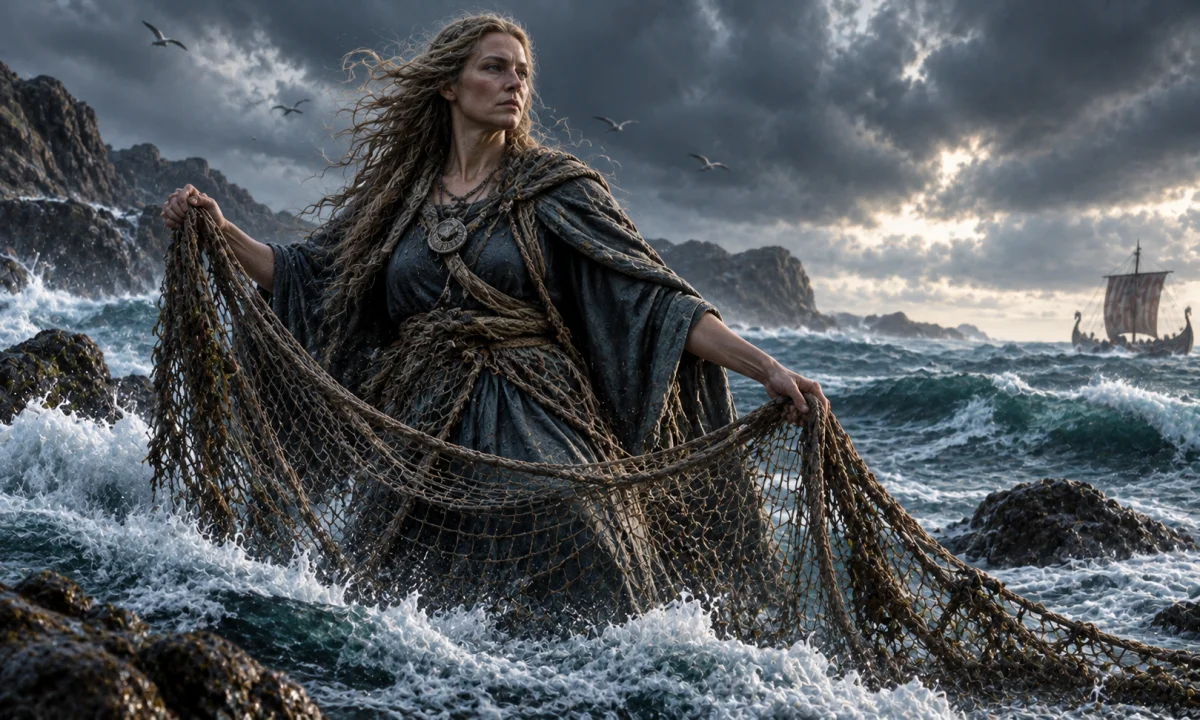
Síbilja may be used in contemporary fantasy, reconstructed religious writing, role-playing material, personal naming, or online mythology collections. In those contexts, creators may portray her as a seeress, witch, goddess, or guardian of hidden knowledge. Such portrayals belong to modern adaptation unless they can be tied to a specific older source.
A historically careful modern interpretation can still use the name creatively. It should identify Síbilja as a newly developed character or as an uncertain figure rather than claiming an ancient cult, established mythology, or canonical place among the Norse gods. Keeping that distinction clear preserves the difference between the documented traditions of the völva and the sibyl and the later invention or reconstruction of a character named Síbilja.