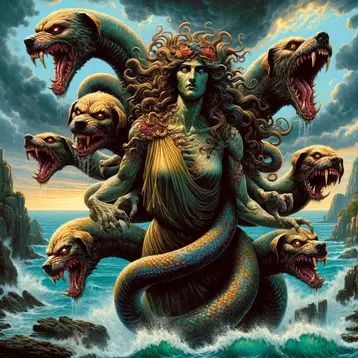
In Greek mythology, Scylla is a fearsome sea monster known for her terrifying appearance and her role in ancient stories. She is often depicted as a creature with multiple dog-like heads and a ferocious disposition. Scylla is famously associated with the Strait of Messina, where she resides on one side, while her counterpart, Charybdis, is on the other. Together, they create a perilous passage for sailors trying to navigate through the strait. The tales of Scylla have captivated audiences for centuries, serving as a warning about the dangers of the sea and the unpredictability of nature.
The Origins of Scylla
The origins of Scylla can be traced back to various ancient texts, where her character is shaped by the influences of different cultures and storytellers. In Homer’s Odyssey, Scylla is described as a once-beautiful nymph who was transformed into a monster by the sorceress Circe. This transformation was the result of jealousy, as Circe wished to keep sailors away from her island. Scylla’s metamorphosis serves as a cautionary tale about the consequences of jealousy and the power of the gods in Greek mythology.
 Silenus
In other accounts, Scylla is said to have been the daughter of Phorcys, a primordial sea god, and Ceto, a sea goddess. This lineage connects her to the chaotic and often dangerous aspects of the sea. Scylla’s physical form, with her many heads and fierce nature, symbolizes the dangers that lurk beneath the waves, representing the unpredictability of the ocean. These origins contribute to her lasting legacy in Greek mythology, making her a significant figure in the pantheon of sea monsters.
Scylla and Charybdis
The most famous story involving Scylla is her relationship with Charybdis, another mythical creature that embodies the treacherous nature of the sea. While Scylla is a monster that snatches sailors from their ships, Charybdis is depicted as a massive whirlpool that can swallow entire vessels whole. Together, they create a perilous challenge for anyone attempting to pass through the Strait of Messina, a narrow body of water between Sicily and the Italian mainland.
The phrase “between Scylla and Charybdis” has entered modern language as a metaphor for being caught between two equally dangerous choices. This reflects the profound impact that these two mythical beings have had on storytelling and the human experience. In the Odyssey, the hero Odysseus must navigate this dangerous strait, demonstrating the themes of courage, cunning, and the struggle for survival that are prevalent in Greek mythology.
 Sirens
Odysseus and His Encounter with Scylla
Odysseus, the protagonist of the Odyssey, is one of the most notable characters to encounter Scylla. As he sails home from the Trojan War, he is warned by the sorceress Circe about the dangers that lie ahead. She advises him to avoid the whirlpool created by Charybdis and instead face Scylla, even though he will lose some of his men. This choice highlights the harsh realities of leadership and the sacrifices that must be made in dire situations.
- Odysseus must make a decision that reflects the lesser of two evils.
- He chooses to confront Scylla, knowing that it may cost him dearly.
- The encounter showcases his bravery and quick thinking.
When Odysseus and his crew pass through the strait, Scylla emerges from her lair and snatches six of his men, devouring them before their eyes. This moment is one of the most poignant in the Odyssey, illustrating the brutality of fate and the helplessness of humans in the face of divine and monstrous powers. Odysseus is left to mourn his lost crew, but he must continue on his journey, a testament to the resilience of the human spirit.
Scylla in Art and Literature
Scylla has been a subject of fascination for artists and writers throughout history. Her image has been depicted in various forms of art, from ancient pottery to Renaissance paintings. Artists often emphasize her monstrous features, such as her multiple heads and serpentine body, to convey her terrifying nature. These artistic representations serve to capture the imagination and highlight the themes of fear and danger associated with the sea.
 Selene
In literature, Scylla appears not only in the Odyssey but also in works by later poets and playwrights. The Roman poet Virgil references her in the Aeneid, where she is depicted as a formidable obstacle for Aeneas on his journey. These literary allusions contribute to her status as a timeless figure in mythology, symbolizing the eternal struggle against chaos and the unknown.
Modern Interpretations of Scylla
In contemporary culture, Scylla continues to be a powerful symbol in literature, film, and art. Modern interpretations often explore her character in new ways, sometimes portraying her as a tragic figure rather than a purely malevolent monster. This shift allows for a deeper exploration of her motivations and the circumstances that led to her transformation.
- Some stories depict her as a victim of circumstance.
- Others explore themes of isolation and longing.
- These interpretations challenge the traditional view of Scylla as simply a monster.
Furthermore, Scylla has found her way into popular media, appearing in movies, video games, and television series. These modern adaptations often draw on her mythological roots while adding contemporary elements that resonate with today’s audiences. As a result, Scylla remains a relevant and intriguing figure in both ancient and modern storytelling.
The Symbolism of Scylla
Scylla embodies various symbols in Greek mythology, representing the chaotic forces of nature and the dangers of the unknown. Her monstrous form signifies the fear that ancient sailors felt when facing the unpredictable sea. Scylla’s presence serves as a reminder of the power of nature and the respect it demands from those who dare to navigate its waters. This symbolism extends beyond the literal interpretation of a sea monster, encompassing themes of fear, loss, and the struggle for survival.
Additionally, Scylla’s relationship with Charybdis illustrates the idea of duality in mythology. She represents one aspect of danger, while Charybdis represents another. Together, they create a complex narrative about the choices we face in life, often leaving us with no easy solutions. This duality resonates with the human experience, as individuals frequently find themselves caught between difficult decisions, much like Odysseus navigating the strait.
Lessons from Scylla’s Myth
The myth of Scylla offers valuable lessons that are still applicable today. One of the most prominent themes is the idea of sacrifice. Odysseus’s decision to confront Scylla rather than Charybdis highlights the need to make difficult choices in life. Sometimes, leaders and individuals must weigh their options carefully and be prepared to face the consequences of their decisions. This theme encourages critical thinking and resilience in the face of adversity.
- Making difficult choices is a part of life.
- One must often confront fears to move forward.
- Leadership involves making sacrifices for the greater good.
Moreover, Scylla’s transformation from a beautiful nymph to a monster serves as a cautionary tale about the consequences of jealousy and rage. Her story illustrates how negative emotions can lead to destructive outcomes, reminding us of the importance of managing our feelings and actions. This moral lesson remains relevant in today’s world, encouraging individuals to reflect on their emotions and the impact they have on their lives and the lives of others.
Scylla in Comparative Mythology
Scylla’s story is not unique to Greek mythology; similar figures appear in various mythologies around the world. Many cultures feature sea monsters that pose threats to sailors, reflecting the universal fear of the ocean and its mysteries. For instance, in Norse mythology, the Kraken is a legendary sea monster known for dragging ships beneath the waves, much like Scylla’s role in Greek tales. These comparisons highlight the shared human experience of grappling with the unknown.
In other mythologies, such as those from the Pacific Islands, there are also stories of powerful sea deities or monsters that protect the ocean’s secrets. These figures often serve as guardians of the sea, representing the dual nature of water as both a source of life and a force of destruction. The similarities between these myths and the story of Scylla demonstrate how different cultures interpret and personify the challenges posed by the natural world.
Scylla’s Legacy in Modern Culture
The legacy of Scylla continues to thrive in modern culture, where her image and story have been reimagined in various forms. From literature to film, Scylla remains a compelling character that resonates with audiences. Her fearsome nature serves as a reminder of the dangers that exist in the world, while also inviting exploration of deeper themes related to identity and transformation.
- Scylla appears in various modern retellings of classical myths.
- Her character is often reinterpreted to explore themes of empowerment.
- Contemporary adaptations highlight her complexity and depth.
In addition, Scylla’s myth has influenced popular culture, inspiring works in various genres. Her story has been adapted into movies, television shows, and even video games, where she is often portrayed as a formidable adversary. These adaptations allow new generations to engage with the myth, ensuring that Scylla remains a relevant and intriguing figure in storytelling.
Scylla is a multifaceted character in Greek mythology whose story continues to resonate with audiences today. From her origins as a beautiful nymph to her transformation into a fearsome monster, Scylla embodies themes of sacrifice, fear, and the complexities of human emotion. Her relationship with Charybdis adds depth to her narrative, illustrating the dual nature of danger and the choices we face in life. As her legacy endures in modern culture, Scylla remains a powerful symbol of the eternal struggle against chaos and the unknown.