WORLD
WORLD
Samigina
Samigina is a demon in the early modern Western grimoire tradition, best known as the fourth spirit listed in the Ars Goetia, the first section of the Lesser Key of Solomon. The name appears in several forms, including Gamigin, Gamygin, and Gamygyn. In the hierarchy described by the grimoire, Samigina is a Great Marquis of Hell who commands thirty legions of spirits.
Origins in European demonological literature
Samigina does not belong to a clearly documented ancient mythology with an independent cult, temple tradition, or body of religious stories. The figure comes from the learned magical literature of early modern Europe, especially books that classified spirits according to ranks, names, seals, powers, and numbers of subordinate legions.
The best-known account occurs in the Ars Goetia, a text transmitted in manuscripts associated with the Lesser Key of Solomon. The Lesser Key was compiled in its surviving form during the seventeenth century, although it draws on older magical and demonological materials. Its authorship is uncertain, and the work is not an ancient text written by the biblical King Solomon. The Solomonic attribution reflects a long-standing literary tradition that presented magical knowledge as belonging to Solomon or to other authoritative figures of the past.
Samigina also appears, under variant spellings, in earlier demonological catalogues. One important predecessor is Johann Weyer’s Pseudomonarchia Daemonum, published in 1577. Weyer presented a catalogue of demons in the context of his discussion of witchcraft, deception, and the mental and religious dangers associated with claims of diabolic magic. The account of Samigina in later grimoires is closely related to this earlier catalogue, although spellings, wording, ordering, and details vary between manuscripts and editions.
These works should be understood as products of Christian demonology and ceremonial magic rather than as neutral records of a universal supernatural taxonomy. Their lists combine biblical ideas about demons, medieval theological arguments, magical manuals, names adapted from earlier languages, and the habits of scribes and printers. A demon’s position in such a catalogue tells us about the structure of the text and its occult tradition; it does not by itself establish that the figure was widely worshipped or known in popular European folklore.
Name and identity
The spelling Samigina is especially associated with versions of the Ars Goetia. Other forms include Gamigin, Gamygin, and Gamygyn. These differences arose through manuscript transmission, transliteration, printing practices, and attempts to reproduce unfamiliar magical names. The variation makes it difficult to treat one spelling as unquestionably original.
The relationship between the different forms is generally clear because the descriptions are substantially similar and the figure occupies the same place in the relevant catalogues. Nevertheless, the name’s deeper linguistic origin is uncertain. It is sometimes connected by modern writers with names from older magical or demonological traditions, but such proposed derivations are not equally well supported. There is no secure evidence that Samigina preserves a fully documented pre-Christian deity under another name.
In the classification of the Ars Goetia, Samigina is a Marquis, or marquis of Hell. This is part of the grimoire’s feudal and courtly vocabulary. The demons are assigned ranks such as kings, dukes, princes, marquises, counts, and presidents, reflecting the social and political language familiar to early modern European readers. These titles should not be confused with a consistent theology shared by all Christian traditions. They are features of a particular occult catalogue.
Appearance and principal powers
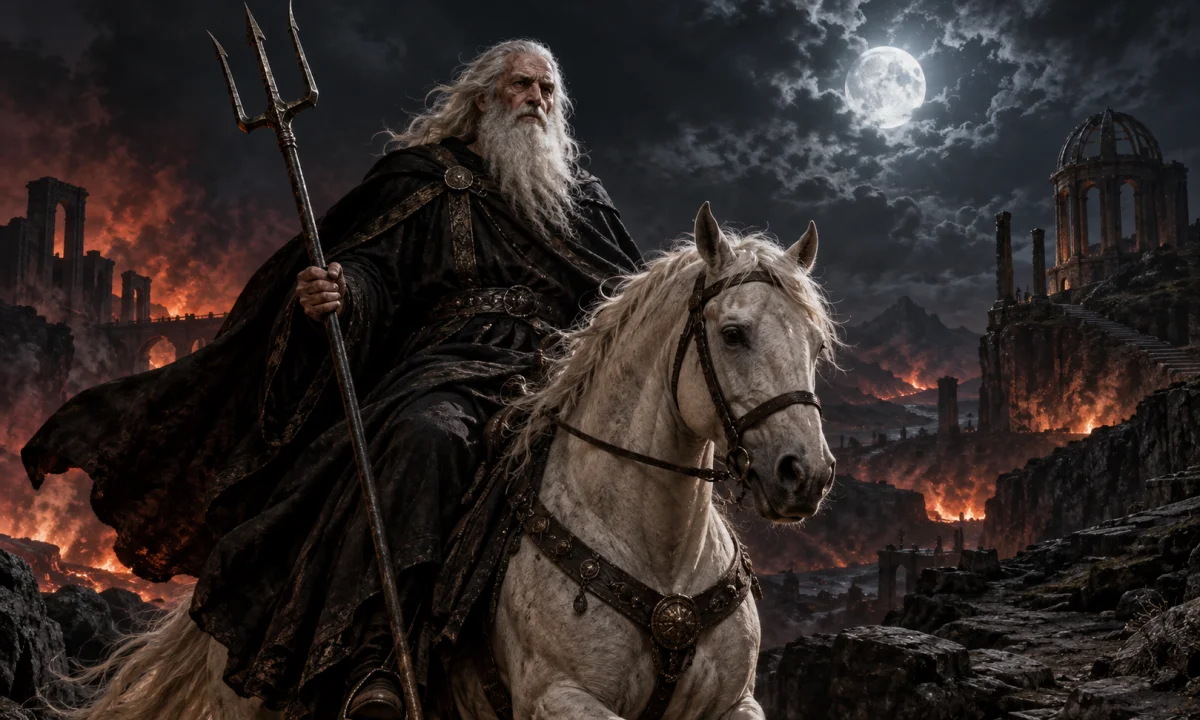
The standard description presents Samigina as appearing first in the form of a small horse or small ass. The wording varies, and translations sometimes choose “foal,” “little horse,” or “little donkey.” At the request of the operator, Samigina can take human form. This combination of an animal appearance and a change into human shape is one of the figure’s most recognizable traits.
The descriptions do not provide a detailed portrait of the human form. They are more concerned with identifying the spirit and stating its functions than with describing clothing, facial features, age, sex, or a distinctive physical emblem. Later illustrations and occult reference works may give Samigina a more elaborate appearance, but those visual details should not automatically be treated as part of the original textual tradition.
Samigina is said to speak with a hoarse voice. This is a small but distinctive detail in the grimoire description. It contributes to the unsettling transformation from an animal shape to an articulate supernatural being, while also marking Samigina as a spirit whose manner of communication is unusual rather than graceful or angelic.
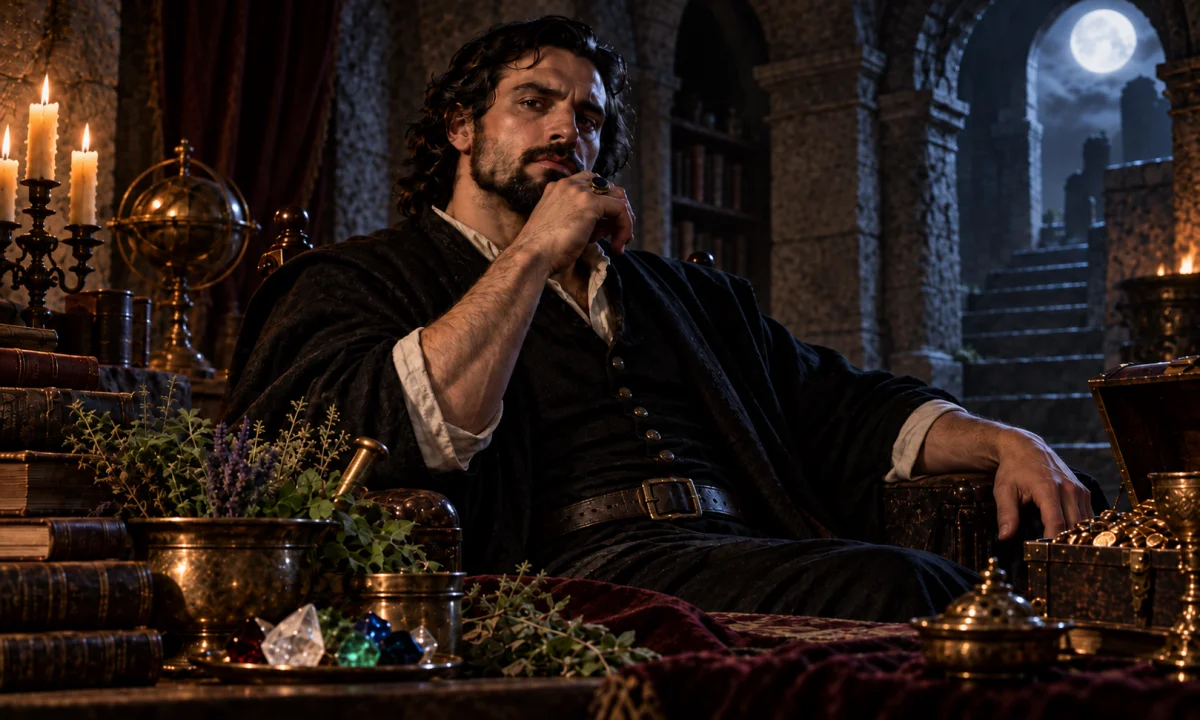
The figure is credited with teaching the liberal sciences. In the intellectual vocabulary of medieval and early modern Europe, the liberal arts or liberal sciences referred broadly to learned disciplines associated with a cultivated education. The traditional seven liberal arts were grammar, rhetoric, logic, arithmetic, geometry, music, and astronomy, although the wording in the demonological text does not necessarily mean that Samigina is assigned a precise curriculum covering each of these subjects.
Samigina is therefore presented as a possessor or instructor of knowledge, not merely as a violent or destructive monster. The ability to teach scholarly subjects reflects an important feature of grimoire demonology: demons may be portrayed as dangerous, deceptive, and spiritually corrupting while also possessing extensive information. Their knowledge is often imagined as acquired through long existence, observation of human affairs, or access to forbidden realms.
The text also says that Samigina gives an account of the dead who died in sin. The wording is brief and open to interpretation. It may suggest knowledge of deceased souls, information about the circumstances or condition of the dead, or a capacity to answer questions about those who died without repentance. The text does not develop a full doctrine of the afterlife or explain how Samigina obtains this knowledge.
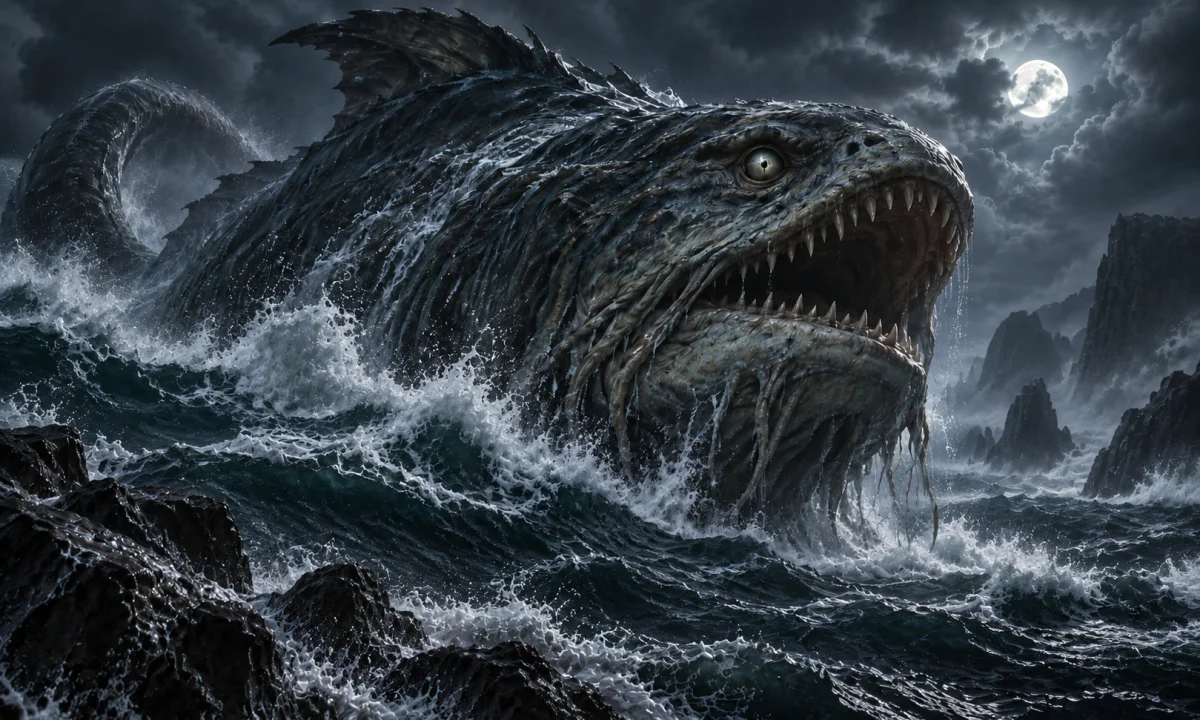
Some modern summaries associate this power specifically with people who drowned in the sea. That association reflects wording or interpretation found in certain presentations of the Goetic material, but it should be treated carefully because editions and translations do not always agree on the exact scope of the description. The secure point is that Samigina is connected with giving information about dead sinners or the dead who died in sin. The brief catalogue entry does not provide a complete mythology of drowned souls.
Rank and the thirty legions
Samigina is described as ruling thirty legions. In the Ars Goetia, a legion is a subordinate group of spirits under the authority of a named demon. The number is part of the catalogue’s hierarchical system and may have symbolic or organizational significance, but the text does not narrate the identities or individual histories of these subordinate spirits.
Numbers of legions vary among demons in the Goetic lists. They help create an image of Hell as an ordered supernatural kingdom with offices, military divisions, and chains of command. This structure resembles the ranks and bureaucratic classifications found in other European accounts of infernal powers. It should not be mistaken for a single, consistent doctrine of demon hierarchy accepted throughout Christian history.
The title of Great Marquis and the command of thirty legions place Samigina among the more formally ranked spirits of the catalogue. Even so, the entry is relatively concise. Unlike figures who later acquired extensive legends through religious commentary, folklore, fiction, or occult elaboration, Samigina has no large cycle of traditional stories preserved in the Goetia itself.
Role within the grimoire tradition
In ceremonial magic, catalogue entries such as Samigina’s function as practical descriptions. A grimoire may provide a spirit’s name, rank, appearance, seal, powers, and the number of legions under its authority. The information is intended to support recognition and classification within a ritual system. It is not written as a mythological narrative explaining the demon’s birth, family, historical actions, or place in a cosmic creation story.
The surrounding magical tradition commonly treats spirits as beings who may be summoned, questioned, commanded, or constrained through divine names, ritual preparations, circles, seals, and formal language. These practices belong to the literature of ceremonial magic and should not be confused with ordinary Christian worship or with a universal form of “demonology.” Some historical readers regarded such operations as dangerous superstition or diabolic practice, while others treated the grimoires as repositories of esoteric knowledge.
Samigina’s combination of scholarly instruction and information about the dead reflects two recurring concerns in occult literature: the desire for hidden knowledge and the desire to cross boundaries that normally separate the living from the dead. The figure’s animal-to-human transformation adds another boundary crossing, linking instinctive or bestial imagery with language, education, and learned authority.
Interpretations of the animal form
The small horse or ass has sometimes encouraged symbolic interpretations. A horse can represent movement, power, travel, or a messenger, while a donkey may evoke humility, burden-bearing, or stubbornness in broader European symbolism. However, the Goetic description does not explain the animal form symbolically. It simply reports the shape in which Samigina appears.
For that reason, interpretations should be distinguished from documented tradition. It is reasonable to observe that the form contrasts with Samigina’s intellectual powers, but it is not justified to claim that the animal necessarily represents a particular ancient god, psychological force, or moral quality. The text gives no confirmed explanation for why this spirit appears as a small horse or ass rather than as another animal.
The transformation into human form also has a practical function in the narrative of invocation: the spirit initially manifests in a recognizable supernatural or animal shape and can then become more suitable for conversation. Similar changes of form occur throughout folklore and magical literature, but Samigina’s specific combination belongs to the catalogue description rather than to a broad, independent cycle of folk tales.
Distinguishing Samigina from similar figures
Samigina should not be automatically identified with Samael, Semjaza, or other names beginning with “Sam” or “Gam.” Samael is a major figure in some Jewish and later Christian demonological and angelological traditions, while Semjaza is associated in the Book of Enoch with the leaders of the Watchers. Neither is the same figure as the Goetic marquis Samigina.
Nor should Samigina be confused with a named deity from Greek, Roman, Germanic, Celtic, or Near Eastern religion simply because later writers compare demons with older gods. Early Christian authors sometimes interpreted pagan deities as demons, and modern occultists may propose links between figures from different traditions. Such comparisons can be historically interesting, but they do not prove that Samigina originated as a particular ancient god.
The name may also be presented in modern reference works as though “Gamygin” and “Samigina” were separate demons. In the context of the Goetic catalogues, they are generally variant forms of the same entry. Differences in spelling, rank wording, or details of the description reflect transmission and editorial history rather than necessarily indicating distinct beings.
Later reception
Samigina has remained known primarily through editions and discussions of the Ars Goetia. Modern occult publications often reproduce the name, rank, seal, appearance, and attributed powers, sometimes adding ritual instructions or symbolic interpretations. Such additions belong to later occult reception and should be separated from the short descriptions found in the older demonological catalogues.
The figure also appears occasionally in modern fantasy, role-playing games, novels, visual media, and online demon encyclopedias. These adaptations may change the spelling to Gamigin or Gamygyn, expand the command over legions into a character history, or turn the horse-like appearance into a more elaborate monster design. A fictional portrayal may use the Goetic name without preserving the original rank, powers, or religious context.
In the historical tradition, Samigina is best understood as a compact entry in a Christian-influenced system of early modern ceremonial demonology: a marquis associated with thirty legions, a small horse or ass form, a hoarse voice, instruction in the liberal sciences, and knowledge concerning the dead who died in sin. Beyond these attributes, the surviving tradition provides little narrative material, and claims about a more extensive biography or an ancient pre-Christian identity remain speculative.