WORLD

Shax
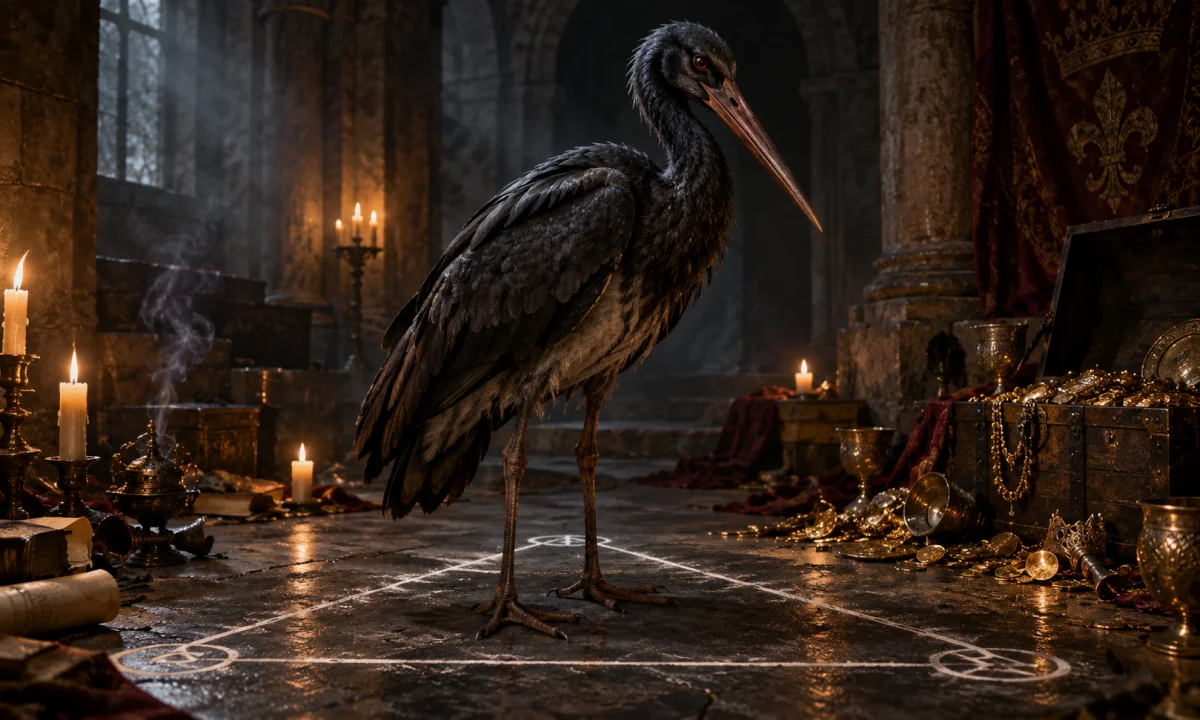
Shax is a demon listed in the Ars Goetia, the first section of the seventeenth-century grimoire commonly known as the Lesser Key of Solomon. He is usually described as a marquis of Hell who commands thirty legions of spirits. His traditional functions involve deception, the removal of sight or hearing, the theft and recovery of valuables, the discovery of hidden things, and the provision of horses or other requested objects. Shax belongs to the learned European tradition of ceremonial demonology rather than to an ancient, independently attested religion or mythology.
Origins in European demonology
The figure now usually called Shax appears in manuscripts and printed works associated with the Ars Goetia. These texts belong to a broader early modern tradition of cataloguing spirits, assigning them ranks and offices, and describing methods by which a ritual practitioner might summon or command them. The tradition drew on several earlier materials, including Christian demonological writing, magical manuals, lists of spirits, and older catalogues of alleged demons.
The Lesser Key of Solomon is not a single ancient document written by the biblical King Solomon. It is a compilation that reached its known form in the early modern period, probably during the seventeenth century, although some of its material is older. Its first part, the Ars Goetia, presents seventy-two spirits in a fixed sequence. Each entry generally gives a name, a rank, a description of appearance, the number of legions under the spirit's command, and the abilities attributed to it.
Shax's entry reflects the concerns of that magical literature. Wealth, secrecy, obedience, sensory impairment, and the retrieval of animals or objects are treated as practical supernatural services. Such descriptions should be understood as claims made within a demonological and magical system, not as evidence that Shax was worshipped by an ancient community or that the reported powers were historically demonstrated.
Name and textual variation
The name is commonly written Shax, but Chax is also found, especially in older or variant forms of the tradition. Spelling was not standardized in early modern manuscripts, and the letters used to represent names could change as texts were copied, translated, edited, or typeset. The variation does not necessarily indicate two separate demons.
The exact history of the name is uncertain. Shax is not a prominent figure in biblical literature, classical mythology, or the major surviving pantheons of the ancient Near East. Nor is there strong evidence for a pre-Christian cult devoted to a deity who can confidently be identified with the spirit in the Ars Goetia. The name is best treated as part of the evolving nomenclature of European grimoire demonology.
Descriptions also vary between editions and modern transcriptions. Some versions describe a bird resembling a dove, while others give a stork-like form. The voice is generally said to be hoarse or harsh. These differences are important because popular summaries sometimes present one visual detail as fixed and universally accepted, even though the textual record is not completely uniform.
Rank and classification
In the Ars Goetia, Shax is identified as a marquis, a title corresponding to a high-ranking noble or military official in the hierarchy imagined by European demonologists. The ranks used in the catalogue include kings, dukes, princes, marquises, counts, presidents, and other offices. They do not describe a single consistent theology of Hell. Instead, they reflect the political and aristocratic vocabulary familiar to the writers and readers of the period.
Shax is traditionally said to command thirty legions. A legion in this context is a conventional measure of supernatural followers, not a military unit whose historical existence can be verified. The number is part of the catalogue's system of classification, which gives each spirit a place and apparent authority within an infernal hierarchy.
His position as a marquis should not be confused with a universally recognized status in all demonological traditions. Different Christian writers and magical systems assign different names, ranks, and responsibilities to demons. A title in the Ars Goetia describes Shax within that particular textual framework only.
Appearance and voice
Shax is generally presented in the form of a bird. The most familiar modern accounts call the bird a dove, while some versions and interpretations identify it as a stork or a similar long-legged bird. Because the surviving textual tradition contains variation, it is safer to describe the form as birdlike rather than insist that every account gives exactly the same species.
The bird form creates a striking contrast between Shax's appearance and his reported conduct. A dove may evoke harmlessness, peace, or religious symbolism, while a hoarse voice and deceptive speech undermine that impression. If the stork reading is followed, the image becomes more unusual and less closely connected with standard Christian symbolism. Neither form should be assumed to represent an older animal deity without independent evidence.
The emphasis on a hoarse or unpleasant voice is also significant. In ceremonial magic, the voice of a summoned spirit could function as a sign of its identity or as part of the dramatic atmosphere of an encounter. Shax's voice is not merely a physical detail; it helps mark him as a dangerous and potentially unreliable speaker.
Attributed powers and offices
The traditional entry gives Shax several related abilities. He is said to be capable of taking away a person's sight, hearing, or understanding when commanded by the practitioner. These powers place him among spirits associated with confusion and the impairment of perception. The wording can be read literally within the grimoire's supernatural framework, but it also has a symbolic dimension: Shax represents the loss of reliable knowledge and the vulnerability of the senses.
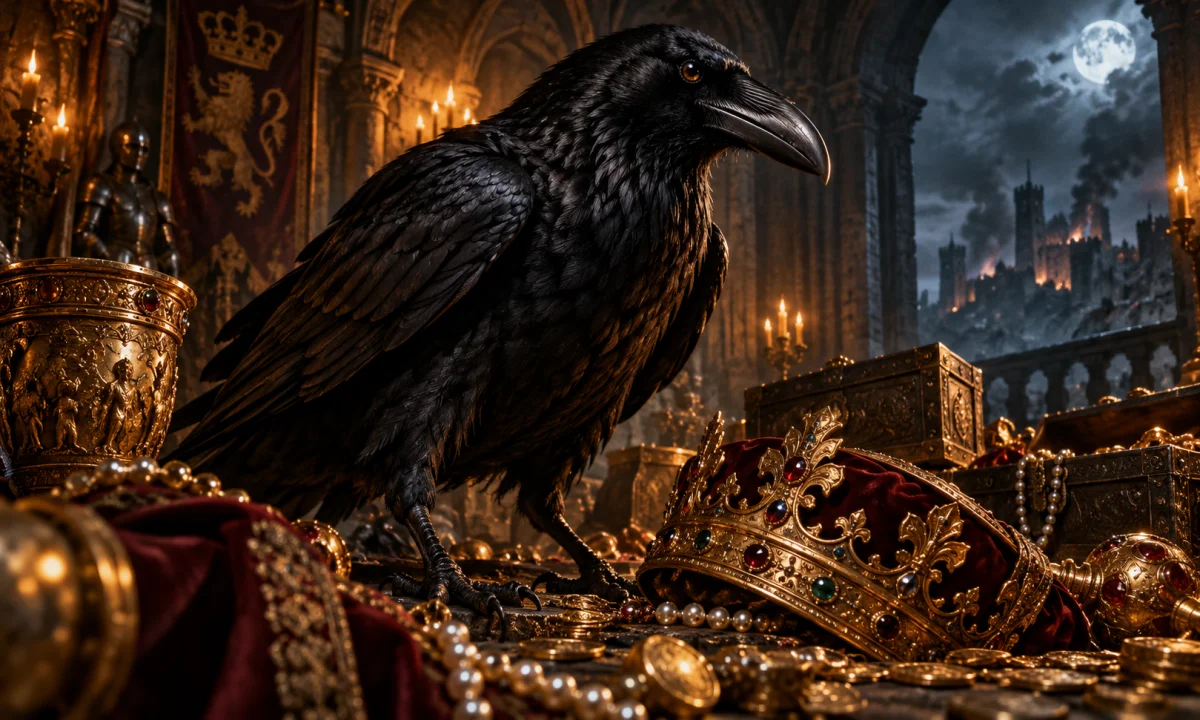
Shax is also credited with stealing money from the treasures of kings and carrying it away. In some versions, the money is said to be returned after an extraordinarily long period, usually given as 1,200 years. This promise is hardly a practical form of wealth acquisition. Its absurd duration may emphasize the spirit's deceitfulness or the danger of trusting a supernatural promise whose fulfillment lies beyond any human lifetime.
Other traditional abilities include discovering hidden things and bringing horses or various objects to the person who commands him. Horses were valuable property in the society that produced these texts, serving as transport, agricultural resources, and military assets. The ability to fetch a horse therefore represented a meaningful form of material assistance, even if it was framed as an occult service.
Shax is repeatedly associated with lying and deception. The practitioner is warned to give commands carefully because the spirit may mislead him or provide false information. This warning is central to Shax's character. He is not simply a servant who delivers whatever is requested; he is a hostile or unreliable intelligence whose apparent obedience may conceal a trap.
Stories and relationships
Unlike figures from epic mythology or sacred narrative, Shax does not possess a large cycle of independent stories. The Ars Goetia provides a catalogue entry rather than a biography. There is no widely attested myth describing his birth, family, fall from heaven, marriage, rivalry, or final defeat.
His relationship with the practitioner is the central narrative pattern. The operator issues a command, Shax is expected to carry it out, and the operator must guard against deception. This structure reflects the logic of ceremonial magic, in which a spirit is approached through names, signs, ritual authority, and formal commands. It does not necessarily imply that Shax was believed to be a willing ally. In Christian demonological thinking, a demon could appear useful while remaining morally dangerous.
Shax is not consistently described as subordinate to a particular famous demon such as Satan, Lucifer, or Beelzebub in the main catalogue entry. Modern retellings sometimes place every Goetic spirit into a simplified chain of command, but the original material is more limited. The title of marquis and the number of legions establish rank without providing a detailed political history of Hell.
Symbolism and interpretation
Shax can be interpreted as a figure of unreliable knowledge. His powers affect sight, hearing, understanding, and the discovery of concealed things. These functions all concern the limits of perception and judgment. A person who seeks hidden information through him may receive knowledge, but cannot easily determine whether it is true.
His connection with theft and delayed restitution adds another layer. Shax promises access to wealth while placing that wealth outside meaningful human control. The enormous delay attached to repayment turns apparent generosity into mockery. In this respect, the demon embodies the risk that a desire for immediate gain may lead to dependence on a deceptive power.
The bird form may reinforce this ambiguity. Birds can symbolize freedom, messages, elevation, or divine presence, but a bird that speaks with a harsh voice and carries out acts of theft becomes an unsettling inversion of those associations. The contrast is characteristic of demonological imagery, which often transforms familiar or respected symbols into signs of danger, false appearance, or corrupted power.
Historically, entries such as Shax's also reveal how early modern writers organized fear and temptation. The catalogue converts vague anxieties about theft, secrecy, sensory loss, and false counsel into the profile of a named spirit. It should not be read as a direct record of popular belief across Europe. Grimoires were specialized texts, often copied or consulted by educated practitioners, and their contents did not necessarily reflect the beliefs of ordinary communities.
Shax and similar names
Shax should not automatically be identified with every figure whose name is spelled similarly. The name may be confused with Chax, which is usually a variant spelling within the same grimoire tradition, but it should not be merged without evidence with unrelated words, personal names, fictional characters, or demons from other modern systems.
Nor should Shax be confused with demons from other catalogues merely because they share an office or appearance. Several spirits in European demonology are associated with hidden knowledge, theft, animals, deception, or distorted senses. Similar functions do not establish identity. Each spirit belongs to a particular textual history, and the details of Shax's rank and abilities come primarily from the Ars Goetia tradition.
Later occult and popular reception
From the nineteenth century onward, renewed interest in ceremonial magic brought the Ars Goetia and its spirits to a wider audience. Occult writers reproduced, reorganized, or reinterpreted the catalogue, sometimes adding symbolic systems, ritual instructions, astrological associations, or elaborate visual designs not present in earlier versions. In these later contexts, Shax may be treated as an entity for ritual contact, a psychological symbol, or a name within a broader magical practice.
Modern occult interpretations are not identical with the early modern source tradition. Some practitioners regard Goetic spirits as independent supernatural beings; others understand them as aspects of the unconscious mind, ritual personifications, or literary figures. These positions belong to modern interpretation and should not be projected backward onto every historical reader of the grimoires.
Shax also appears occasionally in fantasy, role-playing games, occult fiction, online demonology, and other popular media. Such portrayals may change his rank, appearance, powers, gender, personality, or relationships to suit a fictional setting. A character called Shax in a modern work therefore does not automatically preserve the attributes of the marquis in the Ars Goetia. The historically distinctive features remain the birdlike appearance, the hoarse voice, the thirty legions, the deceptive nature, and the reported control over perception, hidden things, valuables, and horses.