WORLD
WORLD
Pillan
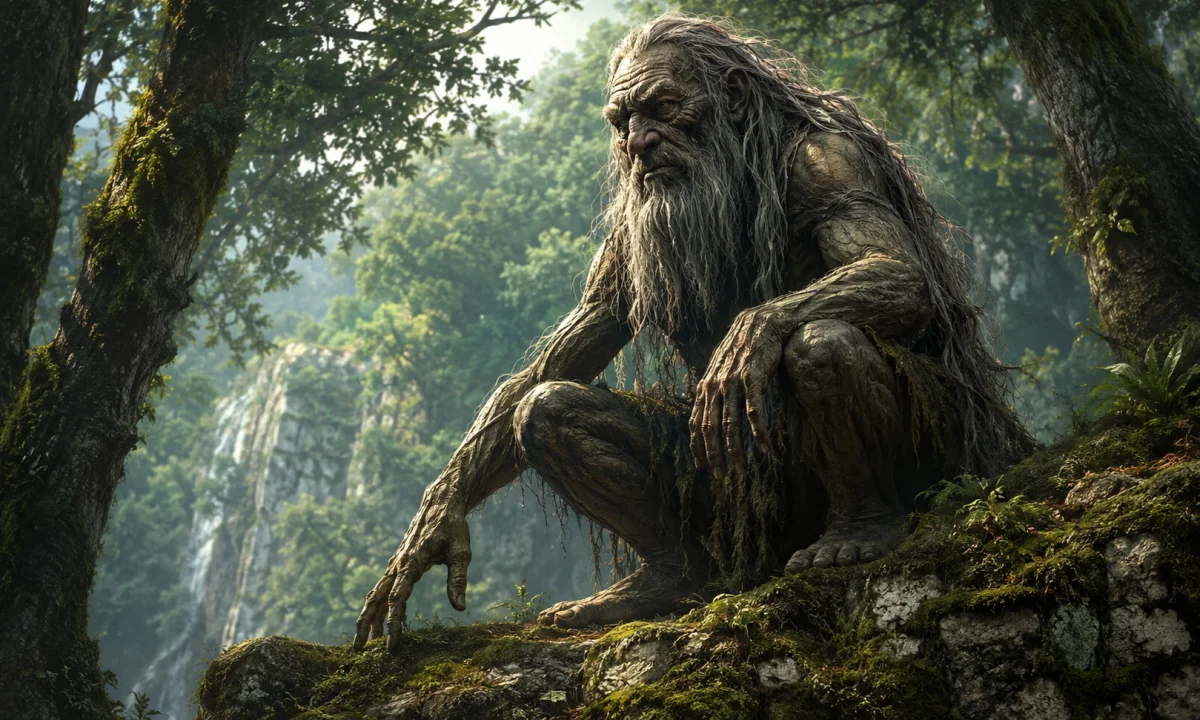
Pillan (also written Pillán, Pillan or Pu-pillan in some contexts) is a powerful spiritual figure, or class of spiritual beings, in the religious traditions of the Mapuche people of south-central Chile and western Argentina. Pillan is strongly associated with thunder, lightning, volcanic fire, storms and the force of the natural world. In other accounts, the word refers more broadly to ancestral spirits or powerful beings connected with a community. Its meaning is therefore not completely uniform, and it is misleading to treat Pillan as a single god with one universally fixed biography.
Mapuche cultural and religious setting
The Mapuche are an Indigenous people whose traditional homeland, known as Wallmapu, extends across parts of present-day Chile and Argentina. Mapuche religious knowledge has been transmitted primarily through oral tradition, ritual practice, family teaching and the authority of religious specialists, especially the machi. The surviving written descriptions were largely produced by Spanish missionaries, colonial officials and later ethnographers. These observers often interpreted Mapuche beliefs through European categories such as “god,” “devil,” “spirit” or “idol.” Such descriptions are valuable, but they do not always preserve Mapuche concepts accurately.
Mapuche spirituality does not necessarily divide the world into a simple opposition between natural and supernatural. Mountains, rivers, forests, animals, weather and human communities may all participate in relationships involving power, obligation and respect. Spiritual beings are often understood through their connections with particular places and with the living and the dead. Within this setting, Pillan belongs to a network of forces rather than to a neatly arranged pantheon comparable to that of ancient Greece or Rome.
Mapuche religious ideas also vary between regions and communities. Language, local history and the influence of Christianity have contributed to differences in terminology and interpretation. A description of Pillan from one area may emphasize volcanoes and storms, while another may stress ancestors, ritual power or the moral condition of a community.
The name and its meaning
The spelling Pillán reflects Spanish writing conventions and is not the only form used. Mapudungun has been represented in several different orthographies, so the same word may appear without an accent or with other spelling differences. The precise meaning of the term is debated because early sources translated it inconsistently and because its use can change according to context.
In many explanations, a Pillan is a powerful spirit associated with a deceased ancestor, particularly an ancestor of importance to a family, lineage or community. In other explanations, Pillan refers to beings who dwell in or control mountains and volcanoes, or to forces manifested in thunder and lightning. These meanings need not be mutually exclusive. A powerful ancestor may be connected with the landscape, and a volcano may be understood as the dwelling place or visible expression of spiritual power.
Some older European accounts treated Pillan as a major deity or as a devil-like being. Modern interpretations are generally more cautious. “Deity” can suggest a permanent, individualized god in a way that does not fit every Mapuche use of the term, while “demon” reflects Christian judgment rather than an impartial description. Pillan is best understood as a powerful category of spiritual presence whose identity depends on tradition, place and context.
Volcanoes, thunder and fire
The most familiar image of Pillan presents the being as a force of mountains and volcanic activity. The volcanoes of the Andes are prominent features of the Mapuche homeland, and eruptions, earthquakes, lightning and violent storms have traditionally been understood within a religious landscape rather than as meaningless accidents. Pillan may be said to inhabit volcanic peaks, to cause eruptions or to express anger through fire and thunder.
This association does not make Pillan simply a “god of volcanoes” in the narrow sense. A mountain can be a place of power, an ancestor’s abode, a site of communication with the spirit world and a participant in community life. Volcanic fire may therefore signify both danger and sacred potency. The same force that threatens settlements can also be approached with respect and ritual care.
Descriptions of Pillan sometimes connect thunder and lightning with conflict among powerful spirits. In these accounts, storms are not merely meteorological events but signs of activity in the invisible world. However, the details differ considerably from one retelling to another. There is no single canonical Mapuche myth that fixes Pillan’s appearance, genealogy and actions in the way that a written epic might do for a figure such as Heracles or Odin.
Pillan and the ancestors
Ancestral relationships are central to many understandings of Pillan. The dead are not necessarily regarded as having vanished from the community. Important ancestors may continue to protect, warn or influence their descendants, while their spiritual power can be connected with particular places. This helps explain why Pillan is sometimes described as an ancestral spirit rather than an independent nature deity.
In this interpretation, the status of a Pillan may reflect the importance of the person during life. A respected leader, renowned warrior or otherwise significant ancestor might remain active after death. Yet the relationship is not simply one of worship directed at a remote supernatural ruler. Living people maintain obligations to their ancestors and to the wider spiritual community through memory, ritual and appropriate conduct.
Some accounts also state that Pillan can be benevolent or harmful. This does not necessarily mean that there are two separate species, one good and one evil. A spirit may protect those who respect the proper order and punish neglect, disrespect or violations of social and ritual obligations. European writers sometimes recast such beings as either benevolent angels or malevolent devils, but Mapuche concepts of spiritual power do not always fit that moral binary.
Relationship with other Mapuche spiritual beings
Pillan should not be confused with every powerful being in Mapuche cosmology. Ngünechen, often translated as “Lord” or “Owner of the People,” is widely described as a supreme or governing divine power, although the form and interpretation of Ngünechen vary and have been influenced by Christian descriptions. Ngünechen is not simply another name for Pillan.
The ngen are commonly described as spirits or owners of particular elements and places, such as water, mountains, forests or animals. Their relationship to the natural world differs from the role assigned to Pillan in traditions focused on ancestors, storms or volcanic force. A wekufe, meanwhile, is generally associated with harmful or disruptive spiritual power. Older sources sometimes grouped different beings together because they lacked precise equivalents in European religious vocabulary, so apparent overlaps should be treated carefully.
Mapuche religious language also includes concepts such as Wenu Mapu, the upper or elevated spiritual realm, and Nag Mapu, the earthly world where human life unfolds. The exact meanings and uses of these terms vary. They should not be imagined as a rigid three-level universe with identical definitions in every Mapuche community.
Pillan in ritual life
References to Pillan are connected in some accounts with the nguillatun, a major Mapuche communal ceremony involving prayer, offerings, song, dance and requests for the well-being of people, animals and the land. The ceremony is not simply a performance of a myth. It is a living act of relationship among human beings, spiritual powers, ancestors and the wider world.
The machi, a religious specialist and healer, may communicate with spiritual powers in healing and ceremonial work. The machi’s role is not identical to that of a priest in a centralized church, and Mapuche religious practice has no single institution that controls all belief. Knowledge is learned through community, family, apprenticeship, dreams, visions and ritual experience. Consequently, a general description of Pillan cannot replace the teachings of particular Mapuche communities.
Offerings and prayers directed toward powerful spirits are often concerned with balance, health, fertility, rain, protection and the continuity of the community. When Pillan is associated with storms or volcanic fire, the relationship may include both reverence and apprehension. The aim is not necessarily to “control” nature but to recognize powerful relationships and act with proper respect.
Stories and regional variations
Popular summaries sometimes present Pillan as a single thunder god who rules all volcanoes or as the husband, father or rival of other named figures. Such genealogies should be treated with caution. Mapuche oral traditions include many regional narratives, and names may be recorded differently in Spanish-language sources. A figure mentioned in one local story cannot automatically be assigned a place in a universal Mapuche pantheon.
Some modern retellings connect Pillan with the creation of volcanoes, the explanation of eruptions or battles among supernatural beings. Others describe the mountains as homes of ancestral Pillan. These narratives may preserve genuine elements of oral tradition, but the exact wording and details often come from later written compilations, school materials, tourism literature or popular mythology websites. There is no single authoritative written “Book of Pillan.”
Pillan is also sometimes mentioned alongside the well-known story of Trentren Vilu and Caicai Vilu, the great serpent beings associated in many versions with land, water and a catastrophic flood. The traditions may share a broader landscape of Mapuche sacred geography, but Trentren Vilu and Caicai Vilu are distinct figures. They should not be identified with Pillan merely because all are linked to mountains, water or large natural events.
Interpretations of power and morality
The word “power” is particularly important in discussions of Pillan. A Pillan is not necessarily powerful because of a throne, army or formal rank. Power may be shown through the ability to produce thunder, move through the landscape, affect weather, protect descendants or punish violations of ritual and social order. The term can therefore refer to an active spiritual presence rather than to a character with a fixed personality.
Some historical accounts portray Pillan as dangerous or hostile. This partly reflects the experiences of colonial observers, who interpreted unfamiliar religious practices through Christian ideas about paganism and demonic forces. It also reflects the genuinely ambivalent character of many sacred powers: a being that protects a community may also punish it, and a force that brings rain or fertility may cause destruction when disturbed.
Modern scholarship and Indigenous cultural work tend to emphasize that Mapuche religious concepts should be understood within Mapuche categories whenever possible. Translations such as “spirit,” “ancestor,” “deity” and “nature power” are useful approximations, but none captures every use of Pillan. The safest description acknowledges the term’s range rather than forcing it into one European theological category.
Distinguishing Pillan from similar figures
- Pillan and Ngünechen: Ngünechen is commonly presented as a supreme or governing divine power, while Pillan is associated in different traditions with ancestors, storms, volcanoes and powerful spirits. They are not interchangeable names.
- Pillan and Ngen: Ngen usually refers to a spirit or “owner” linked to a particular natural place, element, animal or resource. A Pillan may also be connected with a place, but the terms do not have identical meanings.
- Pillan and Wekufe: Wekufe is generally connected with harmful or disruptive forces. A Pillan may be dangerous in some stories, but Pillan is not simply another word for an evil spirit.
- Pillan and Trentren Vilu or Caicai Vilu: The two serpents belong to a different cycle of Mapuche traditional narratives. Their association with flood, land and transformation does not make them forms of Pillan.
- Pillan and thunder gods from other cultures: Comparisons with figures such as Thor, Zeus or the Andean Illapa can help readers notice a shared association with storms, but they do not establish that these beings have the same mythology or religious function.
Colonial records and the problem of translation
Much of the information available to outsiders about Pillan comes from records written after the Spanish invasion and during the colonial period. Missionaries often sought to classify Mapuche religious beings so that they could be explained within Christian teaching. A spirit associated with thunder might be called a god, idol or demon; an ancestral presence might be described as a superstition. Such labels reveal the concerns of the writers as much as they reveal Mapuche belief.
Later folklorists and ethnographers collected oral traditions under different conditions. Some worked carefully with Mapuche speakers, while others arranged diverse stories into a single mythology for a Spanish-speaking audience. Changes in spelling, translation and regional terminology can make it difficult to determine whether two accounts describe the same being, related beings or entirely different local traditions.
For this reason, claims about Pillan should be dated and qualified when they depend on a particular source or region. The figure is not a relic of a vanished religion. Mapuche communities continue to maintain, adapt and debate their spiritual traditions, and contemporary understandings may differ from both colonial descriptions and popular encyclopedic summaries.
Pillan in contemporary culture
Today, Pillan appears in Spanish-language writing about mythology, Indigenous heritage, volcanoes and fantasy. The name is sometimes used for fictional fire beings, powerful monsters or generic thunder deities. These adaptations may draw inspiration from Mapuche tradition, but they are modern creations and should not be presented as traditional belief.
The name also appears in cultural and commercial contexts connected with the landscapes of Chile and Argentina, especially volcanic regions. Such uses can bring attention to Mapuche heritage, but they may also reduce a complex spiritual concept to a decorative symbol of fire, mountains or adventure. A respectful treatment recognizes that Pillan is connected not only with dramatic natural phenomena but also with ancestry, community, ceremony, moral responsibility and living Indigenous identity.