WORLD
WORLD
Pilirin
Pilirin is a name associated in some modern English-language references with Australian Aboriginal mythology. Its identity, cultural origin and traditional meaning are uncertain, however. Unlike figures such as the Rainbow Serpent, Baiame, Tiddalik or the bunyip, Pilirin is not securely documented as one clearly defined being shared across Aboriginal Australia. The name may reflect a local term, an altered spelling, a transcription from an oral language, or a modern compilation that has detached a name from its original cultural setting.
A name without a securely established tradition
“Australian Aboriginal mythology” is a broad label covering the religious traditions, ancestral histories, ceremonial knowledge and oral literature of hundreds of distinct peoples. These traditions are not a single mythology with one common cast of gods and monsters. A name belonging to one language group cannot automatically be treated as part of the beliefs of all Aboriginal Australians.
In the case of Pilirin, the available English-language record does not establish a consistent account of the figure. There is no generally accepted description of Pilirin’s appearance, habitat, powers, genealogy or role in a particular Dreaming narrative. Nor is there a reliable basis for assigning the name to a specific Aboriginal nation without further linguistic or ethnographic evidence.
This uncertainty is important rather than incidental. Aboriginal traditions were transmitted primarily through spoken narrative, performance, ceremony, art, kinship relationships and connection to Country. Early outsiders often recorded names according to unfamiliar spelling systems, and some accounts were produced without the permission or participation of the people whose traditions were being described. A single name could consequently appear in several forms, while similar-looking words from different languages could be treated as though they referred to the same being.
Origins and cultural setting
The religious background relevant to any Aboriginal mythological name is often described in English as the Dreaming or Dreamtime. These terms are useful but imperfect translations. In many Aboriginal traditions, ancestral beings established relationships between people, animals, plants, waterholes, hills, stars and ceremonial law. Their actions are not simply stories set in a remote past. They explain continuing obligations to Country, social responsibilities, ritual practice and the moral order of the world.
A being named in such a tradition might therefore be more than a “character” or supernatural creature. It could be connected with a particular site, a song cycle, an initiation ceremony, a clan estate, a seasonal event or a restricted body of knowledge. The meaning of the name might also depend on the language, pronunciation and social context in which it is used. Removing the name from that setting can make an ancestral figure appear to be a generic monster or spirit, even when the original tradition treats it very differently.
No dependable evidence currently makes it possible to describe Pilirin in those terms with confidence. It should not be presented as a pan-Aboriginal god, demon or cryptid. Nor should it be assigned to a particular region merely because a modern list places it among other Australian beings.
Identity and classification
Pilirin is sometimes classified in broad reference works as a spirit or mythical creature. Such classifications should be treated cautiously. “Spirit” is a convenient English category that may conceal important distinctions between ancestral beings, ghosts of the dead, dangerous presences, guardians of places, personifications of natural forces and beings belonging to ceremonial narratives.
There is also no secure evidence that Pilirin is a god in the sense used for figures such as Zeus or Odin. Aboriginal religious traditions do not generally organise supernatural beings according to a single universal hierarchy of gods, angels, demons and lesser spirits. A being may be powerful in relation to one place or story without belonging to a general pantheon.
The spelling itself may be significant. Aboriginal languages were traditionally unwritten, and different researchers developed different systems for representing their sounds in Roman letters. A final “n”, doubled consonant, vowel change or alteration in syllable structure can produce a new-looking form. In addition, names may have passed through several languages before appearing in English. “Pilirin” may therefore be a transcription of a local word, a variant of another name, or a form created through copying and editorial error. Without a traceable record, these possibilities cannot be resolved.
Attributes and appearance
No stable traditional description of Pilirin’s physical form can be stated with confidence. Claims that identify the figure as a monster, animal, ancestor, water being, serpent, giant or human-like spirit should not be treated as established simply because they occur in an unsourced catalogue or on a popular mythology website.
The same caution applies to alleged powers. There is no securely documented basis for saying that Pilirin causes storms, guards sacred places, attacks travellers, abducts children, controls animals or punishes violations of customary law. Those are common motifs in global mythology and are often attached to poorly documented names by modern writers seeking to create a complete entry. Their familiarity does not make them evidence for this particular figure.
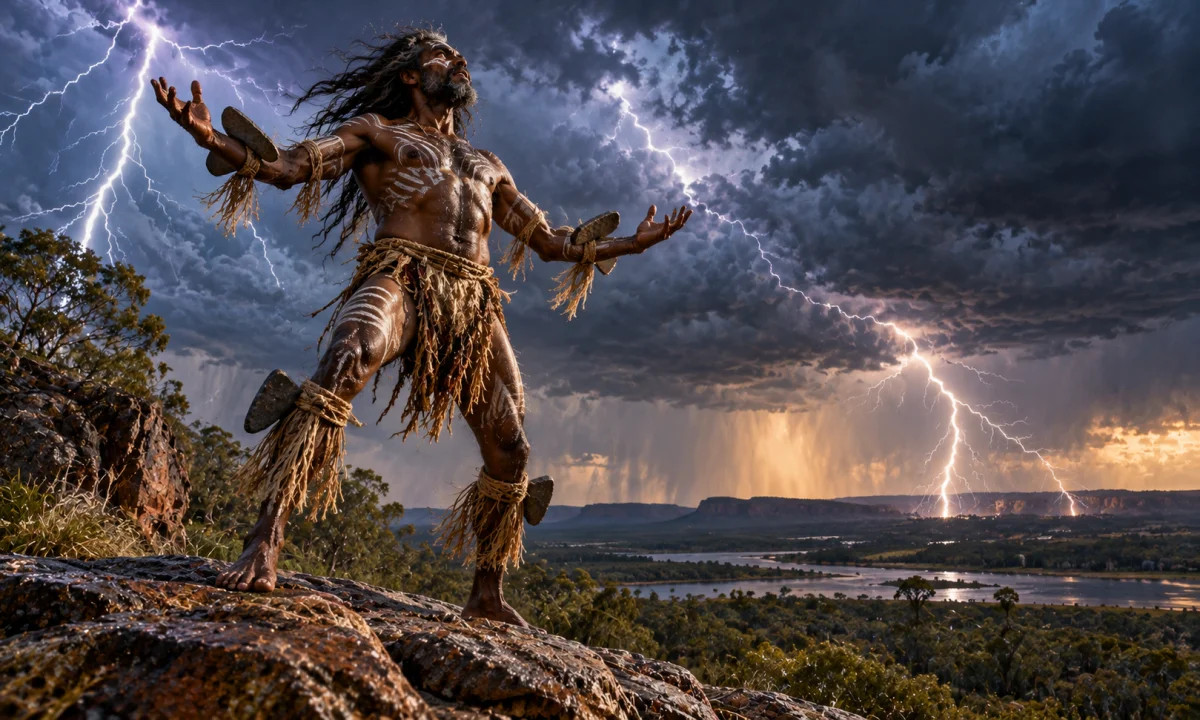
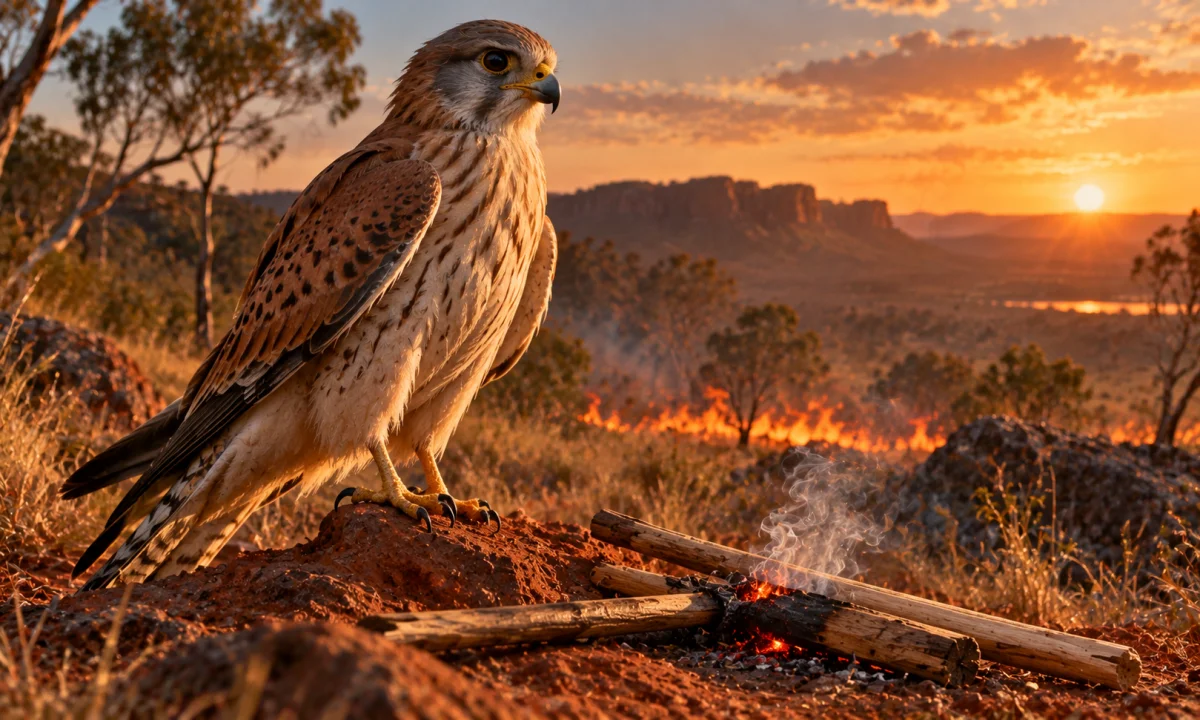
Images labelled “Pilirin” should also be approached carefully. Contemporary illustrations can give an uncertain name a vivid appearance, but an artist’s interpretation is not proof of traditional iconography. Aboriginal visual traditions are closely connected with particular communities, ancestral narratives, materials and permissions. A generic fantasy creature placed beside an Aboriginal name may misrepresent both the being and the culture.
Stories and relationships
No widely attested Pilirin story, genealogy or relationship with other Aboriginal ancestral beings has been established in the standard English-language record. It is therefore not responsible to invent a narrative in which Pilirin fights a serpent, protects a waterhole, teaches humans a skill or appears as the enemy of another named figure.
Many Aboriginal narratives do contain journeys, transformations, conflicts and acts of creation. An ancestor may become a landform, leave a track across Country, establish a law or explain the origin of a species. Yet the presence of these patterns elsewhere does not demonstrate that Pilirin participates in them. Traditional stories must be connected to their own language community and cultural context rather than assembled from motifs borrowed from unrelated regions.
Relationships are especially important in this respect. A name may refer to an ancestor whose significance is defined by connection to a specific site or group, not by a set of adventures. Some knowledge may be restricted according to age, gender, initiation status or community authority. The absence of a published story does not prove that no tradition exists; it may indicate that the relevant knowledge was never recorded, was recorded under another name, or is not intended for public circulation.
Why the name can be misleading
Pilirin should not automatically be equated with the bunyip. “Bunyip” is an English umbrella term applied to a variety of reported beings and stories, especially in colonial and later popular writing. It does not designate one universally consistent creature, and there is no sound reason to use it as a substitute for an uncertain name.
Nor should Pilirin be merged with the Rainbow Serpent, the Mimih spirits, the Yara-ma-yha-who, the Nargun or other well-known beings. These figures belong to different bodies of tradition, and some names are associated with particular language groups and regions. Similar themes—water, danger, transformation, the landscape or the behaviour of children—do not establish identity.
Confusion can also arise from transliteration. An unfamiliar Aboriginal word may resemble a name from another language or a term from a different tradition. Modern lists sometimes place all such names under “Australian mythology” without recording their location, language, spelling variants or source history. Once repeated, an uncertain identification can appear authoritative even though each later entry derives from the same brief and undocumented statement.
Interpretation and cultural significance
The most responsible interpretation of Pilirin at present is therefore methodological. The name demonstrates the limits of treating Aboriginal mythology as a catalogue of fantasy creatures. A catalogue can preserve a word while losing the Country, language, custodianship and ceremonial context that give the word meaning.
It also illustrates the difference between traditional evidence and modern reception. A name appearing in an encyclopaedia, database or online list shows that the name has circulated in writing. It does not by itself show that the entry accurately represents an Indigenous tradition. Historical evidence requires more: a traceable record, a known language or community, a clear account of where the information came from, and attention to how the original speakers understood the figure.
Where such evidence is unavailable, uncertainty is the accurate conclusion. It is better to say that Pilirin is poorly documented than to provide an attractive but fictional biography. This approach also respects Aboriginal cultural authority, because it avoids claiming knowledge about a tradition that may belong to a particular community or may not be publicly shareable.
Modern references
Pilirin has little established presence in widely known Australian literature, film, television or games. If the name appears in modern fantasy or online mythology material, those uses should be regarded as later interpretations rather than proof of an ancient, universally recognised being. A fictional adaptation may invent a form, personality and story for creative purposes, but it should identify those additions as modern creations.
For the same reason, a modern website that describes Pilirin with certainty should not be treated as evidence merely because its wording is repeated elsewhere. The most useful questions are: which Aboriginal language or community is associated with the name; where was the name recorded; what spelling variants exist; and does the account come from recognised cultural knowledge rather than an unsourced compilation?
Until those questions can be answered, Pilirin is best described as an uncertain or insufficiently documented name associated with Australian Aboriginal mythology, not as a clearly defined creature with a universally accepted appearance, story or religious function.