WORLD
WORLD
Pharzuph

Pharzuph is a minor demonological figure associated in later European occult literature with fornication and sexual temptation. Unlike demons with long histories in scripture, medieval legend or ritual magic, Pharzuph is known chiefly through demonological catalogues and reference works. The surviving material is brief, and there is no substantial body of traditional stories, religious worship or established iconography connected with the name.
Origins and Cultural Setting
Pharzuph belongs to the tradition of European Christian demonology: the study and classification of demons within a religious and occult framework. In this tradition, writers often described demons as tempters who encouraged particular sins, vices or forms of disorder. Pride, greed, envy, wrath and lust could be treated not only as moral failings but also as areas in which demonic forces were believed to operate.
The name is especially associated with later demonological compilations, including the kind of cataloguing found in early modern and nineteenth-century works on devils and infernal spirits. These books brought together material from biblical interpretation, medieval theology, folklore, magical manuscripts and earlier demon lists. They did not all follow the same system, and their entries frequently varied in length and reliability.
Pharzuph is not a prominent figure in the Bible, the major Christian theological writings on demons, or the best-known medieval legends. There is no widely recognized ancient myth that presents Pharzuph as a god, spirit or independent supernatural character. Nor is there strong evidence of a pre-Christian cult or folklore tradition devoted to a being under this name.
The figure should therefore be understood as a catalogued demon of later demonological literature, rather than as an ancient deity whose original mythology has been lost. The short description attached to the name appears to have been more influential than any narrative tradition.
Name and Identity
The spelling Pharzuph is the form most commonly encountered in modern English-language discussions of demonology. Its etymology is uncertain. The name does not have a securely established meaning in a known ancient language, and claims that it is an authentic Hebrew, Greek, Mesopotamian or Egyptian divine name should be treated cautiously unless supported by a specific historical source.
Names in demonological catalogues were often copied, transliterated or altered as they passed between languages and manuscripts. Printers, translators and occult authors sometimes preserved unfamiliar spellings without explaining their origin. In other cases, names were adapted to fit a particular classification system. This makes it difficult to determine whether an unusual name represents an old independent tradition, a corruption of another name or a relatively late literary creation.
The limited descriptions of Pharzuph identify the demon with fornication, a term that in Christian moral vocabulary traditionally referred to sexual relations outside approved marriage. In some later occult summaries, the name is expanded into a general association with lust, seduction or illicit sexual desire. These broader descriptions should not be mistaken for evidence of a detailed original mythology. The central and most consistent feature is the demon's connection with sexual sin.
Classification as a Demon
Pharzuph does not possess a universally accepted rank in demonology. Some modern lists place the name among demons associated with specific sins or temptations, while others simply repeat the short description without assigning a title, office or position in an infernal hierarchy.
This lack of a stable rank is important. Well-known systems such as the hierarchy of demons in medieval theological writing, the demon catalogues associated with Johann Weyer, and the spirit lists printed in later ceremonial-magical books use different principles. A demon may be described as a prince, king, president or servant in one work, while another source omits that title entirely. Pharzuph is not one of the consistently ranked spirits of the most famous ceremonial systems.
The figure is better classified as a vice-associated demon. Such beings personify or promote a particular moral danger rather than ruling a clearly defined geographical realm, commanding a documented army or appearing in a cycle of stories. Their function is often symbolic: they give a name and personality to a temptation that religious writers considered spiritually destructive.
Attributes and Powers
The primary attribute assigned to Pharzuph is the encouragement of fornication or uncontrolled sexual desire. In a demonological interpretation, this could involve tempting a person toward extramarital relations, promiscuity or conduct regarded by Christian moral teaching as sexually immoral.
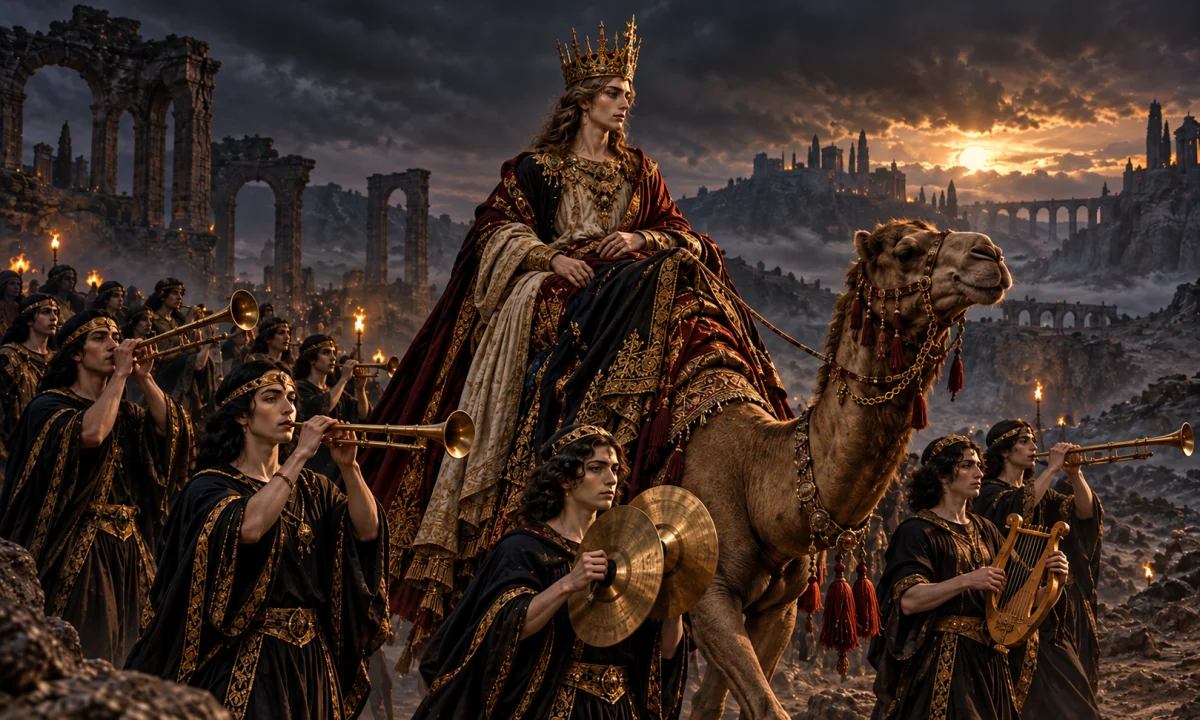
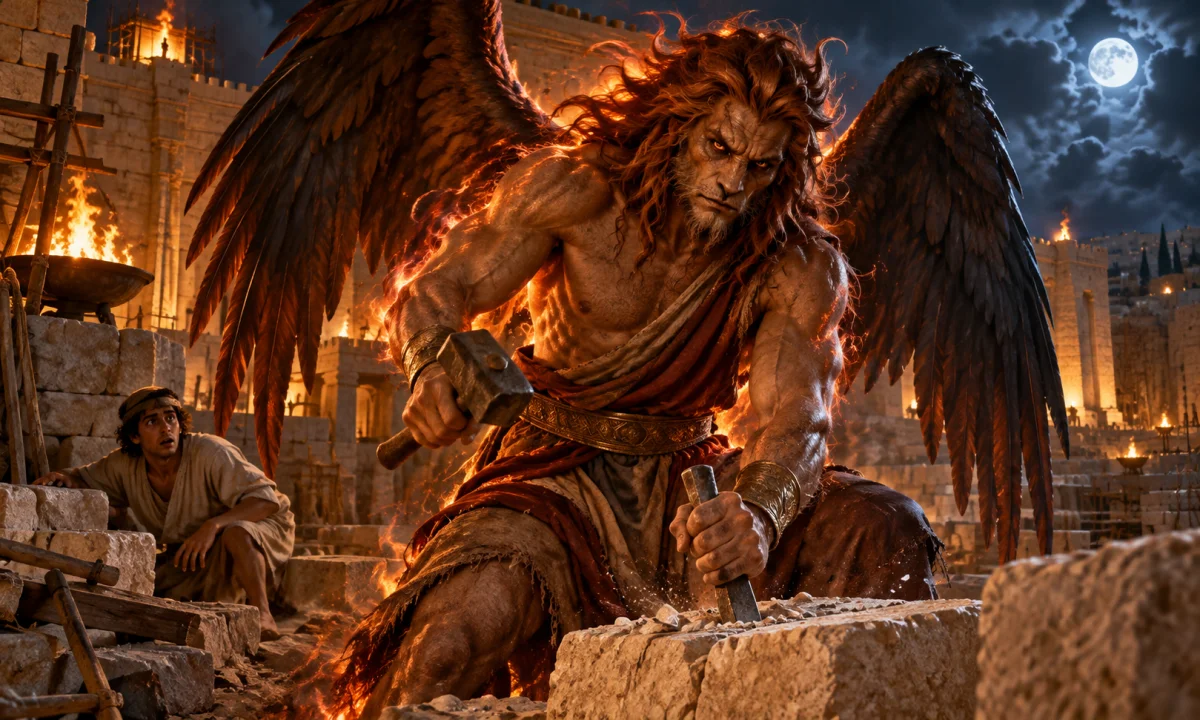
Descriptions of Pharzuph are generally too short to establish a distinctive appearance. There is no dependable traditional portrait showing a particular body, animal feature, garment, weapon or emblem. Images sometimes produced for modern demonology websites, occult-themed publications or fictional settings should not be treated as inherited iconography. They are usually artistic inventions or visual interpretations based on the general idea of a lustful demon.
Similarly, no consistent account gives Pharzuph a specific place of residence, day of power, planetary correspondence, incense, seal or method of conjuration. Modern occult tables may supply such details, but these additions belong to later esoteric practice or contemporary system-building rather than to a well-attested ancient tradition.
The supposed power of Pharzuph is therefore primarily temptational. The demon represents the ability of desire to overcome judgment, restraint and social or religious obligations. This is a common theme in Christian demonology, in which sexual temptation could be understood as both a bodily impulse and an attack on the will.
Pharzuph and the Demonology of Sexual Sin
Christian demonological writing frequently connected demons with sexual temptation. This association developed from several overlapping ideas: biblical warnings about adultery and fornication, theological discussions of the passions, stories of saints resisting temptation, and folklore about spirits that attacked or seduced sleepers.
In this context, naming a demon such as Pharzuph served a classificatory purpose. It made an abstract vice appear as an intentional spiritual force. Rather than describing sexual misconduct only as a human weakness, a demonological writer could present it as part of a larger conflict between temptation and moral discipline.
This does not mean that every religious writer believed there was a separate demon assigned to every sin. Christian theology has never had a single universally binding catalogue of demons. Some authors emphasized chief demons and broad categories of evil; others created elaborate hierarchies in which particular spirits represented specialized activities. Pharzuph belongs to the latter tendency, especially in its later and more schematic forms.
The association also reflects historical attitudes toward sexuality. The word “fornication” carries the moral and legal assumptions of the Christian societies in which these catalogues were produced. Modern readers should distinguish the historical description of a demon from an objective claim about sexuality. The entry tells us more about the moral vocabulary and classificatory habits of demonological authors than about an independently documented supernatural being.
Stories and Relationships
There is no substantial cycle of legends about Pharzuph. Unlike figures such as Lucifer, Lilith or Asmodeus, Pharzuph does not have a widely transmitted biography, genealogy or series of encounters with saints, heroes or biblical characters.
No reliable traditional account establishes Pharzuph as the consort, servant, offspring or rival of another famous demon. Claims connecting the name with a particular infernal family or hierarchy usually arise from modern lists that combine names from different sources. Such combinations can create an appearance of a coherent mythology where the older material provides only isolated entries.
Nor is Pharzuph a standard character in the major narratives about demonic sexual beings. Medieval and early modern folklore includes accounts of incubi and succubi, spirits believed to have sexual relations with sleeping humans. These beings form a broader folkloric category, with their own history and variations. A brief catalogue entry identifying Pharzuph with fornication does not establish that the demon is an incubus or succubus.
Distinguishing Pharzuph from Similar Figures
Asmodeus
Asmodeus has a much older and richer history. A demon named Asmodeus appears in the Book of Tobit, where he is associated with the deaths of Sarah's successive husbands before Tobias defeats him with ritual means. Later Jewish, Christian and Islamic traditions develop the figure in different ways, and European demonology frequently associates Asmodeus with lust, gambling or destructive desire. Because of this sexual association, Asmodeus is sometimes treated as equivalent to Pharzuph in modern summaries. They are not the same figure. Asmodeus has a distinct textual and legendary history, while Pharzuph is a much less substantial catalogue demon.
Sitri
Sitri, listed in the Ars Goetia, is another demon commonly linked with sexual desire. That spirit is described within a specific ceremonial-magical hierarchy and is given a rank, appearance and powers in that system. Pharzuph does not belong to that standard Goetic identity merely because both names are connected with lust or sexual temptation.
Incubi and Succubi
Incubi and succubi are categories of sexual spirits in European folklore and demonological writing. They are usually described in relation to sleeping people and nocturnal encounters. Pharzuph has no equally established folklore role and should not automatically be visualized as one of these beings.
Lilith
Lilith has roots in ancient Mesopotamian demonological material and later Jewish traditions, in which her identity changes considerably over time. Modern popular culture often presents Lilith as a female embodiment of sexual independence or dangerous seduction. That modern image should not be used to define Pharzuph, whose surviving description does not establish a gender, body or narrative relationship to Lilith.
Historical Evidence and Scholarly Caution
The evidence for Pharzuph is literary rather than archaeological or ethnographic. There is no known temple, inscription, ancient prayer, established festival or broad folk tradition that securely documents worship of this being. The name's significance comes from its appearance in demonological classification, not from evidence of a widespread religious cult.
Short entries in demon catalogues can be difficult to interpret. A compiler may have copied a name from an earlier list, translated a moral label, or included a spirit simply to complete a taxonomy. Later writers may then repeat the entry and add details that appear authoritative because they have been printed many times. Repetition is not the same as independent confirmation.
For that reason, statements about Pharzuph should remain modest. It is reasonable to describe the name as belonging to a later demonological tradition and to associate it with fornication or lust. It is not reasonable to present an elaborate biography, a fixed infernal office or a distinctive physical appearance as ancient fact when the surviving tradition does not securely provide them.
Cultural Significance
Pharzuph illustrates how demonological systems transformed moral concepts into named supernatural agents. A vice-associated demon does not need a long mythology to perform an important cultural function. The name can operate as a warning, giving a personal identity to temptation and reinforcing the idea that desire may become an external spiritual threat.
Such catalogues also reveal the interaction between theology and folklore. Religious writers inherited ideas about demons as fallen spirits and tempters, while popular beliefs supplied stories of nocturnal attackers, seducers and dangerous supernatural encounters. Compilers then arranged these materials into lists that sometimes looked systematic even when their sources were diverse and inconsistent.
In modern reference culture, Pharzuph is often presented alongside far more prominent demons. Online lists, fantasy encyclopaedias and occult-themed media may expand the name into a fully characterized entity with powers, symbols or relationships. Those portrayals can be creative, but they should be identified as modern adaptations rather than confused with the sparse historical record.
Modern Reception
Pharzuph has limited visibility in mainstream popular culture compared with demons such as Satan, Lucifer, Pazuzu, Asmodeus or Beelzebub. When the name appears in contemporary fiction, role-playing games or occult-inspired media, creators generally use its association with sexual temptation as a starting point. They may assign the demon a gender, appearance, hierarchy or personality to meet the needs of a particular story or game.
These adaptations are not necessarily attempts at historical reconstruction. They belong to the continuing process by which old demonological names are reused as symbols of desire, transgression and loss of control. The historical Pharzuph remains a notably narrow figure: a little-documented demon associated primarily with fornication, preserved more as a label in later demonological catalogues than as the centre of an independent mythology.