WORLD

Sitri
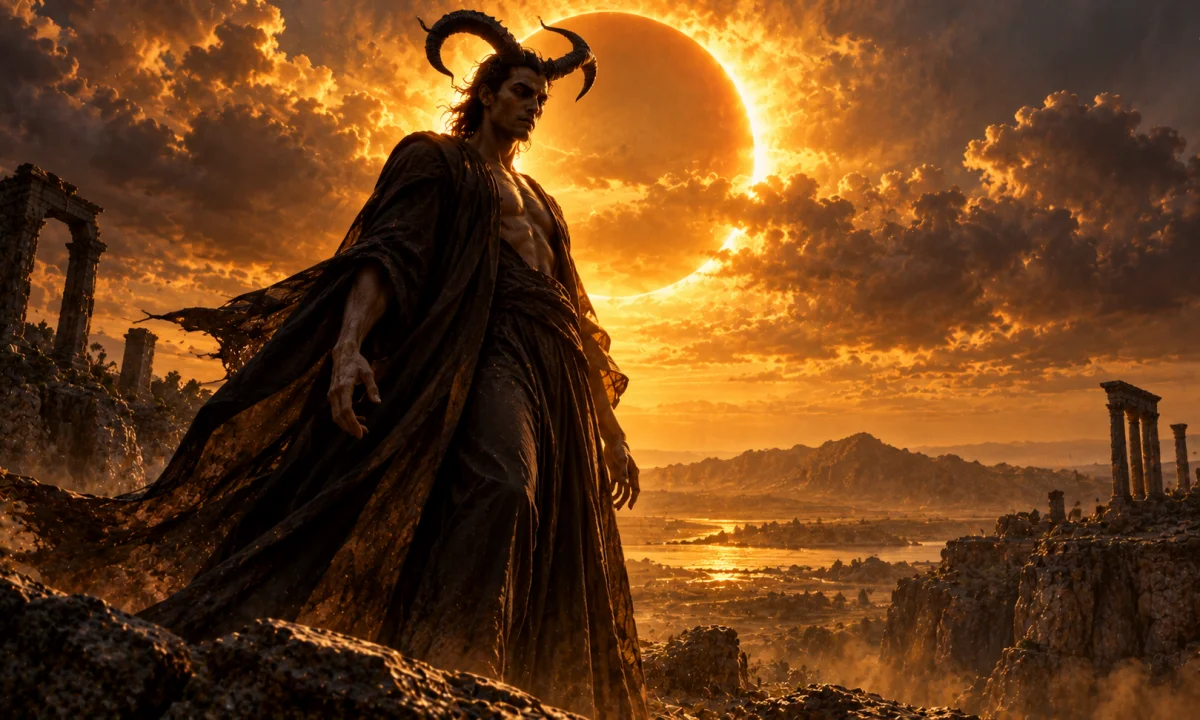
Sitri is a demon of European grimoire tradition, best known from the Ars Goetia, the first section of the Lemegeton or Lesser Key of Solomon. In that text, Sitri is described as a powerful prince who first appears with a leopard’s face and wings resembling those of a gryphon before taking the form of a remarkably beautiful human being. His stated power is to provoke love or sexual desire between men and women, and to cause people to reveal themselves naked when commanded.
Sitri belongs to the learned demonology of early modern Europe rather than to an independently documented ancient religion. The surviving descriptions come from magical handbooks that organized spirits into ranks, offices, names and ritual procedures. These works drew on biblical imagery, Christian ideas about demons, older magical traditions and material inherited from medieval and Renaissance occult literature. They should not be treated as evidence that Sitri was worshipped as a deity in antiquity.
Origins in grimoire tradition
The most familiar account of Sitri appears in the Ars Goetia, a catalogue of seventy-two spirits. The work survives in manuscript traditions associated with the broader Lemegeton, a collection generally dated to the seventeenth century, although some of its contents derive from earlier texts. The Ars Goetia presents each spirit with a name, rank, visual form, area of influence and a seal used in ceremonial magic.
In the catalogue, Sitri is the twelfth spirit and is given the rank of a great prince. His description is brief. He appears initially with a leopard-like face and wings like those of a gryphon, then changes into a beautiful human form when the ritual operator requests it. His principal office is to stir love between men and women. The description also assigns him the ability to make women display their bodies, although later retellings often generalize this into an ability to compel or encourage sexual exposure.
Sitri’s entry is part of a structured system in which demons are given aristocratic or military titles such as king, duke, marquis, president and prince. These titles do not demonstrate that the beings were understood as members of a coherent ancient pantheon. They reflect the hierarchical style of European demonological and magical literature, in which the invisible world was organized according to models of earthly courts, armies and governments.
Earlier and related textual forms
A related figure appears in Johann Weyer’s Pseudomonarchia Daemonum, a sixteenth-century catalogue of demons. Weyer gives the name Bitru, also known in variant spellings in later occult literature, and describes a spirit with closely related characteristics: a leopard-like appearance, wings, a handsome human form and the power to provoke sexual attraction. The similarity between Bitru and Sitri has led many historians of magic to regard them as connected versions of the same demonological entry.
That relationship should be described cautiously. The names are not identical, and early modern demonological texts contain copying errors, transliteration differences and editorial changes. The surviving manuscripts do not provide a simple, universally accepted account of how every name developed. “Sitri” is the standard form in modern discussions of the Ars Goetia, while “Bitru” belongs especially to the earlier Weyer tradition. They are often treated as textual counterparts, but they should not automatically be merged with every spirit whose name sounds similar.
There is no reliable evidence that Sitri originated as a named demon in ancient Mesopotamian, Greek, Roman or biblical religion. Attempts to derive the name from an ancient deity or language are speculative unless supported by clear textual evidence. The most secure historical identification places Sitri within the transmission of European demonological catalogues.
Name and classification
The spelling Sitri is the form most widely used in English-language editions and occult reference works. Other spellings may occur because grimoires circulated in handwritten copies and were later edited, translated or typeset in different ways. Variants should not automatically be interpreted as separate beings. At the same time, a spelling difference can sometimes indicate that a text is drawing from a different manuscript family or source.
In the Ars Goetia, Sitri is classified as a prince. This is a rank within the grimoire’s ceremonial hierarchy, not a statement about political history or an ancient religious office. His placement among the seventy-two spirits gives him a formal identity in the catalogue, but the text does not provide a biography, genealogy or mythology comparable to the stories told about major gods and heroes.
His assigned function concerns attraction, erotic desire and the exposure of the body. These themes place Sitri among spirits associated with human passions rather than with a particular landscape, natural phenomenon or craft. The entry does not describe him as the universal ruler of love, nor does it connect him to marriage, fertility, childbirth or a defined sacred festival.
Appearance and symbolic features
The leopard-like face
Sitri’s first form combines a humanly recognizable demon with animal imagery. The Ars Goetia describes a leopard’s face, an image that can suggest fierceness, speed, predatory energy and uncontrolled appetite. The text does not explain why the leopard was chosen, so interpretations should remain tentative. The animal face may function primarily as a mark of otherness and danger, showing that Sitri is not initially encountered as an ordinary human figure.
Leopards and other large cats had long carried symbolic associations in European and Near Eastern art, but no specific ancient leopard cult can be securely identified as Sitri’s source. The presence of a leopard-like form in the grimoire is best understood within the visual language of magical demonology, where spirits frequently appear with animal heads, hybrid bodies or signs of monstrous power.
Wings like those of a gryphon
The wings attributed to Sitri are compared to those of a gryphon, the legendary creature traditionally formed from an eagle’s upper body and a lion’s lower body. The comparison emphasizes a hybrid and imposing appearance. It may also associate Sitri with creatures that cross boundaries between earthly and aerial realms.
The description does not say that Sitri is himself a gryphon, nor does it identify him with any particular griffin from classical or medieval mythology. The wings are one feature of his manifestation in the ritual text. Later illustrations often give him a more elaborate animal-human body than the original wording requires, so modern images should not be assumed to preserve a single authoritative appearance.
The beautiful human form
After appearing in a frightening or animal-like shape, Sitri is said to take a beautiful human form at the operator’s request. Beauty is central to the spirit’s assigned function: attraction is represented not only as an abstract power but also through a persuasive physical appearance. The transformation creates a contrast between the threatening supernatural form and the alluring human one.
The text does not specify Sitri’s gender in a consistent modern sense. Its language is focused on his ability to influence desire between men and women and on the visual appeal of the form he assumes. Later artists and occult writers may portray Sitri as male, female, androgynous or sexually ambiguous. Those variations belong largely to interpretation and adaptation rather than to a detailed original mythology.
Powers and ritual office
Sitri’s principal office is to incite love between men and women. In the context of the grimoire, “love” is strongly connected with erotic attraction and sexual desire. It does not necessarily mean mutual affection, emotional commitment or a healthy relationship as those ideas are understood today. The wording presents desire as something that can be stimulated through supernatural coercion.
The second power associated with Sitri concerns nakedness and the public or private revelation of the body. In the original description, the power is phrased in a gender-specific way, referring to women. Modern summaries sometimes broaden the ability to include anyone, but that expansion reflects later interpretation rather than the exact wording of the older catalogue.
These powers place Sitri within a tradition that regarded lust and uncontrolled desire as morally dangerous. Christian demonology commonly described demons as tempting human beings through the passions, particularly sexual desire. In a ritual catalogue, however, a condemned temptation could also be treated as an operational power that a magician might attempt to direct. This tension between moral condemnation and practical magical use is characteristic of many European grimoires.
The Ars Goetia also assigns Sitri a seal, as it does to the other spirits in the catalogue. The seal is a distinctive diagram associated with his name in editions of the text. Its meaning is not explained through a narrative myth, and the exact form can vary between manuscripts, engravings and modern reproductions. A contemporary symbol printed under Sitri’s name should therefore be understood as part of the grimoire’s ritual system, not as an ancient religious emblem with a long, independently verified history.
Stories and relationships
Sitri has no substantial cycle of myths, legends or heroic episodes. The grimoire gives a functional entry rather than a narrative. It tells the reader how Sitri appears and what he is believed to do, but it does not describe a birth, family, conflict, kingdom, punishment or relationship with other demons.
For this reason, claims that Sitri is the child, consort, servant or rival of another demon should be treated with caution. Some modern occult systems place the seventy-two spirits into elaborate genealogies or give them additional associations, but these arrangements are not established by the core description in the Ars Goetia. Likewise, there is no original story in which Sitri participates in the fall of angels, the Garden of Eden or a war in Hell.
The designation “prince” can encourage later writers to imagine a court or family around Sitri. In the source tradition, however, the title functions mainly as a rank. It does not provide evidence of a personal relationship with Lucifer, Satan, Beelzebub or any other prominent figure in Christian demonology.
Religious and cultural significance
Sitri illustrates how early modern demonology transformed human anxieties about desire into named supernatural agents. The spirit’s powers focus on attraction, exposure and the loss of control over sexual behavior. Such themes were important in Christian moral teaching, where lust could be represented as a spiritual danger and as a means by which demons sought to corrupt people.
At the same time, the grimoire tradition was not simply popular folklore. It belonged to a literate culture of manuscripts, ritual instructions and learned magic. Its authors and readers drew on religious language while also using technical methods such as divine names, protective circles, seals, conjurations and ranked spirit catalogues. The existence of Sitri in such a text does not show that ordinary communities widely worshipped him or told stories about him.
Nor should Sitri be confused with a demon from a specific local folk tradition merely because modern dictionaries place him under the broad heading of “demons.” European folklore contains many beings associated with seduction, nocturnal encounters and sexual danger, but those beings have distinct histories. Sitri’s identity is tied primarily to the grimoire catalogue and its textual transmission.
Distinctions from similar figures
- Bitru: Bitru is the name used in a related sixteenth-century demonological tradition associated with Johann Weyer. Because the description resembles that of Sitri, the two are often treated as corresponding forms, but the names reflect different textual versions.
- Incubi and succubi: These are broader categories of sexual demons in medieval and later European religious thought. Sitri is not simply another name for an incubus or succubus. His specific identity comes from the Goetic catalogue, where he is a prince with a leopard-like face, wings and the power to incite desire.
- Eros or Cupid: The Greek and Roman gods of desire are deities associated with love and attraction, not demons from Christian ceremonial demonology. Their iconography and religious contexts are different, even though Sitri’s stated office overlaps with one aspect of their domains.
- Asmodeus: Asmodeus is a much older and more widely attested demonological figure with roots in Jewish and related religious traditions. Later occult writers may associate him with lust, but he is not another form of Sitri.
- Animal-headed deities and monsters: Sitri’s leopard-like appearance does not make him a leopard god, a gryphon or an ancient animal deity. The features belong to a hybrid manifestation described in a European grimoire.
Later occult and popular reception
From the nineteenth century onward, occult writers and publishers gave the Goetic spirits renewed attention. New editions of the Ars Goetia standardized spellings, reproduced seals and sometimes added interpretations not present in the earlier text. Sitri consequently became more recognizable as a named figure in modern ceremonial magic than he had been in general religious culture.
Modern occult practitioners may assign Sitri additional correspondences involving planets, elements, colors, numbers or ritual tools. These systems differ from one author or magical order to another, and they should not be presented as universally ancient attributes. The stable core of the traditional entry remains his rank as a prince, his leopard-like and winged initial form, his beautiful human appearance and his association with erotic attraction and exposure.
Sitri also appears occasionally in fantasy fiction, role-playing games, music, online occult communities and visual art. In these settings, creators may portray him as a seductive demon, a shapeshifter, a royal figure or a gender-fluid spirit. Such portrayals can draw inspiration from the grimoire description, but they are modern adaptations rather than additional evidence about the historical tradition.
Within the history of demonology, Sitri is most accurately understood as a named spirit of the early modern Goetic catalogue: a prince whose imagined appearance combines predatory animal features, gryphon-like wings and human beauty, while his assigned office turns the power of desire into a form of supernatural influence.