
Perun is one of the most significant deities in Slavic mythology. He is often considered the god of thunder and lightning, similar to the Norse god Thor and the Greek god Zeus. Perun embodies strength, power, and warrior-like qualities. His character reflects the values and beliefs of the ancient Slavic people, who revered nature and the forces that governed it. As the protector of the sky and the heavens, Perun played a vital role in the spiritual lives of the Slavs, influencing their rituals, practices, and daily activities.
The Origins of Perun
The origins of Perun can be traced back to the early Slavic tribes that inhabited Eastern Europe. These tribes had a deep connection to nature and its elements, which influenced their deities and myths. Perun is believed to have originated from the Proto-Slavic word for “to strike” or “to hit,” signifying his role as a god of storms and warfare. Over time, Perun’s image evolved, but his core attributes remained consistent, highlighting his importance in the Slavic pantheon.
 Ovinnik
In ancient Slavic culture, gods were often associated with natural elements. Perun was linked to the oak tree, which was considered sacred. The oak symbolized strength and endurance, reflecting Perun’s powerful nature. Rituals involving oak trees were common, and offerings were made to honor him. This connection to nature emphasizes the Slavic people’s respect for the environment and their belief in the interconnectedness of all living things.
Attributes and Symbols of Perun
Perun is often depicted with various symbols that represent his power and authority. One of the most notable symbols associated with him is the thunderbolt. This powerful weapon signifies his ability to control storms and lightning. In many depictions, Perun is shown wielding a thunderbolt, ready to strike down his enemies. This imagery reinforces his role as a protector and a warrior.
Another important symbol of Perun is the eagle. The eagle is often seen as a messenger between the gods and humans, soaring high in the sky. In Slavic culture, the eagle is a representation of strength, courage, and freedom. Perun’s association with the eagle highlights his dominion over the skies and his role as a guardian of the natural world. Additionally, the eagle’s ability to see far and wide symbolizes Perun’s omniscience and watchfulness over humanity.
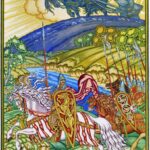 Mikula
Perun and Other Slavic Deities
Perun is not alone in the Slavic pantheon; he is often compared and contrasted with other deities. One of the most notable is Veles, the god of the underworld and cattle. Veles is often seen as Perun’s adversary, representing chaos and the earth’s fertility. This duality between Perun and Veles reflects the balance of nature, where order and chaos coexist. Their relationship is often depicted in myths where Perun battles Veles, symbolizing the eternal struggle between good and evil.
Another important deity is Rod, the god of family and creation. Rod is seen as the progenitor of all beings and the source of life. While Perun embodies strength and power, Rod represents the nurturing aspect of life. Together, these deities illustrate the complexity of Slavic beliefs, where strength, nurturing, and chaos are all essential components of existence.
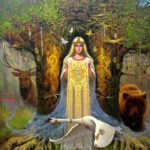 Mati Syra Zemlya
Worship and Rituals
The worship of Perun was deeply ingrained in the daily lives of the ancient Slavs. Rituals dedicated to him were often held during thunderstorms, as people believed that these natural events were manifestations of his power. Offerings, such as food, drink, and even livestock, were made to appease him and seek his favor. These rituals were not only acts of devotion but also a way to connect with the divine forces that governed their lives.
One of the most significant festivals dedicated to Perun was the Perun’s Day, celebrated during the summer solstice. This festival marked the height of the agricultural season, and it was a time for the community to come together in celebration. People would gather to perform traditional dances, sing songs, and make offerings to Perun. The festivities included lighting bonfires, symbolizing the sun’s power, and invoking Perun’s blessings for a bountiful harvest.
Perun in Folklore and Literature
Perun’s influence extends beyond rituals and worship; he is also a prominent figure in Slavic folklore and literature. Many tales depict him as a heroic figure who defends humanity against malevolent forces. These stories often illustrate his bravery and strength, serving as moral lessons for the community. In these narratives, Perun is portrayed as a protector who intervenes in times of crisis, reinforcing the belief that the gods watch over the people.
In addition to oral traditions, Perun appears in various written texts. The Primary Chronicle, a historical record of the Kievan Rus, mentions Perun as one of the principal deities worshipped by the Slavs. This document provides insight into how the ancient Slavs viewed their gods and the importance of these deities in their lives. The chronicles serve as a testament to Perun’s enduring legacy and the cultural significance he held in Slavic society.
Modern Interpretations of Perun
Today, Perun remains a figure of interest in modern Slavic neopaganism and folklore studies. Many contemporary practitioners draw inspiration from ancient rituals and beliefs, seeking to revive the worship of Slavic deities. Perun, as a symbol of strength and protection, is often invoked in rituals aimed at personal empowerment and resilience. This revival reflects a growing interest in indigenous beliefs and a desire to reconnect with ancestral traditions.
In popular culture, Perun has also found his place in various forms of media, including literature, films, and video games. His character is often depicted as a powerful warrior, embodying the traits associated with him in ancient mythology. These modern interpretations highlight the timeless nature of Perun’s story, as his attributes resonate with contemporary audiences seeking heroes and figures of strength.
Perun’s role in Slavic mythology is multifaceted and rich with meaning. As a god of thunder, lightning, and warfare, he embodies the power of nature and the values of ancient Slavic society. His attributes, symbols, and relationships with other deities illustrate the complexity of the Slavic pantheon and the cultural significance of these beliefs. Through rituals, folklore, and modern interpretations, Perun’s legacy continues to inspire and resonate with people today.