 WORLD
WORLD
Polynesian mythology
Articles about Polynesian mythology within Oceania.
Last articles
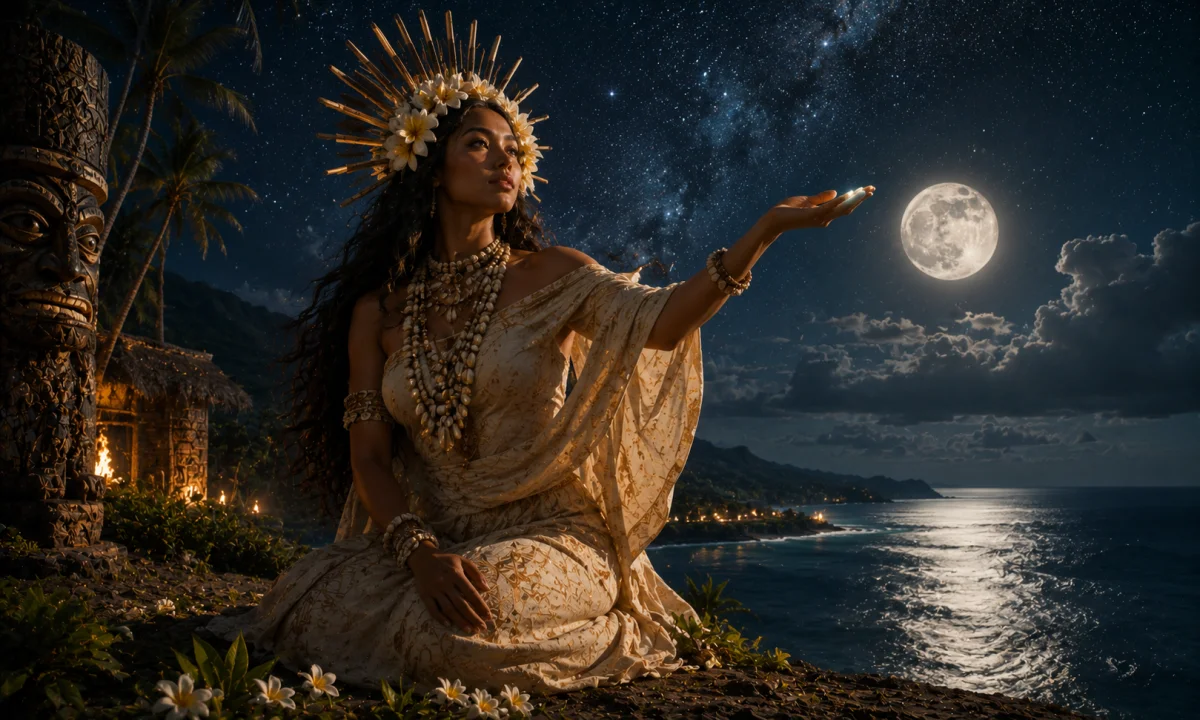
Hina
Hina is a name used for several important female figures in Polynesian traditions, especially in eastern Polynesia. Depending on the island, language and tradition, Hina may be associated with the moon, women’s work, wea…
Hoa-tapu
Hoa-tapu is an obscure name associated with Polynesian mythology, but it does not identify a universally recognised god or legendary being across Polynesia. In modern lists of mythological figures, Hoa-tapu is sometimes …
Ilaheva
Ilaheva is a little-known name associated with Polynesian mythology, but its identity and traditional role are not securely established. Some modern mythology references describe Ilaheva as a female sea deity or as a com…
Kai-n-tiku-aba
Kai-n-tiku-aba is a little-known name associated with the traditional mythology of the Gilbert Islands, now the Republic of Kiribati in the central Pacific. The figure is sometimes placed under the broad heading of Polyn…
Laufakanaa
Laufakanaa is an obscure name associated in some modern reference lists with Polynesian mythology. Unlike widely attested figures such as Māui, Tangaroa, Tāne, or Tagaloa, Laufakanaa does not have a securely documented m…
Lo-au
Lo-au, more commonly written Loʻau or Loau, is a traditional Polynesian figure associated especially with Tonga. He is generally described not as a universal Polynesian god but as a culture hero, priest, lawgiver, or anc…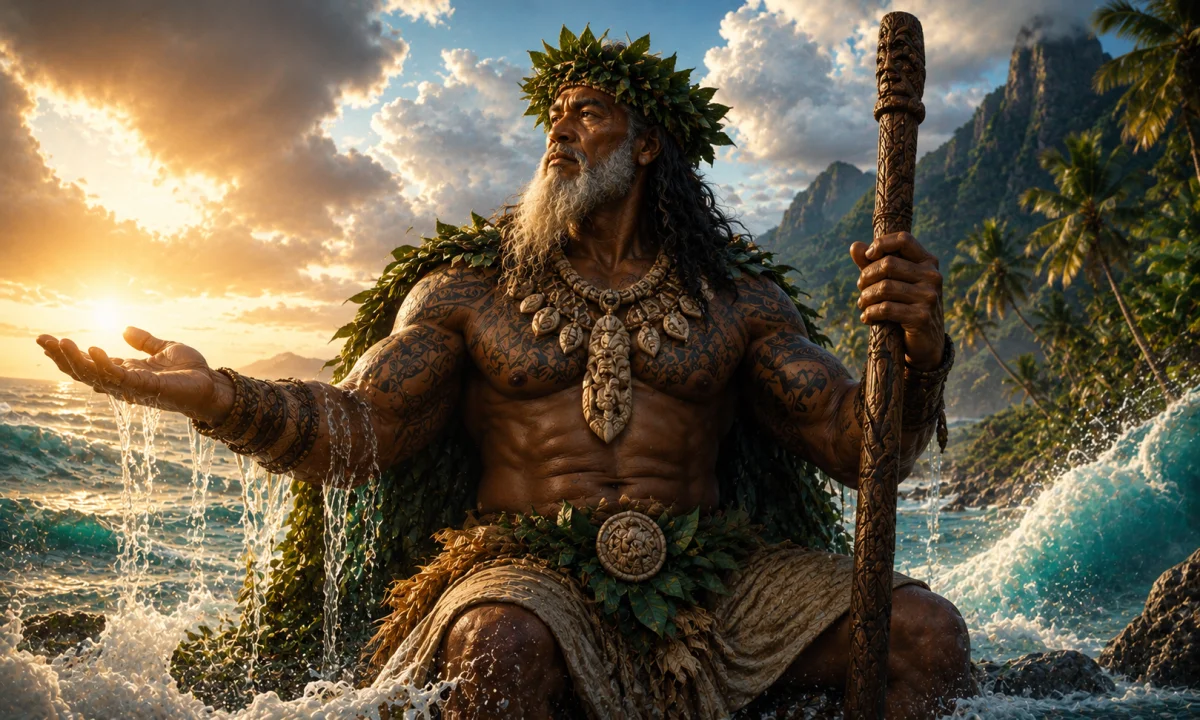
Tagaloa
Tagaloa is a major deity in several Polynesian religious traditions, especially those of Samoa and neighbouring island societies. The name is also written Tangaloa, Tāngaloa, or in related forms such as Tahitian Ta'aroa,…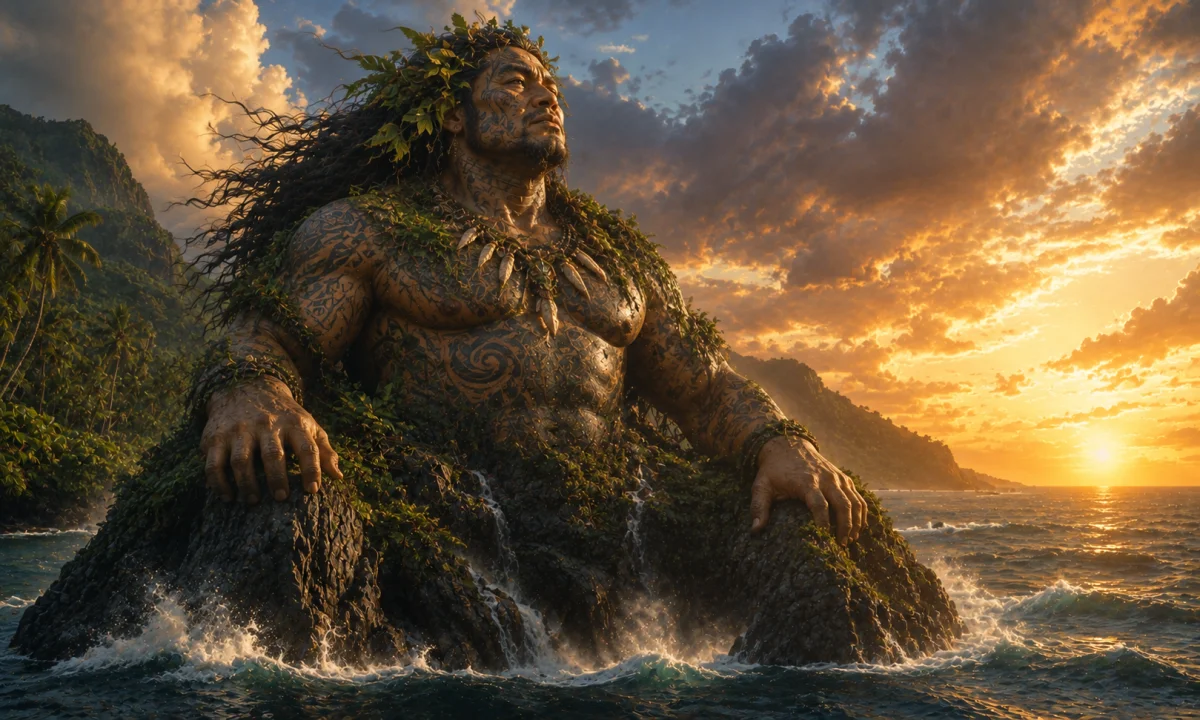
Mahu-fatu-rau
Mahu-fatu-rau is an obscure name associated with Polynesian religious tradition. It is preserved mainly in older records of Polynesian mythology rather than in a widely circulated body of traditional stories. The survivi…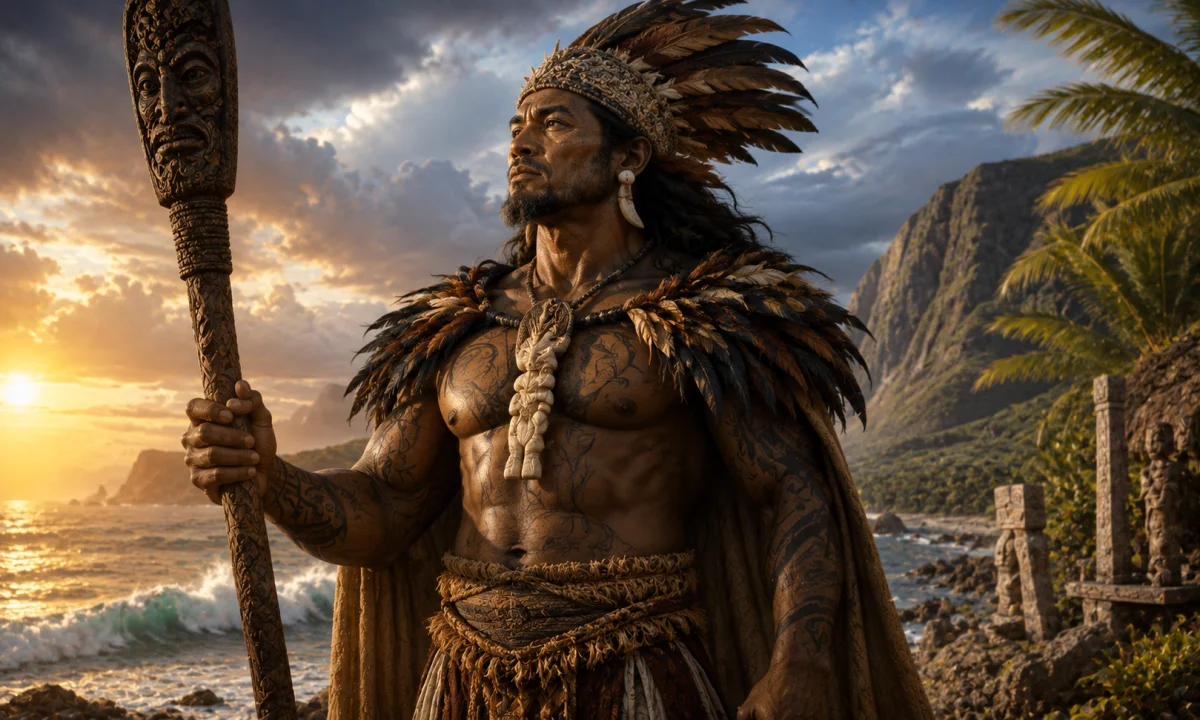
Makemake
Makemake is one of the principal deities of Rapa Nui, the Polynesian culture of Easter Island in the southeastern Pacific. In traditional accounts, he is associated with creation, fertility, the sea, and the birds whose …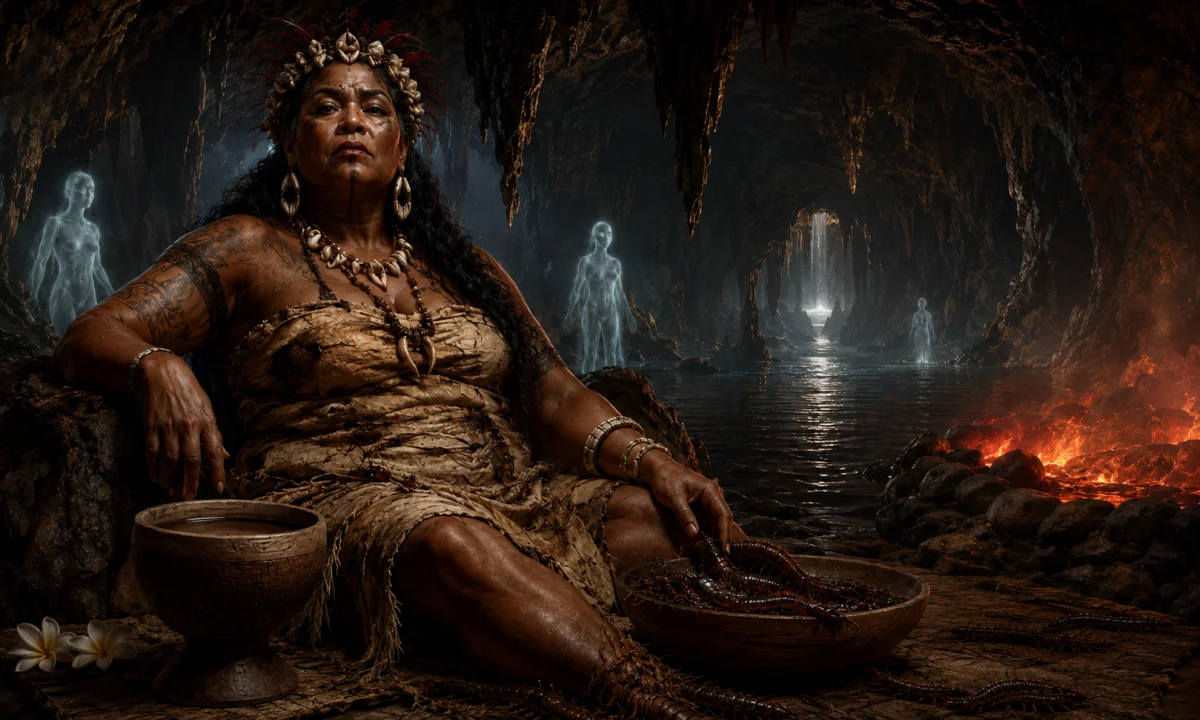
Miru
Miru is a name associated chiefly with the underworld in traditions from eastern Polynesia, especially the island of Mangaia in the Cook Islands. In these traditions, Miru is a powerful female being who rules or inhabits…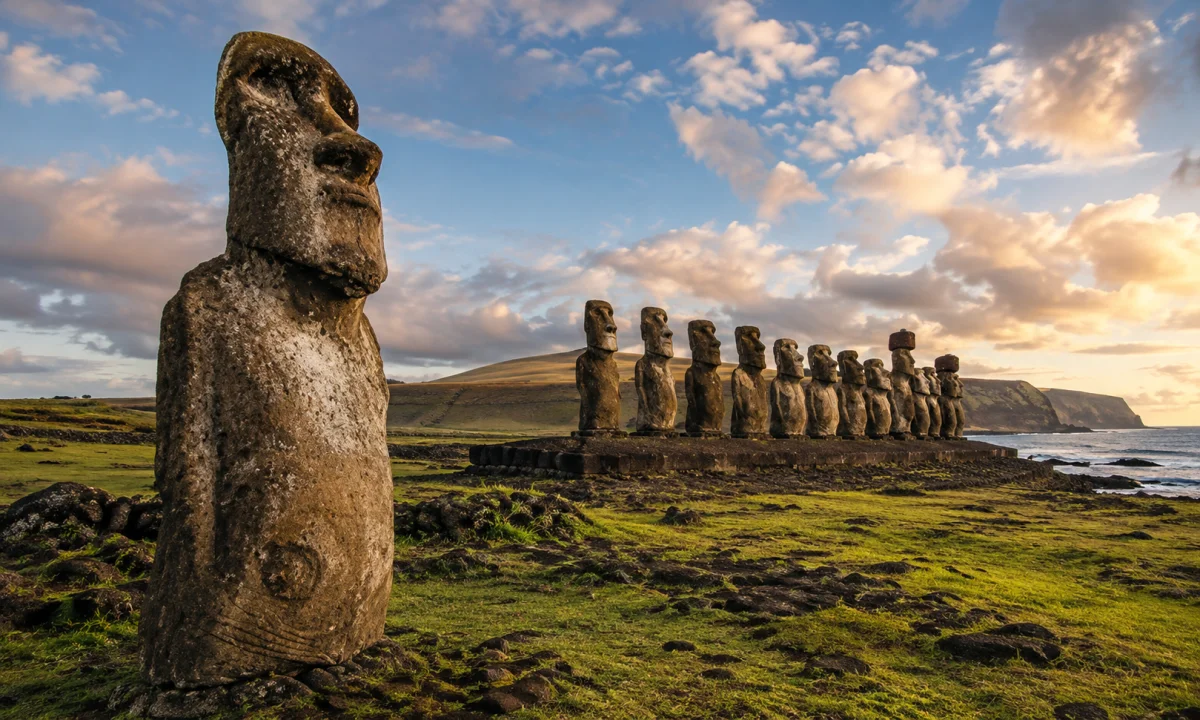
Moai
Moai are the monumental stone figures created by the people of Rapa Nui, the Polynesian island more commonly known in English as Easter Island. They are among the most recognisable monuments in the Pacific, but they are …
Moko
Moko is a name associated with a giant lizard-like being in Māori and wider Polynesian folklore. It is generally described as a taniwha or other supernatural reptile connected with water, although accounts differ and do …Polynesian mythology: myths, traditions and legends
Polynesian mythology encompasses the sacred narratives, genealogies, divine beings, ancestral histories and ritual traditions developed across the many island societies of Polynesia. These traditions belong to communities spread across a vast region of the Pacific, including Tonga, Samoa, Hawaiʻi, Aotearoa New Zealand, Tahiti, the Cook Islands, the Marquesas, Rapa Nui and numerous smaller island groups. They share linguistic and cultural relationships created through ancient voyaging and settlement, but they do not form one uniform mythology or a single pantheon. Names, genealogies, divine roles and creation accounts vary significantly between islands and communities.
The academic term mythology can describe culturally authoritative narratives concerning creation, ancestors, gods and the ordering of society. It does not imply that these traditions are merely fictional. Polynesian narratives are closely connected with genealogy, land, ocean, political authority, navigation, ritual and community identity. Many remain important within living cultures, even where Christianity, colonial rule and modern national institutions have transformed their interpretation and performance.
Polynesia and its cultural boundaries
Polynesia is commonly understood as a broad triangular region of the Pacific whose outer points are Hawaiʻi in the north, Rapa Nui in the east and Aotearoa New Zealand in the southwest. This geographical model is useful, but it should not suggest that every society within the region developed in isolation or shared exactly the same traditions.
Polynesian languages belong to the Austronesian language family and retain many related words for gods, ancestors, sacred power, social restriction and the natural world. Linguistic relationships help identify patterns inherited from earlier communities, but similar names do not guarantee identical divine figures.
Western Polynesian societies such as Tonga and Samoa maintained long histories of interaction with Fiji and other parts of Oceania. Eastern Polynesian communities developed their own networks connecting archipelagos separated by great distances. Voyaging, intermarriage, warfare and exchange allowed stories and ritual concepts to travel, while local histories gave them new meanings.
Oral transmission and sacred knowledge
Before the introduction of alphabetic writing, Polynesian traditions were preserved through oral performance, genealogy, chant, dance, ritual speech and visual forms. Skilled specialists memorised long sequences of names and events that established relationships among gods, ancestors, rulers and places.
Oral transmission was not casual or unstructured. Particular chants and genealogies could belong to chiefly families, priestly specialists or recognised custodians. Knowledge might be public, restricted or appropriate only to specific ceremonial occasions.
Variation between versions can reflect local authority, political history or the needs of performance. Two communities may preserve different genealogies for related figures because each tradition explains its own ancestry and rights to land or leadership.
Many written records were produced by missionaries, colonial officials, travellers and later Indigenous scholars after major religious and political change. These collections preserve valuable material but may omit ritual context, simplify language or reorganise narratives according to European ideas of mythology and religion.
Creation and the emergence of the world
Polynesian creation traditions include several broad patterns. Some describe the world emerging gradually from darkness, emptiness or a sequence of generative states. Others begin with divine ancestors whose unions produce the sky, earth, sea and living beings.
In Māori tradition, Ranginui, the sky father, and Papatūānuku, the earth mother, are joined together while their children remain confined in darkness. Their children debate how to create space and eventually separate the parents, allowing light to enter the world. Tāne plays the decisive role in many versions, while Tāwhirimātea, associated with winds and storms, opposes the separation.
Related ideas concerning sky and earth appear in other Polynesian traditions, but names and episodes differ. The similarity may reflect shared cultural inheritance, while the individual narratives belong to specific communities and languages.
Creation is not always represented as one completed event. Genealogical chants may trace existence through successive stages, linking cosmic formation with the ancestry of plants, animals and humans. The world is understood through relationships of descent rather than through a strict division between natural and supernatural categories.
Genealogy and the ordering of existence
Genealogy is fundamental to Polynesian mythology. Divine beings, chiefs, families, landscapes and living species may be connected through lines of descent. Genealogy establishes identity, authority and responsibility rather than serving only as a record of biological ancestry.
A chief’s status could depend upon descent from revered ancestors or gods. Competing genealogies might support different political claims, and preserving them accurately could be a matter of considerable importance.
Genealogical relationships also connect humans with the wider environment. Plants, animals, winds, stars and islands may belong within extended networks of kinship. This does not mean that every Polynesian society held one identical belief that all natural phenomena were literal relatives, but relational ancestry is a recurring and influential principle.
Atua and divine beings
The term atua, with related forms across Polynesian languages, can refer broadly to gods, divine beings, ancestral powers or spiritually potent presences. Translating every atua as a god in the classical European sense can be misleading because their identities and levels of authority vary.
Some atua possess wide regional importance and complex genealogies. Others are associated with a particular family, profession, island, place or natural process. A being may be approached through offerings and ritual without functioning as a universal ruler over one clearly defined domain.
Divine figures can be creative, protective and dangerous at the same time. Their behaviour is not always governed by a simple opposition between good and evil. Conflict, desire, rivalry and transformation form part of the sacred history through which the present world emerged.
Tangaroa and the ocean
Tangaroa, known through related names such as Taʻaroa, Kanaloa and Tagaloa, appears across much of Polynesia. His roles vary greatly. He may be associated with the sea, fish, creation, craftsmanship, fertility or divine ancestry.
In some traditions, Tangaroa is a major creator or primordial deity. In others, he belongs among a larger group of divine siblings and has particular authority over ocean life. The Hawaiian Kanaloa developed within a religious system distinct from Tahitian, Māori or Samoan traditions.
The widespread presence of related names reflects historical linguistic and cultural connections, but it does not justify combining every version into one biography. Tangaroa is not simply a universal Polynesian sea god with identical myths throughout the Pacific.
Tāne and the living world
Tāne is especially prominent in Māori and other eastern Polynesian traditions. He is associated with forests, birds, growth, light and the separation of earth and sky. In some accounts, he also participates in the creation or formation of humanity.
Māori narratives describe Tāne searching for the female element necessary to produce human life. The resulting accounts vary among tribal traditions and may connect the first woman with earth, sacred place and divine craftsmanship.
Tāne’s association with forests reflects the practical and spiritual importance of trees, birds and timber. Canoes, houses, weapons and tools depended upon forest resources, and entering or using the forest could involve appropriate ritual conduct.
Tū and conflict
Tū, or Tūmatauenga in Māori tradition, is connected with human activity, conflict and warfare. After the separation of the sky and earth, he opposes or confronts his divine brothers and establishes relationships that help explain human authority over other forms of life.
In Māori narratives, Tū’s descendants consume the children of his brothers through fishing, hunting and cultivation. This provides a sacred explanation for human use of animals and plants while preserving the memory that these beings remain connected through kinship.
Related forms of Tū appear elsewhere in Polynesia, but their roles differ. Modern descriptions that identify him only as a war god simplify a figure associated more broadly with human action, courage and social power.
Māui and the culture hero
Māui is one of the most widely recognised Polynesian figures. Stories about him are known across many islands, but his genealogy, companions and achievements vary. He is a culture hero, trickster and transformer whose intelligence repeatedly challenges the limits imposed upon humanity.
Māui is often credited with fishing up islands from the sea. In different traditions, the islands, fishing hook and circumstances change. The story connects land formation with voyaging, fishing knowledge and ancestral identity rather than serving as one universal geological explanation.
He also slows or captures the sun so that daylight lasts long enough for human work. Some traditions describe him obtaining fire from a divine or ancestral keeper and passing it to humanity.
In a major Māori narrative, Māui attempts to overcome death by entering the body of Hine-nui-te-pō, the powerful woman associated with night and death. His plan fails when a bird laughs and awakens her, explaining why humans remain mortal. Other Polynesian traditions preserve different accounts of Māui’s death or do not include this episode.
Hina and varied female identities
Hina is a widespread name associated with numerous female figures across Polynesia. These figures may be connected with the moon, weaving, water, fertility, beauty or relationships with Māui and other heroes.
The recurrence of the name does not mean that every Hina is one goddess with a single biography. In some narratives, Hina is Māui’s sister; in others, his mother, wife or an unrelated woman. Local traditions must be examined separately.
Stories may describe Hina travelling to the moon, escaping an unwanted relationship, obtaining knowledge or interacting with an eel whose death produces the first coconut. Even when similar motifs appear across islands, their characters and meanings can differ.
Pele and Hawaiian sacred tradition
Pele is a major figure in Hawaiian tradition associated with volcanic fire, lava, creation and the powerful transformation of land. She belongs to a family of divine beings and is connected with migration narratives that lead ultimately to Hawaiʻi.
Her stories frequently involve rivalry, desire, family conflict and the establishment of sacred places. The volcanic landscape is not merely a symbol of Pele; eruptions and lava flows are understood within traditions of her presence and activity.
Pele remains significant within living Hawaiian culture and should not be treated only as a fictional volcano goddess. Modern tourism and entertainment often reduce her to anger, jealousy or spectacular destruction, overlooking genealogy, place and religious responsibility.
Rongo, Lono and agricultural abundance
Related figures known as Rongo, Lono and through similar names are associated in several Polynesian traditions with agriculture, cultivated food, rain, peace, ritual and seasonal abundance. Their exact roles vary widely.
In Hawaiʻi, Lono is connected with rain, fertility and the Makahiki season, a period involving tribute, games, ritual movement and restrictions on warfare. In Māori tradition, Rongo is strongly associated with cultivated foods and peaceful activity.
These similarities reflect related religious concepts, but the Hawaiian Makahiki cannot be used to reconstruct every tradition concerning Rongo elsewhere. Ritual calendars developed according to local crops, political institutions and environments.
Mana and sacred effectiveness
Mana is a Polynesian concept referring broadly to authority, prestige, effectiveness and spiritually charged power. It can belong to gods, ancestors, people, words, objects and places. Mana is not simply magical energy that individuals collect like a physical substance.
A chief’s mana may derive from genealogy, achievement, ritual status and the recognition of the community. Objects associated with important people can also carry significance because of their relationships and histories.
Mana may increase through successful action or be damaged through defeat, misconduct or violation of sacred restrictions. Its meaning varies across languages and societies, so one definition cannot capture every use.
Tapu and restricted relationships
The word tapu, known in English through the form taboo, refers to conditions of sacred restriction, prohibition or separation. A person, object, place or period may become tapu because of divine presence, rank, danger, death or ritual activity.
Tapu is not merely a list of irrational social prohibitions. It regulates relationships with powerful conditions and helps protect sacred people, resources and ceremonial processes. Violating tapu may produce spiritual, social or political consequences.
Restrictions varied according to community and context. Some were temporary, while others were connected with inherited status. The balance between tapu and ordinary accessibility was maintained through ritual procedures and recognised authority.
Ancestors and the dead
Ancestors occupy an important position in many Polynesian traditions. They establish genealogical identity, land rights and political legitimacy and may remain active in the affairs of descendants.
The dead can become protective, dangerous or distant depending on circumstances, status and ritual treatment. Burial places may possess enduring sacred importance, particularly when connected with chiefs or founding ancestors.
Not every spirit of the dead belongs to one uniform category. Some traditions distinguish honoured ancestors from restless, wandering or harmful presences. Christianity later transformed many interpretations of death while older relationships with genealogy and place continued.
Spirits, guardians and nonhuman beings
Polynesian traditions include many beings associated with forests, reefs, caves, night, winds and particular localities. Their names and characteristics differ between islands. Some protect families or places, while others punish disrespect or endanger travellers.
Māori traditions include beings described through terms such as taniwha, which may inhabit water, caves or dangerous landscape features. A taniwha can threaten people, protect a community or act as an ancestral guardian. Calling every taniwha a monster or dragon erases this variation.
Hawaiian traditions include moʻo, powerful reptilian or water-associated beings that may appear as lizards, guardians or transformed women. Their identity cannot be reduced to a direct equivalent of European dragons.
Local beings frequently encode knowledge about dangerous currents, cliffs, caves or resource areas. Their narratives connect supernatural authority with environmental awareness and community memory.
Navigation, stars and ancestral voyaging
The settlement of Polynesia required sophisticated knowledge of winds, ocean swells, stars, birds, clouds and seasonal conditions. Voyaging traditions are therefore closely connected with ancestry, leadership and sacred knowledge.
Founding ancestors are often remembered as navigators who travelled between islands, discovered land or established communities. These narratives may preserve historical memory alongside supernatural events and genealogical claims.
Modern claims that Polynesian navigators travelled by instinct alone seriously underestimate their expertise. Navigation involved training, observation and the transmission of specialised knowledge.
Experimental voyaging and cultural revitalisation have demonstrated the effectiveness of non-instrument navigation while restoring traditions disrupted by colonial rule. These modern projects are renewals of Indigenous knowledge rather than evidence that every old migration narrative should be read as a literal logbook.
Sacred places and ritual structures
Religious ceremonies took place at sites whose forms and names varied across Polynesia. Marae and related terms can refer to ceremonial spaces associated with gods, ancestors, chiefs and community gatherings. In Aotearoa New Zealand, the modern marae is also a central social and cultural complex with its own historical development.
Temples, platforms, carved images, stones and enclosed spaces could mark divine and ancestral presence. Rapa Nui is famous for monumental moai representing powerful ancestors, although their exact meanings and historical roles developed across time.
Archaeology provides evidence for construction, offerings and political organisation, but ritual meaning must be interpreted alongside oral traditions and Indigenous knowledge. Monumental forms should not be treated as mysterious achievements requiring external civilisations or supernatural technology.
Sacrifice and offerings
Polynesian ritual involved offerings of food, plants, animals, crafted objects and other valuables. Offerings expressed gratitude, obligation, request or the recognition of sacred authority.
Historical evidence indicates that human sacrifice occurred in some Polynesian societies under particular political and religious conditions. Its frequency and meaning varied and should not be generalised across the entire region.
European observers often highlighted sacrifice while ignoring the violence of colonial conquest and missionary suppression. Accurate treatment requires acknowledging the evidence without presenting Polynesian religion as defined by cruelty.
Christianity and religious transformation
Christian missionaries became influential across Polynesia from the late eighteenth and nineteenth centuries onward, although the timing and circumstances differed among islands. Conversion was connected with local political struggles, chiefly authority, literacy and colonial intervention.
Temples and sacred images were sometimes destroyed, ceremonies were prohibited and older gods were reclassified as demons or false deities. Missionaries also helped create written forms of Polynesian languages and recorded traditions, producing a complicated legacy of preservation and suppression.
Polynesian communities did not simply abandon one complete religion and adopt an unchanged European Christianity. Christian ideas were translated through local language, genealogy, leadership and existing concepts of sacred power.
Many communities today combine strong Christian identities with respect for ancestral narratives, customary values and sacred landscapes. These relationships differ across denominations, families and islands.
Colonial records and historical interpretation
Early European descriptions often misunderstood Polynesian religious categories. Writers used terms such as idol, priest, king and temple even when local concepts differed. They sometimes exaggerated practices to justify missionary intervention or colonial rule.
Later ethnographers collected extensive genealogies and narratives, but they worked after epidemics, depopulation, conversion and political disruption had altered community life. Some relied heavily on a small number of informants and presented one local version as representative of an entire island group.
Indigenous historians, language experts and cultural practitioners have challenged many of these interpretations. Their work emphasises correct names, community ownership and the inseparability of narrative from genealogy and place.
Modern representation and common misconceptions
Popular culture frequently combines Hawaiian, Māori, Samoan and Tahitian figures into one fictional Polynesian pantheon. Although these societies share historical connections, their traditions are not interchangeable.
Māui is often presented as one fixed demigod with a standard set of adventures. In reality, communities preserve different genealogies and stories, and some modern portrayals significantly alter his appearance and personality.
Another misconception treats mana as supernatural energy and tapu as a simple ban. Both concepts belong to complex systems of authority, relationship and sacred responsibility.
Polynesian mythology remains inseparable from the peoples, languages and oceanic landscapes through which it developed. Its creation narratives, ancestral genealogies and divine figures express histories of voyaging, settlement and adaptation while continuing to shape cultural identity, artistic practice and relationships with land and sea.