WORLD
WORLD
Ai-tupuai
Ai-tupuai is an obscure name associated with Polynesian supernatural tradition, but its identity is not securely established. English-language summaries sometimes present Ai-tupuai as a frightening spirit, monster or man-eating being. The surviving evidence does not support a single, universally accepted description, island origin or cycle of myths. The name may represent a local figure, a variant spelling, a transcription from an oral tradition, or a later classification that brought together details from different Polynesian cultures.
Origins and cultural setting
Polynesian mythology is not one unified system of belief. It includes the traditions of many island societies spread across a vast area of the Pacific, including the central and eastern Pacific, the western Polynesian islands and the marginal Polynesian communities of Melanesia and Micronesia. These societies shared some inherited religious concepts, names and narrative patterns, but each developed its own languages, genealogies, ritual practices and supernatural beings.
Traditional stories were usually transmitted orally. Knowledge could be preserved through genealogical recitation, ritual speech, chants, songs, place traditions and narratives told by specialists. Names and descriptions could therefore change when stories moved between islands or were recorded by outsiders. European visitors, missionaries and later folklorists also used different systems for representing Polynesian sounds. A single name might consequently appear in several forms, while similar names could be treated as though they referred to the same being.
Ai-tupuai belongs to this difficult area of Polynesian mythology. It is not comparable, in terms of documentation, with widely recorded figures such as Māui, Tangaroa, Tāne or Pele. There is no broadly recognized pan-Polynesian mythology in which Ai-tupuai has a fixed place, and no generally accepted traditional text gives a complete biography of the figure. Claims that assign Ai-tupuai a precise island, genealogy or set of powers should therefore be treated cautiously unless they can be connected to a specific local tradition.
The name Ai-tupuai
The spelling Ai-tupuai is not enough by itself to establish the figure’s origin. Polynesian languages are related, but words that resemble one another can have different meanings in different languages. Early records also frequently represented unfamiliar sounds inconsistently, especially when the recorder did not speak the local language.
The first element, Ai, may invite an interpretation connected with eating or devouring in some Polynesian languages. That apparent meaning has encouraged descriptions of Ai-tupuai as a consuming monster. It should not, however, be treated as a certain translation. The element may be part of a personal name, a title, a dialect form or a spelling that has been altered in transmission. Likewise, tupuai cannot be given one fixed meaning across all Polynesian languages without knowing the language and source in which the name occurs.
The name should also not automatically be connected with every Polynesian word resembling aitu, atua, tupua or tupua'i. These terms can refer to gods, spirits, ancestors, ghosts, demons, supernatural powers or other beings, depending on the society and context. Similar-looking vocabulary reflects historical relationships between Polynesian languages, but it does not prove that figures with related names are identical.
Identity and classification
Ai-tupuai is commonly treated in modern listings as a spirit or monster rather than as a major creator deity. Even that classification is provisional. Polynesian categories do not always match the divisions used in modern reference books. A being may be described as a god in one context, an ancestor or guardian in another, and a dangerous spirit in a third. The boundary between deity, ghost, ancestral presence and monstrous being was not necessarily fixed.
Some brief accounts characterize Ai-tupuai as an aggressive or predatory supernatural entity, sometimes using language such as “demon” or “man-eater.” These descriptions may preserve a genuine strand of folklore, but they are not supported by a large and consistent body of recorded narratives. In many cases, short catalogue entries repeat an earlier description without preserving the local story, pronunciation, ritual setting or name of the community from which it was taken.
For that reason, Ai-tupuai is best presented as an obscure and uncertainly documented Polynesian supernatural figure. It is safer to describe the traditional attribution as variable than to claim that the being had one universally recognized form.
Reported characteristics
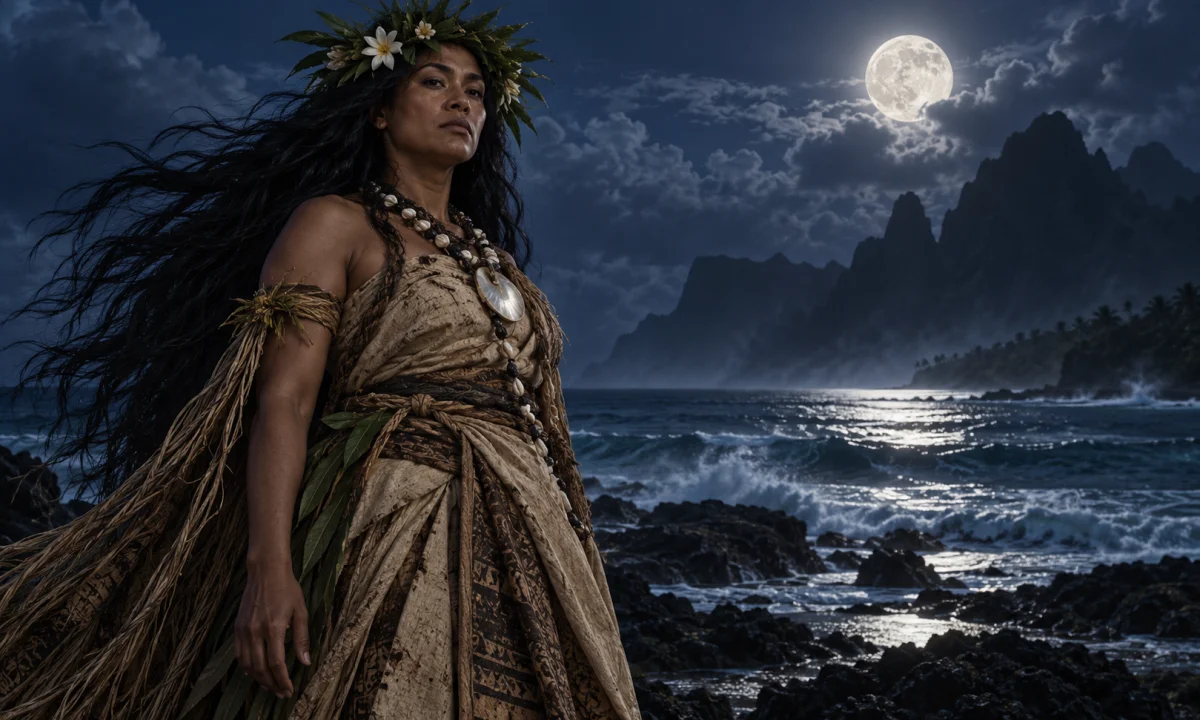
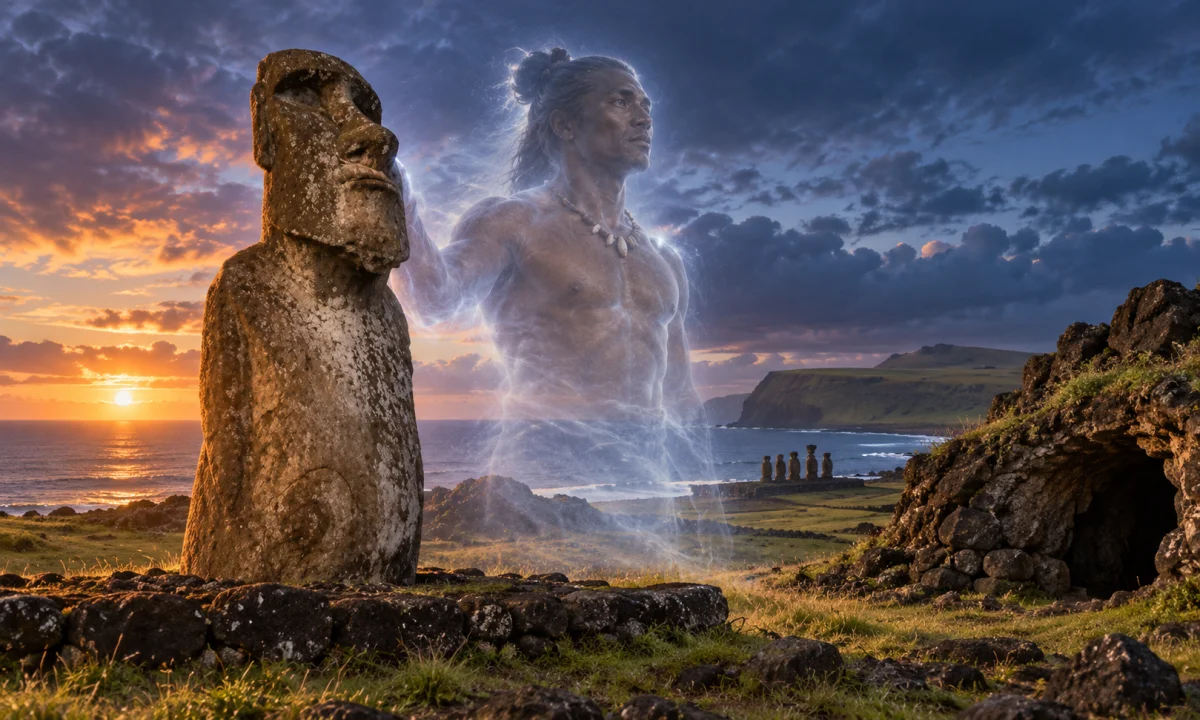
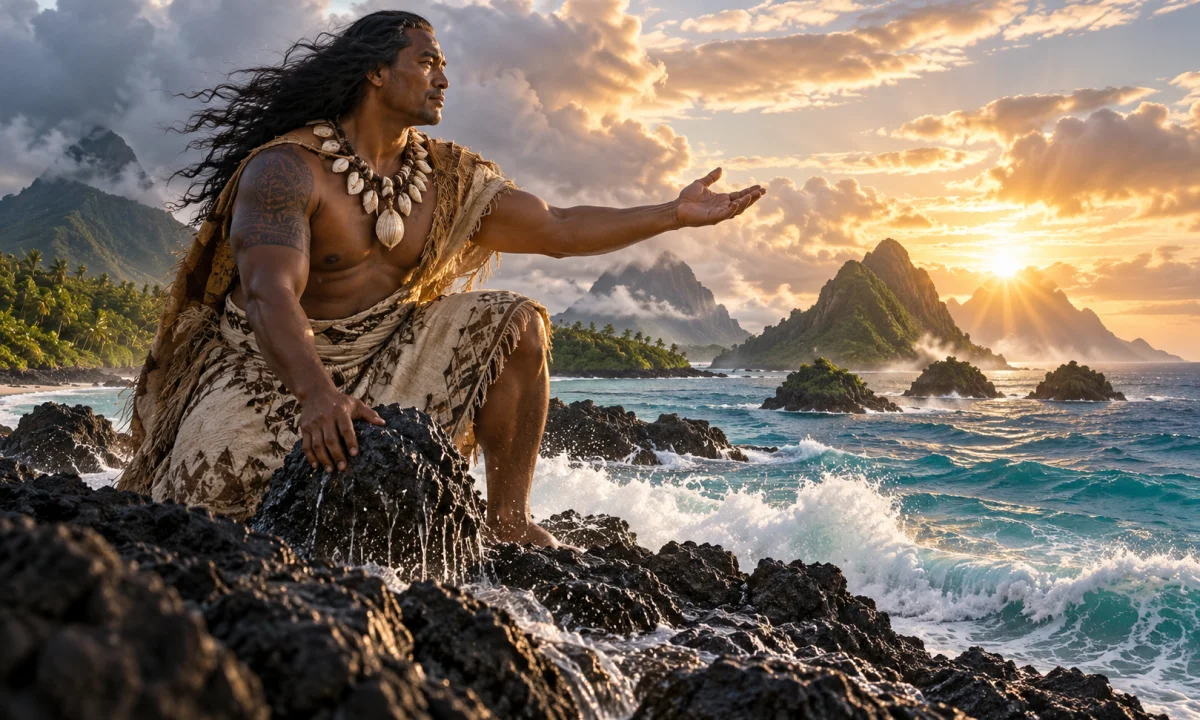
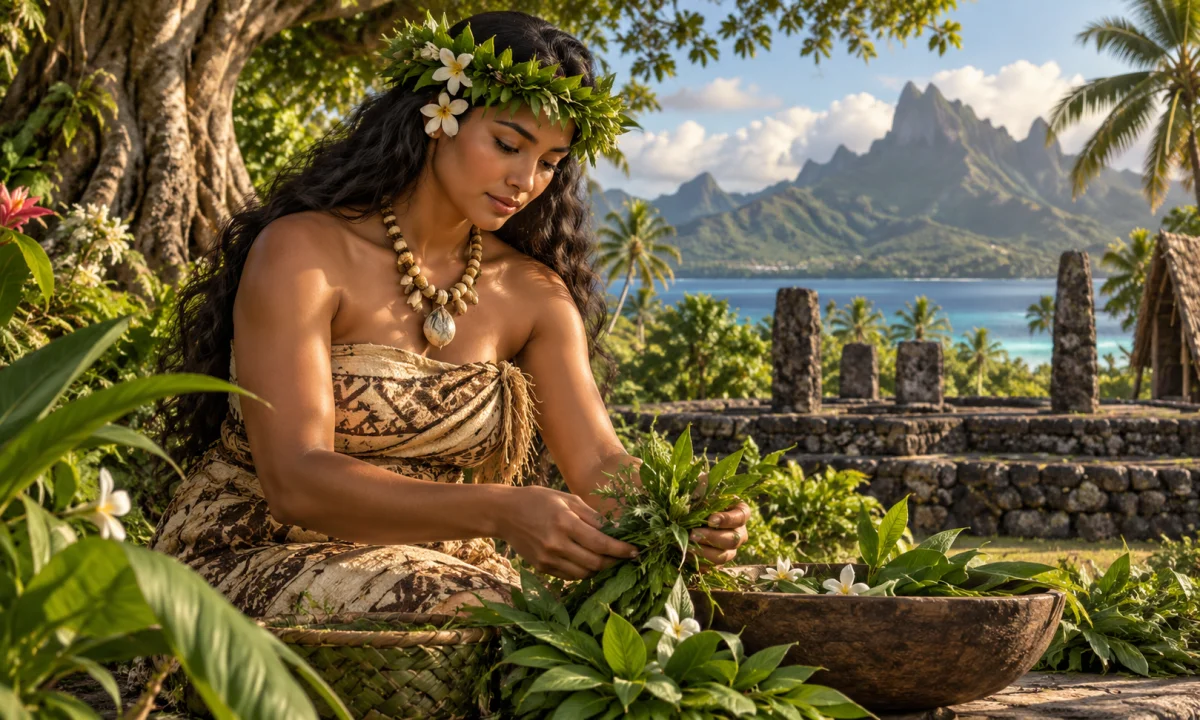
Where Ai-tupuai is described as a dangerous spirit or monster, the emphasis usually falls on threat rather than on a detailed physical appearance. There is no dependable, standard description establishing whether the figure was human-shaped, animal-shaped, gigantic, aquatic or capable of changing form. Illustrations that give Ai-tupuai a particular body may therefore represent modern artistic invention rather than a documented traditional image.
The association with devouring is also uncertain in scope. It may reflect:
- a traditional story about a being that attacks or consumes people;
- an interpretation of the name based on a word meaning “eat” or “food”;
- a translation choice made by an early recorder;
- or a later summary that turned a less specific supernatural figure into a monster.
There is no secure evidence for assigning Ai-tupuai a standard weapon, sacred animal, residence, family relationship or particular natural phenomenon. Descriptions that provide such details without identifying a local source should not be treated as established features of the tradition.
Relationship to Polynesian spirit traditions
The idea of a dangerous supernatural being is fully compatible with Polynesian religious and folkloric traditions, even when the specific identity of Ai-tupuai remains unclear. Many Polynesian societies recognized beings associated with death, wilderness, the sea, dangerous places, sickness, taboo violations or the boundary between the human and divine worlds.
In several Polynesian languages, terms related to aitu are used for spirits, ghosts or supernatural beings. The meaning varies considerably. An aitu might be hostile, but it might also be an ancestor, a guardian or a being associated with a particular locality. Similarly, terms related to atua often refer to gods or powerful spiritual beings, although translations such as “god” and “spirit” do not always capture the full local meaning.
These wider concepts provide useful cultural context, but they do not prove that Ai-tupuai was an aitu in the technical sense of any one island society. Nor should a generic account of Polynesian spirits be mistaken for a specific Ai-tupuai myth. The figure’s uncertain documentation makes that distinction especially important.
Stories and variants
No single, widely attested narrative cycle of Ai-tupuai has survived in the standard English record. There is no securely established account of a birth, defeat, marriage, migration, rivalry with a named hero or role in the creation of the world. This absence does not demonstrate that no stories once existed. Oral traditions can be lost, preserved only in local languages or recorded without the name being connected to the narrative. It does mean that later retellings should not be presented as though they belonged to a universally shared Polynesian canon.
Variation may have arisen at several stages. A local name could have been written down by different observers, translated according to a mistaken word division or associated with a familiar category such as “devil” or “ogre.” A compiler working from short reports might then arrange the name beside beings from unrelated islands. Later websites and popular books can repeat that arrangement until it appears to be an ancient, unified tradition.
It is also possible that Ai-tupuai represents a localized being whose importance was limited to one community or a small group of communities. Local supernatural figures are often less visible in general histories than major gods whose names appear in genealogies and creation narratives. Their relative obscurity should not be taken as evidence that they were unimportant to the people who knew their stories.
Religious and folkloric significance
If the monster interpretation reflects a genuine traditional element, Ai-tupuai may be understood within a wider pattern of stories about dangerous beings that occupy the margins of settled life. Such figures can express the risks of travelling, entering forests, crossing open water, breaking prohibitions or encountering the dead. They may also help explain why particular places, times or activities required caution.
In Polynesian societies, supernatural narratives were not necessarily “myths” in the narrow modern sense of imaginary tales. They could be connected with ancestry, land, ritual authority and practical knowledge. A story about a threatening being might preserve a warning about a reef, cave, valley or stretch of sea. It might also reinforce social rules concerning hospitality, respect for sacred places or conduct toward the dead.
However, no specific moral lesson can be assigned to Ai-tupuai without a reliable local narrative. It would be speculative to claim that the figure always symbolized greed, death, cannibalism, the ocean or a particular social taboo. Those interpretations may be plausible for some monster traditions, but they are not demonstrated attributes of Ai-tupuai itself.
Distinguishing Ai-tupuai from similar names
Confusion is particularly likely because Polynesian supernatural vocabulary contains many related-looking forms. Ai-tupuai should not automatically be identified with an aitu, atua, tupua or other spirit simply because the names resemble one another. These words can overlap in translation while differing in pronunciation, grammar and religious meaning.
The name should also be kept distinct from place names that resemble Tupuai or Tubuai. Polynesia contains many names that have been spelled in several ways by outsiders. A geographical similarity does not establish that Ai-tupuai was the guardian of, or a being originating from, a particular island.
Nor is Ai-tupuai interchangeable with famous Polynesian monsters or ogres from better-documented traditions. Māui’s opponents, Māori taniwha, Hawaiian moʻo and various island-specific ogres belong to distinct narrative and cultural contexts. Grouping them together merely because they are dangerous supernatural beings obscures the differences between local traditions.
Modern reception
Ai-tupuai has little established presence in mainstream film, television, games or popular fiction. When the name appears in modern mythology lists, it is often presented in a compressed form: a Polynesian monster, demon or eater of people. Such descriptions can be useful as signs of how the figure has been classified by modern writers, but they should not be confused with a complete traditional account.
Contemporary illustrations and fictional expansions may give Ai-tupuai a dramatic body, elaborate powers or connections with famous Polynesian gods. Unless those features are tied to a specific traditional record, they belong to modern adaptation rather than securely documented mythology. A responsible portrayal should preserve the uncertainty surrounding the name and avoid presenting a speculative reconstruction as an established cultural fact.
Ai-tupuai is therefore most accurately understood as a poorly documented and variably described name within the broad field of Polynesian supernatural tradition. The figure may preserve memories of a local monster or spirit, but the available evidence does not justify a fixed biography, uniform appearance or single island-wide interpretation.