WORLD

Nunuso’mikeeqone’im
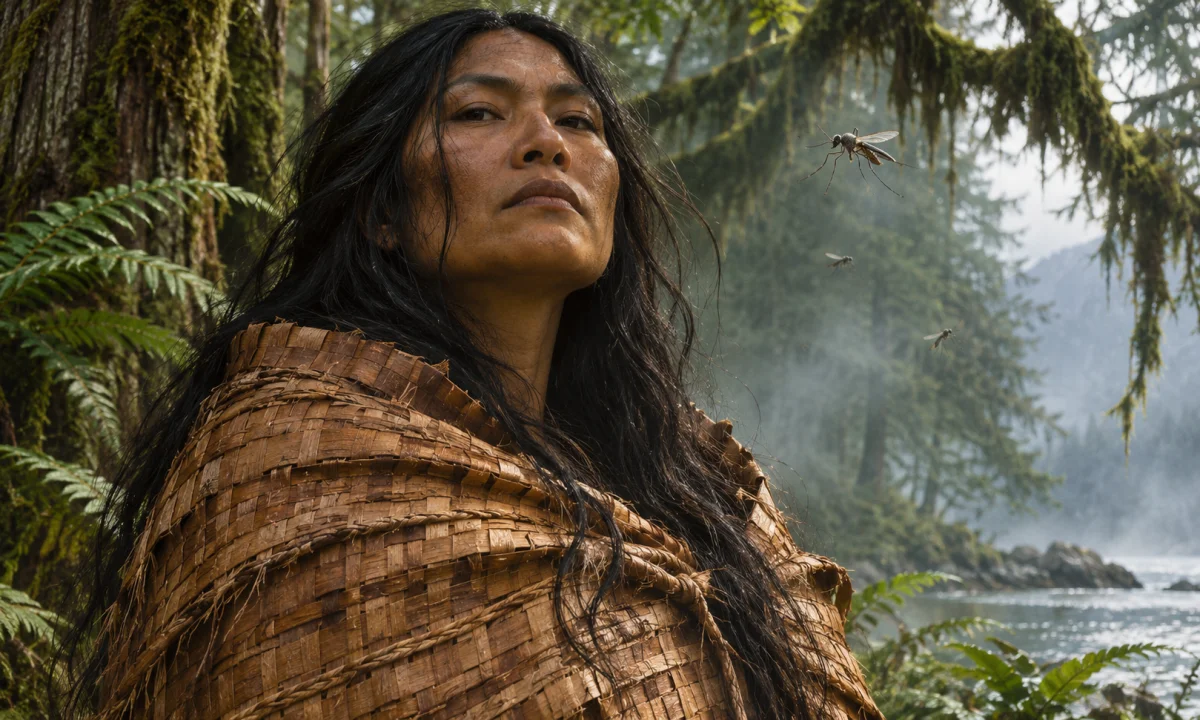
Nunuso’mikeeqone’im is a name associated with the Mi’kmaq tradition of northeastern North America. It is generally used for small supernatural beings, often described in English as “little people” or diminutive spirits. Information about them is limited in widely available written sources, and the spelling, translation, and details of their character can vary. Nunuso’mikeeqone’im should therefore be understood within Mi’kmaq cultural tradition rather than treated as a universal Native American version of elves, fairies, or dwarfs.
Mi’kmaq cultural setting
The Mi’kmaq are an Indigenous people of the northeastern woodlands and Atlantic region. Their traditional homeland, often called Mi’kma’ki, includes present-day Nova Scotia, New Brunswick, Prince Edward Island, parts of Newfoundland and Labrador, and the Gaspé Peninsula of Quebec. Mi’kmaq communities also exist elsewhere, including in Maine and other parts of Canada.
Mi’kmaq traditional knowledge developed through oral teaching, ceremonial practice, family history, observation of the natural world, and relationships with particular places. Stories about animals, powerful beings, ancestral figures, and unusual spirits were not necessarily separated into the modern categories of “myth,” “legend,” and “fairy tale.” A story could teach proper conduct, explain a dangerous place, preserve historical memory, or describe an encounter with a being understood to have real spiritual significance.
For that reason, descriptions of Nunuso’mikeeqone’im should not be detached from the wider Mi’kmaq understanding that forests, waters, rocks, animals, and other parts of the landscape may possess agency or spiritual importance. The existence of small supernatural beings is not simply a decorative feature of a fantasy world. It belongs to a cultural framework in which human beings are expected to behave carefully toward the nonhuman world.
Name and identity
The form Nunuso’mikeeqone’im is a Mi’kmaq-language name or transcription. Mi’kmaq has been written in more than one orthographic system, and English-language publications may represent the same or a closely related word with different punctuation, apostrophes, vowel sequences, or endings. Spellings such as Nunuso’mkeeqone’im may therefore appear in reference material. The differences should not automatically be taken as evidence for different beings.
The name is commonly glossed in English as referring to little people, although an exact translation may depend on the form being cited and on the source’s treatment of Mi’kmaq grammar. The plural ending in the recorded form suggests that the name refers to a group rather than to one individually named character. A secure, universally accepted English translation and a single standardized spelling are not always available.
It is also important not to confuse Nunuso’mikeeqone’im with every other Mi’kmaq account of small or hidden beings. Indigenous traditions often contain several kinds of supernatural figures, and similar English descriptions can conceal important differences in language, behaviour, and cultural meaning. A “little person” in a translation may be an approximate description rather than the official name of a single species.
Appearance and nature
Available descriptions generally present Nunuso’mikeeqone’im as beings of small stature. Their reduced size is the most consistent feature attached to the English expression “little people.” Beyond that basic characteristic, accounts are not sufficiently uniform to establish one fixed appearance. Some retellings give them a human-like form, while others emphasize their hidden or elusive nature rather than describing their bodies in detail.
They are best understood as spiritual or supernatural inhabitants of the landscape, not as an ordinary human population concealed in the woods. Their small size may make them difficult to see, but invisibility or magical disappearance should not be assumed in every tradition. Likewise, modern illustrations sometimes give such beings pointed ears, European fairy clothing, wings, or other fantasy features that do not belong to the documented Mi’kmaq material.
The beings’ relationship to the land is more important than a catalogue of physical traits. In the broad pattern of northeastern Indigenous storytelling, wooded places, rocky areas, shorelines, and isolated locations can be associated with beings who are not fully subject to human control. A person entering such a place is expected to show awareness and restraint rather than assuming that the land is empty.
Behaviour and powers
Descriptions of Nunuso’mikeeqone’im are not extensive enough to support a complete, consistent list of supernatural powers. They are commonly characterized as elusive and capable of avoiding ordinary human observation. Some accounts and summaries associate little people with forest environments and with actions that may be helpful, mischievous, or unsettling, but these elements should not be presented as universal rules.
In traditional storytelling, a small spirit’s power does not have to resemble the spectacular magic of modern fantasy. A being may influence events by remaining unseen, confusing a traveller, disturbing an object, making sounds, or appearing briefly in a place where it should not be. Such encounters can function as warnings about arrogance, carelessness, or disrespect.
When stories describe beings who assist or trouble humans, the outcome may depend on how the human behaves. This reflects a wider ethical pattern in Indigenous traditions: relationships with nonhuman persons are reciprocal. Respect, attention, and appropriate conduct may lead to safe passage or assistance, while mockery, greed, or intrusion may produce danger. It would be misleading, however, to assign a fixed moral label such as “good” or “evil” to Nunuso’mikeeqone’im without a particular traditional account.
Stories and oral tradition
No single canonical narrative about Nunuso’mikeeqone’im is known in the way that a literary character may have one authoritative origin story. The tradition belongs to an oral cultural environment in which stories can exist in local versions and may be told for different purposes. A recorded text is therefore not necessarily a complete account of the tradition, and an absence of published stories does not prove that no community knowledge exists.
Older Mi’kmaq stories were transmitted orally, often in settings where the teller and audience shared knowledge of local geography, family relationships, and proper behaviour. European missionaries, administrators, folklorists, and later researchers recorded some Indigenous narratives, but those records were selective. They were also shaped by the language, assumptions, and goals of the people doing the recording. A short English description of “little people” may preserve only one aspect of a much richer Mi’kmaq understanding.
For this reason, claims about a single homeland, king, society, sacred hierarchy, or standard set of adventures should be treated cautiously unless they can be connected to a particular Mi’kmaq source or community tradition. There is no sound basis for inventing a detailed biography, genealogy, or mythology for Nunuso’mikeeqone’im simply because comparable beings in European folklore have those features.
Meaning in the landscape
Nunuso’mikeeqone’im can be interpreted as part of a worldview in which the natural environment is socially and spiritually inhabited. Forests are not merely scenery, and unusual events are not always reduced to coincidence. Stories about hidden beings can teach people to move attentively through the land, to recognize the limits of human knowledge, and to avoid treating remote places as possessions.
The idea of small supernatural people also expresses the presence of lives beyond ordinary human perception. Their diminutive size does not necessarily mean that they are weak or unimportant. In folklore, beings that are physically small may possess knowledge, mobility, or powers that humans lack. The contrast can challenge the assumption that human beings are the measure of all significance.
Such stories may also preserve a sense of uncertainty. A person cannot always know who occupies a place, what has caused an unexplained event, or whether a seemingly empty landscape is spiritually vacant. The appropriate response is not always to conquer or expose the unknown. In a cultural setting grounded in reciprocal relationships, caution and respect are meaningful forms of knowledge.
Relationship to other Mi’kmaq beings
Nunuso’mikeeqone’im should not be automatically identified with Mikumwesuk, another name associated with small supernatural beings in northeastern Indigenous traditions. English-language summaries sometimes group various “little people” together, but similar size or woodland associations do not establish that the names are synonyms. Their identities, stories, and meanings may differ according to the language form and community context.
They are also distinct from major Mi’kmaq culture heroes such as Glooscap, whose name is represented in several spellings, including Kluskap and Gluskabe. Glooscap is a central figure in a large body of Mi’kmaq and related Wabanaki storytelling, with narratives concerning the shaping of the world, relationships with animals, and encounters with other powerful beings. Nunuso’mikeeqone’im are not simply miniature forms of Glooscap or members of his standard group of companions.
Nor should they be merged with the Jenu, a dangerous cannibal being found in some Wabanaki traditions, or with underwater and animal-associated beings that appear in Mi’kmaq stories. Translating all supernatural figures as “spirits,” “fairies,” or “monsters” can erase distinctions that matter within the original tradition.
Comparison with European fairies and modern fantasy
The English phrase “little people” encourages comparison with fairies, elves, goblins, and dwarfs. Such comparisons can be useful only at a very general level: several cultures tell stories about beings who are smaller than humans, live beyond ordinary society, and possess unusual powers. The similarities do not demonstrate a shared origin, and they do not make Nunuso’mikeeqone’im equivalent to a European fairy race.
European folklore often organizes fairies into elaborate kingdoms, courts, genealogies, or moral categories. Modern fantasy commonly gives small beings standardized bodies, costumes, magical abilities, and fictional languages. Those conventions should not be projected backward onto Mi’kmaq tradition. In particular, there is no basis for automatically giving Nunuso’mikeeqone’im wings, pointed ears, underground cities, treasure, or a universal fear of iron.
Modern retellings may also use the name as a convenient label for a generic forest creature. That can make the figure easier to place in fantasy fiction, games, illustrations, or lists of legendary beings, but it may separate the name from its Mi’kmaq linguistic and cultural setting. A respectful adaptation should identify the Mi’kmaq origin, retain uncertainty where the tradition is not fully documented, and avoid treating a living Indigenous culture as a source of interchangeable fantasy creatures.
Evidence and responsible interpretation
Knowledge of Nunuso’mikeeqone’im is less widely documented in English than knowledge of some better-known figures in Mi’kmaq storytelling. The surviving record must therefore be approached with care. A brief dictionary gloss, a folkloric classification, and a community-held story do not necessarily serve the same purpose or carry the same authority.
Several points remain especially important:
- The name is associated with Mi’kmaq tradition, not with all Indigenous peoples of North America.
- The recorded spelling and exact translation may vary.
- The plural form generally indicates a group of beings rather than one named individual.
- Small stature is the main recurring feature in English descriptions, while appearance and abilities are less securely standardized.
- Accounts should not be expanded with invented genealogies, fixed habitats, or fantasy characteristics.
- Nunuso’mikeeqone’im should be distinguished from other Mi’kmaq and Wabanaki supernatural beings, even when English translations make them sound similar.
In the most responsible reading, Nunuso’mikeeqone’im represent a tradition of elusive small beings connected with Mi’kmaq ideas about inhabited landscapes, the limits of human perception, and the need for respectful conduct. Their relative obscurity is not an invitation to fill the gaps with unsupported detail. It is a reminder that Indigenous oral traditions have often been recorded incompletely, and that a name may carry cultural meaning beyond what a short English description can preserve.