WORLD
WORLD
Lungkata
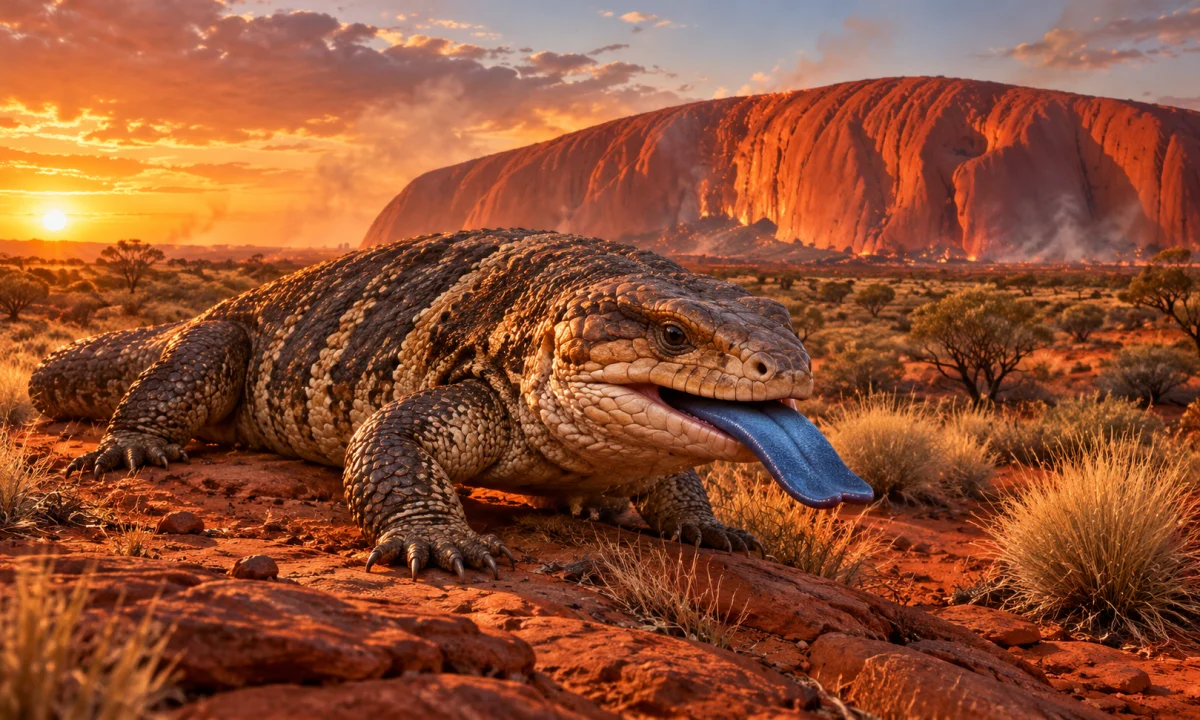
Lungkata is an ancestral figure in the living Tjukurpa traditions of the Anangu people of Central Australia, especially those associated with Uluru and the surrounding country. He is commonly described in English as a blue-tongue lizard man or blue-tongue lizard ancestor. Stories about Lungkata connect fire, greed, law, movement across the landscape and the visible features of Uluru. They are not simply tales about a supernatural animal: within Anangu culture, Tjukurpa describes ancestral events that established relationships between people, places, animals, conduct and ceremony.
Cultural setting
Uluru lies in the traditional country of the Anangu, including Pitjantjatjara- and Yankunytjatjara-speaking peoples. Anangu custodianship is expressed through Tjukurpa, a complex body of ancestral law and knowledge. The word is often translated into English as “Dreaming” or “Dreamtime”, but those translations can be misleading if they suggest a distant period that has ended. Tjukurpa refers to an enduring order of the world: ancestral beings travelled through the land, created its features, established rules for living and continue to be connected with particular sites.
Lungkata is therefore best understood within a specific cultural landscape rather than as a character belonging to a single, universal Aboriginal mythology. Aboriginal peoples across Australia have many distinct languages, countries, laws and ancestral traditions. A figure associated with Uluru should not automatically be treated as representative of all Aboriginal cultures.
Much knowledge about Lungkata is transmitted through oral teaching, customary practice, performance and relationships with particular places. Some accounts have been recorded for visitors, educational purposes or cultural interpretation, while other knowledge may be restricted or appropriate only for particular people and occasions. Published versions are consequently selective. Differences in spelling, detail and emphasis may reflect language, transcription, translation, the purpose of a telling or the cultural limits placed on what can be shared publicly.
The name and identity of Lungkata
The spelling Lungkata is widely used in English-language discussions of Uluru. As with many Aboriginal names written in English orthography, spelling can vary between records and languages. The name is generally associated with a blue-tongue lizard, or with an ancestral being represented in blue-tongue-lizard form. It should not be assumed that every reference to an ordinary blue-tongue lizard is a reference to Lungkata, however. The ancestral figure and the living animal are related through symbolism and story, but they are not identical categories.
English descriptions often call Lungkata a “man”. This reflects the human social qualities attributed to the ancestral being rather than a claim that Lungkata is an ordinary human person. In Aboriginal storytelling, ancestral beings may take the forms of animals, people, plants, natural forces or combinations of these. They act, travel, make decisions and enter relationships in ways that explain both the moral order of society and the appearance of the land.
Lungkata is not a god in the strictly classical sense, nor is he best classified as a monster or a demon. He belongs to an ancestral tradition in which the boundaries between human, animal and spiritual identity do not follow the categories usually used in European mythology.
Appearance and associations
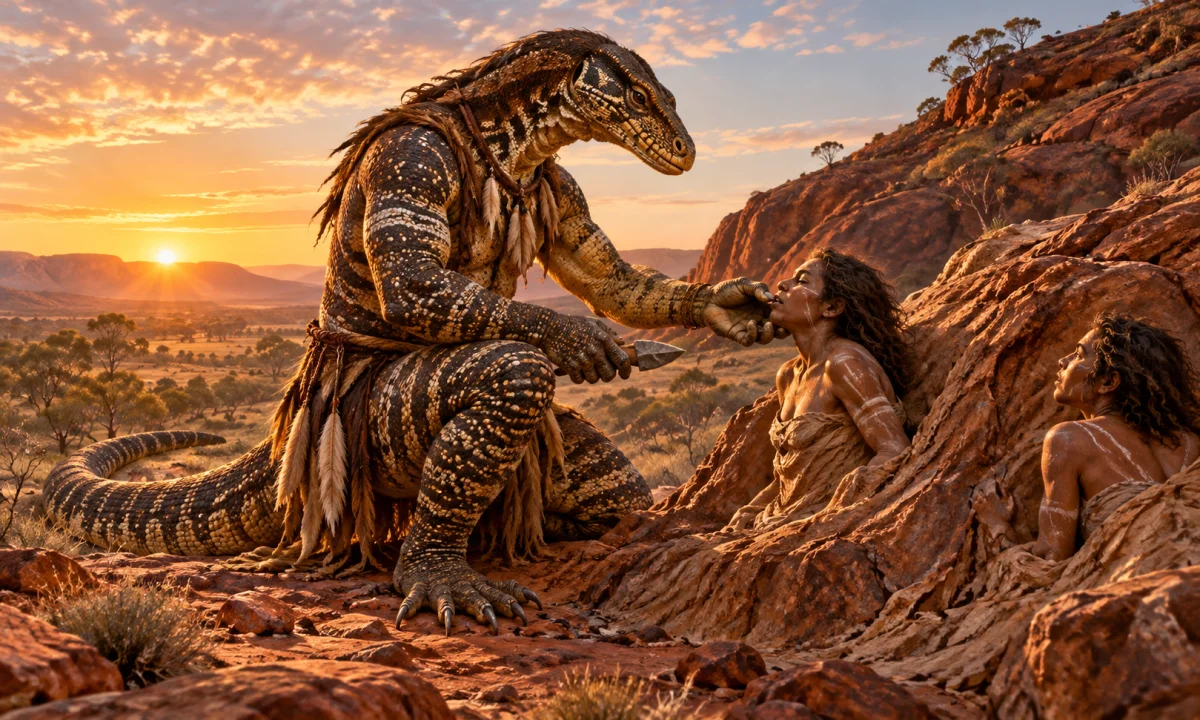
Lungkata is commonly represented as a blue-tongue lizard ancestor. The blue tongue of the animal provides a memorable physical feature, while the lizard’s movement and relationship with the ground connect the figure to the country around Uluru. In public explanations, Lungkata is especially associated with fire. The fire connected with his story is not merely a magical weapon or an accidental blaze. It forms part of the ancestral explanation of particular marks and changes in the Uluru landscape.
Accounts frequently connect Lungkata with a fire scar or darkened area on Uluru. The precise explanation, sequence of events and interpretation of individual landscape features can vary according to the tradition being presented. It is therefore safer to say that Lungkata’s actions are associated with the fire features of Uluru than to treat one simplified tourist version as the complete or definitive account.
Fire itself has profound importance in Central Australian cultural and ecological knowledge. It can be used carefully to manage country, encourage new growth, support hunting and maintain habitats. In Lungkata’s story, fire also carries ethical meaning. It reveals the consequences of selfishness, conflict and improper behaviour. The story should not be reduced to a simple claim that an ancestral being “invented fire”; rather, fire is part of a wider network of law, responsibility and landscape knowledge.
The story of Lungkata at Uluru
In commonly circulated public versions, Lungkata travels through the Uluru area and encounters hunters who have obtained a kangaroo, often identified as a red kangaroo or malu. Lungkata takes or claims the animal for himself instead of sharing it properly. The hunters pursue him, and fire becomes involved in the ensuing events. In some tellings, Lungkata starts a fire or leaves a fire burning; in others, the fire is part of the conflict and pursuit. The blaze spreads across the country and leaves marks that can still be associated with the ancestral episode.
Some versions describe Lungkata as escaping, being injured or suffering the consequences of his actions. Other accounts concentrate less on a complete plot and more on the relationship between the ancestral being, the fire and the physical features of Uluru. Details such as the number and identity of the hunters, the exact reason for the fire and the final fate of Lungkata should not be treated as fixed across all tellings.
The moral emphasis is commonly placed on sharing and proper conduct. Food obtained through hunting is not simply private property, and social obligations govern how it is distributed. Lungkata’s behaviour demonstrates what happens when those obligations are ignored. His story can therefore be connected with broader Anangu teachings about respect, restraint, responsibility and the consequences of breaking law.
The public versions of the story are sometimes presented as if Lungkata were a villain who merely stole food and caused a bushfire. That approach misses the depth of Tjukurpa. Ancestral stories do not only label characters as good or bad; they explain how people should behave in relation to kin, country, animals and resources. The landscape itself acts as evidence that these events remain relevant. A rock surface, a burn mark or a cave may function as a place of memory, teaching and continuing cultural authority.
Relationship with Uluru
Lungkata’s significance is inseparable from place. The story is not freely transferable to any blue-tongue lizard or any fire-scarred landscape. Its meaning is anchored in Uluru and in Anangu relationships with that country. Particular locations may be connected with stages of an ancestral journey, bodily marks, encounters, camps, tracks or events. The form of the rock is consequently not only geological. It is also part of a cultural record.
This way of understanding Uluru differs from the idea that a myth was invented to explain an otherwise meaningless natural formation. For Anangu custodians, ancestral law and the land are mutually connected. The story gives knowledge about the place, while the place gives visible and lived presence to the story. Visiting a site, observing its features and behaving properly there may all be part of cultural learning.
Public interpretation may identify Lungkata-related locations around Uluru, but not every culturally significant detail is available to visitors. Some sites have gendered, ceremonial or otherwise restricted knowledge. Respect for Anangu authority means avoiding the assumption that every sacred meaning should be publicly disclosed or photographed.
Relationships with other Uluru traditions
Lungkata is one of several ancestral figures and story cycles associated with Uluru. The Mala, or hare-wallaby ancestors, are connected with other important Tjukurpa relating to the rock. The Kunia, or woma-python ancestor, is also central to traditions concerning Uluru, particularly around Mutitjulu Waterhole. These figures occupy different narrative and cultural contexts.
Because public descriptions often group several Uluru stories together, confusion is possible. Lungkata should not be merged with the Mala ancestors, Kunia or other beings simply because all are connected with the same mountain. Shared geography does not mean shared identity. Each Tjukurpa has its own places, relationships, obligations and appropriate forms of teaching.
Nor should Lungkata be confused with every lizard figure found in Aboriginal traditions elsewhere in Australia. Many Aboriginal cultures have ancestral reptiles, lizard heroes and creator beings, but similarity of animal form does not establish a common character or a common origin. The traditions of the Western Desert and those of other regions must be considered in their own cultural settings.
Interpretation and cultural significance
Lungkata’s story can be interpreted at several connected levels. At the most immediate level, it is a narrative about obtaining and sharing food. At a social level, it teaches that individual appetite does not override obligations to others. At a landscape level, it explains the presence and appearance of fire-related features at Uluru. At a religious level, it expresses the continuing presence of ancestral law in the country.
The story also shows why the term “myth” requires care. In ordinary English, “myth” can imply an untrue story or an outdated explanation. In the context of Tjukurpa, that implication is inadequate. Lungkata’s story is part of a living system of knowledge and authority. Its truth is not necessarily framed as a scientific account of geological formation, but neither is it merely fictional entertainment. It belongs to a cultural and religious way of knowing the land.
Interpretations by outsiders should also be treated cautiously. Scholars, park interpreters and writers may discuss themes such as ecological management, morality, social order or the personification of natural forces. These interpretations can be useful, but they are analyses from particular viewpoints. They do not replace Anangu custodianship or provide access to every level of cultural meaning.
The association between Lungkata and fire can be especially easily misunderstood. It does not mean that Anangu tradition regards all fire as destructive, nor does it offer a simple historical account of one particular wildfire. Fire may be dangerous when used improperly, but carefully managed fire is also an important tool in many Australian Indigenous land-management practices. In Lungkata’s narrative, the destructive dimension of fire is tied to conduct, conflict and the breaking of obligations.
Contemporary presence
Lungkata remains relevant because Uluru is a living cultural landscape, not only a natural landmark or tourist attraction. Public discussions about respectful behaviour at Uluru have often drawn attention to Anangu law, sacred sites and the limits of visitor access. The closing of the Uluru climb in 2019 was part of a broader recognition of Anangu wishes and cultural authority, although the decision cannot be explained by Lungkata’s story alone.
Modern educational displays and guided interpretations may present a shortened version of Lungkata’s story for visitors who do not speak the relevant Aboriginal languages or possess the cultural background needed to understand the full tradition. Such retellings can help communicate the importance of Uluru, but they should be distinguished from the complete body of Anangu knowledge. A concise public narrative is an introduction, not permission to treat sacred traditions as unrestricted folklore.
Lungkata has not become a universally standardized character in global popular culture in the way that figures from Greek, Norse or Egyptian mythology have. When he appears in tourism material, children’s resources or general discussions of Aboriginal mythology, the presentation may simplify his identity and remove him from the living cultural context of Uluru. Responsible use of the name keeps the connection with Anangu country visible and avoids presenting Lungkata as a generic “Australian lizard god”.
For that reason, Lungkata is best approached as an Anangu ancestral being whose story joins ethical law, animal identity, fire and the enduring features of Uluru. The surviving public accounts offer important insight, but they do not erase variation, cultural restrictions or the authority of the people whose country and tradition the story belongs to.