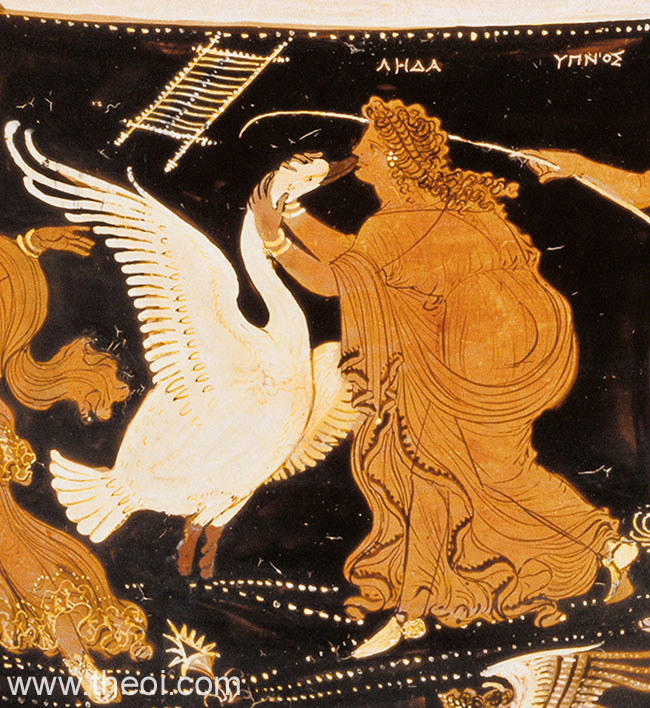
Leda is a fascinating figure in Greek mythology, known primarily for her relationship with the god Zeus and the consequences of that union. She is often depicted as a beautiful queen of Sparta, married to King Tyndareus. The story of Leda intertwines themes of love, betrayal, and the complex nature of divine intervention in human affairs. Her narrative is rich with symbolism and has been a source of inspiration for many artists and writers throughout history. In this article, we will explore various aspects of Leda’s story, her significance in mythology, and the cultural impact of her character.
The Myth of Leda
The myth of Leda begins with her marriage to King Tyndareus of Sparta. Tyndareus was a mortal king, and his union with Leda produced several notable offspring. However, the story takes a dramatic turn when Zeus, the king of the gods, becomes enamored with Leda. In an attempt to seduce her, Zeus transforms himself into a beautiful swan. This transformation is significant as it highlights the lengths to which the gods would go to fulfill their desires. The interaction between Leda and the swan results in a complex narrative of love and betrayal.
 Limoniades
From this union between Leda and Zeus, several important figures in Greek mythology are born. According to various versions of the myth, Leda gives birth to four children: Castor, Pollux, Clytemnestra, and Helen of Troy. This aspect of the story illustrates the intertwining of mortal and divine lineages. Each of these children plays a crucial role in Greek mythology, particularly Helen, whose abduction leads to the Trojan War. Thus, Leda’s story is not just about her but also about the significant consequences of her actions and relationships.
The Birth of the Children
After the encounter with Zeus, Leda lays two eggs, from which her children emerge. The birth of the children is often depicted in art and literature, emphasizing the miraculous nature of their conception. Each child has a unique destiny, reflecting the complex relationships and themes present in Greek mythology. Castor and Pollux, also known as the Dioscuri, are often celebrated as protectors of sailors and are associated with horsemanship. Their bond is legendary, symbolizing loyalty and brotherhood.
Clytemnestra, another daughter of Leda, is known for her role in the tragic events of the House of Atreus. Her story involves themes of revenge and justice, particularly in relation to her husband Agamemnon. Clytemnestra’s actions have profound implications for the future of her family, illustrating the intricate web of fate that is prevalent in Greek myths. On the other hand, Helen of Troy is perhaps the most famous of Leda’s children. Her beauty is legendary, and her abduction by Paris of Troy sparks the infamous Trojan War, showcasing the far-reaching consequences of Leda’s union with Zeus.
 Lelantus
Artistic Representations of Leda
Leda’s story has been a popular subject in various forms of art throughout history. Artists have sought to capture the moment of her encounter with Zeus in different ways, often emphasizing the beauty and tragedy of the scene. One of the most famous representations is Leonardo da Vinci’s painting, “Leda and the Swan.” In this work, the graceful figures of Leda and the swan are depicted in a moment of intimate connection, highlighting the tension between divine and mortal realms.
Another notable representation is in the works of the sculptor Antonio Canova, who created a neoclassical statue of Leda and the swan. This sculpture captures the elegance and beauty of the figures while also conveying the underlying themes of seduction and betrayal. Such artistic interpretations reflect the enduring fascination with Leda’s story and the broader themes of love, power, and the consequences of divine intervention.
 Lethe
LetheThe Themes of Leda’s Story
The narrative of Leda encompasses several important themes that resonate throughout Greek mythology. One of the central themes is the interplay between divine and mortal realms. Leda’s relationship with Zeus illustrates how the gods often interfere in human lives, leading to complex outcomes. This theme raises questions about fate, free will, and the nature of divine justice. Leda’s children, each with their own destinies, serve as examples of how the actions of the gods can have lasting impacts on mortals.
Another significant theme in Leda’s story is betrayal. Leda’s union with Zeus, despite being a result of divine seduction, complicates her marital relationship with Tyndareus. This betrayal is echoed in the fates of her children, particularly in the tragic tale of Clytemnestra and Agamemnon. The consequences of betrayal are explored throughout the myth, highlighting the emotional and moral complexities of human relationships.
Leda in Literature
Leda’s story has been retold in various literary works, each interpretation adding layers to her character and the overarching narrative. In the epic poem “The Iliad” by Homer, references to Leda and her children can be found, showcasing their importance in the context of the Trojan War. These references serve to establish the connections between the characters and the larger themes of heroism, fate, and the influence of the gods.
Additionally, modern writers have drawn inspiration from Leda’s tale, exploring themes of identity, power, and the consequences of desire. Poets like W.B. Yeats have written about Leda, emphasizing the tragic beauty of her story. Yeats’s poem “Leda and the Swan” captures the moment of seduction and its aftermath, inviting readers to reflect on the complexities of power dynamics and the fragility of human existence.
Cultural Impact of Leda’s Myth
The myth of Leda has had a profound impact on various aspects of culture, particularly in the realms of art, literature, and psychology. In the visual arts, Leda’s story has inspired countless paintings, sculptures, and other forms of artistic expression. The themes of beauty, seduction, and the consequences of divine intervention continue to resonate with artists and audiences alike.
In literature, Leda’s tale serves as a rich source of inspiration for exploring complex human emotions and relationships. The interplay between divine and mortal realms raises questions about the nature of love, power, and betrayal, making it a relevant theme in contemporary storytelling. Writers continue to reinterpret Leda’s story, examining its implications in modern contexts and drawing parallels to current societal issues.
Leda and Feminism
In recent years, the story of Leda has been re-evaluated through a feminist lens. Scholars and writers have explored the implications of her narrative, particularly in relation to themes of agency and consent. Leda’s encounter with Zeus raises important questions about the nature of power dynamics in relationships. Some interpretations focus on Leda as a victim of divine coercion, while others emphasize her strength and resilience in navigating her circumstances.
This feminist perspective encourages a deeper understanding of Leda’s character and the societal norms of her time. By examining her story in the context of modern feminist thought, we can gain insights into the complexities of female identity and the struggles faced by women throughout history. Leda’s narrative serves as a reminder of the ongoing relevance of these themes in contemporary discussions about gender and power.
Leda’s story is a rich tapestry of mythology, art, and literature that continues to captivate audiences today. Her narrative embodies the complexities of love, betrayal, and the interplay between divine and mortal realms. As we explore Leda’s significance in Greek mythology and her impact on culture, we uncover timeless themes that resonate across generations. The enduring fascination with Leda serves as a testament to the power of myth in shaping our understanding of human experience.