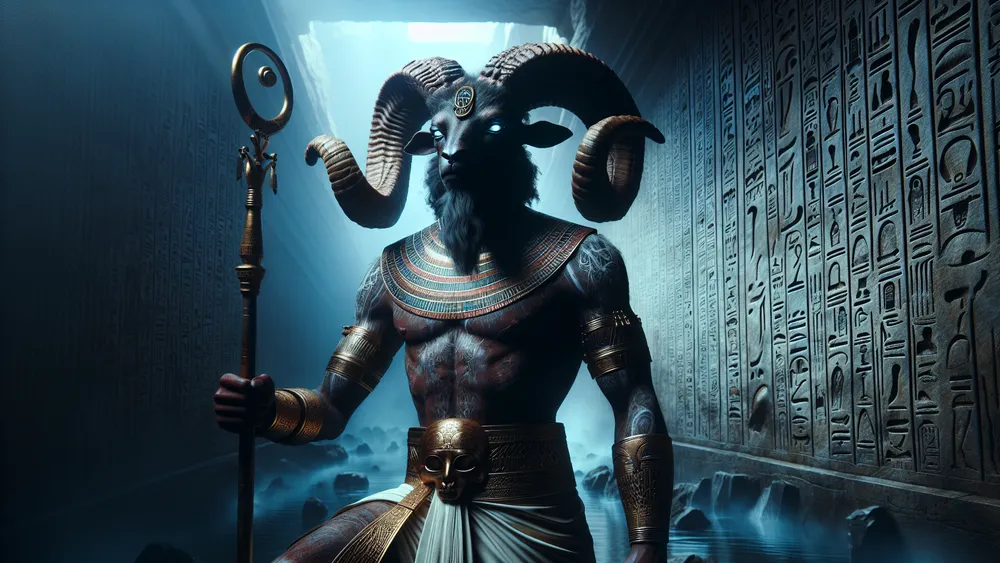
Kherty, a significant figure in Egyptian mythology, represents the duality of life and death. As a deity, Kherty is often associated with the underworld and is considered a guardian of the passage between the living world and the realm of the dead. His image is typically depicted as a human figure with the head of a jackal, which is a common representation of gods associated with funerary practices and the afterlife in ancient Egypt. This animal connection emphasizes the importance of the jackal in Egyptian culture, symbolizing both protection and the watchful nature of the gods over the deceased.
Origins of Kherty
The origins of Kherty can be traced back to the early periods of Egyptian civilization. He is often linked with the god Osiris, who is the god of the afterlife and resurrection. As Osiris presided over the dead, Kherty served as a guide for souls navigating the challenges of the underworld. This connection highlights the importance of Kherty in the funerary rituals and the beliefs surrounding death in ancient Egypt. Furthermore, Kherty’s role evolved over time, reflecting the changing religious landscape of Egypt.
 Khepri
Kherty’s name itself has various interpretations, with some scholars suggesting that it means “to traverse” or “to cross.” This interpretation aligns with his role as a guide for the souls of the departed. In ancient texts, Kherty is often mentioned in the context of funerary inscriptions, indicating his significance in helping souls achieve a safe passage to the afterlife. His role is critical in the journey that every soul must undertake after death, making him a vital figure in the mythology surrounding mortality.
Iconography of Kherty
The iconography of Kherty is rich and diverse, showcasing his multifaceted nature within Egyptian mythology. Artists often depicted him as a jackal-headed figure, symbolizing his connection to the afterlife and his protective qualities. The jackal was associated with cemeteries and was believed to guard the graves of the deceased, which further emphasizes Kherty’s role as a protector of souls. In some representations, Kherty is shown standing or seated, holding a sistrum or an ankh, symbols of life and fertility.
In addition to his jackal form, Kherty is sometimes depicted alongside other deities, reinforcing his importance within the broader pantheon of Egyptian gods. He may be shown in scenes involving the weighing of the heart, a critical judgment process that determined the fate of the deceased. These artistic representations serve not only as religious symbols but also as reminders of the values and beliefs held by ancient Egyptians regarding life, death, and the afterlife.
 Khenti-kheti
Kherty in Egyptian Texts
Kherty appears in various ancient Egyptian texts, including the Pyramid Texts and the Book of the Dead. These texts provide valuable insights into his role and significance within the mythological framework. In the Pyramid Texts, Kherty is often invoked during funerary rituals, highlighting his importance in ensuring a safe passage for the deceased. His presence in these texts underscores the belief that the dead required guidance and protection as they journeyed through the afterlife.
The Book of the Dead, a compilation of spells and prayers designed to assist the deceased in their journey through the underworld, also mentions Kherty. In these texts, he is portrayed as a benevolent deity who aids the souls in overcoming obstacles and challenges they may face. The imagery and language used in these texts emphasize the protective and guiding nature of Kherty, reinforcing his role as a crucial figure in the Egyptian belief system regarding death and the afterlife.
Worship and Rituals
The worship of Kherty was closely tied to the rituals surrounding death and burial practices in ancient Egypt. Families often invoked Kherty during the preparation of the deceased, seeking his guidance and protection for their loved ones. Funerary offerings, such as food, drink, and symbolic items, were placed in tombs to honor Kherty and ensure that the deceased would receive his assistance in the afterlife. These offerings reflected the belief that the dead continued to exist in another realm and required sustenance.
 Wadjet
Rituals dedicated to Kherty often included prayers and invocations aimed at securing his favor. Priests and family members would recite specific spells and chants, asking for his protection and guidance during the journey to the afterlife. The significance of these rituals highlights the deep reverence that ancient Egyptians had for Kherty and the belief in his power to influence the fate of the deceased. Such practices demonstrate the intricate relationship between religion, culture, and the afterlife in ancient Egyptian society.
Kherty and the Afterlife
Kherty’s role in the afterlife is multifaceted, as he serves as both a protector and a guide for souls navigating the underworld. The journey through the afterlife was fraught with challenges, including encounters with various deities and judgment processes. Kherty’s presence was believed to provide comfort and security to the deceased, assuring them that they were not alone in their journey. His protective nature is particularly significant during the critical moment of the weighing of the heart, where the soul’s worth was assessed.
During the weighing of the heart ceremony, the heart of the deceased was placed on one side of a scale, while the feather of Ma’at, representing truth and justice, was placed on the other. If the heart was lighter than the feather, the soul would be granted passage to the afterlife. If it was heavier, it would face dire consequences. In this context, Kherty’s role becomes even more crucial, as he is seen as a supportive figure who aids the deceased in achieving a favorable outcome during this judgment.
Kherty’s Legacy in Modern Culture
Kherty’s influence extends beyond ancient Egyptian religion and continues to resonate in modern culture. His symbolism and themes of life, death, and the afterlife have been explored in various forms of art, literature, and popular media. The fascination with Egyptian mythology has led to a resurgence of interest in deities like Kherty, as people seek to understand the beliefs and practices of ancient civilizations.
In contemporary literature and films, Kherty is often referenced as a representation of the mysteries of death and the afterlife. His character embodies the duality of existence, reminding audiences of the importance of understanding and respecting the cycle of life. The incorporation of Kherty into modern narratives serves as a bridge between the ancient world and contemporary society, illustrating the enduring relevance of Egyptian mythology.
Kherty stands as a significant figure in Egyptian mythology, embodying the complexities of life, death, and the afterlife. His protective nature, combined with his role as a guide for souls, highlights the deep reverence that ancient Egyptians held for their beliefs surrounding mortality. The rich iconography and textual references associated with Kherty provide valuable insights into the cultural and religious practices of ancient Egypt. As interest in Egyptian mythology continues to grow, Kherty’s legacy remains a poignant reminder of the enduring questions surrounding existence and the afterlife.