WORLD
WORLD
Kasogonaga
Kasogonaga—also written Kasogonagá—is generally described as a rain serpent associated with Guaraní mythology in South America. In the brief accounts that circulate under this name, Kasogonaga is a powerful snake connected with clouds, rain and storms. The figure is not as extensively documented as many better-known beings of Guaraní tradition, however, and important details about its origin, appearance and religious significance remain uncertain.
Origins and cultural setting
The Guaraní are a group of Indigenous peoples whose languages and communities have long been established across Paraguay, northeastern Argentina, southern Brazil and parts of eastern Bolivia. “Guaraní mythology” is a broad modern label rather than the name of a single, uniform religious system. Guaraní-speaking peoples have distinct histories, traditions and forms of religious expression, and stories may vary between communities.
Traditional knowledge was transmitted primarily through oral teaching, ritual practice, storytelling and relationships with the natural world. Much of the material available to outsiders was recorded comparatively late, often by missionaries, travellers, ethnographers or other non-Indigenous observers. Such records can preserve valuable information, but they may also simplify local beliefs, use foreign categories such as “god” or “monster”, or combine traditions that originally belonged to different communities.
Kasogonaga should therefore be treated cautiously. The name appears most often in modern summaries of South American mythology, where it is identified as a rain-bringing or storm-associated serpent. There is no widely recognised ancient Guaraní scripture or single canonical story that establishes a complete account of the being. The surviving descriptions are short and inconsistent, making it difficult to determine whether Kasogonaga was historically a major deity, a local spirit, a traditional animal figure or a name preserved mainly through later compilations.
Name and identity
The form Kasogonaga is common in English-language references, while Kasogonagá reflects a spelling sometimes used in Spanish. The final accent mark may indicate Spanish pronunciation rather than an original Guaraní orthography. The exact linguistic origin and meaning of the name are not securely established in commonly available documentation.
It is also uncertain whether the name represents a single figure known throughout the Guaraní-speaking world. Some descriptions present Kasogonaga as a mythological serpent; others treat it almost like a weather spirit or deity. These classifications may reflect the vocabulary of modern writers more than categories used by the communities from which the traditions emerged.
For that reason, it is safer to describe Kasogonaga as a rain-associated serpent in sources labelled Guaraní than to claim that every Guaraní community traditionally recognised the same being. The figure’s identity should not be expanded with unsupported genealogies, fixed religious offices or elaborate physical descriptions.
Appearance and powers
Kasogonaga is generally imagined as a large or supernatural serpent. Its principal attribute is a relationship with rain. In the most frequently repeated summary, the serpent dwells in or near the clouds and brings rain through its movement. Some retellings say that it shakes its body, while others simply state that it controls or produces rainfall.
These descriptions connect Kasogonaga with one of the most important forces in tropical South American life. Rain affects crops, rivers, forests, animals and human settlement. A serpent associated with rainfall can therefore represent far more than frightening weather: it may embody the renewal of the land and the conditions necessary for food and communal survival.
Modern summaries sometimes add details such as golden scales, jewel-like eyes, lightning or thunder. Those features are not consistently documented and should not be treated as universal elements of the tradition. They may be embellishments introduced by later retellers who sought to give the creature a more vivid or familiar fantasy appearance.
Likewise, Kasogonaga is sometimes called a “rain god”. That label may be convenient for a general audience, but it can be misleading. A serpent spirit connected with rain does not automatically occupy the same religious position as a creator, supreme deity or formally worshipped god. The available evidence does not establish a single, definitive theological status for Kasogonaga.
Rain, serpents and the living landscape
Associations between serpents and water occur in many parts of the world, but similar symbolism does not prove that separate traditions share a common origin. In South American Indigenous traditions, serpents may be linked with rivers, underground spaces, fertility, transformation, danger or the movement of life-giving water. Their ability to shed skin can also make them images of renewal, although that interpretation should not automatically be assigned to every serpent figure.
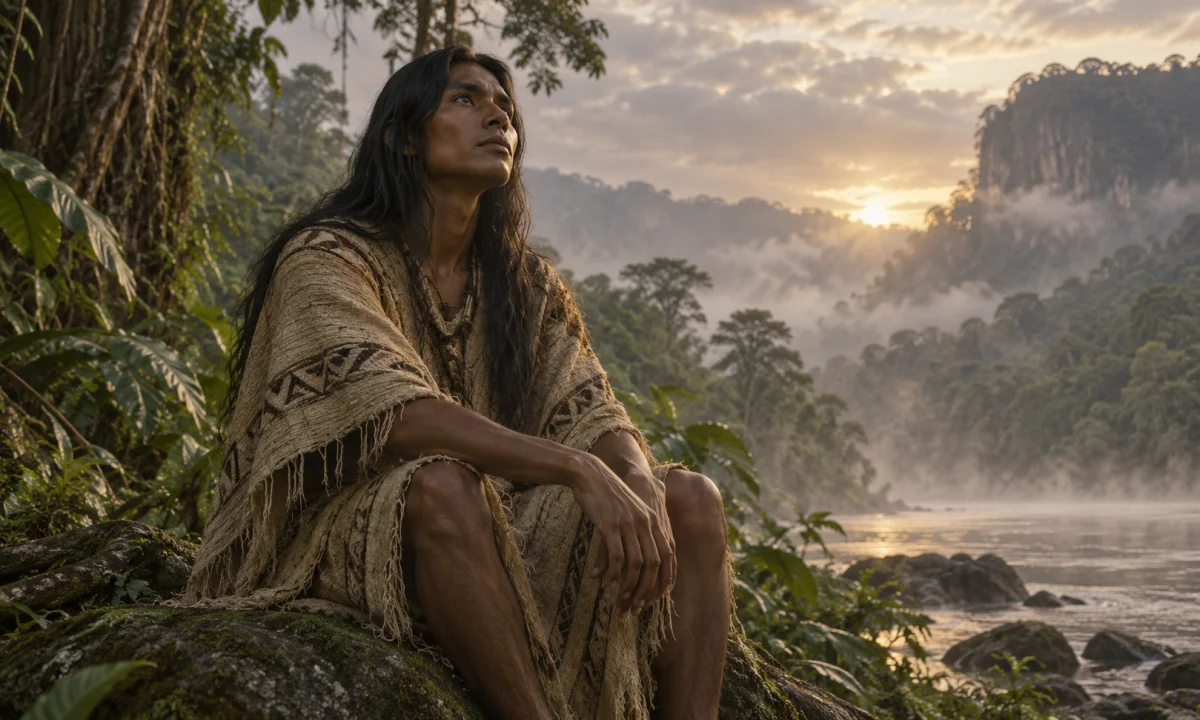
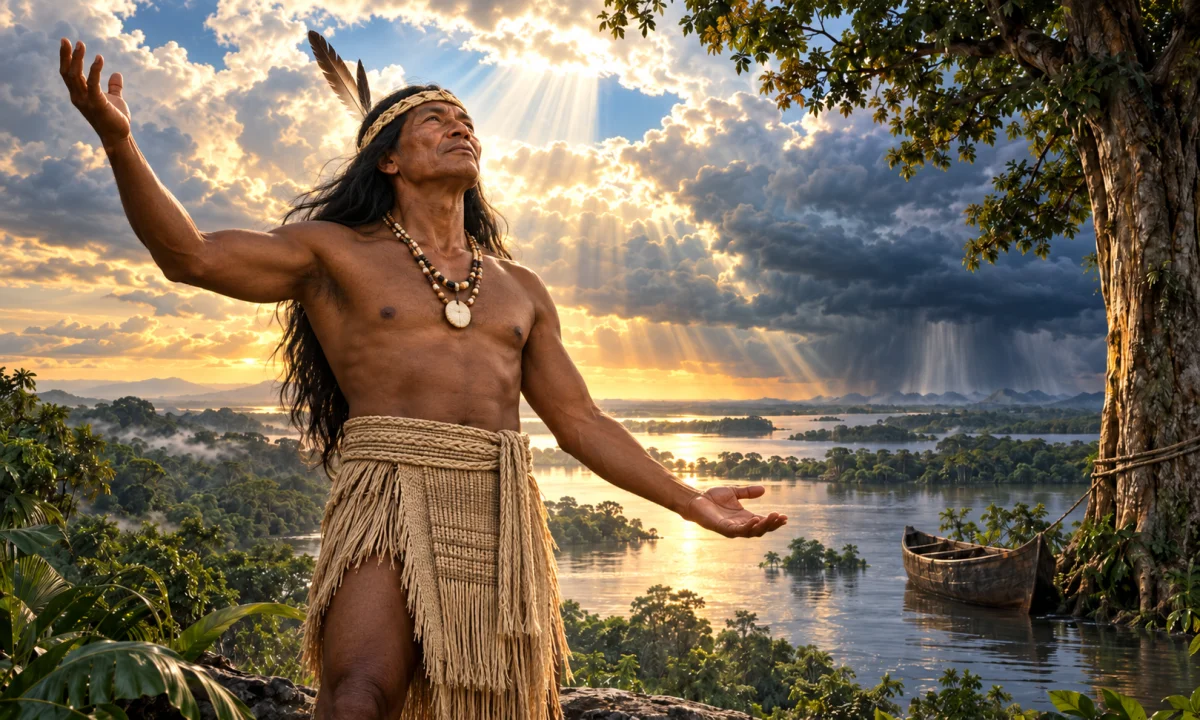
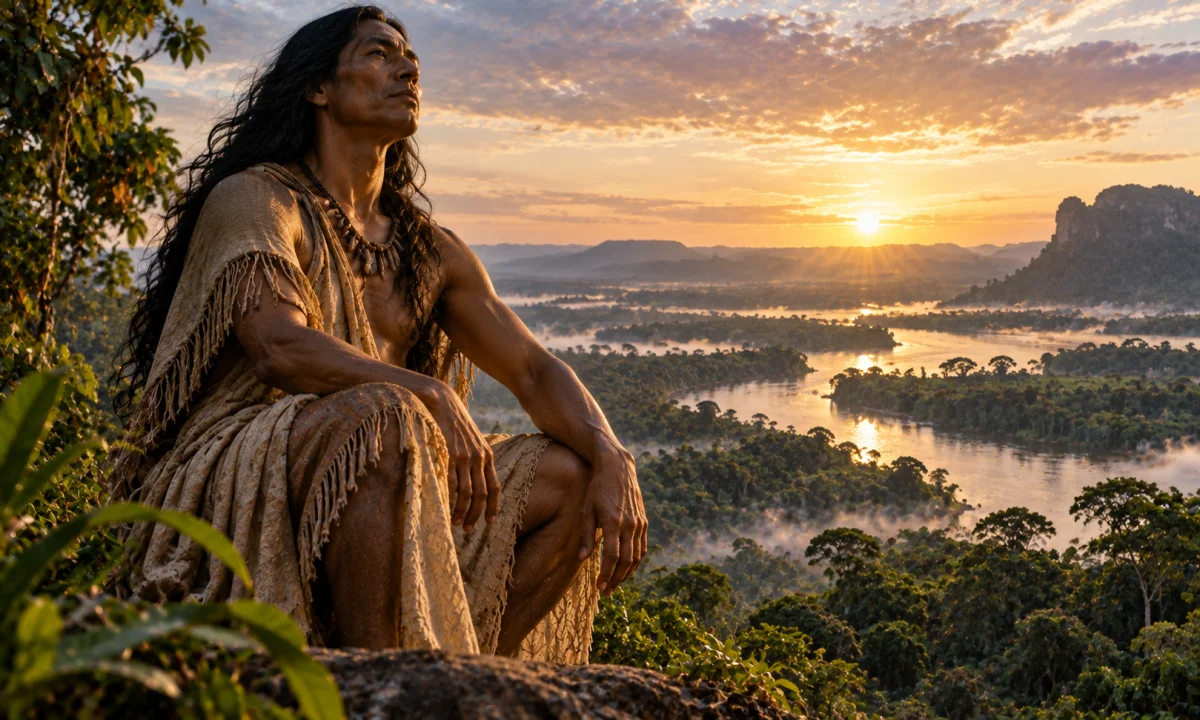
Within a Guaraní context, a rain serpent can be understood as part of a worldview in which humans, animals, weather and the wider landscape are interdependent. Rain is not merely a meteorological event. It can be a sign of balance, a condition for cultivation and a force requiring respect. A supernatural being connected with storms may consequently be viewed with both reverence and caution.
There is not enough reliable information to say that Kasogonaga had a standard cult, a dedicated priesthood or a fixed ritual devoted to it. Nor is there a secure basis for claiming that the serpent was always benevolent or always hostile. A rain-bringing being might be welcomed because it sustains life, yet feared because excessive storms can destroy crops, flood settlements or threaten travellers.
Stories and variants
No single, widely attested narrative about Kasogonaga dominates the surviving material. Most accounts provide a description rather than a developed myth. They may mention the serpent’s residence in the clouds, its ability to cause rain or its connection with storms, but they rarely preserve named relatives, a detailed origin story or a sequence of adventures.
This absence matters. It means that claims about Kasogonaga fighting rival monsters, marrying another supernatural being, guarding a particular sacred place or creating the world should be regarded as unverified unless supported by specific Indigenous traditions. An attractive story repeated on many websites can still originate from a single modern summary rather than from a broad or ancient oral record.
Spelling and presentation also vary. Kasogonaga and Kasogonagá may refer to the same figure in secondary sources, but variations in spelling do not by themselves prove that there are multiple traditional beings. Conversely, the existence of similar storm-serpent figures elsewhere in South America does not prove that all of them are versions of Kasogonaga.
Distinction from other South American serpents
Kasogonaga should not automatically be identified with every great serpent in South American mythology. Several famous figures have their own cultural settings, names and traditions.
- Amaru is a major serpent or dragon-like being in Andean traditions, especially those associated with Quechua-speaking peoples. It is not simply another name for a Guaraní rain serpent.
- Mbói Tu’i belongs to the Paraguayan and Guaraní legendary tradition known as the Teju Jagua cycle or family of seven monstrous brothers in many modern presentations. It is usually described as a serpent-like creature with a parrot’s head and is distinct from Kasogonaga.
- Jasy Jatere is a well-known figure in some Paraguayan Guaraní folklore, often associated with forests, midday and the abduction or enchantment of children in later accounts. It has no inherent identity with a rain serpent.
- Yacumama is a giant water serpent associated in modern descriptions with Amazonian traditions. Its name and cultural setting differ from those attached to Kasogonaga.
These comparisons are useful only when they preserve distinctions. A broad category such as “South American mythology” includes traditions from many peoples and language families. Similar imagery—especially serpents, water and storms—can arise independently from the importance of rivers, rainfall and seasonal change.
Religious and cultural significance
The most cautious interpretation of Kasogonaga places the figure within a wider pattern of respect for weather and the natural environment. Rain may nourish fields and forests, while storms may display the dangerous power of the same landscape. The serpent’s significance, if the surviving descriptions accurately reflect older tradition, would therefore lie in its capacity to express the double nature of rain: necessary for life but capable of causing harm.
It is important not to turn this limited evidence into a universal statement about “the Guaraní view of nature”. Guaraní peoples are not culturally identical, and Indigenous religions are living traditions rather than frozen mythological systems. Contemporary communities may interpret inherited figures in ways that differ from colonial records or popular reference works.
There is also a difference between traditional evidence and modern classification. A catalogue may list Kasogonaga alongside dragons, water monsters and weather gods because all are supernatural beings. That arrangement helps readers compare subjects, but it does not demonstrate that the original tradition placed Kasogonaga in the same category. The terms “mythical creature”, “deity” and “monster” are often editorial labels.
Kasogonaga in modern culture
Kasogonaga has limited recognition in mainstream literature, film and games. The figure appears more often in online lists of legendary creatures, encyclopedic summaries and discussions of world mythology than in major modern adaptations. In these settings, the rain serpent may be given a more dramatic form: a colossal snake coiling through storm clouds, a guardian of rainfall or a monster that commands thunder.
Such portrayals can make the name accessible, but they often blur the boundary between documented tradition and creative invention. Golden scales, lightning attacks, elaborate divine family trees and heroic battles should be identified as later imaginative additions unless they can be traced to a specific traditional account. A respectful depiction should preserve the uncertainty surrounding the figure and avoid presenting a brief, regional tradition as a single universal doctrine.
Kasogonaga is best understood as a sparsely documented serpent associated with rain in sources connected to Guaraní mythology. Its importance lies less in a large body of surviving tales than in the way the image links a powerful animal form with clouds, water, fertility and the unpredictable forces that sustain or threaten human life.