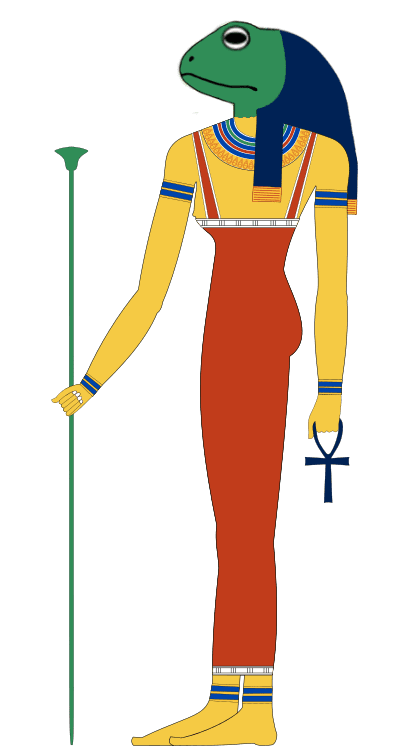
In ancient Egyptian mythology, Heket is a fascinating goddess associated with fertility, childbirth, and the waters of the Nile. Often depicted as a woman with the head of a frog or simply as a frog, Heket holds a significant place in the pantheon of Egyptian deities. Her association with frogs stems from the natural behavior of these creatures, which were abundant in the Nile during the flooding season, symbolizing both life and rebirth. The annual flooding of the Nile was crucial for agriculture in Egypt, and frogs were seen as harbingers of this vital event.
The Role of Heket in Egyptian Mythology
Heket played a crucial role in the ancient Egyptian belief system, particularly in the realm of childbirth. She was often called upon by women during labor, as it was believed that she could ease the process and ensure a safe delivery. This protective aspect of her character is reflected in various texts and artifacts, where she is invoked to provide support to mothers and their newborns. Heket’s presence during childbirth was not just a matter of superstition; it was a deeply ingrained belief that linked the goddess to the very essence of life.
 Hedetet
In addition to her role in childbirth, Heket was also associated with the afterlife. The Egyptians believed that she helped guide souls through the underworld. This connection to the afterlife emphasizes her importance in the cycle of life and death. Heket was seen as a protective figure, ensuring that the transition from life to death was smooth and safe. Her duality as a goddess of both life and death underscores the complexity of ancient Egyptian beliefs regarding existence.
Heket and the Fertility of the Nile
The connection between Heket and the Nile is profound. The annual flooding of the Nile was a critical event for Egyptian agriculture, and frogs were one of the first signs of this flooding. As such, Heket was seen as a symbol of fertility and abundance. The waters of the Nile were essential for growing crops, and Heket’s association with these waters made her a vital deity for farmers and those reliant on the land for their livelihoods. Her influence was not just limited to childbirth; it extended to the very sustenance of the Egyptian people.
 Hauhet
- Fertility: Heket was invoked for blessings of fertility, not just in childbirth but also in agriculture.
- Protection: Women prayed to Heket for protection during pregnancy and childbirth.
- Guidance: Heket was believed to guide souls in the afterlife, showing her multifaceted role in Egyptian beliefs.
Symbolism and Iconography
Heket’s imagery is rich and varied. She is most commonly depicted as a woman with the head of a frog, which immediately signifies her connection to fertility and the Nile. The frog is a symbol of rebirth, as it undergoes metamorphosis from tadpole to adult. This transformation parallels the themes of life, death, and renewal that are central to Heket’s character. Statues and paintings of Heket often include her holding a sistrum, a musical instrument associated with joy and celebration, further highlighting her role in the celebration of life.
Moreover, Heket’s association with the color green is significant, as this color symbolizes fertility and growth in ancient Egyptian culture. Artworks depicting Heket often showcase her adorned with green garments or surrounded by lush vegetation, reinforcing her connection to nature and the vital resources provided by the Nile. This visual representation helps convey her importance not only as a goddess of childbirth but also as a nurturing force in the agricultural cycles of Egypt.
Heket in Ancient Texts
Heket appears in various ancient Egyptian texts, including pyramid texts and funerary spells. These texts often invoke her name during rituals aimed at ensuring safe childbirth or a smooth transition to the afterlife. In these contexts, she is portrayed as a benevolent figure who watches over the living and the dead. For instance, some spells specifically request her assistance in protecting mothers and their infants from malevolent forces. This highlights the deep-seated belief in her protective qualities.
 Hathor
- Pyramid Texts: Ancient writings where Heket is invoked for protection and guidance.
- Funerary Spells: Texts that call upon Heket to assist souls in their journey through the afterlife.
- Rituals: Heket was often included in rituals aimed at ensuring safe childbirth.
Heket and Other Egyptian Deities
In the vast tapestry of Egyptian mythology, Heket is often mentioned alongside other significant deities. One such deity is Isis, the goddess of motherhood and magic. Isis and Heket share similar roles in protecting mothers and children. In many myths, Isis is depicted as calling upon Heket to assist her during childbirth. This collaboration highlights the interconnectedness of various deities in Egyptian belief, where each goddess contributes to the overall well-being of society.
Another deity closely associated with Heket is Thoth, the god of wisdom and writing. Thoth was often invoked in matters of knowledge and understanding, including those related to childbirth and the afterlife. Heket and Thoth’s combined influence emphasizes the importance of knowledge in the processes of life and death. Together, they represent a harmonious balance between the physical and spiritual aspects of existence.
Worship and Rituals
The worship of Heket was integral to the daily lives of many ancient Egyptians, particularly women. Rituals dedicated to her often took place in private homes or small shrines, where women would offer prayers and gifts in hopes of receiving her blessings. These rituals could involve lighting candles, making offerings of food, and reciting prayers. The act of invoking Heket was not only a way to seek her favor but also a means of connecting with the divine during significant life events.
- Home Shrines: Many families maintained small shrines dedicated to Heket for daily prayers.
- Offerings: Women often brought offerings of food and flowers to honor the goddess.
- Ritual Prayers: Specific prayers were recited to seek Heket’s blessings during childbirth.
The Legacy of Heket
Despite the passage of time, Heket’s influence continues to resonate in modern culture. Her role as a goddess of fertility and childbirth is still acknowledged in various forms, from literature to art. Many people today still seek to honor the traditions and beliefs of ancient cultures, and Heket serves as a symbol of the enduring connection between the past and present. Her legacy reminds us of the importance of nurturing life and protecting those who are vulnerable.
Moreover, Heket’s association with the Nile and agriculture highlights the ongoing relationship between humans and nature. In contemporary discussions about sustainability and environmental protection, Heket’s symbolism serves as a reminder of the vital resources that water and fertile land provide. Her legacy encourages us to respect and care for our environment, reflecting the ancient Egyptians’ understanding of the delicate balance between humanity and nature.
Heket in Popular Culture
In recent years, Heket has made appearances in various forms of popular culture, including literature, video games, and television shows. These representations often emphasize her role as a goddess of fertility and childbirth, bringing her ancient significance into modern storytelling. Such portrayals help educate new generations about Egyptian mythology and the rich tapestry of beliefs that shaped ancient civilizations.
- Literature: Heket appears in novels that explore themes of mythology and ancient cultures.
- Video Games: Many games incorporate Heket as a character or symbol, highlighting her role in fertility.
- Television: Documentaries and shows about ancient Egypt often feature Heket in discussions of mythology.
Heket’s significance in ancient Egyptian mythology cannot be overstated. As a goddess of fertility, childbirth, and the waters of the Nile, she embodies the essential aspects of life and the natural world. Her protective qualities and connection to the afterlife reflect the deep-seated beliefs of the ancient Egyptians regarding existence and the cycles of life. Today, Heket remains a powerful symbol of nurturing and protection, reminding us of the importance of honoring life in all its forms.