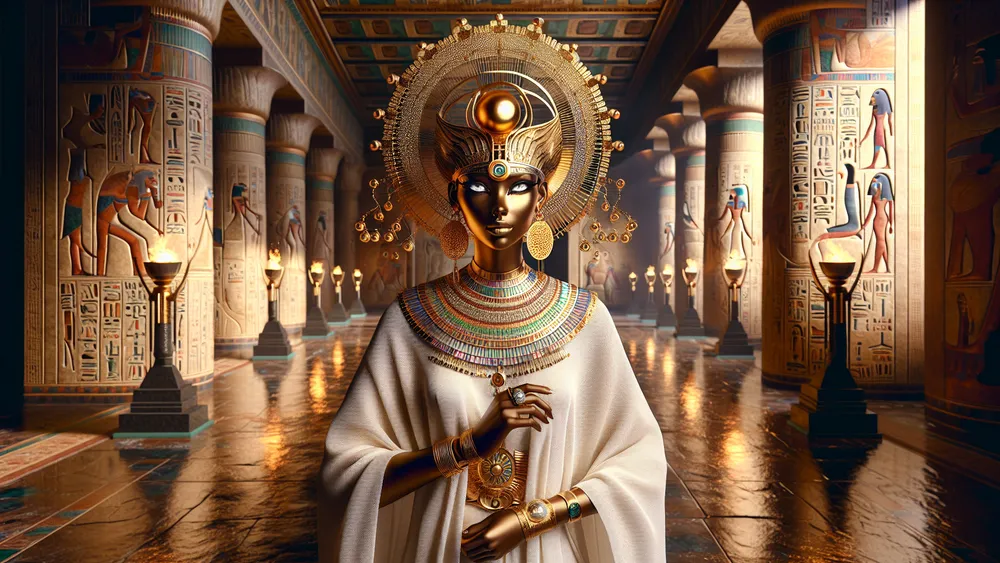
Hauhet is a significant figure in Egyptian mythology, known primarily as a goddess associated with the concept of infinity and the limitless nature of time and space. She is often depicted as a woman with a symbol that represents the infinite and the boundless aspects of existence. In ancient Egyptian culture, the understanding of time and the cosmos was crucial, and Hauhet played a vital role in this understanding. Her essence embodies the eternal nature of the universe, making her an important figure in various myths and religious practices.
Origins and Representation
The origins of Hauhet can be traced back to the early periods of ancient Egyptian civilization. She is often associated with the Ogdoad, a group of eight deities worshipped in Hermopolis. The Ogdoad represented the primordial elements of creation, and Hauhet was often paired with her male counterpart, Hau, who personified the same concepts of infinity and the void. Together, they symbolized the infinite space that existed before creation. This duality reflects the ancient Egyptians’ understanding of the universe as a complex interplay between different forces.
 Hathor
In artistic depictions, Hauhet is frequently shown with a symbolic headdress that features a feather or a serpent, representing her connection to the infinite. She may also be portrayed standing or sitting, often with her arms raised, symbolizing the act of creation and the vastness of the cosmos. The imagery associated with Hauhet serves as a reminder of the limitless potential of the universe and the mysteries that lie beyond human understanding.
Mythological Context
Hauhet’s role in Egyptian mythology is intertwined with the narratives surrounding creation and the cosmos. According to various myths, the universe began in a state of chaos and darkness. From this chaos, the gods emerged, bringing order and light. Hauhet, along with her counterpart Hau, was believed to exist before creation, embodying the void that preceded existence. This makes her a primordial deity, crucial to the ancient Egyptians’ understanding of the cosmos.
- Hauhet represents the infinite nature of the universe.
- She is part of the Ogdoad, a group of primordial deities.
- Her male counterpart is Hau, symbolizing the same concepts.
The myths surrounding Hauhet often emphasize the cyclical nature of time and existence. The ancient Egyptians believed that the universe was not linear but rather cyclical, with time repeating itself in endless cycles. Hauhet’s association with infinity reinforces this belief, as she embodies the idea that creation and destruction are part of an eternal process. This cyclical view of existence is reflected in many aspects of ancient Egyptian life, including their rituals, festivals, and beliefs about the afterlife.
 Hatmehit
Cult and Worship
The worship of Hauhet was not as widespread as that of some other Egyptian deities, but she held a special place in the hearts of those who understood her significance. Temples dedicated to the Ogdoad, including Hauhet, were often located in Hermopolis, where rituals and ceremonies took place to honor these primordial gods. In these temples, priests would conduct elaborate rituals, invoking Hauhet and her counterparts to ensure the continuation of order in the universe.
Devotees believed that by honoring Hauhet, they could gain insight into the mysteries of the universe and the nature of existence. Offerings of incense, food, and symbolic items were made to appease the goddess and seek her favor. These offerings served as a means of communication between the mortal realm and the divine, allowing worshippers to connect with the infinite aspects of Hauhet’s being.
Symbols and Artifacts
Hauhet’s symbols are essential in understanding her role in Egyptian mythology. The most prominent symbol associated with her is the infinity loop, which represents the endless nature of time and space. This symbol is often depicted in ancient artifacts, such as jewelry and amulets, worn by individuals seeking protection and blessings from the goddess. The infinity loop serves as a reminder of the eternal cycles of life, death, and rebirth that are central to Egyptian beliefs.
 Haroeris
- The infinity loop symbolizes the endless nature of time.
- Artifacts depicting Hauhet often include her symbols.
- Amulets were worn for protection and blessings.
In addition to the infinity loop, other artifacts related to Hauhet may include inscriptions and carvings found in tombs and temples. These inscriptions often contain prayers or hymns dedicated to the goddess, expressing the reverence of the ancient Egyptians for her role in the cosmos. Such artifacts provide valuable insights into the religious practices and beliefs of ancient Egyptian society, highlighting the importance of Hauhet in their understanding of existence.
Hauhet in the Afterlife
The concept of the afterlife was a central aspect of ancient Egyptian religion, and Hauhet’s influence extended into this realm. The Egyptians believed that the journey to the afterlife involved navigating through various challenges and obstacles. Hauhet, as a goddess of infinity, was thought to guide souls through the vastness of the cosmos, ensuring their safe passage into the next life. Her role in the afterlife reflects the belief that death is not an end but rather a continuation of existence in a different form.
Funerary texts, such as the Book of the Dead, often included references to deities like Hauhet, who were invoked to protect the deceased during their journey. The ancient Egyptians sought her guidance and favor to ensure that their souls would find peace and immortality. The imagery associated with Hauhet, depicting her as a nurturing and protective figure, reinforces her role as a guide for souls navigating the complexities of the afterlife.
Lessons from Hauhet
Hauhet’s presence in Egyptian mythology offers valuable lessons about the nature of existence and the universe. Her embodiment of infinity serves as a reminder that life is a continuous cycle of creation and destruction. This perspective encourages individuals to embrace the changes and challenges they face, recognizing that each moment is part of a larger, eternal process. The teachings of Hauhet resonate with the idea that understanding our place in the cosmos can lead to greater wisdom and insight.
- Life is a continuous cycle of creation and destruction.
- Embracing change is essential for growth.
- Understanding our place in the cosmos leads to wisdom.
Moreover, Hauhet’s association with infinity invites individuals to contemplate the mysteries of existence. The vastness of the universe can be overwhelming, but it also inspires curiosity and exploration. By reflecting on the infinite nature of time and space, individuals can develop a deeper appreciation for life and the connections they share with others. Hauhet encourages us to look beyond the surface and seek the profound truths that lie beneath.
Comparative Analysis with Other Deities
Hauhet shares similarities with other deities in Egyptian mythology, particularly those associated with creation and the cosmos. For instance, Nun, the god of the primordial waters, also embodies the concept of infinity and the void. Both Nun and Hauhet represent the chaos that existed before creation, highlighting the ancient Egyptians’ understanding of the universe as a balance between order and chaos. This comparison illustrates the interconnectedness of the various deities in the Egyptian pantheon and their shared themes.
Additionally, Hauhet can be compared to Isis, another significant goddess in Egyptian mythology. While Isis is primarily known for her roles in magic and motherhood, she also embodies the cycles of life and death. Both goddesses emphasize the importance of transformation and continuity in existence. The relationships between deities like Hauhet and Isis showcase the multifaceted nature of Egyptian mythology, where different gods and goddesses represent various aspects of the same fundamental truths.
Influence on Modern Culture
The legacy of Hauhet and her teachings continue to resonate in modern culture, particularly in discussions about the nature of time, existence, and the universe. Many contemporary philosophies and spiritual practices draw inspiration from the ancient Egyptian understanding of infinity and the cyclical nature of life. The idea that life is a continuous journey rather than a linear path encourages individuals to embrace change and seek deeper meaning in their experiences.
- Modern philosophies draw inspiration from Hauhet’s teachings.
- Discussions about time and existence reflect ancient beliefs.
- Embracing change is a key theme in contemporary spirituality.
Furthermore, Hauhet’s symbolism of infinity has found its way into art, literature, and popular culture. Artists and writers often explore themes of eternity and the cosmos, echoing the ancient Egyptian beliefs surrounding Hauhet. This enduring influence demonstrates the timeless relevance of her teachings and the profound impact of Egyptian mythology on human thought and creativity.
Final Thoughts on Hauhet
Hauhet stands as a powerful symbol of the infinite nature of existence in Egyptian mythology. Her association with the Ogdoad and the primordial elements of creation highlights her significance in the ancient Egyptians’ understanding of the cosmos. Through her representation as a goddess of infinity, Hauhet invites individuals to reflect on the mysteries of life, death, and the eternal cycles that shape our existence.
As we explore the teachings of Hauhet, we are reminded of the importance of embracing change and seeking wisdom in our experiences. Her legacy continues to inspire curiosity and contemplation, encouraging us to look beyond the surface of life and explore the deeper truths that lie within the universe. The enduring influence of Hauhet in modern culture serves as a testament to the timeless nature of her teachings and the universal themes present in Egyptian mythology.