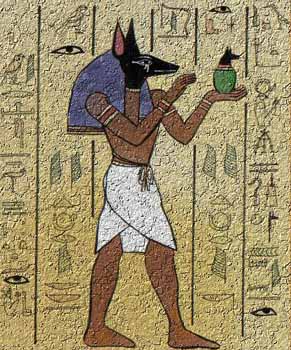
Duamutef is one of the four sons of Horus in Egyptian mythology. He is often depicted as a jackal or a man with a jackal’s head. Duamutef is associated with the protection of the stomach and intestines of the deceased, which were removed during the mummification process. His role in the afterlife was crucial, as he was responsible for guarding the canopic jar that held the stomach of the deceased. Each of the sons of Horus had specific duties, and Duamutef’s role was particularly important in ensuring the well-being of the body in the afterlife.
Origins of Duamutef
The origins of Duamutef can be traced back to ancient Egyptian beliefs about the afterlife. The ancient Egyptians had a deep understanding of the human body and its functions. When someone died, they believed it was essential to preserve the body for the afterlife. This belief led to the practice of mummification. Duamutef, as a son of Horus, was born from the union of Osiris and Isis, which placed him within a divine lineage. His connection to these significant deities emphasized his importance in the funerary rituals.
 Dua
DuaDuamutef’s name itself is significant. It translates to “He who is like his mother.” This reference highlights the maternal aspect of his character, suggesting that he embodies qualities associated with nurturing and protection. In Egyptian culture, the mother figure was often seen as a source of strength and security. Thus, Duamutef’s role as a protector of the deceased’s internal organs reflects this nurturing aspect. His character serves to bridge the gap between life and the afterlife, ensuring that the deceased is cared for even after death.
Symbolism of Duamutef
Duamutef is rich in symbolism. As a jackal, he represents the connection between the living and the dead. Jackals were often seen in ancient Egypt scavenging in cemeteries, which contributed to their association with death and the afterlife. This symbolism made Duamutef a fitting guardian for the deceased’s internal organs, as he represented the natural cycle of life and death. In many depictions, he is shown standing beside the canopic jars, signifying his protective role over the stomach.
- Protection: Duamutef is seen as a protector, ensuring that the stomach of the deceased is safe and secure.
- Transition: He symbolizes the transition from life to the afterlife, guiding the soul through this journey.
- Nurturing: His maternal attributes suggest a nurturing aspect, emphasizing care and protection.
 Dedun
DedunThe canopic jars, which held the organs of the deceased, were often inscribed with prayers and spells to ensure the safe passage of the soul. Each of the four sons of Horus was associated with a specific organ and a specific jar. Duamutef was linked to the stomach, which was essential for digestion and nourishment. This connection further emphasizes his role in providing sustenance for the soul in the afterlife.
Duamutef in Funerary Practices
Duamutef played a significant role in ancient Egyptian funerary practices. During the mummification process, the internal organs were removed and placed in canopic jars. Each jar was protected by one of the sons of Horus, with Duamutef specifically guarding the jar that contained the stomach. This practice was a vital part of the mummification process, as it was believed that the organs needed to be preserved for the deceased to enjoy a comfortable afterlife.
Funerary texts, such as the Book of the Dead, often included spells and prayers directed towards Duamutef. These texts were intended to invoke his protection and ensure the safe passage of the deceased. Families would often include amulets and inscriptions dedicated to Duamutef in tombs to enhance the protection of their loved ones. This highlights the deep reverence that the ancient Egyptians held for Duamutef and his role in the afterlife.
 Kneph
KnephDepictions of Duamutef
Duamutef is commonly depicted in ancient Egyptian art and artifacts. He is often shown as a jackal or as a man with a jackal’s head, dressed in traditional Egyptian attire. His images can be found in tomb paintings, canopic jars, and other funerary objects. The jackal head symbolizes his role as a protector of the deceased, while his human form represents his divine nature.
In many depictions, Duamutef is portrayed standing beside the canopic jars, ensuring that they are guarded. The jars themselves are often adorned with intricate designs and inscriptions that invoke his protection. These artistic representations serve not only as a visual reminder of his role but also as a spiritual invocation for the deceased. The imagery of Duamutef reinforces the importance of safeguarding the body and its organs, which were seen as essential for the afterlife.
Comparative Analysis with Other Sons of Horus
Duamutef is one of four sons of Horus, each of whom had a specific role in protecting the organs of the deceased. The other sons are Imsety, who protected the liver; Hapy, who guarded the lungs; and Qebehsenuef, who watched over the intestines. While each son had distinct responsibilities, they collectively worked to ensure the safety of the deceased’s body. This division of labor highlights the ancient Egyptians’ understanding of the body and its functions.
Duamutef’s role as the protector of the stomach can be compared to Imsety’s guardianship of the liver. The liver was seen as the center of emotions and thought, making its protection equally vital for the afterlife. Similarly, Hapy’s role in guarding the lungs reflects the importance of breath and life. Each son of Horus, including Duamutef, contributed to the overall well-being of the deceased in the afterlife, demonstrating the interconnectedness of their roles.
Duamutef in Modern Culture
Today, Duamutef continues to be a subject of interest in popular culture and academic studies. His image and symbolism have been adopted in various forms of media, including literature, films, and video games. The fascination with Egyptian mythology has led to a resurgence of interest in figures like Duamutef, as people seek to understand the rich tapestry of beliefs and practices that characterized ancient Egyptian culture.
Moreover, Duamutef’s significance in the context of funerary practices has been explored in various documentaries and educational programs. These presentations aim to shed light on the importance of the afterlife in ancient Egyptian society and how figures like Duamutef played a role in shaping these beliefs. By examining the symbolism and practices associated with Duamutef, modern audiences can gain insight into the values and customs of ancient Egyptians.
Duamutef stands as a vital figure in Egyptian mythology, embodying the principles of protection, nurturing, and transition in the context of the afterlife. His role as the guardian of the stomach reflects the ancient Egyptians’ deep understanding of the human body and their beliefs about the afterlife. Through various depictions and practices, Duamutef’s legacy continues to endure, reminding us of the rich cultural heritage of ancient Egypt.