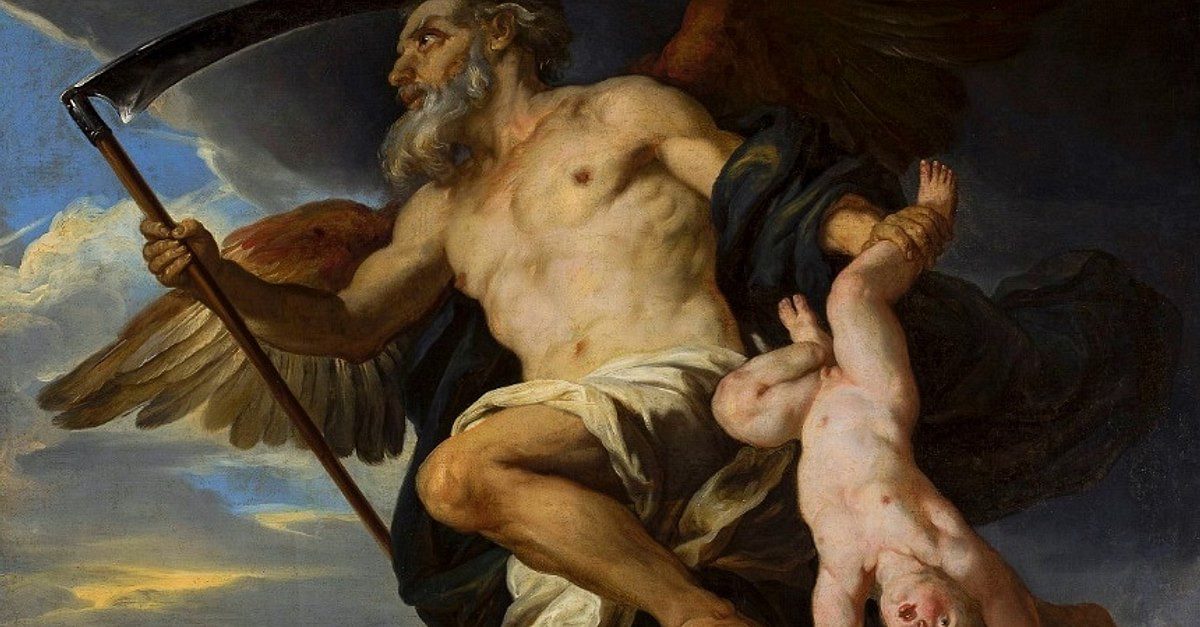
Cronus, a significant figure in Greek mythology, is known as the leader of the first generation of Titans. He is often associated with themes of time, harvest, and, most notably, the cyclical nature of life. In ancient texts, Cronus is portrayed as a complex character who embodies both creation and destruction. His story intertwines with that of his children, the Olympian gods, who eventually overthrow him, marking a pivotal moment in Greek mythological history. This article explores the various aspects of Cronus, his lineage, his reign, and his eventual downfall.
The Birth of Cronus
Cronus was born to Uranus (the sky) and Gaia (the earth), making him one of the primordial beings of the universe. As one of the Titans, Cronus had several siblings, including Oceanus, Hyperion, Coeus, Crius, Iapetus, and Theia. These siblings played crucial roles in the myths surrounding the creation of the world. Cronus’s birth is significant as it symbolizes the transition from the chaotic forces of the universe to a more structured order, which the Titans would help establish.
 Cybele
In the stories of creation, Gaia was unhappy with Uranus because he imprisoned their children, the Cyclopes and the Hecatoncheires, deep within the earth. Seeking to free her children, Gaia conspired with Cronus to overthrow Uranus. Cronus took a sickle and castrated his father, thus fulfilling Gaia’s desire and allowing the Titans to emerge from the shadows. This act of rebellion against Uranus marks the beginning of Cronus’s reign and sets the stage for the tumultuous events that follow.
The Reign of Cronus
Once he overthrew Uranus, Cronus became the ruler of the universe and established his reign over the Titans. Under his leadership, the world experienced a period of peace and prosperity, often referred to as the Golden Age. During this time, humanity flourished, living in harmony with nature and free from the burdens of labor. Cronus was revered as a god of agriculture and harvest, symbolizing abundance and fertility.
As the ruler of the Titans, Cronus was often depicted as a benevolent figure. He taught humans how to cultivate the land, and his association with the harvest made him a vital deity for agrarian societies. People worshipped him, offering sacrifices to ensure bountiful crops and favorable weather. Cronus’s reign was marked by the absence of war and strife, and he was seen as a fatherly figure who cared for his subjects.
 Cyclopes
The Prophecy and Fear of Overthrow
Despite his initial success, Cronus was haunted by a prophecy that foretold his downfall. It was said that one of his children would eventually overthrow him, just as he had done to Uranus. This prophecy instilled fear in Cronus, leading him to take drastic measures to prevent it from coming true. He resorted to a cruel practice: every time his wife, Rhea, gave birth, he would swallow the newborn child to eliminate any potential threats to his throne.
- First, he swallowed Hestia.
- Then came Demeter.
- After that, he swallowed Hera.
- Next was Hades.
- Finally, he swallowed Poseidon.
Rhea, devastated by the loss of her children, devised a plan to save her youngest, Zeus. When Zeus was born, Rhea secretly took him to the island of Crete and gave Cronus a stone wrapped in swaddling clothes, which he unknowingly swallowed. Zeus was raised in secrecy, away from Cronus’s watchful eyes, and this act of deception would ultimately lead to Cronus’s downfall.
The Rise of Zeus
 Polyphemus
As Zeus grew older, he became aware of his destiny and the prophecy surrounding his father. With the help of Metis, the goddess of wisdom, he devised a plan to overthrow Cronus. Metis gave Zeus a potion that forced Cronus to regurgitate his siblings, who had been trapped in his stomach. Once freed, Hestia, Demeter, Hera, Hades, and Poseidon joined forces with Zeus to confront their father.
The siblings rallied together, and a great battle ensued, known as the Titanomachy. This war lasted for ten years and was marked by fierce clashes between the Titans, led by Cronus, and the Olympian gods, led by Zeus. The Titans were powerful, but the united front of the Olympians, along with the help of the Cyclopes and Hecatoncheires, proved to be too much for Cronus and his allies.
The Titanomachy
The Titanomachy was a defining moment in Greek mythology, symbolizing the struggle between the old order and the new. The Titans, who had once ruled with Cronus, found themselves fighting against their own children. This conflict was not just a battle for power but also a clash of ideals. The Olympians represented a new way of governance, one that favored justice and order over tyranny.
During the war, Zeus demonstrated remarkable leadership and strategic skills. He used thunderbolts, gifted to him by the Cyclopes, to strike down his enemies. The Olympians worked together to defeat the Titans, and their unity was a significant factor in their victory. After a long and arduous struggle, the Olympians emerged triumphant, and Cronus was captured.
The Aftermath of the War
Following their victory, Zeus and his siblings decided the fate of the Titans. They chose to imprison Cronus and the other Titans in the Tartarus, a deep abyss located beneath the underworld. This decision was both a punishment and a means of ensuring that the Titans could not threaten their reign again. The imprisonment of Cronus marked the end of the Titan era and the beginning of the Olympian age.
In the aftermath of the Titanomachy, Zeus became the king of the gods and established a new order on Mount Olympus. He, along with his siblings, took on various roles and responsibilities, creating a pantheon of gods that governed different aspects of life and nature. Cronus’s downfall served as a reminder of the inevitability of change and the cyclical nature of power in mythology.
Cronus in Popular Culture
Cronus’s story has left a lasting impact on art, literature, and popular culture. His character is often depicted in various forms, from ancient pottery to modern films and literature. In many adaptations, Cronus is portrayed as a tragic figure, reflecting on the consequences of his actions and the inevitability of fate. This portrayal adds depth to his character, emphasizing the complexities of power and the human condition.
In literature, Cronus has been referenced in works by famous authors such as Hesiod and Homer. Their writings explore the themes of destiny, family, and the struggle for power. In modern times, Cronus has appeared in various films and television series, often as a representation of tyranny and the consequences of unchecked ambition. These adaptations continue to shape the perception of Cronus and his legacy in contemporary society.
The Symbolism of Cronus
Cronus is often associated with various symbols that reflect his character and attributes. One of the most notable symbols is the sickle, which represents his role in the harvest and his act of castrating Uranus. The sickle signifies both creation and destruction, illustrating the duality of Cronus’s nature as a god who brings forth life but also enacts violence to maintain power.
- Time: Cronus is sometimes linked to the concept of time, representing the cyclical nature of existence.
- Harvest: As a god of agriculture, he embodies fertility and the bounty of the earth.
- Fate: His story highlights the inevitability of fate and the consequences of one’s actions.
Through these symbols, Cronus embodies the complexities of life, illustrating the balance between creation and destruction, order and chaos. His legacy serves as a reminder of the fragility of power and the importance of understanding the consequences of one’s choices.
Cronus and the Concept of Time
In addition to his role in Greek mythology, Cronus is often associated with the concept of time. The word “chronology,” which refers to the arrangement of events in time, is derived from his name. This connection emphasizes the importance of time in understanding the cycles of life and the inevitability of change.
Cronus’s reign and subsequent downfall illustrate the passage of time and the cyclical nature of existence. Just as he overthrew Uranus, he was eventually overthrown by his own son, Zeus. This pattern of succession reflects the idea that no power is permanent and that change is an essential part of the universe. In this way, Cronus serves as a symbol of the passage of time and the continuous cycle of life, death, and rebirth.
Cronus remains a captivating figure in Greek mythology, embodying the complexities of power, family, and the passage of time. His story serves as a reminder of the cyclical nature of existence and the inevitability of change. As we continue to explore his legacy, we gain insight into the human experience and the timeless themes that resonate through mythology.