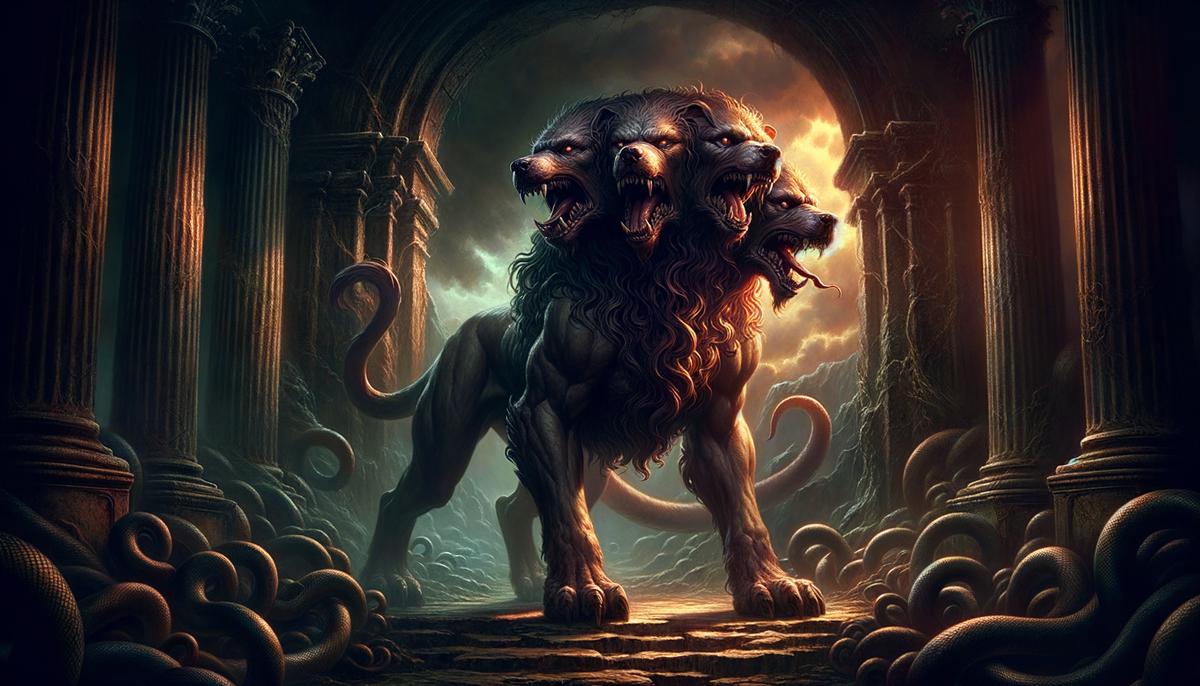
In Greek mythology, Cerberus is known as the three-headed dog that guards the gates of the Underworld. This fearsome creature is a significant figure in various myths and stories. His primary role is to prevent the dead from leaving the Underworld and to stop the living from entering without permission. Cerberus is often depicted with a snake for a tail and has multiple heads, usually three, though some sources suggest he could have more. His intimidating presence serves as a reminder of the power of death and the importance of respecting the boundaries between life and the afterlife.
Origins of Cerberus
The origins of Cerberus can be traced back to ancient Greek literature, where he is first mentioned in works such as Hesiod’s “Theogony.” According to these texts, Cerberus is the offspring of the primordial deities Typhon and Echidna, who are often associated with chaos and monsters. This lineage sets the stage for Cerberus as a creature of great strength and ferocity. Typhon, known as a giant storm monster, and Echidna, considered the mother of all monsters, contribute to Cerberus’s terrifying nature and his role as a guardian of the Underworld.
 Cercopes
In addition to his fearsome parentage, Cerberus is often depicted in art and literature as a creature that embodies the essence of death and the afterlife. His presence serves as a constant reminder of mortality, and he is a symbol of the inevitable fate that awaits all living beings. As a guardian of the Underworld, Cerberus also represents the transition between life and death, highlighting the importance of respecting the boundaries that separate the two realms.
Cerberus in Mythology
Cerberus appears in various myths, showcasing his role as the guardian of the Underworld. One of the most famous stories involving Cerberus is the twelfth labor of Heracles (Hercules). In this myth, Heracles is tasked with capturing Cerberus and bringing him to the surface world. This labor is particularly challenging because Cerberus is not just a mere beast; he is a formidable creature with incredible strength and the ability to terrify even the bravest of heroes.
 Ceryneian-hind
In the story, Heracles descends into the Underworld, where he encounters various spirits and beings. He must prove his worthiness to Hades, the god of the Underworld, before he can take Cerberus. Heracles manages to subdue Cerberus using his immense strength, but he does so without using weapons, demonstrating his heroic nature. This labor not only showcases the physical prowess of Heracles but also emphasizes the importance of bravery and respect when dealing with the unknown.
Characteristics of Cerberus
Cerberus is often described with several distinct characteristics that contribute to his fearsome reputation. Some of these characteristics include:
- Three Heads: The most notable feature of Cerberus is his three heads, each representing different aspects of his personality. One head is often seen as representing ferocity, another as intelligence, and the third as a guardian spirit.
- Serpent Tail: Cerberus is commonly depicted with a serpent for a tail, adding to his monstrous appearance and symbolizing danger.
- Fangs and Claws: His large fangs and sharp claws make him a fearsome opponent, capable of inflicting serious harm on anyone who dares to challenge him.
- Intimidating Growl: Cerberus is known for his terrifying growl, which echoes through the Underworld, instilling fear in the hearts of those who hear it.
These characteristics make Cerberus a formidable guardian, ensuring that the dead remain in the Underworld and that the living do not disturb the peace of the afterlife. His physical traits are not just for show; they symbolize the nature of death and the importance of boundaries in Greek mythology.
 Ceto
CetoCerberus in Art and Culture
Cerberus has been a popular subject in various forms of art and culture throughout history. From ancient pottery and sculptures to modern films and literature, Cerberus continues to capture the imagination of artists and storytellers. In ancient Greece, artists often depicted Cerberus in scenes of the Underworld, emphasizing his role as a guardian. These depictions were meant to convey both the fear and respect that the Greeks had for death and the afterlife.
In addition to visual art, Cerberus has also been featured in numerous literary works. One of the most famous mentions is in Dante Alighieri’s “Inferno,” where Cerberus is depicted as a gluttonous creature guarding the third circle of Hell. This portrayal aligns with the idea of Cerberus as a fearsome guardian, but it also adds layers to his character, exploring themes of sin and punishment in the afterlife.
Modern Interpretations of Cerberus
In modern culture, Cerberus has taken on various forms and interpretations. He appears in films, video games, and even comic books, often retaining his characteristics as a three-headed dog. For example, in the popular video game series “God of War,” Cerberus is depicted as a powerful foe that players must defeat. This portrayal highlights the ongoing fascination with Cerberus as a symbol of death and the challenges that come with facing one’s fears.
- Films: Cerberus has appeared in numerous films, often as a monstrous guardian or antagonist. His character is used to explore themes of bravery, sacrifice, and the struggle against evil.
- Video Games: In games like “Final Fantasy” and “Hades,” Cerberus is featured as a powerful creature that players can encounter, adding an element of challenge and excitement to the gameplay.
- Literature: Modern authors often reference Cerberus in their works, using him as a metaphor for various struggles and challenges that characters must face.
The enduring presence of Cerberus in contemporary culture speaks to the timeless nature of Greek mythology and its ability to resonate with audiences across generations. His character serves as a reminder of the complex relationship between life and death, as well as the human fascination with the unknown.
The Symbolism of Cerberus
Cerberus is rich in symbolism, representing various themes that resonate throughout Greek mythology. One of the most prominent symbols associated with Cerberus is the concept of boundaries. As the guardian of the Underworld, Cerberus serves to protect the threshold between life and death, emphasizing the importance of respecting these boundaries. His presence warns of the consequences of crossing into the realm of the dead without permission, reinforcing the idea that death is a final and sacred state.
Another important aspect of Cerberus’s symbolism is his representation of fear. As a monstrous creature, Cerberus embodies the fears that people have about death and the afterlife. His three heads can be seen as representing the different ways that individuals confront their mortality: denial, acceptance, and fear. This multifaceted nature of Cerberus invites contemplation about how humans deal with the concept of death and the unknown.
Lessons from Cerberus
The myths surrounding Cerberus offer valuable lessons that extend beyond the realm of Greek mythology. One of the key lessons is the importance of courage in the face of fear. Heracles’s encounter with Cerberus demonstrates that true bravery is not the absence of fear, but the willingness to confront it head-on. This lesson is relevant in various aspects of life, as individuals often face challenges and fears that require them to summon their inner strength.
- Respect for Boundaries: Cerberus teaches the importance of respecting boundaries, both in life and in death. Crossing these boundaries can lead to dire consequences, emphasizing the need for caution and awareness.
- Acceptance of Mortality: Cerberus serves as a reminder that death is an inevitable part of life. Understanding and accepting this reality can lead to a deeper appreciation for life and the experiences it offers.
- Facing Challenges: The story of Heracles and Cerberus encourages individuals to face their challenges with determination and bravery. Overcoming obstacles often requires strength and resilience.
These lessons continue to resonate with people today, as they navigate their own fears and challenges in life. The enduring nature of Cerberus’s symbolism highlights the relevance of ancient myths in modern society.
Cerberus in Comparative Mythology
Cerberus is not unique to Greek mythology; similar figures appear in various cultures around the world. Many mythologies feature monstrous guardians that protect the realms of the dead or the underworld. For example, in Egyptian mythology, the goddess Ammit is depicted as a creature that devours the souls of the unworthy, serving a similar purpose to Cerberus. This comparison illustrates the universal themes of death and the afterlife found in many cultures.
In Norse mythology, the creature Fenrir is a monstrous wolf destined to bring about destruction during Ragnarok. While Fenrir’s role differs from that of Cerberus, both creatures symbolize the chaotic forces associated with death and the unknown. These comparisons highlight the shared human experiences and fears surrounding mortality, demonstrating how different cultures interpret similar concepts through their myths.
Influence on Literature and Art
The influence of Cerberus extends beyond mythology into literature and art across cultures. Writers and artists often draw inspiration from the archetype of the monstrous guardian to explore themes of fear, death, and the afterlife. In literature, authors may use Cerberus as a metaphor for the struggles characters face when confronting their own mortality or the consequences of their actions.
- Symbolic Representations: In various works, Cerberus is used symbolically to represent the barriers individuals must overcome in their lives, whether they are emotional, psychological, or spiritual.
- Artistic Interpretations: Artists often depict Cerberus in dramatic and evocative ways, capturing the fear and awe associated with death and the afterlife.
- Modern Adaptations: Contemporary writers and filmmakers continue to reinterpret Cerberus, incorporating him into new narratives that reflect modern fears and challenges.
The ongoing fascination with Cerberus and his symbolism in literature and art demonstrates the lasting impact of Greek mythology on cultural expression. As society evolves, the themes associated with Cerberus remain relevant, inviting exploration and reflection.
Conclusion of Cerberus’s Legacy
The legacy of Cerberus endures through the ages, serving as a powerful symbol in Greek mythology and beyond. His role as the guardian of the Underworld emphasizes the importance of boundaries and the inevitability of death. Through various myths, art, and literature, Cerberus continues to captivate audiences, inviting them to explore the complexities of life, death, and the human experience.
As a figure that embodies both fear and respect, Cerberus reminds us of the delicate balance between life and death. The stories surrounding him encourage us to confront our fears and embrace the lessons they offer. Whether in ancient myths or modern interpretations, Cerberus remains a significant figure, representing the eternal struggle between light and darkness, life and death.