WORLD

Bomazi
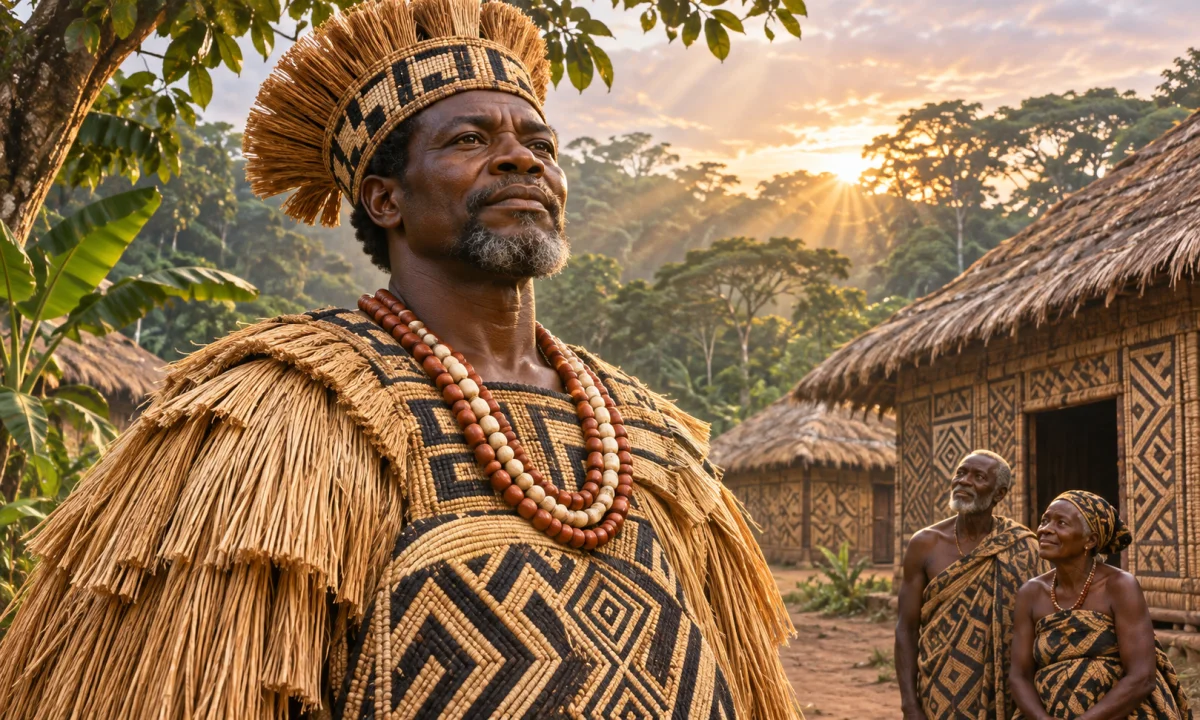
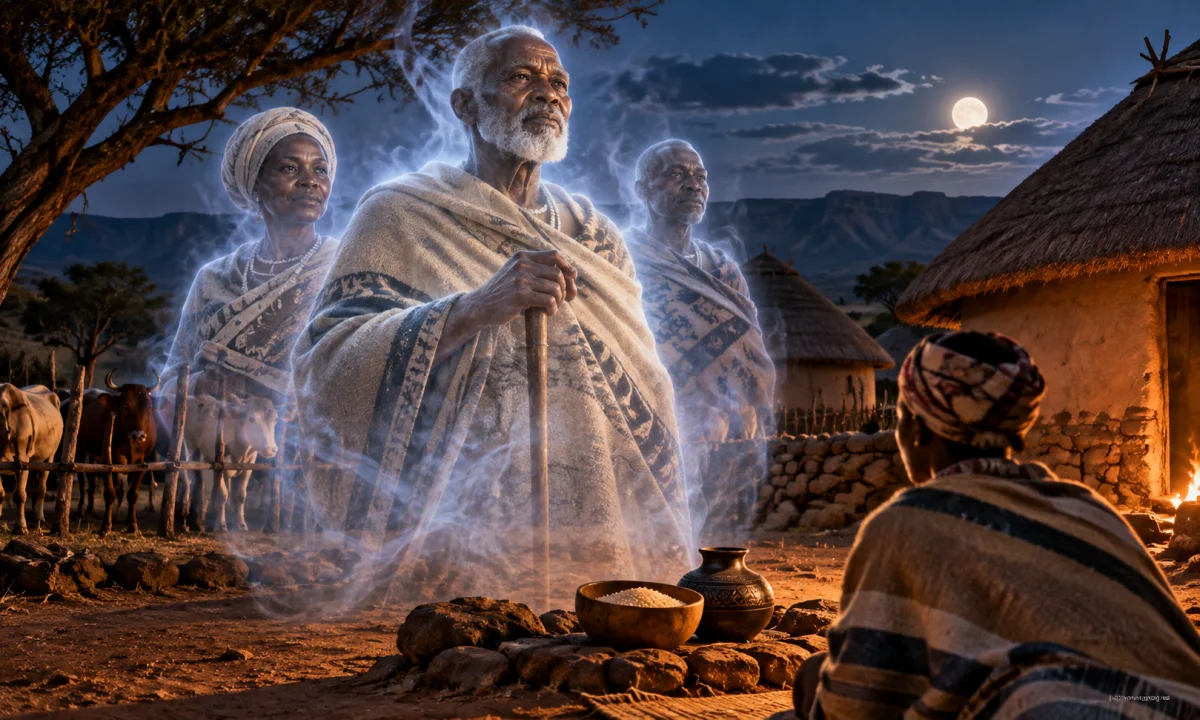
Bomazi is a name associated in some modern reference works with an African deity or spirit of death and the underworld. The figure is usually described as belonging to “Bantu mythology,” but that label is extremely broad. Bantu-speaking peoples include hundreds of communities across central, eastern, and southern Africa, with distinct languages, histories, religious systems, and traditions. As a result, Bomazi should not be presented as a universally recognised Bantu god or as a figure with one established mythology.
The available information about Bomazi is limited. The name appears chiefly in condensed lists of African gods and mythological beings, where it is commonly assigned a connection with death, the realm of the dead, or the underworld. More detailed traditional narratives, prayers, ritual descriptions, and locally identified communities are difficult to establish with confidence. The absence of securely documented stories makes it important to distinguish between a brief classification in a modern compilation and a well-attested figure preserved in a specific oral or written tradition.
Origins and cultural setting
The word “Bantu” properly refers first to a large family of related languages and, by extension, to many populations who speak those languages. Bantu-speaking societies are found from parts of Cameroon and the Congo Basin across central Africa and into eastern and southern Africa. They do not share a single religion, pantheon, or account of death. Concepts associated with ancestors, spirits, creators, illness, misfortune, initiation, and the afterlife vary substantially from one community to another.
For this reason, the phrase “Bantu god of death,” sometimes used for Bomazi, is too general to identify a precise cultural origin. It does not by itself tell us whether the name belongs to a Kongo, Luba, Fang, Mongo, or another tradition, and it should not be treated as evidence of a pan-African belief. A careful account must therefore describe Bomazi as a figure reported in some secondary mythological sources, rather than as a deity securely shared by all Bantu-speaking peoples.
Many African religious traditions were transmitted primarily through oral performance, ritual practice, family teaching, initiation, and relationships with ancestors. Such traditions were not necessarily recorded in a standard written scripture. Early outside observers often wrote down names according to the spelling conventions of their own languages, and they sometimes grouped different beliefs under large racial, linguistic, or geographical labels. Later encyclopaedias and mythology websites occasionally repeated these short entries without preserving the local context behind them.
That history may help explain why Bomazi is easy to find as a name but difficult to place within a well-documented body of stories. It is possible that the name reflects a localized tradition, a transcription in an older source, or a later summary whose original context has been lost. Without stronger evidence, the exact community, language, and period associated with Bomazi remain uncertain.
Name and classification
Bomazi is generally classified as a death deity, an underworld ruler, or a spirit connected with the dead. These descriptions are not always identical. A death deity may be understood as the power responsible for death itself; an underworld ruler governs the place where the dead reside; and a death spirit may be one supernatural being among several involved in funerary or ancestral processes. Short reference entries often blur these distinctions.
There is no universally agreed translation of the name “Bomazi” in English. Nor is there a securely established pronunciation or spelling tradition that can be applied across Africa. Similar-looking names should not automatically be treated as forms of Bomazi. African languages use many different sound systems and writing conventions, and a name recorded by an outsider may not represent its original form accurately. At present, the safest approach is to retain the spelling Bomazi while acknowledging that its linguistic meaning and local form are uncertain.
Some descriptions call Bomazi a god, while others imply a spirit or supernatural ruler. “God” is a convenient English category, but it can impose assumptions drawn from European mythology. In many African religious systems, the boundary between deity, spirit, ancestor, culture hero, and personified force does not correspond neatly to the categories used in modern mythology handbooks. Bomazi’s classification should therefore be regarded as provisional rather than definitive.
Attributes and associated ideas
The principal attribute assigned to Bomazi is authority over death or the realm of the dead. Beyond that broad association, dependable traditional details are scarce. There is no securely established description of Bomazi’s physical appearance, clothing, sacred animals, weapons, dwelling place, symbols, or ritual calendar. Popular summaries sometimes expand a simple “god of death” label into a fully developed character, but those additions should not be accepted as ancient tradition without supporting evidence.
If Bomazi is understood as an underworld figure, the role may be interpreted through wider African ideas about the relationship between the living, the dead, and the ancestors. In many communities, death is not imagined simply as annihilation. The dead may remain socially significant as ancestors, guardians of family continuity, or beings who can influence the fortunes of their descendants. Funerals, mourning, naming practices, offerings, memorial observances, and rules surrounding impurity can all express the need to manage the boundary between the living and the dead.
These broader ideas provide useful context, but they should not be mistaken for specific teachings about Bomazi. There is no clear evidence that Bomazi was universally believed to judge the dead, punish sinners, collect souls, rule a subterranean kingdom, or grant access to an afterlife. Those features are common in modern portrayals of death gods around the world, but they cannot automatically be attributed to this figure.
Likewise, Bomazi should not be assumed to represent evil. In many religious traditions, death is frightening and dangerous without being morally evil. A being connected with death may regulate a necessary transition, guard the boundary between worlds, or embody the fact that human life is limited. The moral character of such a figure cannot be determined from the title “god of death” alone.
Stories and relationships
No widely preserved cycle of myths about Bomazi is available in the same way that there are established story cycles about figures such as Anansi, the Yoruba orisha, or the Kongo creator deity Nzambi Mpungu. There is no securely documented account of Bomazi’s birth, family, rivals, spouse, descendants, or conflict with a creator god. Claims that provide a detailed genealogy should therefore be treated cautiously unless they identify a specific local tradition and reliable documentation.
The same caution applies to supposed stories about Bomazi taking human lives, receiving the dead, or deciding where souls will go. Such narratives may appear in modern retellings, but their presence in an online or commercial mythology list does not establish that they belong to an ancient oral tradition. In the case of Bomazi, the most responsible description is that the figure’s presumed function is known more clearly than the stories surrounding it.
This lack of narrative detail does not necessarily mean that the name has no cultural significance. Oral traditions can be local, restricted, or transmitted in forms that were never written down. A name may also survive in a source that recorded only a fragment of a larger belief system. The uncertainty concerns the evidence available today, not a judgement about whether communities once held meaningful traditions associated with the name.
Death, ancestors, and the unseen world
Understanding the possible significance of Bomazi requires avoiding a simplistic opposition between “life” and “death.” In many African religious settings, the deceased may continue to participate in the moral and social life of a family. Ancestors can be remembered as sources of protection, fertility, authority, warning, or correction. At the same time, improper death, neglected funerary duties, or contact with dangerous spirits may be associated with disorder and misfortune.
A being linked to death could consequently have several possible meanings. Bomazi might be imagined as a guardian of the dead, an embodiment of the passage from life to ancestry, or a personification of mortality. These interpretations are possibilities suggested by the category assigned to the name, not securely recorded attributes. They should not be converted into a single universal theology.
The distinction between an ancestor and a deity is also important. Ancestors are generally deceased members of a community whose continuing relationship with the living depends on family identity and ritual recognition. A deity or major spirit may have a broader supernatural role and may not have been human. If Bomazi belongs to a particular tradition, the local understanding of the figure would determine whether “ancestor,” “spirit,” or “god” is the most appropriate term. The surviving generic label does not settle the question.
Distinction from other African figures
Bomazi should not be confused with other figures who are sometimes described in English as rulers of death or the underworld. Nzambi Mpungu, associated especially with Kongo religious traditions, is commonly discussed as a supreme or creator deity, although interpretations of Kongo religion vary by period and source. Nzambi Mpungu is not simply another name for Bomazi.
Bumba, also called Mbombo in some accounts, is associated in modern presentations with a Kuba creation tradition. That figure belongs to a different cultural context and should not be merged with an uncertain death spirit merely because both names appear in lists of African mythology.
Mami Wata is a broad and diverse water-spirit tradition found in many parts of Africa and in the African diaspora. Mami Wata may be associated with wealth, danger, beauty, healing, sexuality, or the sea, depending on the local tradition. She is not a standard equivalent of Bomazi and should not be treated as a death goddess simply because both can be represented as powerful supernatural beings.
Nor should Bomazi be identified with Baron Samedi, a figure of Haitian Vodou. Baron Samedi developed within the religious and historical environment of Haiti and the African diaspora, with roots in Vodou traditions shaped by several African and American influences. He is a distinct figure, not a later name or form of Bomazi.
Interpretation and significance
Bomazi is most useful to approach as an example of the problems involved in studying African mythology through generalized reference material. A short label can preserve a name while removing the language, community, ritual setting, and historical circumstances that gave the name meaning. Once detached from that setting, the figure may be presented as though it belonged to a single continent-wide pantheon.
The uncertainty surrounding Bomazi also illustrates why “African mythology” is a geographical category rather than one unified religious system. African traditions include creator beings, nature spirits, divinities associated with political authority, tricksters, healing powers, ancestral forces, and many forms of local supernatural presence. Their names and functions cannot be safely combined merely because they come from the same continent.
Where the name is retained, the most defensible interpretation is that Bomazi represents a reported tradition of a supernatural power associated with death or the dead. Its possible symbolism includes mortality, the boundary between the living and the deceased, and the authority of whatever force governs that transition. More specific interpretations require evidence from a named community, language, ritual context, or early record.
Bomazi in modern reference culture
Bomazi has little established presence in widely known literature, film, television, or popular religious practice. The name is more often encountered in modern lists of gods, encyclopaedic summaries, fantasy databases, and online discussions of African mythology. These formats frequently give figures a single domain, such as “death,” without explaining how secure the attribution is or where it originated.
Modern writers and artists may use Bomazi as a name for a death spirit, underworld monarch, antagonist, or guardian of forbidden knowledge. Such uses can be creative reinterpretations, but they should be identified as modern fiction rather than presented as recovered African tradition. A character with elaborate powers, a fixed appearance, or a detailed mythology may therefore reflect the author’s invention rather than evidence about Bomazi’s historical or religious identity.
For now, Bomazi is best described with appropriate caution: a poorly documented figure associated in some secondary sources with death or the underworld, probably placed within a broad and imprecise “Bantu” category. The name may preserve a localized or incompletely recorded tradition, but its exact origin, meaning, attributes, and stories remain uncertain.