WORLD
WORLD
Belial
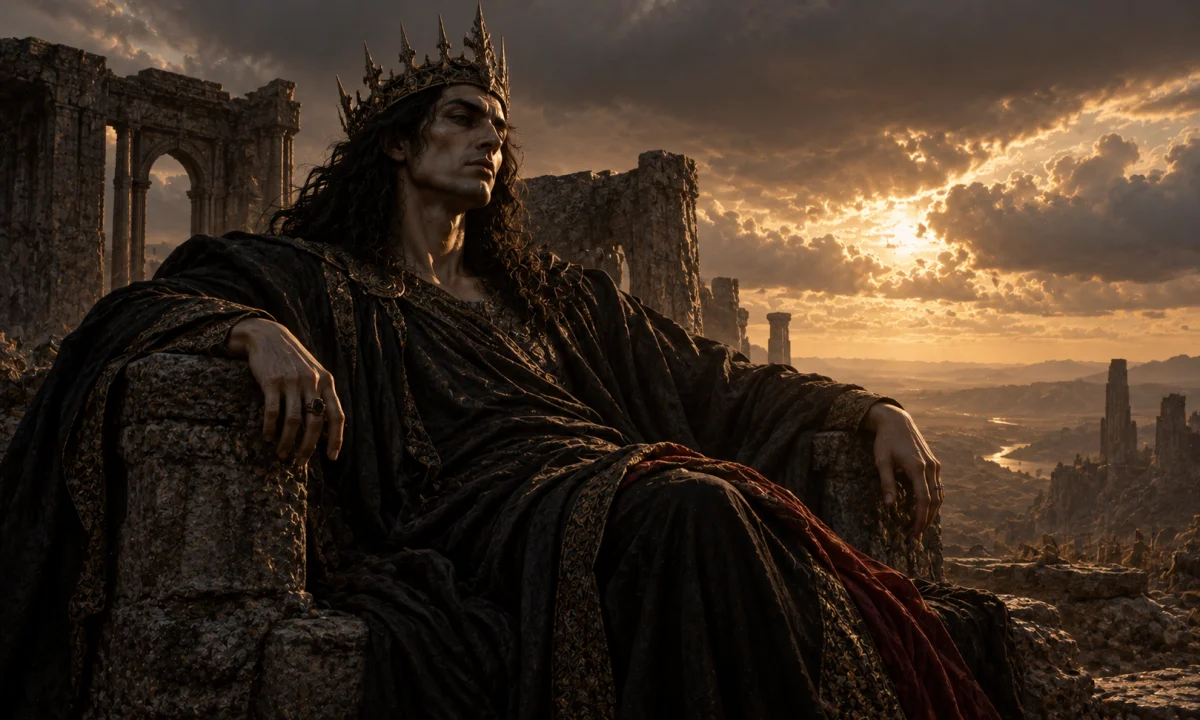
Belial is a name associated with wickedness, lawlessness and opposition to divine order in Jewish and Christian religious traditions. In the oldest Hebrew texts, however, Belial is usually not the name of an independent demon. The Hebrew expression bene beli ya'al, often translated as “sons of Belial,” originally describes worthless, corrupt or lawless people. Over time, later Jewish writings and Christian demonology transformed Belial from a descriptive term into a distinct supernatural adversary, and eventually into one of the prominent demons of European occult literature.
Origins of the name
Belial comes from the Hebrew bĕliyaʿal, a word whose precise original formation and meaning remain debated. It is commonly connected with ideas such as worthlessness, wickedness, destruction or lawlessness. Some traditional explanations interpret the word as “without worth” or “without a yoke,” but scholars do not agree that any single proposed etymology is certain.
In the Hebrew Bible, the word generally functions as a common noun rather than a personal name. Expressions such as “sons of Belial” or “men of Belial” refer to people who behave violently, dishonestly or impiously. They are not necessarily followers of a demon called Belial. Depending on the translation, the phrase may appear as “wicked men,” “scoundrels,” “worthless men” or “ungodly people.” The underlying Hebrew wording is important because later demonological interpretations often read an originally descriptive expression as though it had always referred to a particular spirit.
Examples occur in narratives concerning social disorder and religious disobedience. The men of Gibeah in the Book of Judges are described with this expression, as are certain opponents of King David and other figures who threaten the community. The term marks extreme moral corruption, rebellion or contempt for proper authority. It does not provide a detailed portrait of a demon with a fixed appearance, genealogy or set of powers.
Belial in the Hebrew Bible
The Hebrew Bible uses Belial in several related expressions. “Sons of Belial” can describe violent men, false witnesses, rebels or people who encourage idolatry. In these passages, the emphasis falls on their conduct rather than on their allegiance to a named supernatural being.
English translations sometimes preserve the name as “Belial,” while others translate its meaning. This variation can create the impression that the biblical texts disagree about whether Belial is a person or a concept. More accurately, the difference reflects changing translation choices. In the earliest biblical context, Belial is primarily a term for moral worthlessness or destructive lawlessness.
The word also came to be associated with the realm of death and ruin in some poetic and later interpretive contexts. Such associations helped make it suitable for personification. Yet the Hebrew Bible does not give Belial a narrative comparable to the stories of figures such as Satan, the serpent in Genesis or the destroyer figure in some later apocalyptic writings. Belial’s biblical role is mainly linguistic and ethical: the term identifies people and actions that stand outside communal righteousness.
Development in Second Temple Judaism
Belial becomes a much more clearly personal supernatural figure in some Jewish writings from the Second Temple period, especially texts associated with the Dead Sea Scrolls. These works reflect a strongly dualistic worldview in which the faithful community stands in opposition to forces of deception, impurity and darkness.
In the Community Rule, Belial is presented as a powerful leader of the forces of darkness. He is associated with spirits of deceit and with the testing and corruption of human beings. The text describes a cosmic conflict between the “sons of light” and the “sons of darkness,” with Belial governing or influencing the hostile side. This is not simple philosophical dualism in which good and evil are equal gods; the community’s theology remains rooted in the sovereignty of the God of Israel. Belial is a powerful adversary, but not an independent creator or rival deity of equal status.
The War Scroll also places Belial within an end-time struggle between the forces of light and darkness. Here he represents the organized opposition to the righteous community and to the final triumph of divine justice. The imagery is military and apocalyptic: human groups and spiritual powers participate in a conflict whose outcome is ultimately determined by God.
Other texts from the same broad period, including works related to the Testaments of the Twelve Patriarchs, use forms such as Beliar or Belial for a tempter or demonic opponent. The exact textual history of these writings is complex, and surviving manuscripts reflect transmission through different religious communities and languages. It is therefore safer to speak of a developing family of traditions than of one universally fixed doctrine about Belial.
Identity and classification
Belial’s classification depends on the period and source. In biblical Hebrew usage, he is not clearly a demon at all. In some Jewish apocalyptic and sectarian writings, he is a leading evil spirit or ruler of the forces of darkness. In Christian texts, he can function as a name for a demonic power opposed to Christ and the faithful. In later European demonology, he becomes a high-ranking demon or infernal king.
This development illustrates a broader pattern in religious history. Words that originally describe a condition—wickedness, impurity or lawlessness—can gradually become personified. Once personified, the figure may acquire relationships, titles and visual characteristics from later traditions. Belial is therefore not one unchanging being with a single biography. The biblical term, the apocalyptic adversary and the demon of occult grimoires belong to related but historically distinct stages.
Belial is also sometimes treated as one of the names or forms of Satan. That identification is not consistent across all sources. In some texts, Belial is a separate adversarial power; in others, the two figures occupy similar roles as leaders or embodiments of evil. The relationship should not be presented as a settled feature of all Jewish or Christian belief.
Attributes and symbolism
In early sources, Belial’s defining attribute is not a particular body but opposition to righteousness. He represents deceit, corruption, rebellion and the forces that lead people away from faithful observance. His influence is especially associated with temptation and the distortion of moral judgment.
The Dead Sea Scrolls portray him as a ruler or commander within a spiritual hierarchy of darkness. He is connected with deceitful spirits and with the testing of the righteous. This role gives Belial a political and military character: he is not merely a private tempter but the organizer of a wider opposition to the community of light.
In later Christian interpretation, the name can symbolize lawlessness in a theological sense. The word appears in the New Testament in a passage contrasting Christ with Belial, asking what agreement exists between them. The Greek manuscripts preserve variant forms, including Beliar and Belial. The passage uses the name as a personified representative of demonic or anti-Christian opposition, but it does not describe Belial’s appearance or provide a narrative about his origin.
Because the name is linked with rebellion against divine authority, later writers sometimes associate Belial with pride, political corruption, sexual temptation, false religion or the misuse of power. These associations are interpretive developments rather than a single ancient catalogue of his attributes.
Belial in Christian demonology
Christian demonological writing expanded the number and rank of named demons, particularly during the medieval and early modern periods. Belial was frequently included among the most important infernal powers, although accounts differed substantially in detail.
Some theological writers treated Belial as a personification of impiety or a title belonging to the devil. Others presented him as a specific demon with authority over subordinate spirits. Medieval writers did not always distinguish carefully between biblical language, apocryphal traditions, patristic interpretation and folklore. As a result, Belial’s place in demonological hierarchies varies from one work to another.
Several late medieval and early modern catalogues of demons describe Belial as a king or prince of Hell. These works should not be confused with ancient Jewish scripture. They belong to a later literary and occult environment in which demons were organized into ranks modeled partly on earthly courts and military structures.
Belial in the Ars Goetia
One of the best-known later portrayals appears in the Ars Goetia, the first section of the seventeenth-century compilation commonly called the Lesser Key of Solomon. This is an early modern grimoire, not a biblical or universally authoritative religious text.
In the Ars Goetia, Belial is described as a powerful king. The text gives him a dramatic appearance involving two beautiful angels seated in a chariot of fire. He is said to speak favorably of social and political office and to grant positions, influence or the favor of important people. The work also assigns him a large number of subordinate legions, although the precise details vary among manuscripts and editions.
The same text warns that Belial is inclined to deceive those who summon him and that offerings or ritual forms are required to obtain reliable answers. Such details belong to the conventions of ceremonial magic. They should not be projected backward onto the Hebrew Bible or the Dead Sea Scrolls. The grimoire’s Belial is a product of early modern demonological classification, combining biblical names with magical ritual structures and European ideas about infernal monarchy.
Names and figures that should not be confused
Beliar is often a variant form of Belial, especially in Greek or Christian textual traditions. The spelling does not necessarily indicate a completely separate being, although individual authors may use the name in different ways.
Belial should not automatically be equated with Satan. Both can function as adversaries, tempters or leaders of evil forces, and later Christian writers sometimes merged their roles. Nevertheless, the sources do not all treat them as identical. In some writings Belial is subordinate to a greater adversary; in others he appears as an independent ruler of darkness.
Belial is also distinct from Mastema, a prominent adversarial figure in the Book of Jubilees. Mastema has overlapping functions as an accuser and leader of harmful spirits, and comparisons between the two are possible. However, they are not simply different names for the same figure in every tradition.
Likewise, the biblical expression “sons of Belial” should not be interpreted as evidence that the Hebrew Bible already contained a fully developed demon named Belial. The phrase is an important ancestor of later personification, but its original use is usually a description of human wickedness.
Cultural and religious significance
Belial’s history shows how religious vocabulary can change as communities reinterpret older texts. A word meaning worthlessness or lawlessness became a symbol of organized evil in apocalyptic Judaism, then an opponent of Christ in Christian interpretation, and finally a titled monarch in occult demonology.
The figure is especially significant in traditions concerned with the boundaries between obedience and rebellion. In the Dead Sea Scrolls, Belial helps express the community’s conviction that its conflicts are part of a larger spiritual struggle. In Christian usage, the name marks an incompatibility between devotion to Christ and participation in powers associated with idolatry or moral corruption. In demonological manuals, Belial represents the temptation of influence, status and worldly authority.
These meanings are not interchangeable. The apocalyptic Belial is a cosmic enemy within a religious vision of history; the grimoire Belial is a ranked spirit invoked through ritual; and the biblical term is primarily a moral description. Treating them as one identical figure obscures the historical development that made the name so influential.
Belial in modern culture
Belial continues to appear in novels, films, games, comics, music and other forms of popular culture. Modern creators may portray him as a demon king, fallen angel, ancient god, political manipulator or embodiment of corruption. These versions often draw more heavily on the Ars Goetia, general Christian demonology or modern occult fiction than on the original Hebrew uses of the word.
Some modern works also use “Belial” simply as a name suggesting evil or rebellion, without attempting to follow any historical tradition. Such portrayals can be imaginative and culturally influential, but they should be distinguished from the biblical term and from the sectarian Jewish writings in which Belial first appears as a clearly personified supernatural adversary.