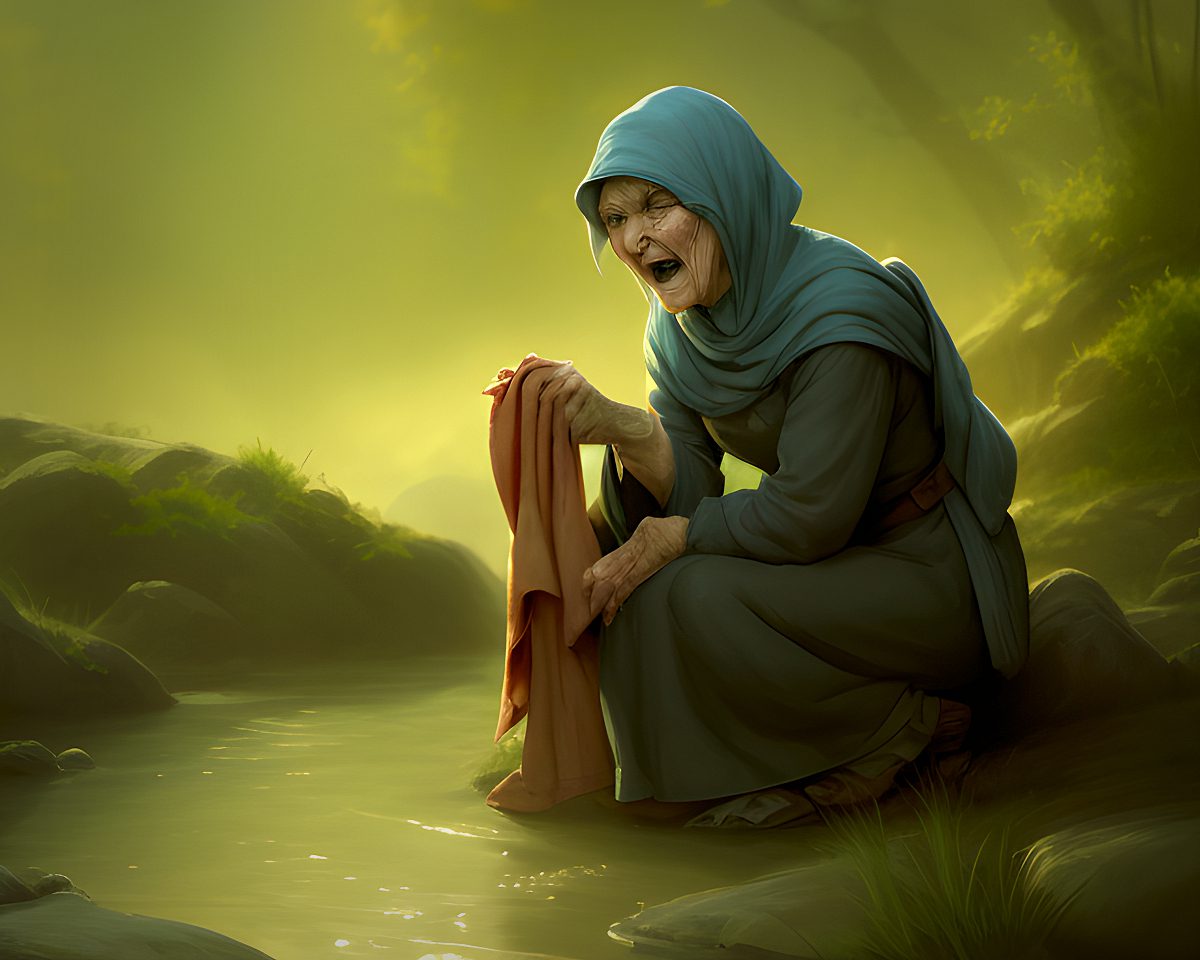
In Irish mythology, the Bean Nighe is a fascinating figure that has captivated the imagination of many. Often referred to as the “Washerwoman,” this spectral woman is known for her connection to death and the supernatural. She is believed to be a harbinger of fate, specifically foretelling the deaths of individuals. The Bean Nighe is not just a solitary character; her stories are intertwined with various aspects of Irish folklore, making her a significant figure in the cultural landscape of Ireland.
Origins of the Bean Nighe
The origins of the Bean Nighe can be traced back to ancient Irish tales. She is often associated with the Tuatha Dé Danann, the mythological race of gods and heroes in Irish mythology. According to some legends, she is said to be a female fairy or a spirit who appears near rivers or streams, washing the clothes of those who are about to die. This connection to water symbolizes the transition between life and death, reinforcing her role as a guide for souls.
 Banshee
In many stories, the Bean Nighe is depicted as an old woman with a disheveled appearance, often dressed in tattered clothing. Her haunting presence is marked by the sound of rushing water and the sight of her washing clothes. Some tales describe her as having a greenish complexion, which adds to her ghostly aura. This visual representation has made her an enduring figure in Irish folklore.
Characteristics of the Bean Nighe
The Bean Nighe possesses several distinct characteristics that set her apart from other mythical figures. One of her most notable traits is her ability to foresee death. When she is seen washing clothes, it is often a sign that someone is about to pass away. This prophetic ability ties her to the themes of fate and mortality, making her a powerful symbol in Irish mythology.
 Banba
BanbaAdditionally, the Bean Nighe is often described as having a deep connection to nature. She is frequently associated with bodies of water, particularly rivers and streams. This connection not only emphasizes her role as a washerwoman but also highlights the importance of water in Irish culture. Water is often seen as a purifying element, and the Bean Nighe‘s washing symbolizes the cleansing of the soul.
Physical Appearance
- Disheveled Hair: The Bean Nighe is often portrayed with wild, unkempt hair, reflecting her otherworldly nature.
- Tattered Clothing: Her attire is usually described as old and worn, symbolizing her connection to the past and the inevitability of death.
- Ghostly Complexion: Many tales depict her with a pale or greenish complexion, enhancing her spectral presence.
These physical traits contribute to the eerie yet intriguing persona of the Bean Nighe. Her appearance is not merely for aesthetic purposes; it serves to reinforce her role as a guide for the souls of the departed. The combination of her ghostly visage and her association with death creates a powerful image that resonates deeply within Irish folklore.
Bean Nighe in Folklore
The tales of the Bean Nighe are rich and varied, often differing from one region of Ireland to another. In some stories, she is portrayed as a benevolent figure, offering guidance to those who encounter her. In contrast, other tales depict her as a more malevolent presence, warning of impending doom. This duality adds complexity to her character and highlights the diverse interpretations of death in Irish culture.
 Balor
BalorOne of the most famous stories involving the Bean Nighe tells of a warrior who encounters her while hunting. He sees her washing the bloodstained clothes of fallen soldiers, realizing that his fate is intertwined with theirs. In this tale, the Bean Nighe serves as a reminder of the warrior’s mortality and the consequences of his actions. This encounter emphasizes the idea that death is not only a personal experience but also a collective one, affecting families and communities.
Regional Variations
- Scottish Connections: In Scotland, a similar figure known as the Bean Nighe appears, often associated with the Fairy Folk.
- Local Legends: Different regions in Ireland have their own unique legends about the Bean Nighe, reflecting local beliefs and customs.
- Modern Interpretations: Contemporary retellings of the Bean Nighe continue to evolve, adapting her story to modern themes of loss and remembrance.
These regional variations showcase the adaptability of the Bean Nighe myth, allowing it to resonate with different audiences throughout history. Whether she is seen as a guardian of souls or a foreboding omen, the Bean Nighe remains a central figure in the tapestry of Irish mythology.
Symbolism of the Bean Nighe
The Bean Nighe is rich in symbolism, representing various aspects of life, death, and the natural world. One of the most prominent symbols associated with her is the concept of fate. As a washerwoman, she is seen as a weaver of destinies, washing the clothes of those who are soon to die. This act symbolizes the inevitable nature of death and the cycle of life.
Moreover, the Bean Nighe embodies the theme of transformation. Water is often seen as a transformative element, capable of changing forms and states. In this sense, the Bean Nighe represents the transition from life to death, serving as a guide for souls as they navigate the afterlife. Her connection to water emphasizes the fluidity of existence and the interconnectedness of all living beings.
Death and Rebirth
- Cycle of Life: The Bean Nighe reminds us that death is a natural part of life, leading to new beginnings.
- Spiritual Guidance: She serves as a guide for souls, helping them transition from the physical world to the spiritual realm.
- Connection to Nature: Her association with water highlights the importance of nature in the cycle of life and death.
This rich symbolism surrounding the Bean Nighe invites reflection on the nature of existence. Her role as a washerwoman transcends mere folklore; it serves as a reminder of the profound connections between life, death, and the natural world.
Bean Nighe in Contemporary Culture
In recent years, the Bean Nighe has found a place in contemporary culture, appearing in literature, film, and art. As interest in folklore and mythology has grown, many creators have drawn inspiration from her story. This resurgence has led to a renewed appreciation for her character and the themes she represents.
For instance, the Bean Nighe has been featured in various novels and short stories, often reimagined for modern audiences. Writers have explored her dual nature, depicting her as both a guide and a warning. This exploration of her character allows for deeper discussions about mortality, fate, and the human experience.
Media Representations
- Literature: Many authors incorporate the Bean Nighe into their narratives, using her as a symbol of fate and transformation.
- Film: Movies that delve into Irish mythology often feature the Bean Nighe as a central character, highlighting her eerie presence.
- Art: Artists have depicted the Bean Nighe in various forms, capturing her haunting beauty and connection to nature.
This modern interest in the Bean Nighe reflects a broader trend of exploring mythology and folklore in contemporary storytelling. As people seek to understand their cultural heritage, figures like the Bean Nighe provide a window into the past and a means of connecting with the present.
Conclusion of the Bean Nighe’s Legacy
The legacy of the Bean Nighe continues to endure, reminding us of the rich tapestry of Irish mythology. Her stories, filled with symbolism and meaning, invite us to reflect on the themes of fate, mortality, and transformation. As a figure that straddles the line between life and death, the Bean Nighe serves as a powerful reminder of the interconnectedness of all beings.
Through her various representations in folklore, literature, and contemporary culture, the Bean Nighe remains a vital part of the Irish mythological landscape. Her haunting presence continues to inspire and provoke thought, ensuring that her legacy will endure for generations to come.