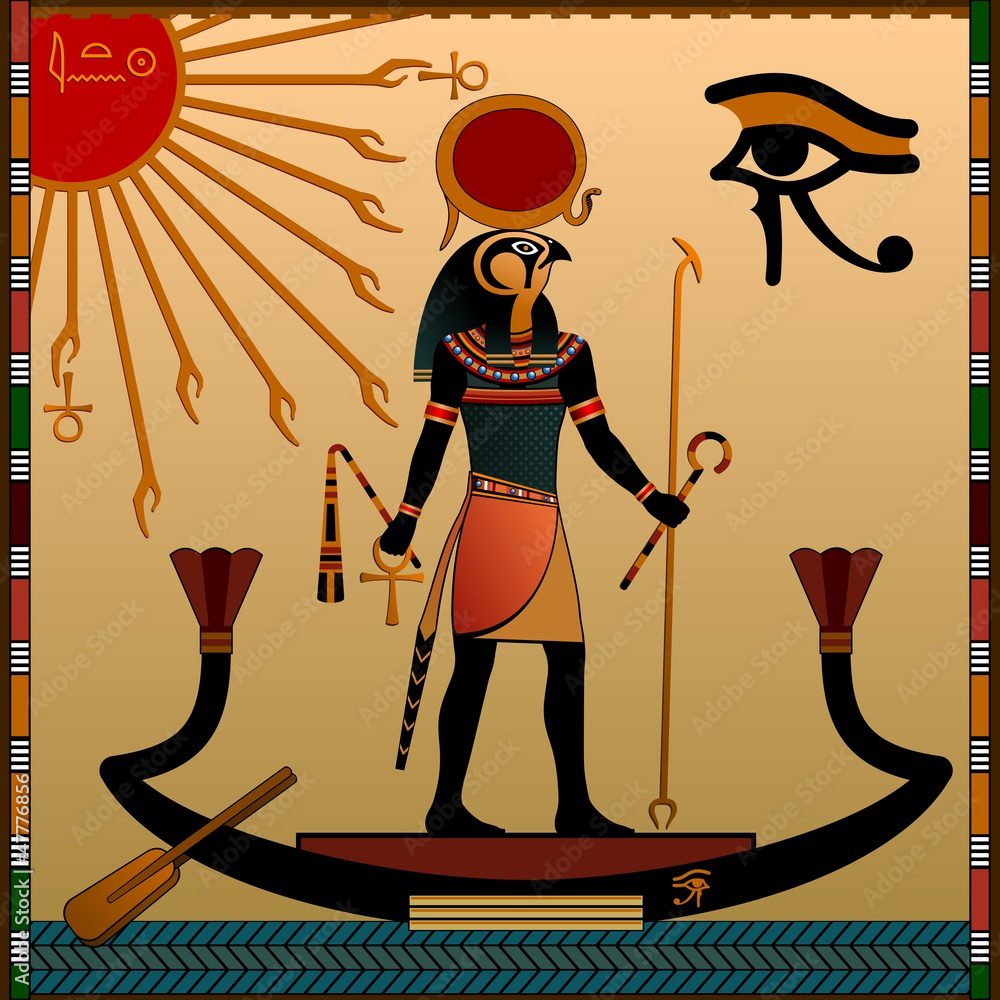
Aten-ra, also known simply as Aten, is a significant deity in Egyptian mythology. This god represents the sun and is often associated with light, warmth, and life. Aten was particularly worshiped during the reign of Pharaoh Akhenaten, who introduced a form of monotheism that focused on the worship of this sun god. The significance of Aten-ra in ancient Egyptian culture cannot be overstated, as it represented not just a deity, but a transformative movement in religious beliefs during the 14th century BCE.
Origins of Aten-ra
The origins of Aten can be traced back to ancient Egyptian religious practices that revered the sun as a vital force for life. Early Egyptians believed that the sun was a powerful entity that governed the day and provided light and warmth to the earth. The sun was often depicted as a circle with rays extending outward, symbolizing its life-giving properties. Aten, however, emerged as a distinct deity during the New Kingdom period, specifically under the rule of Akhenaten.
 Aten
AtenBefore Aten gained prominence, the sun god Ra was one of the principal deities in the Egyptian pantheon. Ra was often depicted as a falcon-headed man and was associated with creation and the afterlife. However, Akhenaten’s focus on Aten marked a significant shift in worship. The pharaoh declared Aten to be the sole god, emphasizing the importance of this solar deity over the traditional pantheon. This shift not only affected religious practices but also had a profound impact on art and culture during this time.
Aten in Art and Iconography
Aten’s representation in art is unique compared to other Egyptian gods. While many deities were depicted in human or animal forms, Aten is often shown as a solar disk emitting rays of light. These rays typically end in hands that reach out to offer the ankh, a symbol of life, to the pharaoh and his family. This imagery underscores the idea that Aten is the source of life and sustenance for humanity.
During Akhenaten’s reign, artistic styles underwent a transformation as well. The period is marked by a more naturalistic approach to art, moving away from the rigid and formal styles of earlier periods. Artists began to depict scenes of everyday life, with the royal family interacting with Aten in a more intimate and personal manner. This artistic shift reflected Akhenaten’s desire to create a direct relationship between the people and the divine.
 Isis
IsisKey Artistic Representations of Aten
- The Solar Disk: The primary symbol of Aten, often shown with rays extending towards the earth.
- Royal Family Scenes: Depictions of Akhenaten, Nefertiti, and their children receiving blessings from Aten.
- Natural Landscapes: Art from this period often features lush gardens and wildlife, symbolizing the fertility granted by Aten.
These artistic representations were not just for decorative purposes; they served to communicate the centrality of Aten in the lives of the ancient Egyptians. The imagery was meant to inspire devotion and reverence, illustrating the connection between the divine and the mundane.
Theological Significance of Aten-ra
The theological significance of Aten-ra is profound, especially in the context of Akhenaten’s religious reforms. By elevating Aten to the status of the one true god, Akhenaten sought to unify the worship of the sun and eliminate the polytheistic practices that had dominated Egyptian religion for centuries. This shift towards monotheism was radical and led to considerable changes in the religious landscape of ancient Egypt.
Aten’s theology emphasized the idea of a personal relationship between the individual and the divine. Unlike other gods who were often associated with specific temples and rituals, Aten was accessible to everyone. This concept was revolutionary, as it suggested that every person could connect with the divine without the need for intermediaries like priests. This change in perspective may have contributed to the appeal of Aten during Akhenaten’s reign.
 Arensnuphis
Core Beliefs Associated with Aten
- Unity of the Divine: The belief in Aten as the sole god, representing the sun’s life-giving power.
- Personal Connection: The idea that individuals could have a direct relationship with Aten.
- Rejection of Polytheism: A move away from the worship of multiple deities towards a singular focus on Aten.
These beliefs reshaped the spiritual landscape of ancient Egypt, promoting a more individualistic approach to worship. This theological shift, however, was not universally accepted and faced resistance from traditional priests and followers of the established pantheon.
Aten-ra and Akhenaten’s Reign
The reign of Akhenaten marked a turning point in the history of ancient Egypt, with Aten-ra at the center of his religious reforms. Akhenaten, originally named Amenhotep IV, changed his name to reflect his devotion to Aten. This decision symbolized his commitment to the worship of this sun god and set the tone for his entire reign. The establishment of the city of Akhetaten (modern-day Amarna) served as the center of Aten worship and was a physical manifestation of Akhenaten’s devotion.
Akhetaten was designed as a religious capital dedicated to Aten, featuring temples and open-air altars where people could worship the sun. The city’s layout and architecture reflected the new religious focus, with wide-open spaces allowing for the worship of the sun in natural light. This shift in urban planning emphasized the importance of Aten as a life-giving force, reinforcing the connection between the divine and the physical world.
Key Developments During Akhenaten’s Reign
- Creation of Akhetaten: The establishment of a new city dedicated to Aten worship.
- Artistic Revolution: A shift towards more naturalistic and personal representations of the royal family and Aten.
- Religious Texts: The production of hymns and prayers dedicated to Aten, emphasizing his supremacy.
Despite these developments, Akhenaten’s reign was marked by controversy and resistance. The traditional priesthood, which had thrived under the worship of gods like Amun, opposed Akhenaten’s reforms. The power struggle between the new religious order and the established traditions created tension that would have lasting effects on Egyptian society.
The Decline of Aten Worship
The worship of Aten-ra began to decline after the death of Akhenaten. His successor, Tutankhamun, who initially ruled under the name Tutankhaten, restored the traditional polytheistic practices and the worship of Amun. The shift back to the old religious customs signaled a rejection of Akhenaten’s radical reforms and a return to the established order.
As Tutankhamun reinstated the worship of Amun, temples dedicated to Aten were closed or repurposed. The once-prominent city of Akhetaten fell into disrepair and was eventually abandoned. Over time, the memory of Aten and the revolutionary ideas associated with Akhenaten faded from the collective consciousness of the Egyptian people.
Factors Contributing to the Decline
- Restoration of Traditional Beliefs: The return to polytheism and the worship of Amun.
- Political Instability: The power struggles and instability following Akhenaten’s death.
- Destruction of Aten’s Monuments: Many monuments and inscriptions dedicated to Aten were destroyed or defaced.
This decline in Aten worship marked a significant turning point in the history of Egyptian religion. The brief period of monotheism under Akhenaten was overshadowed by a return to the rich tapestry of polytheistic beliefs that had characterized ancient Egypt for centuries.
Aten-ra in Modern Scholarship
Today, Aten-ra continues to be a subject of fascination for historians and scholars studying ancient Egyptian religion. The radical shift towards monotheism during Akhenaten’s reign raises important questions about the nature of belief and the dynamics of religious change. Scholars explore the implications of this transformation and its impact on the society and culture of ancient Egypt.
Research on Aten has expanded to include various interdisciplinary approaches, combining archaeology, art history, and religious studies. Excavations at the site of Akhetaten have provided valuable insights into the daily lives of its inhabitants and the significance of Aten worship in their rituals and practices. Additionally, the study of ancient texts and inscriptions has shed light on the theological concepts associated with Aten and their relevance in the broader context of Egyptian belief systems.
Key Areas of Modern Research
- Archaeological Discoveries: Excavations at Akhetaten revealing insights into daily life and worship.
- Theological Analysis: Studies examining the philosophical implications of Aten’s monotheism.
- Art Historical Context: Exploration of the artistic shifts during Akhenaten’s reign and their cultural significance.
As scholars continue to investigate the complexities of Aten-ra’s worship and its implications for ancient Egyptian society, the legacy of this unique deity endures. The story of Aten and its association with Akhenaten serves as a reminder of the dynamic nature of belief systems and the ways in which they can shape cultures and civilizations.
Aten-ra, the sun god, remains an essential figure in the study of Egyptian mythology. His brief rise to prominence during the reign of Akhenaten offers a fascinating glimpse into the complexities of ancient belief systems. The transformation from a polytheistic society to one that embraced monotheism, even if only for a short period, speaks to the profound influence that religion can have on a culture. As modern scholarship continues to explore the intricacies of Aten’s worship and its eventual decline, the story of Aten-ra will undoubtedly remain a pivotal chapter in the history of ancient Egypt.