WORLD
WORLD
Asteraoth
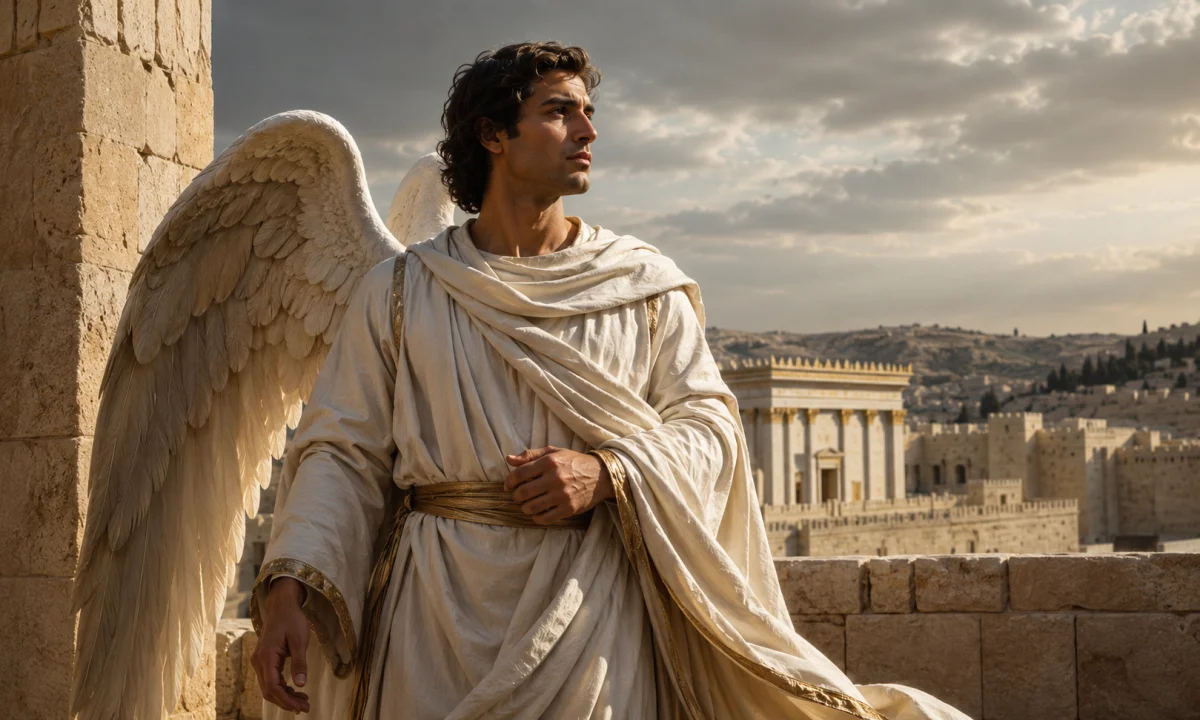
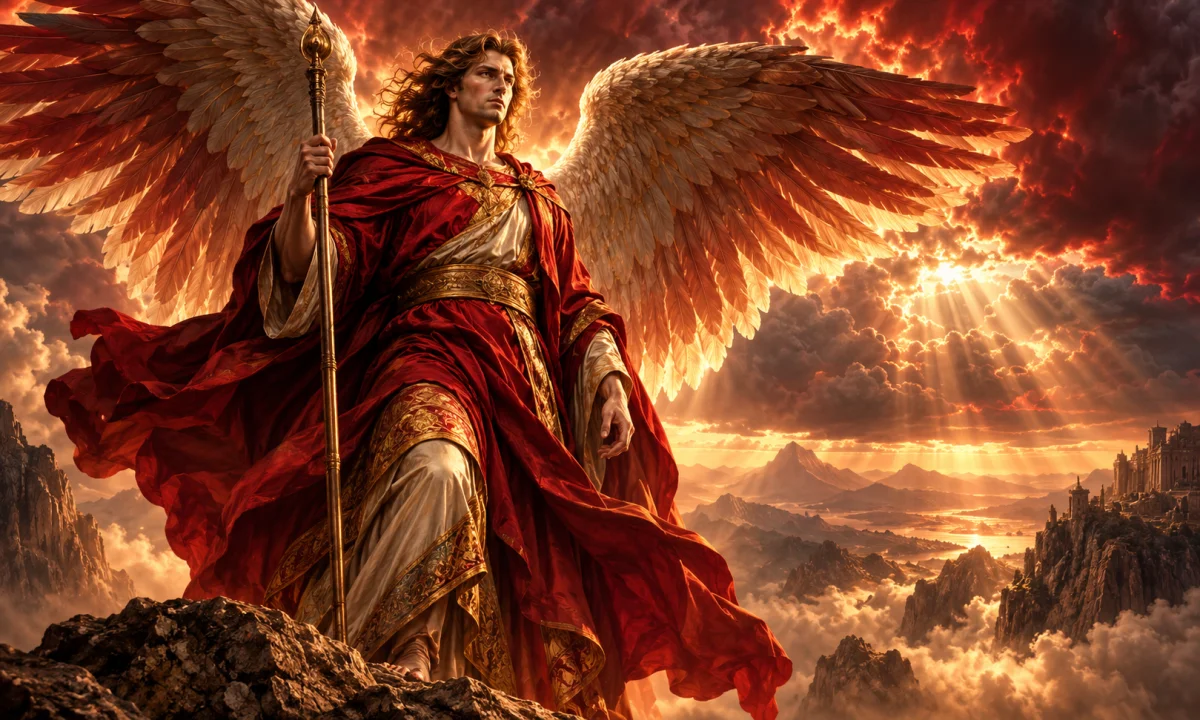
Asteraoth is an uncertain spelling associated with Astaroth, a figure in later Christian demonology. The name is sometimes placed in lists of angels or supernatural spirits, but Asteraoth is not a clearly established angel in the Bible, mainstream Christian theology, Judaism or Islam. In the best-known occult sources, Astaroth is instead described as a powerful demon, usually ranked among the infernal nobility.
The uncertainty matters because several related names have been connected across different periods: the ancient Near Eastern goddess Astarte, the biblical name Ashtoreth, the plural or collective term Ashtaroth, and the early modern demonological name Astaroth. These names are historically related in complicated ways, but they do not all identify the same figure or preserve the same religious meaning. Asteraoth is best treated as a variant or corruption of the later demonological name unless a particular source defines it differently.
Origins of the name
The distant background of the name lies in the religious cultures of the ancient Levant. Astarte was a major goddess worshipped in parts of Syria, Phoenicia and the wider eastern Mediterranean. She was associated in different communities with sexuality, fertility, kingship, war and the protection of cities. Her worship was not identical everywhere, and the surviving evidence comes from several languages and historical settings.
The Hebrew Bible uses the form Ashtoreth, generally in contexts that condemn foreign worship. The name is commonly understood as a Hebrew adaptation of the name Astarte, although its precise linguistic development and vocalization have been discussed by scholars. The biblical term Ashtaroth may refer to the goddess or to forms of her worship, and in some passages it appears alongside the name of the god Baal.
These biblical references are not descriptions of an angel or demon in the later medieval sense. They reflect the polemical setting of biblical religion, in which the worship of other deities is presented as a religious error or a threat to Israelite loyalty to God. The transformation of an ancient goddess into a demonological figure took place gradually through later Jewish and Christian interpretation rather than appearing fully formed in the ancient texts.
From deity to demonological name
Late antique and medieval Christian writers often reinterpreted pagan gods as demons. This did not mean that every pagan deity received a single, continuous identity in Christian literature. Names were altered, combined, translated or transmitted through manuscripts, and their meanings could change substantially. Astaroth emerged within this process as a demonic figure associated by name with Ashtoreth and Astarte.
The transition also reflects the Christian demonological habit of presenting the gods of rival religions as fallen spirits. A deity who had once been worshipped could therefore be recast as a tempter, deceiver or rebellious supernatural power. The resulting demon was not a neutral historical portrait of the ancient goddess. It was a theological and polemical reinterpretation.
The form Asteraoth is much less standardized than Astaroth. It may result from a spelling variation, a transcription from another language, a scribal alteration or confusion with related forms such as Ashtaroth and Astaroth. Without a specific manuscript or work attached to the spelling, it is not possible to assign Asteraoth a separate mythology with confidence.
Asteraoth and the category of angels
Asteraoth may be labelled an angel in modern catalogues because the figure is sometimes described as an angelic or fallen-angelic spirit. Early modern demonological texts frequently used language associated with angels when describing demons. In Christian theology, demons were commonly understood as angels who had rebelled against God, so a demon could be portrayed as having an angelic nature while no longer belonging to the ranks of the faithful angels.
This does not make Astaroth or Asteraoth an angel in the same sense as Michael, Gabriel or Raphael. The canonical Bible does not present Asteraoth as an angel, and there is no widely accepted religious tradition assigning the figure to one of the recognized angelic orders. Nor does the name belong to the standard hierarchies of angels found in Jewish, Christian or Islamic theology.
Consequently, the category Angels should be used with caution. A precise description would call Asteraoth a disputed name associated with Astaroth, a figure of Christian demonology who may be described in some later systems as a fallen angel or infernal spirit. That classification reflects later occult and demonological frameworks, not an ancient angelic tradition.
Astaroth in early modern demonology
The most influential descriptions of Astaroth come from European demonological texts of the sixteenth and seventeenth centuries. Johann Weyer’s Pseudomonarchia Daemonum, published in 1577, includes Astaroth among the demons of a larger infernal hierarchy. The name also appears in versions of the Ars Goetia, the first section of the Lesser Key of Solomon, a magical compilation that circulated in manuscript before being printed in the seventeenth century.
In these works Astaroth is generally presented as a high-ranking demon, often given the title of great duke. The texts assign numbers of subordinate spirits or “legions” to many demons. Such numbers belong to the literary and ritual structure of the grimoires; they are not evidence of an independently documented ancient cult or a universally recognized religious hierarchy.
The descriptions vary in detail, but Astaroth is commonly said to appear as a grotesque or corrupted angelic being riding a dragon-like creature. A serpent or viper is usually placed in the figure’s hand. Some versions warn that the demon’s breath is dangerous or offensive, and ritual instructions advise the conjurer to protect against it. These features are characteristic of grimoire demonology, where visual form and ritual precautions help define the identity of a spirit.
Astaroth is also associated in these texts with knowledge. The spirit is said to answer questions about the past, present and future, and to reveal information concerning hidden matters. Other attributed abilities include teaching sciences or arts, influencing intellectual skill and assisting in the discovery of concealed truths. The exact list differs between textual traditions, and it should not be treated as a stable creed shared by all historical users of the name.
Attributes and symbolism
The imagery attached to Astaroth combines several layers of symbolism. The figure’s angelic appearance points to the idea of a fallen or deceptive celestial being. The dragon or dragon-like mount places the spirit within the visual language of monstrous and chthonic powers. The serpent can signify forbidden knowledge, danger, cunning or temptation, although its precise meaning is not explained consistently in the grimoires.
The emphasis on knowledge is especially important. Astaroth is not usually characterized only as a spirit of physical violence. In many descriptions, the danger lies in gaining knowledge through a forbidden or morally corrupting source. This reflects a recurrent theme in Christian demonology: demonic beings may offer genuine information, but the exchange is spiritually hazardous because it encourages dependence on illicit magic or rebellion against divine order.
Modern summaries sometimes assign Astaroth a fixed set of domains such as vanity, laziness, beauty or lust. Some of these associations arise from later demonological systems, occult reinterpretations or attempts to connect the name with the ancient goddess Astarte. They should not automatically be projected backward onto every historical source. The ancient goddess, the biblical polemical figure and the early modern demon are distinct interpretive formations.
Relationship to Astarte and Ashtoreth
The relationship between Astaroth and Astarte is primarily one of historical transformation and linguistic association, not a simple survival of an unchanged goddess. Astarte belonged to the religious life of ancient Levantine societies and was worshipped under varying local forms. Her attributes could include fertility, sexuality, warfare and royal power, but no single description covers every community in which she was honoured.
Ashtoreth is the form used in biblical Hebrew contexts, where references are generally negative. The name Astaroth later became important in discussions of pagan deities and demons, especially when Christian writers treated former gods as members of a demonic kingdom. Astaroth therefore inherited echoes of an ancient divine name while acquiring a new role within Christian cosmology.
It is inaccurate to say that the ancient worshippers of Astarte believed in a demon called Asteraoth. It is equally inaccurate to describe the biblical references to Ashtoreth as early accounts of a grimoire-style duke of Hell. The names are connected through transmission and reinterpretation, but their religious functions changed substantially.
Distinguishing similar names
- Astarte is an ancient Near Eastern goddess worshipped in various forms across the Levant and neighbouring regions. Her cult belongs to ancient polytheistic religions, not to medieval demonology.
- Ashtoreth is the form found in the Hebrew Bible and related Jewish textual traditions, normally in condemnations of foreign worship.
- Ashtaroth may refer to the biblical term associated with the worship of Ashtoreth, although the exact grammatical and historical usage varies by passage and interpretation.
- Astaroth is the best-known later demonological form, especially in European grimoires and related occult literature.
- Asteraoth is an uncommon spelling whose independent identity is uncertain. It should not automatically be treated as a separate angel or deity.
The name may also be confused with other figures because modern fantasy and occult writing often standardizes variant spellings without explaining their origins. A name appearing in a contemporary list of angels, demons or spirits may therefore reflect editorial preference rather than evidence for a distinct historical tradition.
Religious and cultural significance
Asteraoth is significant less as a clearly defined traditional being than as an example of how religious names change when they move between cultures. A name connected with an ancient goddess could be condemned in biblical writing, reinterpreted through Christian demonology, systematized in Renaissance and early modern magic, and later recast as an “angel” in modern encyclopaedias or fictional settings.
The figure also demonstrates the difference between religious identity and classification by later authors. Astaroth’s rank, appearance and powers were organized by demonologists who were creating taxonomies of spirits for theological, polemical or magical purposes. These classifications are historically important, but they do not demonstrate that the figure had a single continuous cult extending from the ancient Levant to early modern Europe.
Descriptions of Astaroth should therefore be read in relation to their literary settings. The grimoires present spirits in ordered lists, with names, ranks, seals, appearances and promised services. Their structure resembles a catalogue of ritual beings rather than a mythological cycle containing birth stories, family genealogies and a long sequence of adventures. Asteraoth has no securely attested body of ancient myths comparable to those of major gods or heroes.
Later occult and popular reception
Astaroth continued to appear in European occult writing and demonological reference works after the grimoire tradition. The nineteenth-century Dictionnaire infernal, for example, helped popularize recognizable visual and descriptive conventions surrounding demons for a broad reading public. Such works often blended older demonological material with moral interpretation, folklore, imaginative illustration and editorial invention.
In modern popular culture, Astaroth and variant spellings such as Asteraoth may appear in novels, role-playing games, films, comics, video games and online occult catalogues. These adaptations frequently alter the figure’s gender, rank, appearance, powers or moral alignment. Some portray Asteraoth as an angel, while others use the name for a demon, a fallen celestial being or an entirely fictional character. These versions belong to modern creativity rather than to a single authoritative religious tradition.
When a contemporary work calls Asteraoth an angel, that usage may be meaningful within the work’s own fictional cosmology. Historically, however, the name is more securely connected with the demonological figure Astaroth, and even that connection depends on later Christian reinterpretations of older divine names. The spelling alone cannot establish a separate angelic identity, a particular origin or a fixed set of powers.