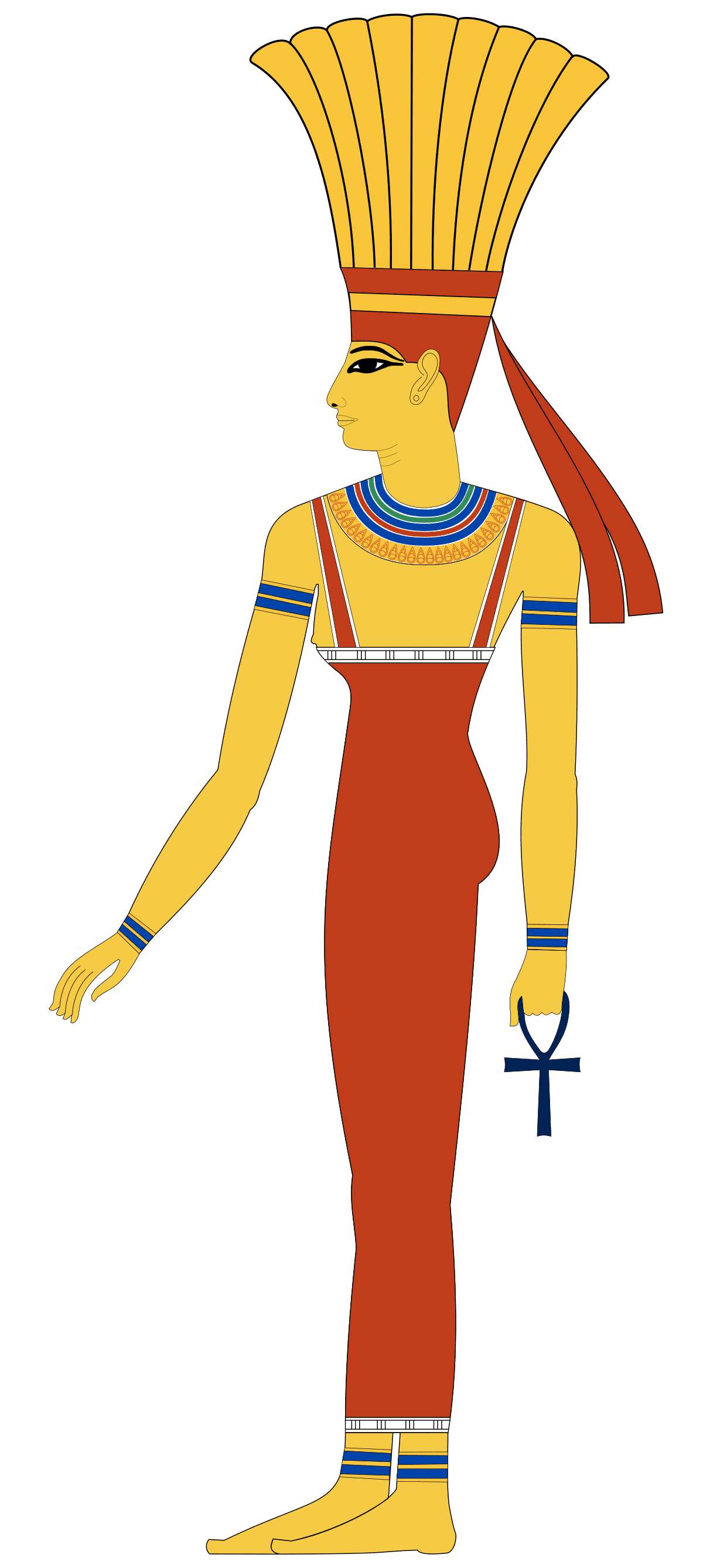
Anuket is a significant goddess in Egyptian mythology, revered primarily as the deity of the Nile and the fertility it brings to the land. She is often depicted as a woman with a feather on her head or as a gazelle, symbolizing her connection to the river and its life-giving properties. Anuket played a crucial role in the agricultural cycle of ancient Egypt, as the annual flooding of the Nile was essential for crop growth. This flooding, which deposited nutrient-rich silt on the riverbanks, was considered a gift from the gods, and Anuket was often credited with ensuring this vital event occurred. Her worship was concentrated in the region of Aswan, where the Nile’s waters were particularly significant.
The Origin of Anuket
The origins of Anuket can be traced back to ancient Egyptian religion, where she was often associated with the Nile River and the life it supported. In the earliest periods of Egyptian history, she was worshiped as a goddess of the waters. Her name is thought to derive from the ancient Egyptian word for “to embrace,” reflecting her nurturing nature. Anuket’s role as a mother figure is a common theme in Egyptian mythology, as she was believed to provide sustenance and nourishment to both the land and its people.
 Ankh
AnkhAs Egyptian civilization evolved, so did the worship of Anuket. By the time of the Middle Kingdom, she had become a more prominent figure, often linked with other deities such as Horus and Isis. The Egyptians believed that Anuket had a hand in the natural phenomena surrounding the Nile, including its flooding and the fertility of the soil. Her cult was particularly strong in Aswan, where she was worshiped alongside the god Khnum, who was believed to create humans and animals from the clay of the Nile.
Anuket’s Attributes and Symbols
Anuket is often depicted with specific attributes that highlight her role as a goddess of the Nile. One of her most recognizable symbols is the feather, which represents purity and truth in ancient Egyptian culture. This feather is often shown on her head, signifying her connection to the divine and her role as a protector of the Nile’s waters. Additionally, she is sometimes portrayed holding a sistrum, a musical instrument associated with joy and celebration, further emphasizing her nurturing and life-giving qualities.
Another important symbol associated with Anuket is the gazelle, which represents grace and beauty. The gazelle is also linked to the fertility of the land, as these animals were often found grazing in lush pastures created by the Nile’s annual flooding. The presence of the gazelle in her iconography underscores her role as a provider and protector of the natural world, embodying the balance between the harshness of the desert and the abundance brought by the river.
 Anit
AnitAnuket’s Role in Egyptian Religion
Anuket’s role in Egyptian religion was multifaceted. She was not only a goddess of the Nile but also a symbol of fertility and abundance. Her worship was deeply intertwined with the agricultural practices of the ancient Egyptians. The Nile’s flooding was a central event in the agricultural calendar, and it was believed that Anuket had the power to control this phenomenon. Farmers would pray to her for a bountiful harvest, and festivals were held in her honor to celebrate the arrival of the floodwaters.
During these festivals, rituals were performed to honor Anuket and seek her blessings. These rituals often included offerings of food and drink, as well as songs and dances that celebrated the life-giving qualities of the Nile. The Egyptians believed that by honoring Anuket, they could ensure the continued fertility of their land and the prosperity of their communities. This close relationship between the goddess and the agricultural cycle highlights the importance of the Nile in ancient Egyptian society.
 Anhur
AnhurAnuket in Mythology
Anuket appears in various myths and stories within Egyptian mythology. One popular tale involves her relationship with the god Khnum, who was believed to shape the bodies of humans and animals from the clay of the Nile. According to the myth, Anuket and Khnum worked together to create the first humans, with Anuket providing the nurturing aspect and Khnum supplying the physical form. This partnership underscores the importance of both deities in the creation and sustenance of life in ancient Egypt.
In another myth, Anuket is sometimes depicted as the daughter of the sun god Ra. This connection emphasizes her divine nature and her role in the cycle of life. As the daughter of Ra, Anuket is seen as a guardian of the Nile, ensuring that the river flows and provides for the people of Egypt. This familial connection also highlights the interconnectedness of various deities in the Egyptian pantheon, where gods and goddesses often worked together to maintain balance in the universe.
Anuket’s Worship and Temples
The worship of Anuket was particularly concentrated in the region of Aswan, where her temples were located near the Nile. These temples served as centers of worship and were often decorated with images of the goddess. Pilgrims would travel from far and wide to pay their respects to Anuket, especially during the annual flooding of the Nile, which was a time of celebration and gratitude. The temples not only served as places of worship but also as administrative centers for the local communities.
Inside the temples dedicated to Anuket, priests would perform daily rituals to honor the goddess and seek her blessings. These rituals included offerings of food, incense, and other gifts. The priests played a vital role in maintaining the relationship between the goddess and the people, ensuring that Anuket was pleased and that the Nile would continue to provide for them. The temples were also places of learning, where knowledge about agriculture, astronomy, and the cycles of nature was passed down through generations.
Anuket’s Legacy
The legacy of Anuket extends beyond her worship in ancient Egypt. As a symbol of the Nile and its life-giving properties, she continues to represent the deep connection between humans and nature. The stories and myths surrounding Anuket have been passed down through generations, influencing art, literature, and culture throughout history. Even in modern times, the Nile remains a symbol of life and fertility, and Anuket’s influence can still be felt in the ways we understand and appreciate this vital river.
Moreover, Anuket’s association with fertility and abundance resonates in contemporary discussions about agriculture and sustainability. As societies grapple with issues related to food security and environmental conservation, the lessons from ancient Egyptian reverence for the Nile and its goddess can provide valuable insights. Anuket’s legacy serves as a reminder of the importance of respecting and nurturing our natural resources, ensuring that future generations can continue to thrive.
Anuket in Art and Culture
Anuket has been a popular subject in various forms of art throughout Egyptian history. Her depictions in ancient murals, sculptures, and jewelry often highlight her beauty and grace. Artists would capture her image with great attention to detail, showcasing her attributes such as the feather and the gazelle. These artistic representations served not only as a means of honoring the goddess but also as a way to communicate her significance to the people of Egypt.
In addition to visual art, Anuket’s influence can be seen in literature and poetry. Ancient texts often referenced her in relation to the Nile and the fertility of the land. Her stories were told and retold, serving as a source of inspiration for poets and writers. These narratives emphasized the importance of the Nile in sustaining life and the goddess’s role as a protector of the natural world. Through these artistic expressions, Anuket’s legacy continued to thrive, reflecting the deep cultural connections between the Egyptians and their environment.
Anuket and Modern Interpretations
In modern times, Anuket’s significance has been revisited by scholars and enthusiasts of mythology. Her role as a goddess of the Nile and fertility has sparked interest in the ways ancient Egyptians understood their environment. Contemporary interpretations often focus on the balance between nature and humanity, drawing parallels between Anuket’s nurturing qualities and current discussions about environmental stewardship.
Additionally, Anuket has become a symbol of empowerment for women in modern culture. As a powerful female deity, she represents the strength and resilience of women throughout history. This reinterpretation of Anuket has led to her inclusion in feminist discussions, where her nurturing aspects are celebrated alongside her strength. By reclaiming figures like Anuket, modern audiences can explore the diverse roles of women in mythology and their relevance in today’s society.
While this article has explored the rich history and significance of Anuket in Egyptian mythology, it is important to recognize that her legacy continues to inspire and inform our understanding of the natural world. The lessons learned from her worship and the reverence shown to the Nile serve as a reminder of the interconnectedness of life and the importance of nurturing our environment.