WORLD
WORLD
Anna-perenna
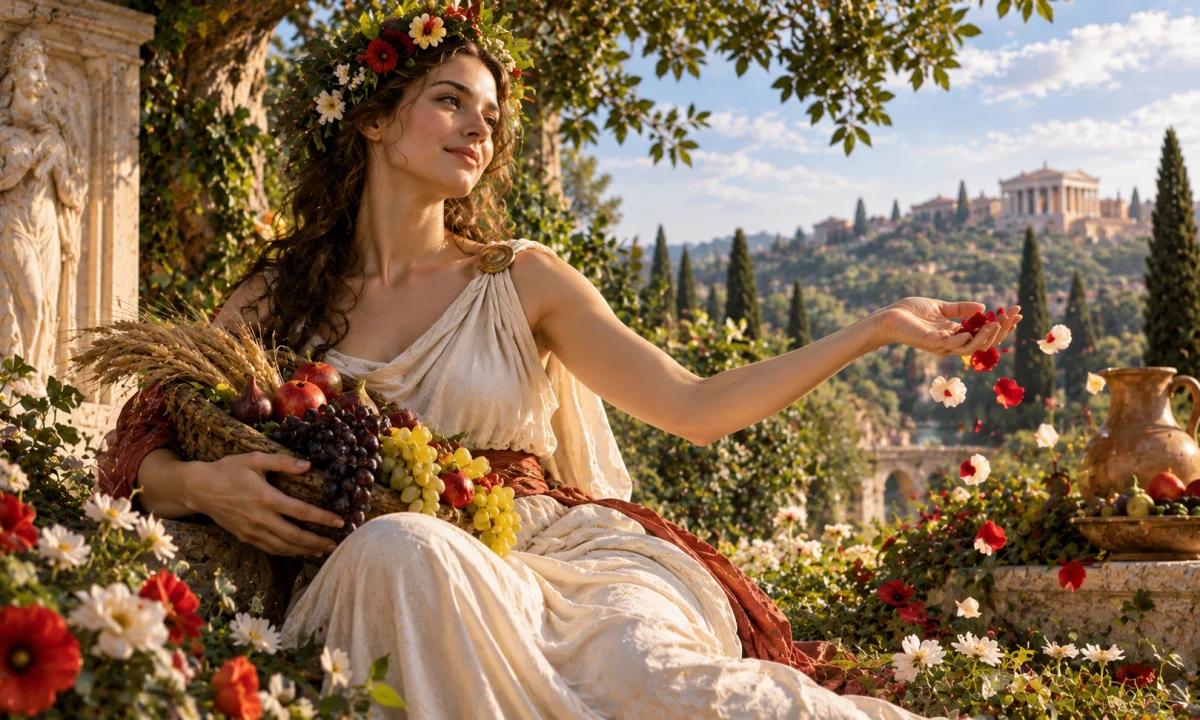
Anna Perenna is a Roman goddess associated with the yearly cycle, continued life and the renewal of time. Her festival was celebrated on 15 March, the Ides of March, with outdoor feasting, drinking, songs and prayers for long life. Although she became connected in Roman literature with several different stories, her original identity remains uncertain. She may have been an ancient personification of the year, a local Italian goddess of renewal, or a figure whose meaning changed as poets and religious writers interpreted her.
Origins and cultural setting
Anna Perenna belonged to the religious world of ancient Rome, but she is less clearly defined than major gods such as Jupiter, Juno or Mars. The Romans preserved no complete early myth explaining her origin. Most surviving information comes from later literary accounts, especially the poet Ovid, together with brief comments by other Roman authors and archaeological evidence from her sanctuary.
Her principal festival took place on 15 March. In the early Roman calendar, March was the first month of the year, so this date fell close to the beginning of the annual cycle. Even after January became the official beginning of the Roman year, March retained important associations with beginnings, renewal and the return of military and agricultural activity. A celebration devoted to a goddess of the continuing year therefore had an appropriate place at this time.
The festival was held outside the city, near the first milestone of the Via Flaminia, in an area associated with the river Tiber and open-air recreation. This setting distinguished the celebration from ceremonies performed inside Rome's formal temples. The participants appear to have included ordinary citizens, particularly the plebeian population. They ate, drank and relaxed in temporary shelters or beneath the open sky rather than observing a solemn rite restricted to priests.
Ovid describes people asking Anna Perenna to grant them as many years of life as the number of cups they drank. The drinking was not merely private enjoyment: it formed part of the festival's symbolism. Each cup could represent another year, and the repeated act of drinking expressed the wish that life would continue through many annual cycles. Singing, dancing and erotic or humorous behaviour were also associated with the celebration, giving it a lively and sometimes disorderly character.
The name Anna Perenna
The meaning of Anna Perenna was already a matter of interpretation in antiquity. The second name is commonly connected with Latin perennis, meaning “lasting throughout the year,” “ever-flowing” or “perpetual.” This makes Anna Perenna understandable as a goddess of the year that returns continuously. The phrase may express the idea of time passing from one year into the next rather than referring to a single human-like personality.
The first name, Anna, is more difficult. Some ancient writers treated it as a personal name, while others connected it with words for nourishment, abundance or the yearly cycle. Modern scholars do not agree about whether the name reflects an original Italian deity, a title or epithet, or an interpretation created after the cult was already established. The evidence is too limited to establish one certain etymology.
Anna Perenna should therefore not be classified too confidently as simply “the Roman goddess of time.” She was linked with the year and its renewal, but Roman religion often allowed a deity to have several overlapping functions. The surviving evidence points to a goddess of continued existence and annual return, while leaving her precise original role open to debate.
Anna Perenna in Ovid's account
Ovid provides the fullest surviving literary discussion of Anna Perenna in the third book of the Fasti, a poem about Roman festivals and the calendar. He presents several possible explanations for her identity rather than offering one final answer. This uncertainty is important: Ovid is not preserving a single uncontested official doctrine, but displaying the variety of stories that Romans could tell about an old and partly obscure goddess.
The old woman who fed the plebeians
One story says that Anna was an old woman from Bovillae, a settlement south-east of Rome. During a period when the Roman plebeians had withdrawn from the city in protest against the political power of the patricians, Anna supplied them with food. She is said to have baked cakes and distributed them to the hungry people.
When the plebeians returned to Rome, they remembered the woman who had helped them. They began to honour her annually, and the helpful Anna became Anna Perenna. This story connects the goddess with the famous political struggle between the plebeians and patricians, especially the plebeian secession traditionally placed early in the Roman Republic.
The tale resembles other Roman explanations that turn a generous human benefactor into a cult figure. It also gives the goddess a strong association with nourishment and survival. Food allows a community to endure through hardship just as the recurring year allows life to continue. Whether the story preserves a genuine historical memory is impossible to determine. It may instead be an etiological tale: a story invented or adapted to explain an existing ritual and give its name a memorable human origin.
Anna as the sister of Dido
Ovid also tells a very different story in which Anna is the sister of Dido, the legendary queen of Carthage. After Dido's death, Anna flees from Carthage and eventually reaches Italy. There she is received by Aeneas, the Trojan founder of the Roman people in Roman legend. Aeneas's wife, Lavinia, becomes jealous of the newcomer, and Anna is forced to escape once again.
In the story, Dido's ghost appears to Anna in a dream and warns her to leave. Anna then reaches a river and is transformed into a water nymph, taking the name Anna Perenna. This narrative connects her with the Trojan and Carthaginian legends that dominated Roman epic culture, particularly the story of Aeneas and Dido in Virgil's Aeneid.
The identification of Anna Perenna with Dido's sister is not evidence that the goddess originally came from Carthage. It is a literary association made within a Roman mythological framework. The name Anna was convenient for linking an established Roman goddess to the already familiar figure of Dido's sister. The tale may also explain why Anna Perenna was connected with a river or watery setting, although it should not be treated as a straightforward account of the cult's historical origin.
The comic story of Mars and Minerva
Near the end of his discussion, Ovid gives Anna a comic role in a story involving Mars. The war god desires Minerva and asks Anna to help him. Anna pretends to arrange a meeting, but when Mars encounters the veiled woman, he discovers that she is Anna rather than Minerva. The goddess has deceived him and turns his pursuit into a joke.
This episode has a different tone from the story of the charitable old woman or the tragic sister of Dido. It is a playful myth attached to the festival, using disguise, sexual frustration and the humiliation of a powerful male god. It does not define Anna Perenna's central religious function. Instead, it demonstrates how Roman festival traditions could accumulate humorous, dramatic and contradictory stories around an ancient divine name.
Festival, ritual and symbolism
The celebration of Anna Perenna was marked by informality and collective enjoyment. Participants set up temporary shelters, drank wine and made wishes for long life. Ovid says that people counted the number of cups they consumed and hoped to live for the corresponding number of years. The practice combines ritual prayer with the festive idea that abundance at the beginning of the year can encourage abundance throughout it.
Some participants sang songs with sexual or mocking content. Ovid describes couples and groups enjoying the festival in ways that would not have belonged to a restrained official ceremony. Such behaviour does not mean that the festival lacked religious importance. Roman festivals often combined sacrifice, prayer, food, drinking, performance and social release. A deity concerned with the renewal of life could be honoured through vitality, pleasure and communal fertility as well as through formal worship.
Anna Perenna's association with the year also suggests a concern with continuity rather than a single moment of creation. The year dies and returns; winter gives way to spring; communities survive one crisis and enter another season. The goddess could therefore represent endurance, repeated beginnings and the hope that life would be longer than the present hardship.
Her connection with food in the plebeian story reinforces this interpretation. A community cannot continue without nourishment, and an individual cannot reach another year without sustaining life from one day to the next. The festival's drinking, feasting and prayers can be understood as expressions of this basic desire for survival and prosperity.
Archaeological evidence
Archaeological discoveries have provided important evidence for the historical cult of Anna Perenna. A sanctuary associated with her was found in Rome near the modern Piazza Euclide, along the ancient Via Flaminia. The site included a spring or fountain installation and was used over a long period, from antiquity into the Roman imperial era.
Objects recovered there include vessels, coins, small figurines and items connected with ritual or magical practices. Lead curse tablets and other unusual deposits indicate that some visitors came with personal requests involving protection, healing, love or harm to an enemy. These finds show that the cult was not limited to the cheerful public festival described by Ovid. As at many ancient sanctuaries, individuals could approach the deity privately with practical concerns.
The sanctuary's water source is especially significant, although its exact symbolism should not be overstated. Water naturally suits a deity connected with a river, a nymph or perpetual flow, and a spring can evoke fertility and renewal. Yet the archaeological evidence does not prove that Anna Perenna was originally a water goddess. It shows that a water-associated place became an important setting for her worship.
The finds also demonstrate that Anna Perenna continued to receive attention beyond the literary world of the late Republic and early Empire. Her cult was not merely a poetic invention by Ovid. At the same time, archaeology has not supplied a complete early theology or established a single original identity for her.
Ancient interpretations
Roman intellectuals sometimes interpreted Anna Perenna symbolically rather than as a goddess with a human biography. Some connected her with the moon, the year or the recurring movement of the heavens. Such interpretations reflect a broader Roman habit of explaining traditional gods through natural processes, abstract principles and wordplay.
These explanations should be distinguished from the popular stories told at festivals. A poet might present Anna as an old woman, the sister of Dido or a mischievous trickster, while a philosopher or antiquarian might describe her as a symbol of the year. The different versions were not necessarily expected to form a consistent mythology. Roman religion could preserve several overlapping interpretations without choosing one as the exclusive truth.
Modern scholarship likewise remains cautious. Anna Perenna may preserve features of an early Italian deity concerned with the annual cycle, but direct evidence for the earliest stage of her worship is lacking. The surviving myths were recorded after centuries of Roman cultural development and may reflect literary creativity as much as ancient ritual memory.
Distinguishing Anna Perenna from similar figures
Anna Perenna is sometimes confused with Anna, the sister of Dido, but the two are not originally identical figures. Dido's sister belongs to the Carthaginian and Trojan legends preserved in Roman epic. Her identification with Anna Perenna is one mythological explanation presented by Ovid, not a secure statement about the goddess's historical origin.
She should also be distinguished from Annona, the Roman personification of the grain supply. The names resemble one another, and both can be associated with nourishment, but Annona represented the provision of grain and food to Rome, especially in imperial contexts. Anna Perenna was connected with the recurring year, long life and a particular March festival.
Nor is Anna Perenna simply another name for a Roman goddess of spring. Her festival occurred at a season of renewal, but the evidence does not make her a direct equivalent of a single Greek or Roman spring deity. Comparisons with goddesses of fertility, the moon or the year may illuminate particular features, but they should not erase the distinct Roman context of her cult.
Later reception
Anna Perenna has never had the same continuous popular presence as Venus, Mars or Medusa. Her surviving image depends largely on Ovid's literary account and on the archaeological rediscovery of her sanctuary. Modern writers sometimes portray her as an ancient goddess of time, spring, magic or female independence, but these expanded characterisations often combine evidence from different ancient sources with modern imaginative reconstruction.
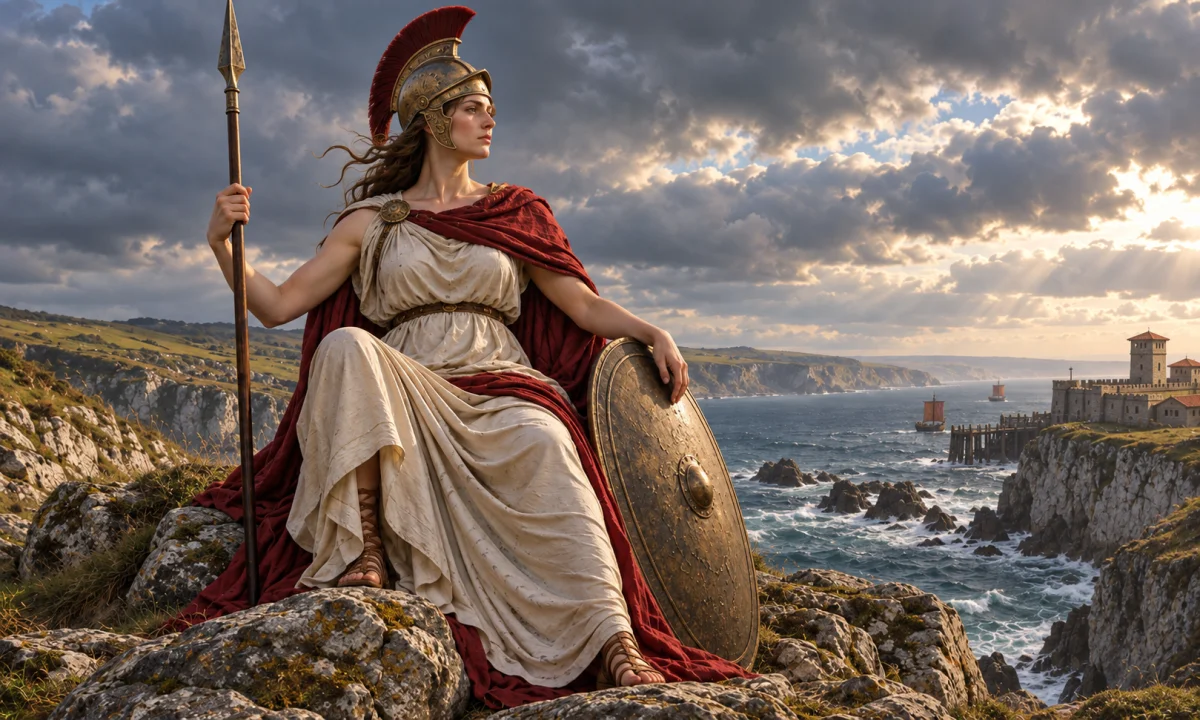
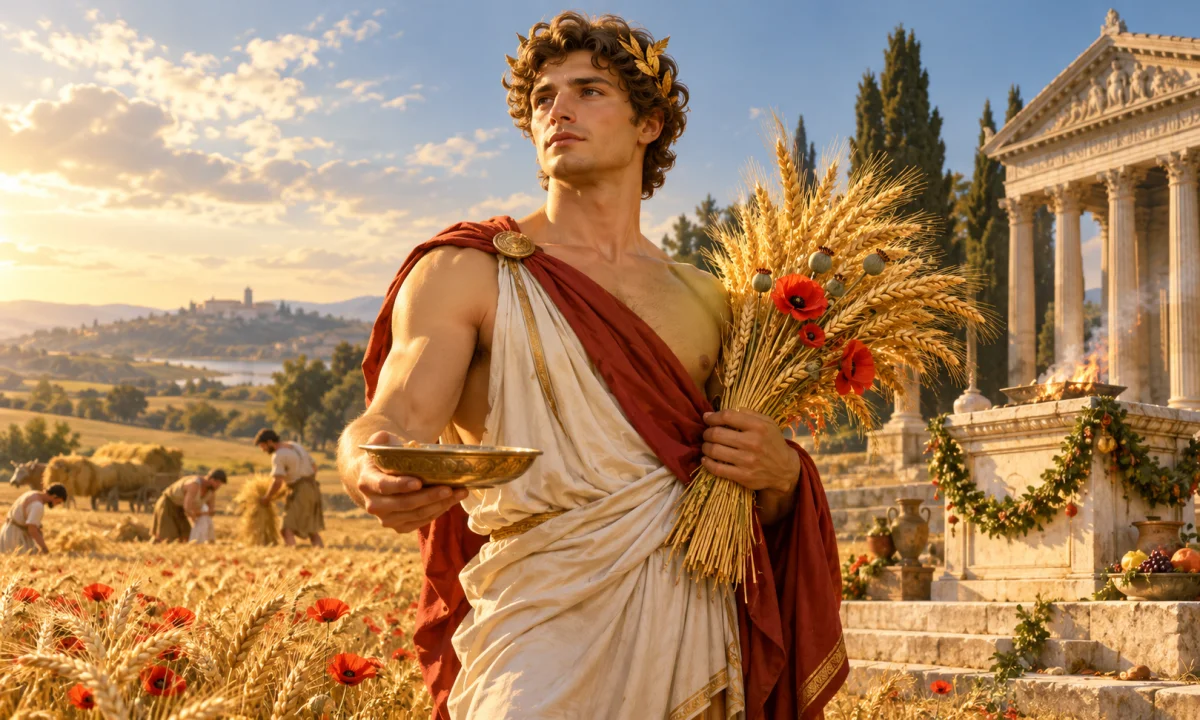
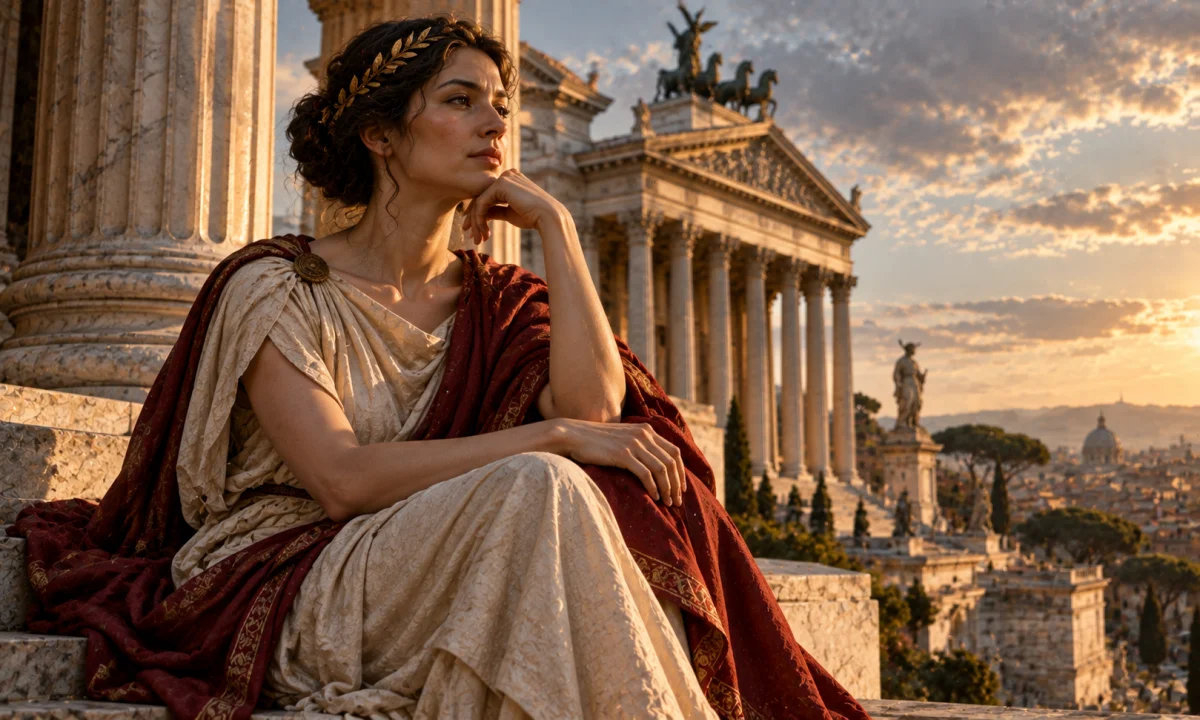
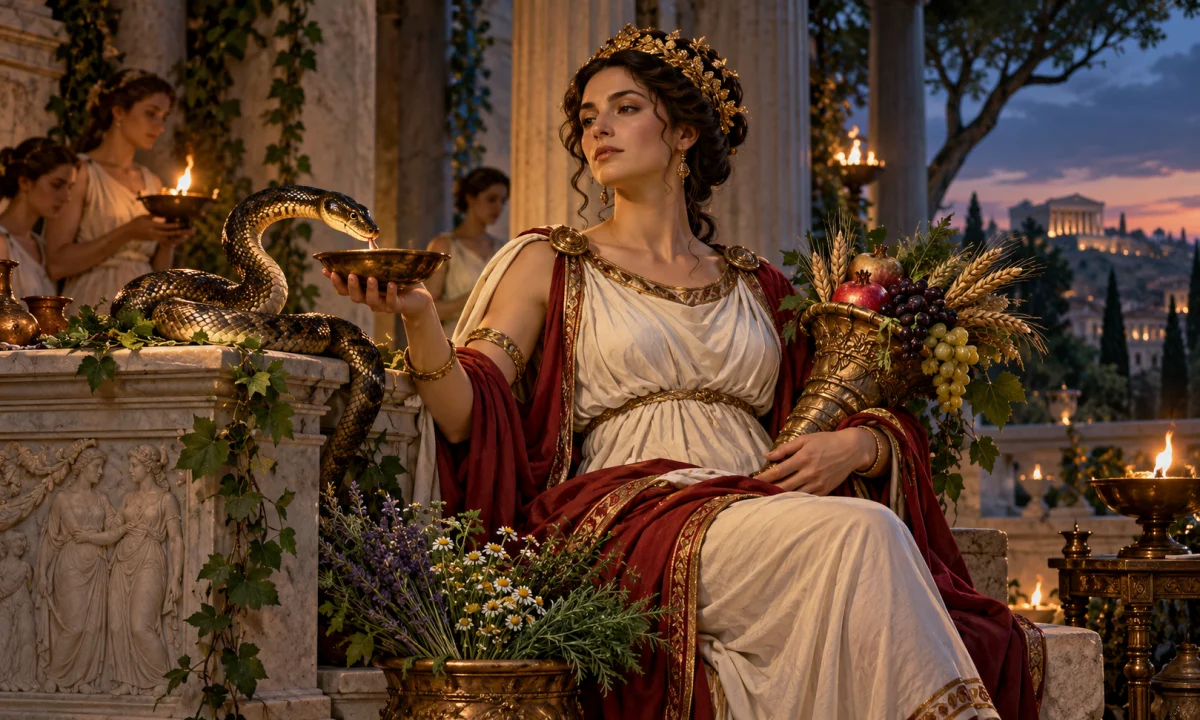
There is no single canonical appearance for Anna Perenna. Ancient texts do not consistently describe her clothing, physical form or supernatural powers. She may appear in interpretation as an old woman, a nymph, an abstract power of the year or a comic trickster, but these are separate strands of tradition rather than fixed attributes belonging to one universally defined character.
Her importance lies in the way she brings together several Roman concerns: the return of the year, the survival of the community, food during crisis, the pleasure of a public festival and the uncertainty of human identity. Anna Perenna was a goddess whose name invited explanation, and the Romans answered that invitation with stories that were charitable, tragic, symbolic and humorous all at once.