WORLD
WORLD
Anatiwa
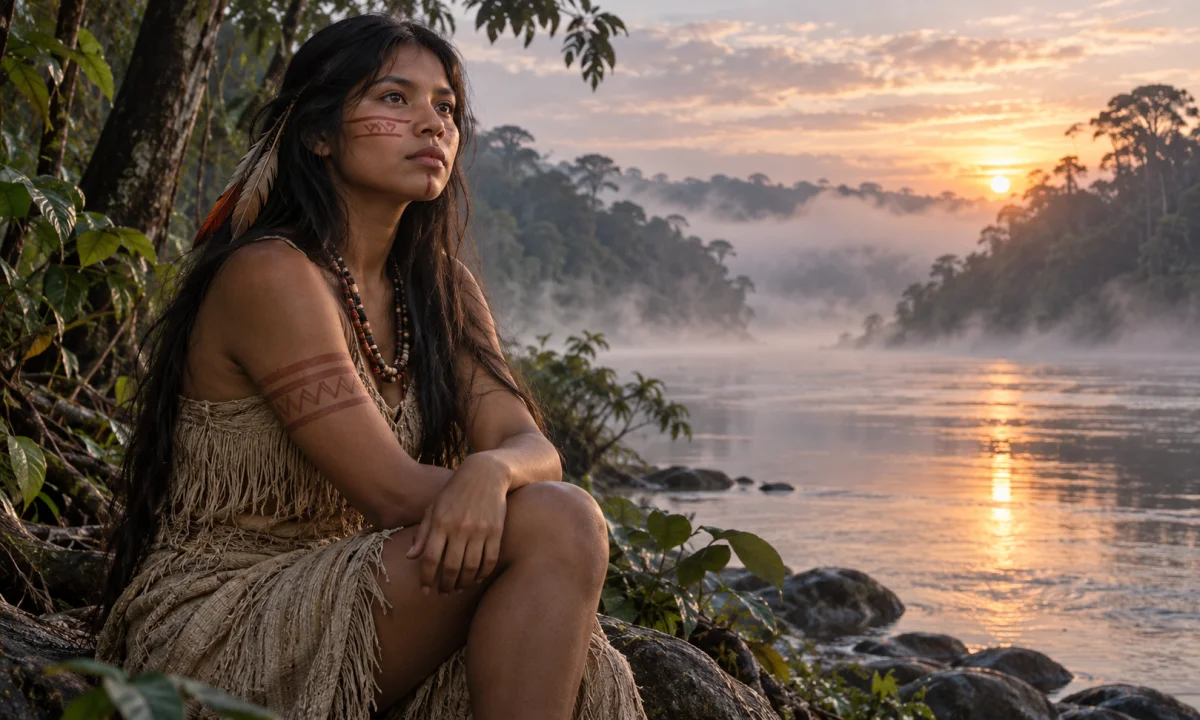
Anatiwa is a poorly documented name sometimes presented online as belonging to South American mythology. Unlike well-attested figures such as Mama Quilla, Anhangá, or the Mapuche Antu, Anatiwa does not have a securely established identity in a clearly identified Indigenous religious tradition. The available descriptions vary, and many lists repeat one another without preserving a verifiable myth, ritual context, language, community, or historical source.
Origins and cultural setting
“South American mythology” is a broad modern category rather than the name of a single religious system. South America contains hundreds of Indigenous peoples and many distinct languages, histories, and traditions. Quechua and Aymara traditions in the Andes, Mapuche religion in the south, and the many traditions of Amazonian, Orinoco, Guiana, Chaco, and lowland peoples cannot be treated as one mythology.
This distinction is important in the case of Anatiwa. The name is often placed under a general South American heading, but a general geographical label does not establish a cultural origin. A name needs to be connected to a people, language, narrative, ritual practice, or documented account before its significance can be described with confidence. No such connection is consistently supplied for Anatiwa in the material in which the name commonly appears.
Indigenous traditions also survive in different forms. Some were recorded by missionaries, travellers, colonial administrators, anthropologists, or later community researchers. Other traditions were transmitted orally and were never written down in the form expected by modern reference books. The absence of a written record does not prove that a figure did not exist. It does mean that a modern writer should not present uncertain details as established fact.
The name Anatiwa
The spelling Anatiwa is itself uncertain. It is not accompanied by a consistently reported original-language form, pronunciation, translation, or set of spelling variants. Without those details, it is difficult to determine whether the word represents a personal name, a title, a place-name, a spirit category, or a transcription error.
Names from Indigenous languages have frequently been altered when written by outsiders. Sounds may be represented differently in Spanish, Portuguese, English, French, or German spelling systems. A single figure may therefore appear under several forms, while similar-looking names may belong to entirely unrelated languages. Conversely, a name that looks Indigenous may be a modern invention created by a compiler, website, game writer, or author of a generalized mythology dictionary.
For Anatiwa, there is no sufficiently stable linguistic evidence to justify a definite translation. Claims that the name means “moon,” “mother,” “spirit,” or another specific concept should therefore be treated cautiously unless they are supported by an identifiable language and a documented tradition.
Identity and classification
Some modern references classify Anatiwa as a goddess or female supernatural being. Other descriptions give the name no clear role at all. These classifications do not form a consistent mythological profile. There is no secure evidence that Anatiwa was universally understood as a goddess, a creator, an ancestral spirit, a celestial being, or a guardian of a particular natural feature.
The word “goddess” can also be misleading when applied to Indigenous religions. European writers often organized unfamiliar spiritual beings according to categories borrowed from Greek and Roman mythology. A being associated with a river, animal, ancestor, storm, or sacred place might consequently be labelled a “god” or “goddess,” even when the community’s own religious concepts did not use an equivalent category.
It is therefore safer to describe Anatiwa as an uncertain mythological name rather than to assign a fixed rank. At present, the name cannot confidently be placed among the established deities of the Andes, the Amazon basin, the Guianas, the Chaco, or any particular South American people.
Attributes and supposed powers
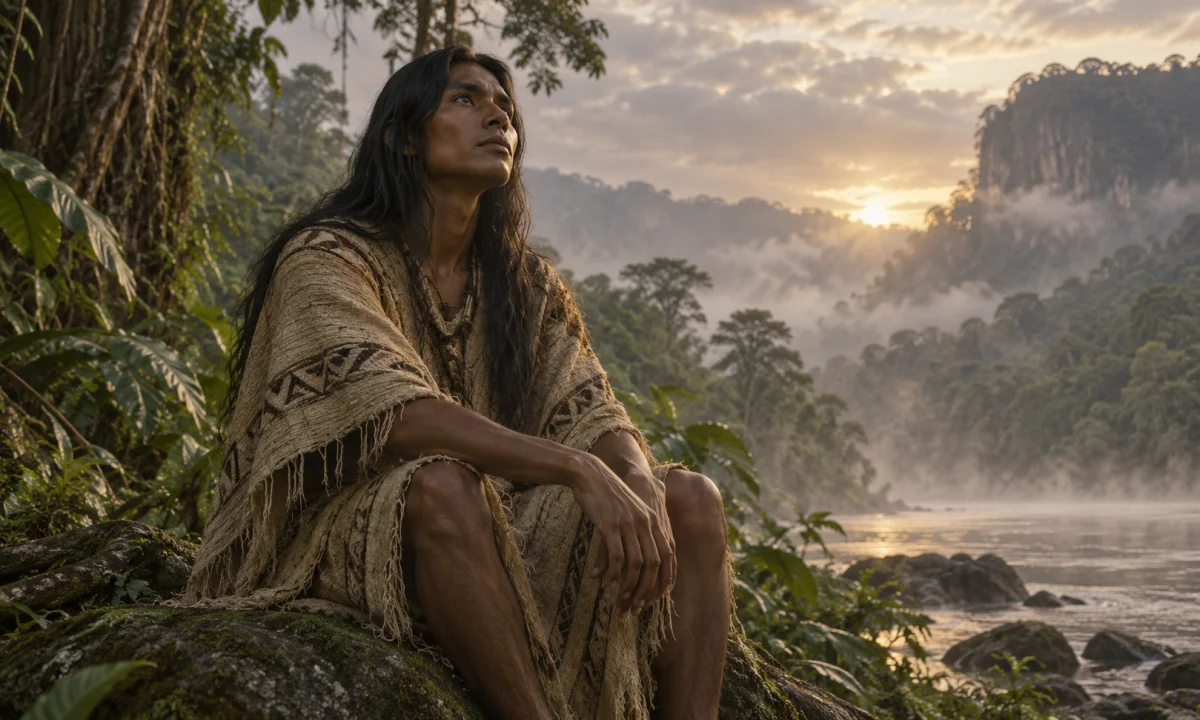
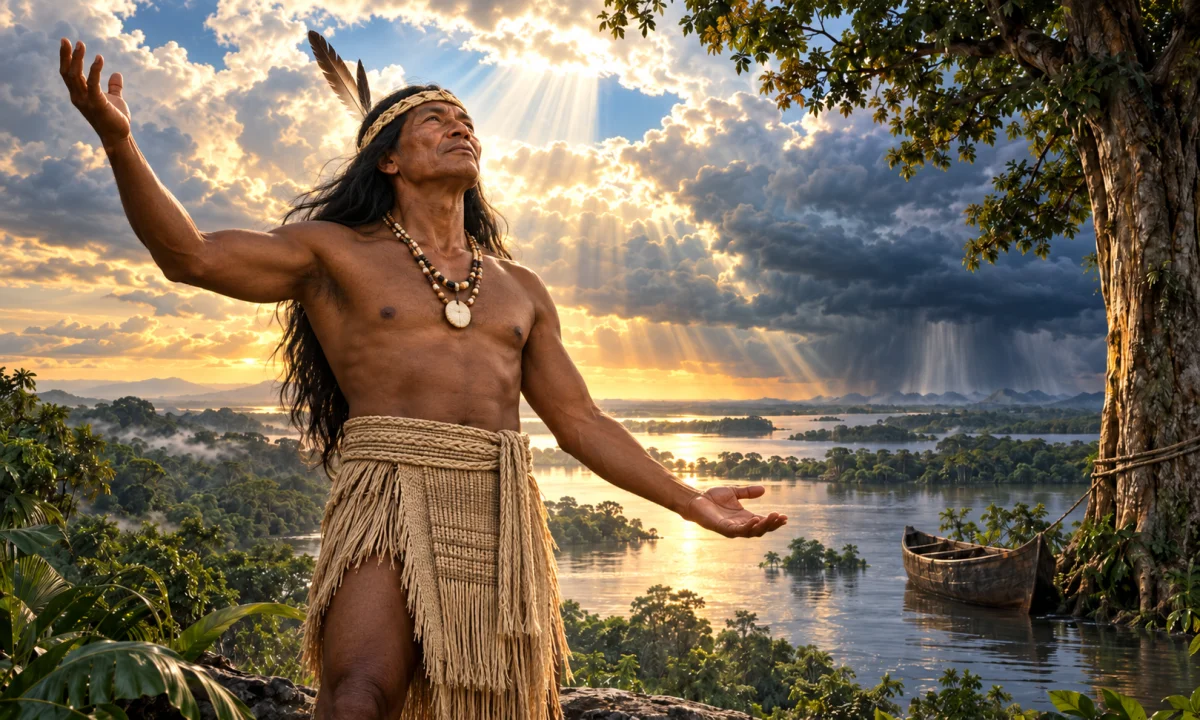
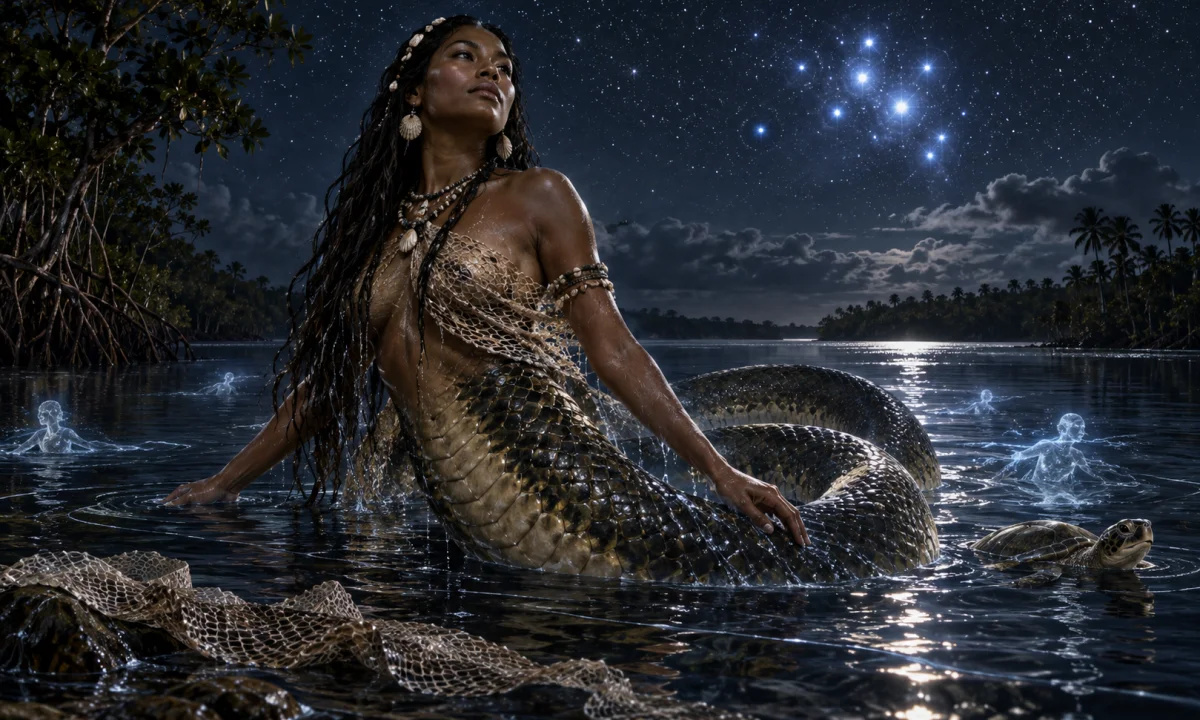
There is no dependable traditional description of Anatiwa’s appearance. Images showing a woman, a celestial figure, an animal-associated spirit, or a richly ornamented deity are modern artistic interpretations rather than evidence for an ancient iconography. No recognized body of sculpture, pottery, ritual object, or Indigenous painting can be securely identified as depicting Anatiwa.
The same caution applies to supposed powers. A number of internet summaries attach broad themes such as fertility, the moon, nature, love, healing, rain, or protection to the name. These are common features in generalized presentations of mythology, but their repetition does not establish that they belong to Anatiwa. Without a traceable narrative or ritual context, these attributes remain unverified.
It is especially unsafe to infer a deity’s role from a name alone. A figure associated with the moon in one South American tradition cannot automatically be connected with a similarly described figure elsewhere. The moon, sun, jaguar, serpent, river, and forest all have important meanings in many cultures, but those meanings differ substantially from one community to another.
Stories and relationships
No widely attested cycle of myths about Anatiwa can be identified with confidence. There is no securely established creation story, genealogy, marriage, conflict, death, transformation, or relationship with a known South American deity that can be assigned to the figure without qualification.
This absence is significant because traditional stories normally provide the context needed to understand a supernatural being. A name may appear in a chant, a place legend, a healing practice, a story about the origin of an animal, or a narrative concerning relations between humans and non-human persons. Removing the name from that setting can make a local spirit look like a universal goddess, even when that was never its meaning.
Claims linking Anatiwa with well-known figures such as Inti, Mama Quilla, Pachamama, Viracocha, Yacumama, Anhangá, or Mapuche celestial beings should not be accepted without specific evidence. These figures belong to different cultural and historical contexts, and similarity in a modern list is not proof of a traditional relationship.
Why the evidence is difficult to assess
Many popular mythology databases combine material from Indigenous traditions, colonial accounts, classical mythology, folklore, occult writing, modern fantasy, and unsourced online summaries. Once an uncertain name has been given a short description, later writers may copy the wording and make the entry appear better established than it is.
Geographical labels can create a similar problem. “South American” may be used as a category simply because a compiler does not identify a more precise origin. That label can conceal major differences between traditions from Colombia, Venezuela, Guyana, Suriname, Brazil, Peru, Bolivia, Chile, Argentina, Paraguay, and Uruguay. It can also obscure whether a name was recorded in an Indigenous language, translated by a colonial writer, or invented recently.
There is also a difference between oral tradition and the written record. A lack of early documentation should not be treated as proof that a belief is false or unimportant. At the same time, respectful treatment of oral cultures does not permit unsupported additions. When evidence is limited, the responsible approach is to preserve the uncertainty rather than fill it with attractive but unverified details.
Distinction from similar names
Anatiwa should not be automatically identified with Anat, the ancient West Semitic goddess known from sources connected with the Levant. Anat is not a South American figure, and resemblance between the names is not evidence of a historical connection.
Nor should Anatiwa be merged with Anahita, an Iranian goddess associated in later tradition with water, fertility, and sovereignty, or with Anaitis, a related form used in some classical and later accounts. These names belong to West Asian and Iranian religious histories, not to an established South American tradition.
It is also important not to confuse Anatiwa with South American figures whose names are better documented. Mama Quilla is associated with the moon in Inca religious tradition; Pachamama is a major Andean earth or world-mother figure, though her meaning has changed across regions and historical periods; Anhangá is a powerful spirit or supernatural being in traditions associated especially with Tupi-Guarani-speaking peoples; and Mapuche traditions include figures such as Antu and Küyen in different accounts of the sun and moon. None of these names provides evidence for the identity of Anatiwa.
Cultural significance of the uncertainty
Uncertainty is not merely a technical problem for reference writers. Assigning an invented or weakly sourced figure to an Indigenous culture can create a false picture of that culture’s religion. It may suggest that communities shared a single pantheon, that every natural force had a human-shaped deity, or that local spiritual concepts were equivalent to the gods of European mythology.
A careful description of Anatiwa should therefore distinguish three levels of information. First, the name is used in some modern mythological listings. Second, those listings do not provide a consistent, verifiable cultural context. Third, the familiar attributes sometimes attached to the name cannot presently be treated as secure traditional information.
This approach also leaves room for future clarification. A community publication, a reliable linguistic record, or an identifiable ethnographic account might establish that Anatiwa is a variant spelling of a known local figure, a spirit from a specific tradition, or a modern name with a documented history. Until such evidence is available, the name should remain classified as uncertain rather than being given a detailed mythology that the surviving record does not support.
Later reception and popular culture
Anatiwa has little clearly documented presence in widely known literature, film, television, games, or other major forms of popular culture. When the name appears in modern fantasy material or online mythology projects, it should be understood as a contemporary use unless the creator provides evidence of a traditional source.
Modern retellings may freely develop a personality, appearance, symbols, powers, or family relationships for Anatiwa. Such creative work can use the name as inspiration, but it should not be presented as recovered Indigenous mythology. The difference between a newly invented character and a traditional religious figure is particularly important when a name is assigned to a broad category such as “South American mythology.”
On the evidence currently available, Anatiwa is best treated as an unverified or insufficiently identified mythological name. Its exact origin, meaning, cultural affiliation, gender, nature, and traditional role remain uncertain, and no detailed set of myths can responsibly be attributed to it without more specific documentation.