WORLD
WORLD
Adonael

Adonael is a name found in later angelological and occult traditions, where it is generally treated as an angelic figure whose name suggests a connection to divine lordship. Unlike well-attested angels such as Michael or Gabriel, Adonael does not belong to a single, widely standardized scriptural tradition. References to the name are comparatively scarce, and its identity, rank, and function vary depending on the source or interpretive system in which it appears.
Because of that limited and uneven evidence, Adonael is best understood as part of the broader history of angelic speculation in Judaism, Christianity, and later esoteric literature rather than as a fixed figure with a settled profile. In some contexts the name is discussed among lists of angels; in others it is treated as a theophoric or constructed angelic name whose meaning evokes God’s authority. The surviving tradition is fragmentary, and many details associated with Adonael are interpretive rather than securely historical.
Origins and religious setting
The name Adonael is formed from elements that are familiar within Semitic religious naming patterns. The ending -el is common in angelic and biblical names and means “God” in Hebrew and related languages. The first element resembles Adon or Adonai, terms associated with “lord” or “my lord” in Jewish usage. On linguistic grounds, the name can therefore be read as something like “my Lord is God” or “Lord of God,” though exact etymologies in angelic names are often uncertain and should not be overstated.
That linguistic shape is important because angelic names in Jewish, Christian, and occult traditions often carry theological meaning. Many such names are not simply labels for individual beings; they can express divine qualities, ranks, or functions. A name like Adonael would naturally fit that pattern, even when the source tradition gives little narrative detail about the figure itself.
Adonael does not have the strong canonical basis of major biblical angels. There is no widely recognized passage in the Hebrew Bible, the New Testament, or standard liturgy that establishes Adonael as a central angelic personality. Instead, the name belongs to later or peripheral traditions where angelic hierarchies were expanded, catalogued, and interpreted in increasingly elaborate ways.
Name, spelling, and identity
Spelling can vary, and with a name like Adonael that variation matters. In manuscript traditions and modern retellings, angelic names may be written in slightly different forms because of transliteration choices, copying practices, or the attempt to make a name look more harmonious with Hebrew-style angelic nomenclature. Readers may encounter Adonael in contexts where the exact spelling is not stable enough to imply a single authoritative form.
The name should also be distinguished from words like Adonai, a revered Hebrew title for God used in Jewish prayer and reading practice. Although the elements are related, Adonael is not the same thing as Adonai, and the presence of the root adon does not by itself identify a figure as canonical, biblical, or uniformly traditional. In angelological texts, names built from divine elements can reflect devotional imagination as much as older scripture.
In traditions that do mention Adonael, the figure is usually treated as an angel rather than as a demon, saint, or deity. However, the evidence is not abundant enough to support a single agreed-upon identity. Some lists of angels in later literature are highly derivative, and names may be inserted, copied, or adapted without a strong narrative context. For that reason, Adonael is best handled cautiously: as a name within angelic tradition, but not as a fully documented figure with a stable biography.
Classification in angelic tradition
Where Adonael appears, the figure is commonly placed within a broader angelic hierarchy. That hierarchy may be influenced by Jewish mystical ideas, Christian angelology, or occult systems that arranged angels into orders, choirs, or administrative roles. Because these systems differ substantially, Adonael may be assigned a different rank or function depending on the source.
In some angelological frameworks, angels are grouped by their proximity to God, their role in governance of the cosmos, or their association with particular virtues, elements, directions, or divine names. Adonael can be understood within that kind of symbolic environment, though it would be inaccurate to claim one universally accepted office for the figure. No standard tradition firmly establishes Adonael as an archangel, a guardian angel, or an angel of a particular nation or planet.
This uncertainty is typical of many lesser-known angelic names. The history of angel lists is full of variation, and names could be transferred across texts, recast in new systems, or attached to different functions by later commentators. Adonael belongs to that shifting landscape.
Attributes and symbolic associations
Because Adonael is not richly described in the best-known canonical sources, attributes associated with the figure are usually inferred from the name and from the broader symbolic language of angelology. The divine element -el signals relation to God, while the opening element may suggest authority, lordship, or reverence. As a result, Adonael is often associated in interpretation with obedience, divine sovereignty, or the ordering power of heaven.
In angelic symbolism, names matter as much as stories. A name that suggests lordship can imply a role connected to command, proclamation, or the manifestation of divine authority. That does not mean older sources always say such things directly; rather, later readers may draw those meanings from the name itself. This is a common feature of mystical and esoteric angelology, where etymology and spiritual interpretation are closely linked.
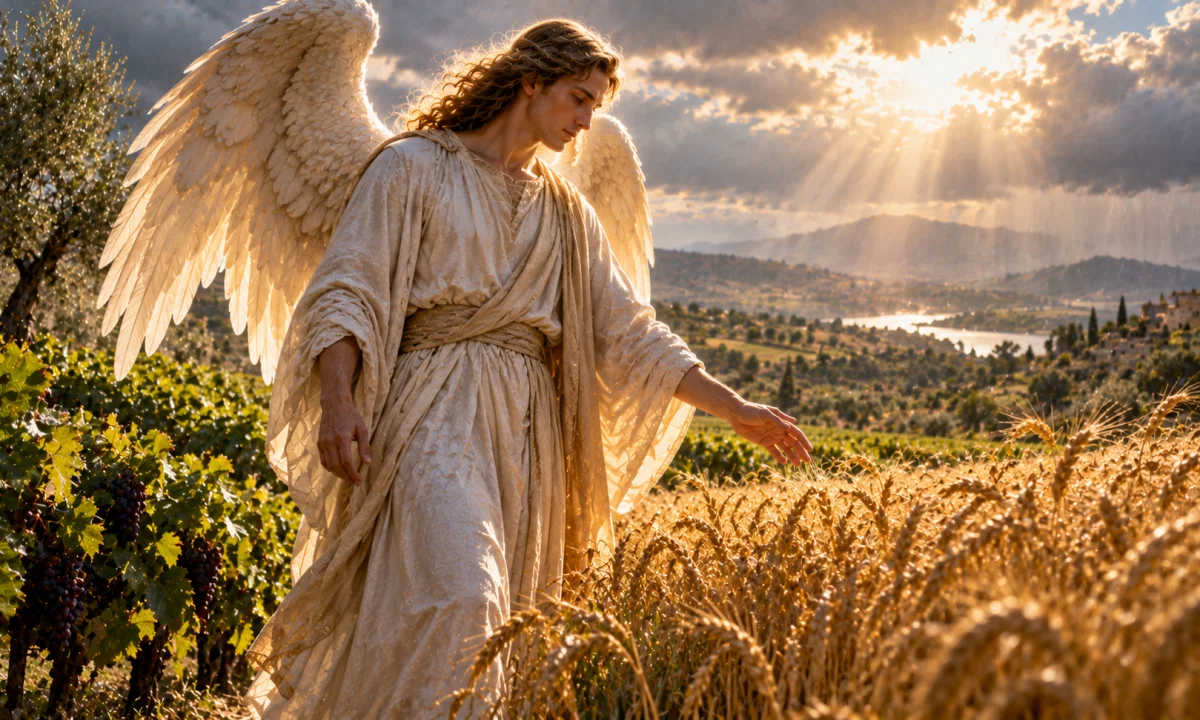
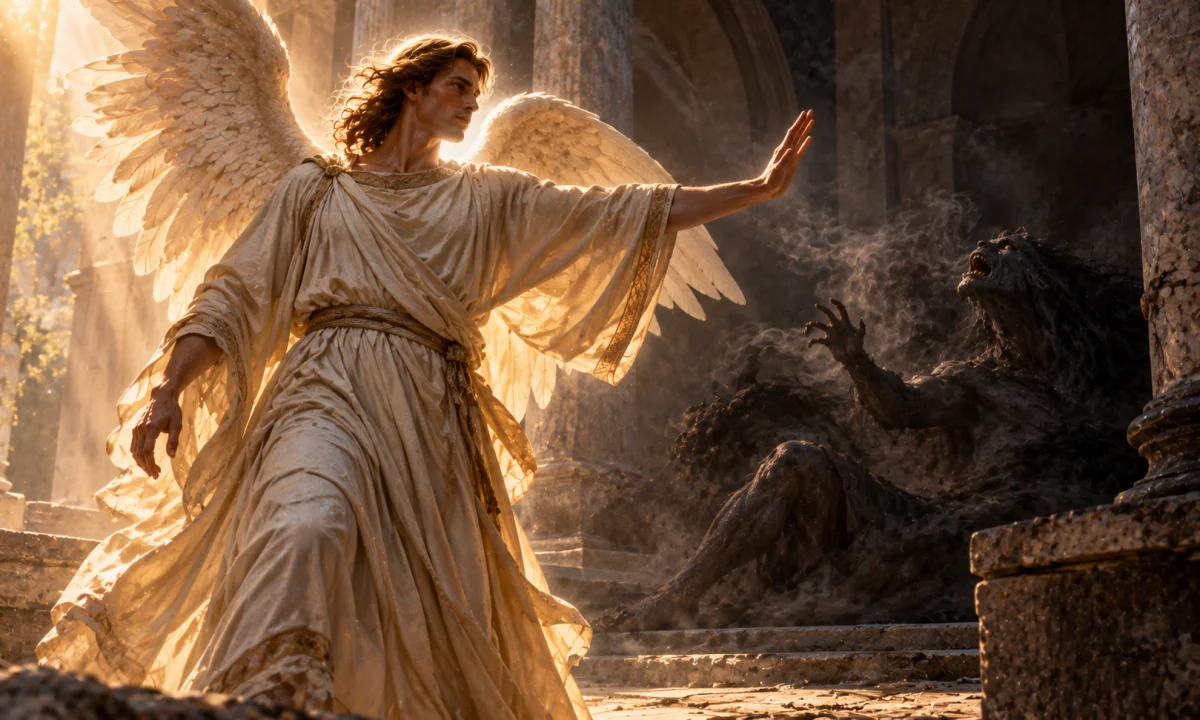
No securely established traditional iconography is widely associated with Adonael. There is no standard biblical image, feast day, or devotional cult centered on the figure. Later artists or occult writers may imagine angelic beings with robes, wings, radiance, or heraldic symbolism, but those are general angelic motifs and should not be mistaken for specific ancient evidence about Adonael.
Sources and surviving references
Adonael is not a major figure in the most familiar scriptural narratives, so surviving references tend to be indirect or secondary. The name is encountered in later angel lists, compilations, esoteric writings, and modern reference works that draw on those materials. In such contexts, it may appear alongside other angels whose names are also uncommon or whose textual histories are obscure.
That kind of survival means the tradition is uneven. Some angel names are preserved because they occur in authoritative religious texts; others persist because they circulated in manuscript culture, mystical speculation, or later encyclopedic attempts to systematize angelic beings. Adonael belongs more comfortably in the second category. The available evidence supports the existence of the name in angelological tradition, but not a large body of narrative or doctrinal material.
It is also possible that some appearances of Adonael reflect local or idiosyncratic traditions rather than a broad pan-religious consensus. Angelic nomenclature has often been fluid, especially in post-biblical and occult settings. When the historical record is thin, it is best to treat the figure as a tradition-dependent angelic name rather than as a universally recognized character.
Role in devotion and interpretation
Because there is no widespread devotional cult of Adonael, the figure is more often encountered in interpretation than in worship. Scholars and readers interested in angel names may approach Adonael as an example of how divine language is used to construct angelic identity. In that sense, the name is significant even when the narrative material is limited.
For some interpreters, angels named with elements like Adon and -el highlight the closeness between divine transcendence and ordered heavenly service. The angelic name becomes a miniature theological statement: God is sovereign, and the angel acts in relation to that sovereignty. Such readings are interpretive, not universally mandated by tradition, but they help explain why names like Adonael attract attention even when they are not central to canonical scripture.
In mystical or esoteric settings, angelic names are sometimes used in prayer, meditation, or ritual language. If Adonael appears in those contexts, it is usually as part of a larger symbolic system rather than as an independent figure with a defined mythic cycle. The emphasis tends to be on the power of the name, not on stories about the angel’s deeds.
Distinction from similar figures
Adonael should not be confused with Adonai, the Jewish reverential form used for God. The similarity is linguistic, but the religious function is different. Adonael is presented, when it appears at all, as an angelic name; Adonai is a sacred title for the divine.
It should also not be conflated with other angelic names that sound similar only because they share the element -el. The angelic naming tradition includes many such names, and the shared suffix does not mean two figures are identical or historically related. Likewise, names beginning with “Adon-” may evoke lordship, but each name has its own textual history, and those histories cannot be assumed to overlap.
Another point of caution is that angelic names sometimes circulate in modern compilations without reliable sourcing. A name may be repeated from one list to another until it appears more established than it really is. Adonael should be understood against that background: a name with plausible linguistic form and some traditional presence, but not a figure with the broad documentary support of the major angels of scripture and liturgy.
Historical and cultural significance
The importance of Adonael lies less in a dramatic myth and more in what the name reveals about religious imagination. Angelology often bridges scriptural tradition, mystical speculation, and the human desire to give structure to the unseen world. Names like Adonael show how divine language was extended into heavenly bureaucracy, where names signaled office, meaning, and relationship to God.
This also reflects a wider pattern in the history of religion: when communities seek to describe invisible intermediaries, they frequently do so by combining familiar sacred elements into new forms. The result may be a rich hierarchy of angels whose names sound ancient, even when their documentation is late or localized. Adonael fits that pattern well.
From a scholarly perspective, the figure is interesting precisely because of the uncertainty surrounding him. The lack of a fixed narrative invites careful distinction between what is attested and what is inferred. That distinction is especially important in the study of angels, where later compilations sometimes blur the line between scripture, tradition, and imaginative elaboration.
Later reception and modern interest
Modern interest in Adonael is usually limited to niche religious, occult, or encyclopedic contexts. The name may appear in discussions of angelic hierarchies, lists of lesser-known angels, or compilations of sacred names. In these settings, Adonael can acquire a degree of contemporary visibility that exceeds the figure’s historical footprint.
Popular culture has not given Adonael the same broad afterlife enjoyed by more famous angels. There is no major, widely recognized literary, film, or gaming tradition centered on the figure. When the name does appear in modern creative work, it usually functions as an evocative angelic-sounding name rather than as a reference to a deeply developed traditional character.
That modern usage should be separated from older religious and mystical material. A contemporary fantasy novel, role-playing sourcebook, or online catalogue may present Adonael with elaborate powers or a dramatic backstory, but such additions belong to modern creativity unless they can be traced to earlier tradition. The name’s traditional significance is more modest and more uncertain than many modern retellings suggest.
Reading Adonael within angelic tradition
Adonael is best approached as a marginal but meaningful figure in the history of angel names. The name’s structure places it firmly within Semitic and religious naming patterns, while its limited textual presence shows how flexible angelic tradition can be. In that respect, Adonael illustrates a common feature of religious history: important symbolic figures do not always come from large narrative cycles. Sometimes they persist as names, traces, and interpretive possibilities.
For that reason, any account of Adonael must remain careful about certainty. The name may be ancient in form, traditional in setting, and meaningful in theology, but the surviving evidence does not support sweeping claims about a fixed biography, universal rank, or standardized function. What can be said with confidence is that Adonael belongs to the wider world of angelic devotion and speculation, where language itself often carries the weight of revelation.
Key points in the tradition
- Adonael is an angelic name found in later or peripheral traditions, not a major canonical angel with a firmly established scriptural profile.
- The name appears to combine elements associated with lordship and the divine suffix -el, though exact etymology should be treated cautiously.
- Surviving references are limited, and the figure’s rank, duties, and attributes vary by source or interpretive system.
- There is no widely accepted traditional iconography, cult, or feast associated with Adonael.
- Modern mentions usually belong to encyclopedic, esoteric, or fictional settings and should be distinguished from older religious tradition.
Common points of confusion
- Adonael is not the same as Adonai, a sacred title for God in Jewish usage.
- Similar-sounding angelic names are not necessarily related and should not be merged.
- Claims that Adonael has a fixed rank or universally recognized role go beyond the evidence.