WORLD
WORLD
Abraxos
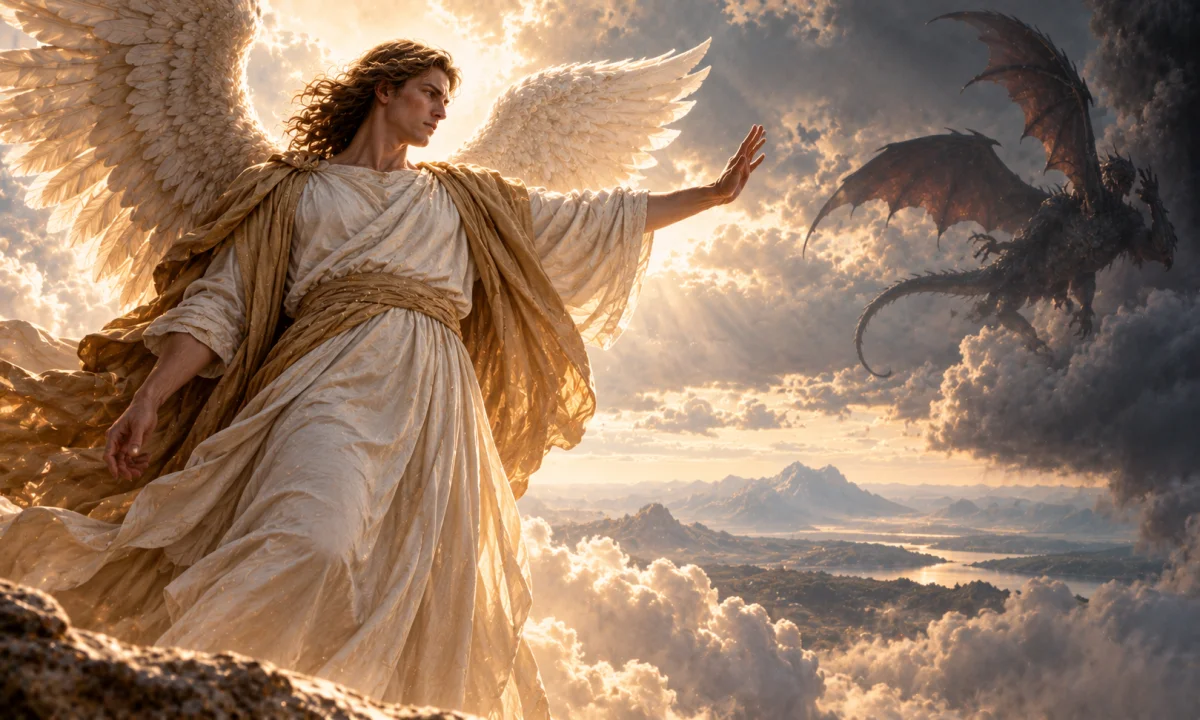
Abraxos is a name associated with a figure from late antique religious and magical tradition, but its exact identity is not fully settled. In surviving texts and later interpretation, the name is most often connected not to a clearly defined angel in the biblical sense, but to a powerful symbolic or numinous being appearing in Gnostic, magical, and esoteric contexts. Because the sources are fragmentary and the name is used in more than one way, Abraxos must be approached with caution: the figure may refer to a divine power, a protective force, or a name employed for ritual purposes rather than a single standardized angelic personage.
The name is best known from the wider family of forms surrounding Abraxas, a term that appears in ancient magical gems, amulets, and later Gnostic and occult writings. In many discussions, Abraxos is treated as a variant spelling, transliteration, or related form of that better-known name. However, the relationship is not always straightforward. Ancient and later sources do not always use spellings consistently, and modern writers sometimes conflate distinct forms or assume a uniform tradition where none exists. For that reason, any account of Abraxos must remain attentive to uncertainty.
Origins and religious setting
Abraxos belongs to the complex religious world of the Roman imperial period, when Judaism, Christianity, Greek religion, Egyptian religious traditions, and various philosophical and magical systems interacted. In this environment, names of power often crossed boundaries. A single figure might be understood as a god, angel, demon, or cosmic ruler depending on the community and the purpose for which the name was used. The name Abraxos appears in that broader late antique setting, where protective names and symbolic beings circulated in amulets, handbooks of ritual, and speculative religious systems.
The strongest historical associations are with Gnostic or Gnostic-like currents and with Greco-Egyptian magical practice. In some modern scholarship, Abraxas is discussed as a cosmic or archontic power linked to creation, fate, and the ordered structure of the universe. In older and popular treatments, the figure has sometimes been described as a god, a demon, or an archangel. None of these labels fully captures the range of surviving evidence. The ancient material is not uniform, and the category “angel” fits only some interpretive frameworks, especially later syncretic or occult ones.
Because the name appears in magical contexts, it is possible that for many users it functioned primarily as a vibrational or protective name rather than as a doctrinally fixed being. In other words, the power of the word could matter more than a carefully defined mythology. That makes Abraxos different from many better-known angels of Jewish, Christian, or Islamic tradition, whose identities are often shaped by canonical scripture or authoritative theological commentary.
Name, spelling, and identity
The name is the first source of difficulty. The form Abraxas is the one most commonly encountered in scholarship and popular writing, while Abraxos appears as a variant transliteration or spelling in some contexts. Because ancient languages were written and copied in varied alphabets, there is no reason to assume that a single standardized spelling existed in antiquity. As a result, modern usage may reflect editorial preference, transliteration habits, or later reinterpretation more than a clearly separate ancient identity.
In some modern traditions, the name is linked to an angelic being. This should be treated carefully. The surviving ancient evidence does not present Abraxos as an angel in the familiar biblical or liturgical sense, such as Michael or Gabriel. Instead, the figure seems to occupy an ambiguous zone between divine power and cosmic ruler. Later occult systems, however, often reclassified older names into angelic hierarchies, and that may be one reason Abraxos can appear under the category of angels in modern reference works.
There is also the possibility of confusion with other names that sound similar or are written with overlapping forms. The most important distinction is between Abraxos/Abraxas and wholly separate beings from Jewish, Christian, or Islamic angelology. It is not safe to merge Abraxos with a canonical angelic figure simply because the name sounds elevated or sacred. The identity remains uncertain and depends heavily on the specific source tradition.
Appearance and symbolism
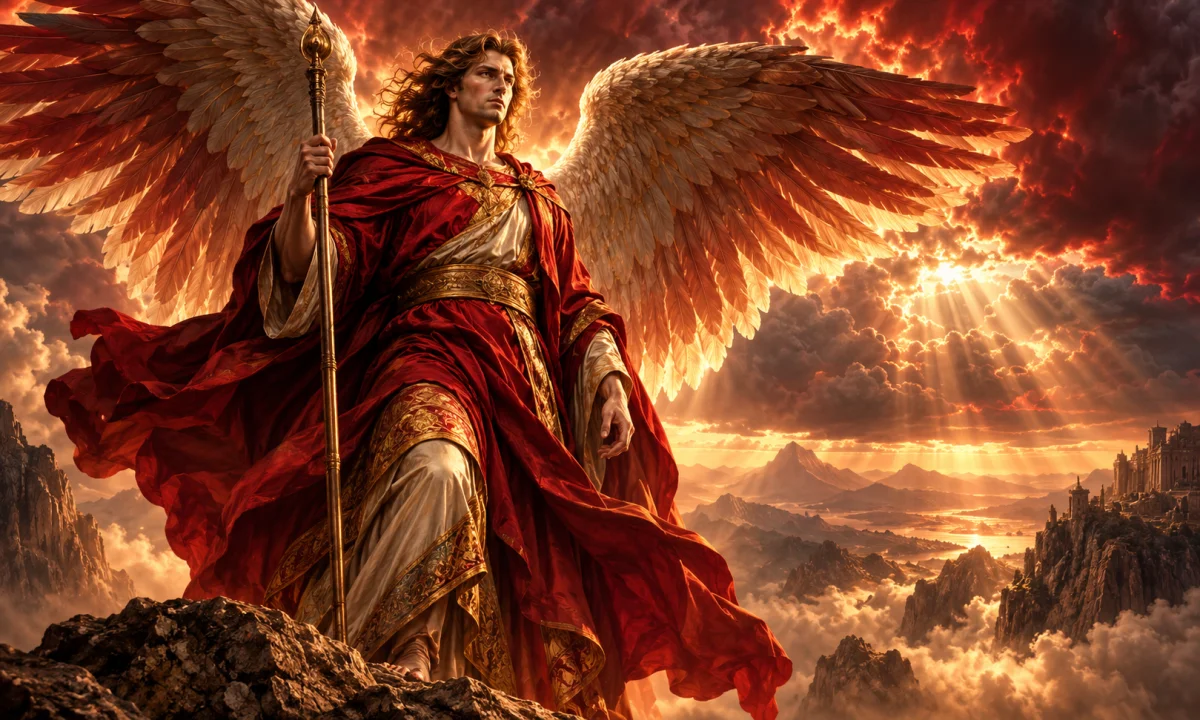
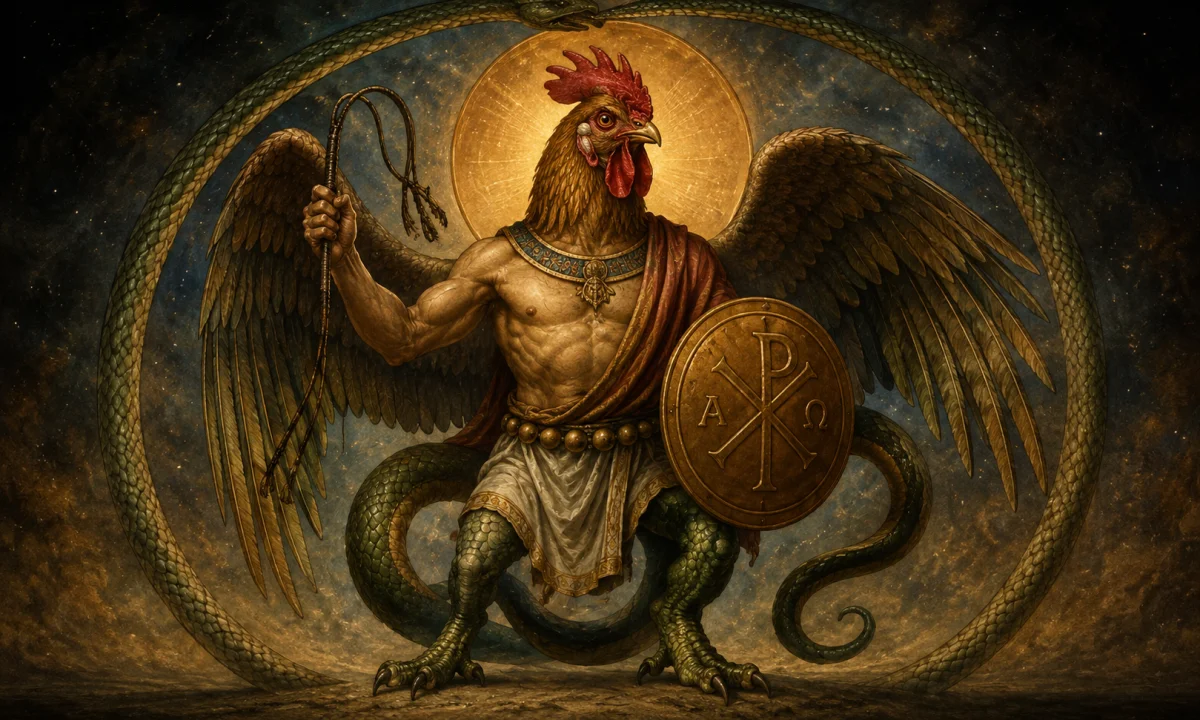
The visual tradition most often connected with Abraxas features composite imagery. On ancient engraved gems, the figure may appear with a human body and animal or symbolic features, sometimes accompanied by words of power. These images are not straightforward portraits in the modern sense. They are symbolic compositions that likely aimed to convey cosmic authority, protection, and mystery rather than literal anatomy.
One common modern description of Abraxas is as a being associated with solar, planetary, or cosmic power. That characterization reflects interpretation of the gem imagery and later esoteric speculation. Ancient users may have understood the name more pragmatically, as effective in invoking hidden power or warding off harm. The symbolism can be read in several ways:
- Authority over hidden or cosmic forces.
- Protection against illness, misfortune, or spiritual danger.
- Transformation, because composite forms often signal liminality and change.
- Secret knowledge, especially in settings influenced by Gnostic ideas.
Because many surviving depictions belong to amuletic contexts, the figure’s appearance may have been meant to work apotropaically, that is, to avert danger. In such cases the exact iconography matters less than the combination of image, name, and ritual use.
Roles in ancient tradition
Abraxos is not securely documented in the same way as major angels in the Hebrew Bible or the New Testament. Instead, the figure emerges from a patchwork of late antique religious life. The role assigned to him varies according to source and interpreter. In some settings, he may function as a cosmic ruler or supreme power. In others, the name seems to serve a magical or protective function with no fully elaborated mythology attached.
Within Gnostic frameworks, names like Abraxas were sometimes linked to the structure of the cosmos and to the journey of the soul through hostile or layered spiritual powers. Such systems often portrayed the material world as ordered by lower powers, with higher divine reality beyond ordinary perception. In that environment, a figure like Abraxos could be imagined as a powerful intermediary, a ruler among cosmic beings, or a name representing divine fullness in symbolic form. Yet these ideas vary widely from text to text, and it would be misleading to present a single fixed doctrine.
In magical practice, the name may have functioned differently. Amulets and incised gems were not systematic theological statements; they were often practical instruments. The use of Abraxos or Abraxas in such objects suggests that the name was believed to carry force. That force might have been invoked for health, protection, success, or control over unseen influences. In this respect, the figure belongs to the lived religion of the ancient Mediterranean, where the boundaries between prayer, ritual, magic, and devotion were often fluid.
Surviving evidence and interpretive problems
Most of what is known about Abraxos comes indirectly, through material objects and later discussion rather than a single authoritative narrative text. This creates significant interpretive problems. An engraved gem can tell us that the name mattered and that it was thought effective, but it cannot by itself reveal the full theology behind the name. Likewise, later Christian critics or heresiologists may mention related names in order to reject them, not to explain them sympathetically.
Scholars therefore disagree on how to classify the figure. Some see Abraxos as a specifically Gnostic name, others as part of a broader magical and religious vocabulary, and still others as a later esoteric reinterpretation of older materials. The evidence supports none of these views exclusively. It is safer to say that Abraxos belongs to a late antique religious repertoire in which the same figure or name could be understood in several overlapping ways.
It is also important not to overstate the degree of continuity between ancient use and modern interpretation. The ancient world did not necessarily regard Abraxos as an “angel” in the strict sense later imagined by Christian angelology. When the term appears in modern angelic lists or occult hierarchies, that may reflect reclassification by later writers rather than ancient self-description. The historical figure is therefore better understood as a flexible sacred name or being whose interpretation changed across time.
Relationship to Gnosticism
Abraxos is often discussed alongside Gnosticism because of the name’s association with cosmological speculation and secret knowledge. Yet “Gnosticism” itself is a modern umbrella term for diverse ancient movements, not a single organized religion. In some of these traditions, powerful names and symbolic figures were used to map the universe, the soul’s ascent, and the relation between the hidden God and the material world.
In that setting, Abraxos may have represented a high cosmic principle, perhaps connected to sovereignty, order, or the regulation of the visible cosmos. Some later interpreters treated the figure as a being standing between transcendent divinity and the lower world. Others saw in the name a way to access protective or salvific power. Because the surviving sources do not preserve a unified account, the safest description is that Abraxos belonged to an esoteric religious imagination rather than to a single dogmatic system.
Gnostic writings and interpretations often use language that is intentionally symbolic and multilayered. Names can function simultaneously as titles, clues, and ritual tools. This may help explain why Abraxos remains so elusive. A figure that is partly conceptual, partly ritual, and partly iconographic cannot be pinned down as easily as a named angel in canonical scripture.
Distinction from similar figures
Abraxos should not be confused with the Greek hero Abraxos is not a hero or with any unrelated mythological or folkloric being that happens to share a similar sound. Nor should the name be merged with the ancient figure Abraxas without qualification. The two forms are closely connected in modern discussion, but their exact relationship in the sources is not always transparent. Spelling variation, transliteration, and later editorial standardization all complicate the picture.
It is also important to distinguish Abraxos from canonical angels in Judaism, Christianity, and Islam. Those traditions generally define angels as messengers or servants of God within a recognized theological structure. Abraxos does not fit neatly into that pattern. If modern reference systems place him under “angels,” that classification should be understood as interpretive and modern, not as an unambiguous ancient consensus.
Another possible point of confusion is with demonological language. Some late antique and medieval Christian writers tended to label unfamiliar sacred names or rival powers as demonic. That does not necessarily mean the name originated as a demon. Abraxos occupies a border zone where one tradition’s protective power could be another tradition’s suspicious or forbidden name. The historical context matters more than later polemical labels.
Cultural significance
Abraxos is important less for a single fixed myth than for what the name reveals about religious creativity in late antiquity. The figure shows how ancient people worked with sacred language, portable images, and overlapping traditions. A name could be powerful because it was secret, ancient, foreign, or associated with hidden knowledge. It could also be effective because it had a place in a ritual system, regardless of whether that system matched later theological categories.
The name’s endurance in modern writing reflects that same fascination. Abraxos has become a symbol of the mysterious, the esoteric, and the hybrid religious imagination of the ancient Mediterranean. For historians, that makes the figure valuable as evidence of how spiritual authority was negotiated across cultures. For modern esoteric traditions, the name may continue to function as an emblem of hidden power or cosmic structure.
At the same time, the figure’s ambiguity is part of its significance. Abraxos demonstrates how difficult it can be to reconstruct ancient religion from partial evidence. A name scratched on a gem, repeated in a magical formula, or reinterpreted by later readers can open a wide field of meaning without yielding a single definitive portrait.
Modern reception
In modern popular culture and esoteric writing, Abraxos is sometimes presented as an angelic, demonic, or semi-divine being with elaborate powers. These portrayals should be separated from the ancient evidence. They often draw on the general aura of mystery surrounding the name rather than on a stable historical tradition. Modern fiction and occult literature may enlarge the figure into a fully developed character, but such versions are creative adaptations, not direct continuations of a single ancient cult or scripture.
Because the traditional material is sparse and ambiguous, contemporary authors have considerable freedom when using the name. That flexibility has helped keep Abraxos alive in imaginative literature, game worlds, and spiritual speculation. Yet the historical record remains limited. The name’s power in modern culture comes precisely from the combination of ancient resonance and unresolved identity.
For that reason, any modern presentation of Abraxos should make clear whether it is drawing on ancient magical tradition, later Gnostic interpretation, or contemporary invention. The ancient figure is best understood as a layered and uncertain sacred name whose meaning changed across communities and centuries, rather than as a single clearly defined angel with a fixed biography.