WORLD
WORLD
Abasdarhon

Abasdarhon is a name found in discussions of angelic beings within certain late antique and esoteric religious traditions, especially in texts and interpretations connected with Jewish, Christian, and broader mystical angelology. The figure is not among the best-known angels of mainstream biblical tradition, and the surviving references are limited and often indirect. Because of that, details about Abasdarhon’s identity, rank, and function can vary by source, and some interpretations remain uncertain.
In the study of angels, names such as Abasdarhon often appear in material that lies at the edge of canonical scripture: apocryphal writings, magical or devotional texts, mystical speculation, and later catalogues of angelic names. In those settings, an angel may be assigned a specific duty, linked to a cosmic region, or named as part of a liturgical or visionary hierarchy. Abasdarhon belongs to that wider world of angelic tradition rather than to the small set of angels whose roles are clearly defined in the Hebrew Bible, the New Testament, or the Qur’an.
Tradition and context
Angelology developed differently across religious communities. In Judaism, Christianity, and related mystical currents, angels can be messengers, guardians, healers, judges, or members of a heavenly court. Some are individually named and described; many more are mentioned only in passing or preserved in later interpretive literature. The name Abasdarhon appears in this broader environment, where angelic names are not always stable and where manuscripts may preserve alternative spellings, titles, or roles.
Because the surviving material is limited, Abasdarhon cannot be treated as a figure with a single fixed biography. In some traditions, a named angel functions as an intermediary between heaven and earth; in others, the name may occur in lists, invocations, or visionary contexts without a detailed narrative. The lack of a standard scriptural profile means that modern readers often encounter Abasdarhon through reference works, comparative angelology, or occult and devotional compilations rather than through a widely read sacred text.
Name and identity
The spelling Abasdarhon is not universally standardized. As with many angelic names transmitted through multiple languages and manuscript traditions, variant spellings and transliterations may appear. That uncertainty matters, because angel names can shift as they pass from one script or language to another, especially in texts copied by hand over centuries. A single name may also be preserved in forms that reflect pronunciation rather than original orthography.
The identity of Abasdarhon is similarly not always fixed. In some cases, names in angelic literature are attached to a function more than to a narrative personality. That means Abasdarhon may be understood less as a character with a detailed story than as a designated heavenly being associated with a role, a rank, or a symbolic purpose. Where a source does not clearly define that role, it is safest to say that Abasdarhon is an angelic name attested in limited traditions rather than a universally recognized angel of a major canon.
It is also important not to confuse Abasdarhon with similarly shaped names in other religious or magical corpora. Angelic and demonic lists in late antique and medieval material often contain names that resemble one another or differ by only a few letters. Without a clear textual identification, it would be misleading to merge Abasdarhon with any other figure simply because of a superficial similarity.
Sources and transmission
Unlike angels such as Michael or Gabriel, whose names and functions are widely known across major scriptural traditions, Abasdarhon is not prominent in standard biblical narrative. References to such a figure tend to survive in specialized literature: mystical writings, compilations of angel names, or ritual and esoteric contexts. In these settings, angelic beings may be named for purposes of invocation, protection, revelation, or cosmological ordering.
That kind of transmission creates two challenges. First, the same name can appear in different contexts with different implications. Second, later compilers sometimes preserved names without preserving their original explanation. As a result, modern scholarship may acknowledge Abasdarhon as an angelic name while remaining cautious about assigning an exact origin, date, or doctrinal status. Where sources are fragmentary, the responsible approach is to distinguish clearly between what is actually attested and what is inferred from the broader pattern of angelic literature.
In some angelological traditions, especially those influenced by late antique cosmology, angels were organized into hierarchies or offices. A named angel might belong to a group associated with a cardinal direction, heavenly gate, planetary sphere, or liturgical function. Abasdarhon is often discussed in that kind of interpretive framework, but the specific office attributed to the figure is not secure enough to state as universal fact unless a source explicitly gives it.
Appearance and symbolism
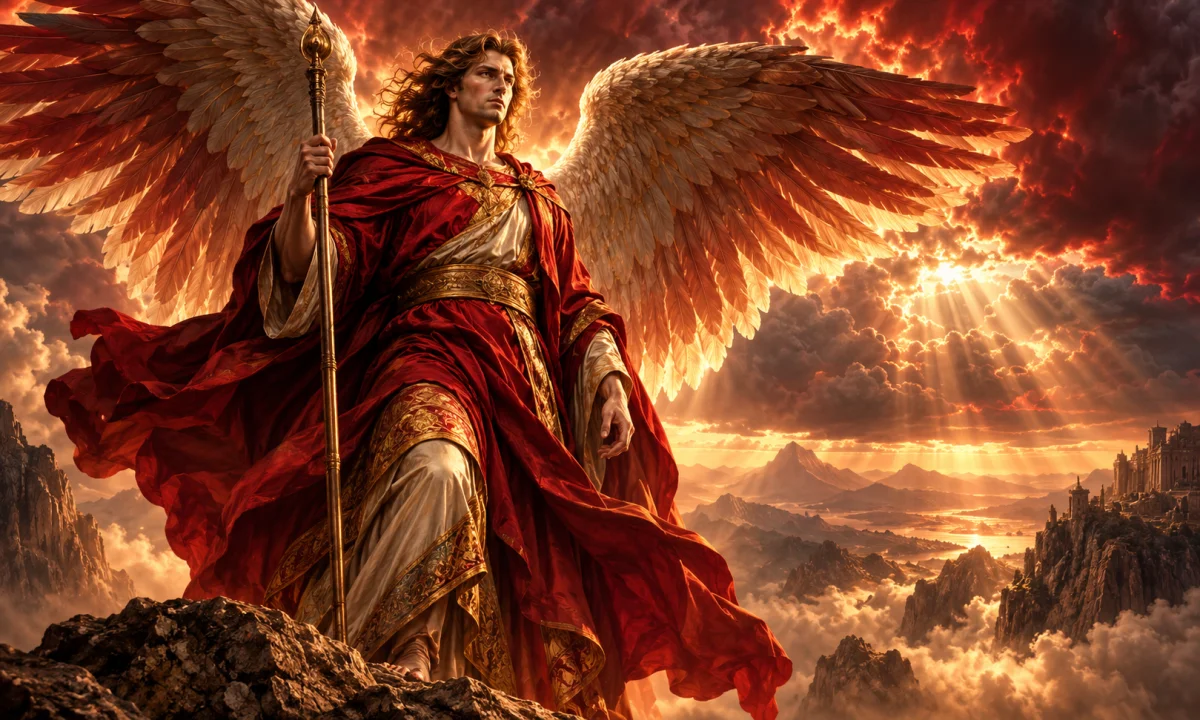
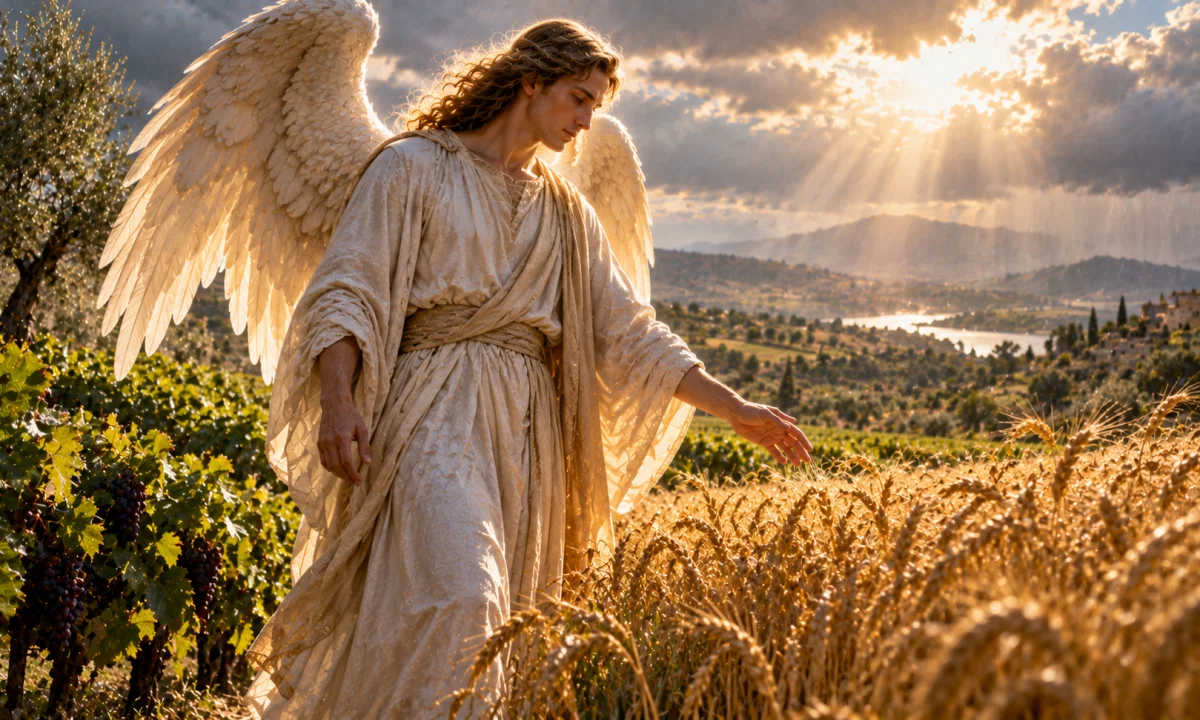
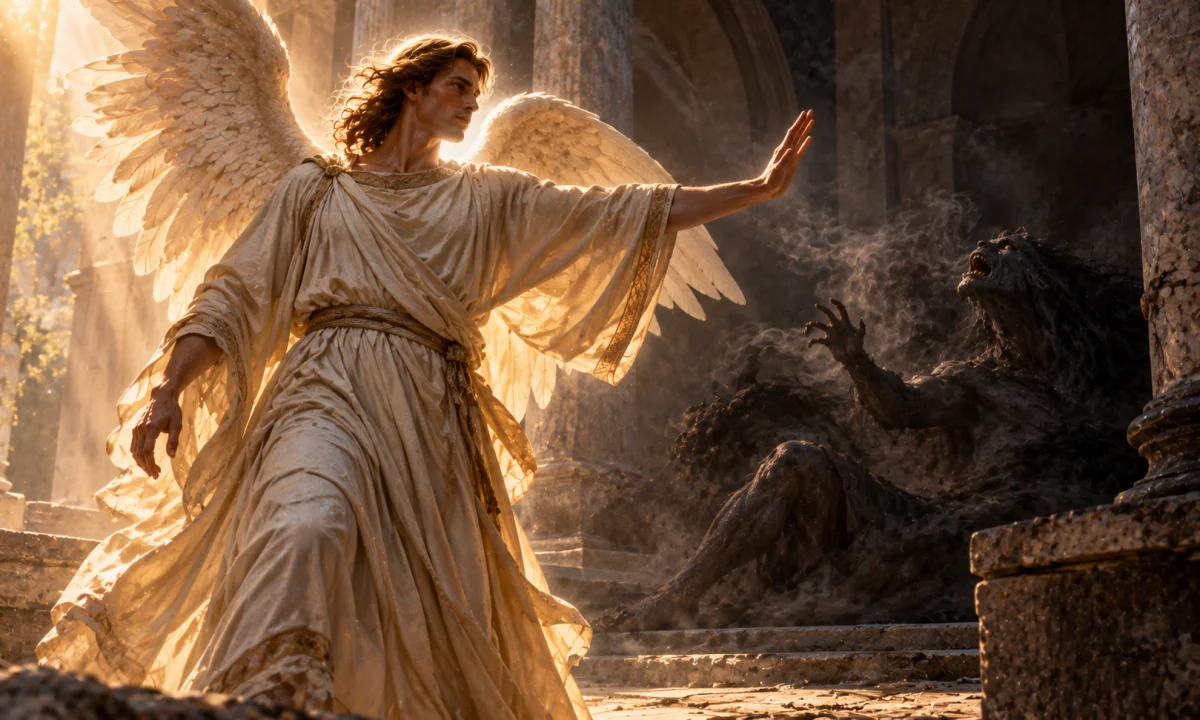
There is no single, authoritative visual description of Abasdarhon in the way that art and scripture sometimes depict archangels. The absence of a standard iconography is typical of many lesser-known angelic names. If Abasdarhon appears in a symbolic or visionary setting, the emphasis is usually on function rather than physical appearance.
In angelic traditions more broadly, a being like Abasdarhon may symbolize mediation, sacred authority, protection, or access to hidden knowledge. Such symbolism depends on the text in which the angel appears. A name in a protective prayer suggests guardianship; a name in a revelation narrative suggests disclosure and divine instruction; a name in a liturgical list may signal cosmic order. For Abasdarhon, surviving evidence is too limited to assign a single definitive set of symbols, but the name belongs to the category of beings imagined as serving in the divine realm rather than acting independently of it.
Where modern occult or popular sources try to describe angelic appearance in detail, those descriptions should be treated carefully. Later imagination often fills gaps left by the older material. In the case of Abasdarhon, there is no widely accepted traditional iconographic standard, and any elaborate physical portrayal should be understood as interpretive rather than anciently fixed.
Role in angelic thought
Within religious traditions that recognize many named angels, a figure like Abasdarhon may be understood in one of several ways. The angel may serve as a messenger of divine will, a guardian over a domain, a participant in heavenly worship, or a being invoked for spiritual assistance. Some angelic names are preserved precisely because they were believed to hold power in ritual or prayer.
Angelology often blends theology with symbolism. Angels can represent the nearness of God, the orderliness of creation, or the idea that the unseen world is populated by intelligent and obedient servants. A name such as Abasdarhon fits into this pattern even when the exact role remains uncertain. The name signals that the tradition concerned itself not only with a few famous messengers but also with a broader and more complex heavenly hierarchy.
In some interpretive settings, named angels also reflect the human desire to classify the divine world. Lists of angels create structure: they sort sacred beings into ranks and offices and allow worshippers or mystics to imagine the heavens as organized and intelligible. Abasdarhon’s importance, then, may lie less in a dramatic story and more in what the name reveals about the tradition that preserved it.
Variants and uncertainty
Uncertainty is central to any discussion of Abasdarhon. The name is not widely standardized, and the limited evidence means that scholars and reference writers may disagree about pronunciation, linguistic origin, or exact textual setting. Some angelic names are borrowed, adapted, or transformed across languages such as Hebrew, Aramaic, Greek, Coptic, Latin, or later vernaculars. In that process, meaning can become obscured.
It is also possible that some references to Abasdarhon depend on manuscript traditions that are not consistent from one witness to another. For angelic names, even a small spelling change can indicate a different transmission history. That is why careful writers avoid overstating certainty when the source base is thin.
Where a tradition does not clearly explain whether a name belongs to an angel, a class of spirits, or a ritual formula, the safest wording is to say that Abasdarhon is an angelic figure or name associated with religious tradition, rather than presenting it as a fully documented personality. This caution helps preserve the difference between attested tradition and later reconstruction.
Relationship to biblical and apocryphal angels
Abasdarhon belongs to the large world of named celestial beings that extends beyond the most familiar biblical archangels. In the Hebrew Bible and New Testament, only a few angels are named explicitly, and even those names are treated differently across traditions. Later Jewish and Christian writings greatly expanded the angelic world, giving names and roles to many more beings.
That expansion appears in apocryphal literature, visionary texts, mystical speculation, and devotional practice. Abasdarhon should be understood against that background. The name does not carry the same level of doctrinal certainty as the most prominent scriptural angels, and it should not be folded into biblical narrative without evidence. Still, it is part of the historical development of angelic devotion and speculation, where religious imagination sought to describe the structure of heaven more fully than the canonical texts do.
Because of this, Abasdarhon can be useful for understanding how angelology evolved. The name illustrates how communities preserved, adapted, and expanded the heavenly hierarchy. It also shows that the boundary between theology, lore, and ritual practice was often fluid in premodern religious culture.
Distinguishing Abasdarhon from similar figures
Confusion is common when studying obscure angels, especially when names resemble one another across different traditions. Abasdarhon should not be automatically identified with any other angelic or supernatural figure unless a source explicitly makes that connection. Similarity of sound alone is not enough.
This caution is especially important with traditions that contain lists of names used for protection, incantation, or mystical ascent. Such lists may preserve angels, archangels, holy names, or other spiritual beings in close proximity. Without a clear contextual explanation, it is easy to mistake one figure for another. Abasdarhon should therefore be treated on its own terms, with attention to the exact text or tradition in which the name appears.
It is also worth distinguishing historical tradition from later imaginative elaboration. Modern works sometimes present obscure angels as though they have a universally agreed set of powers or a dramatic mythic biography. That is not supported here. The available evidence points to a limited and specialized tradition, not to a widely standardized cultic figure with a large body of narrative material.
Modern interest and popular culture
Modern interest in angels has expanded far beyond traditional religious settings. Books on spirituality, esotericism, and comparative religion often include obscure angel names, and internet lists have further circulated names like Abasdarhon. In such contexts, the figure may be presented as a guardian angel, a secret name of power, or part of a larger system of celestial correspondences.
Those modern treatments should be separated from the older material. Popular culture often values angels as symbols of mystery, protection, or hidden knowledge, and obscure names can be especially attractive because they seem ancient and arcane. Yet modern retellings rarely reflect the exact historical context of the traditions from which such names come. In the case of Abasdarhon, there is no major mainstream fictional profile comparable to the well-known angels of film, television, or fantasy literature, and modern appearances are generally limited to niche esoteric writing rather than broad popular culture.
When a name like Abasdarhon reappears today, it usually does so because people are exploring the rich and varied history of angelic belief. That renewed interest can be valuable, but it also requires care. The older traditions are often fragmentary, and the modern desire for a complete and vivid biography can go beyond what the sources allow.
Cultural significance
Abasdarhon is significant less for a dramatic narrative than for what the name reveals about religious history. It belongs to the long tradition of naming heavenly beings in order to express order, closeness to the divine, and the complexity of the spiritual world. Even when a figure is obscure, the survival of the name itself shows that communities found value in enumerating and invoking such beings.
Names like Abasdarhon also demonstrate how religious traditions preserve knowledge in partial and layered ways. A figure may be known in one community through prayer or esoteric study, in another through manuscript lists, and in a third only through later scholarship. The resulting picture is incomplete, but it is historically meaningful. It shows how sacred language can move between scripture, interpretation, ritual, and memory.
For readers interested in angels, Abasdarhon is a reminder that angelic tradition is much larger than the familiar archangels. The name stands at the intersection of theology, folklore, and manuscript culture, where certainty is sometimes limited but significance remains real. Its obscurity is itself part of its historical value, because it points to the hidden and diverse ways people have imagined the inhabitants of heaven.