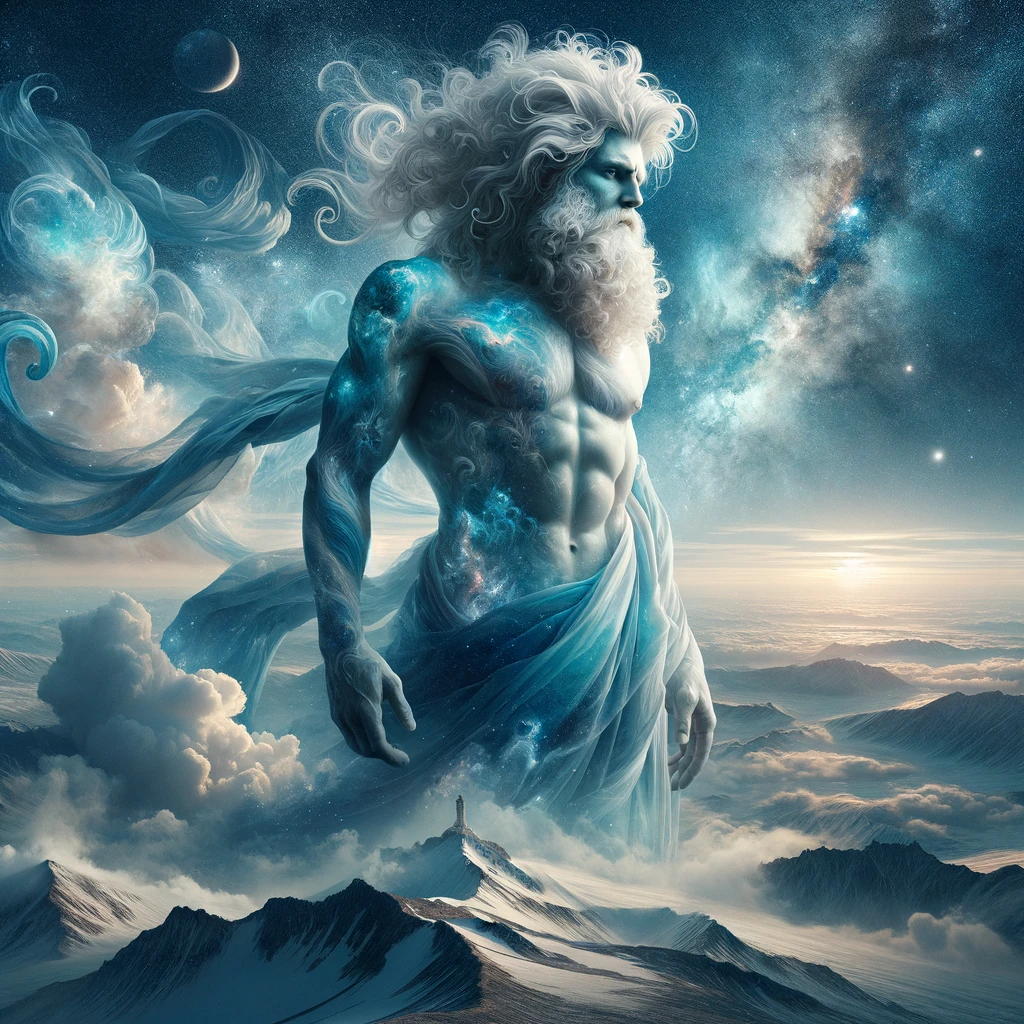
Uranus, in Greek mythology, is a primordial deity who represents the sky. He is one of the oldest gods in the Greek pantheon and is often considered the personification of the heavens. Uranus is the father of the Titans, the Cyclopes, and the Hecatoncheires, which are significant figures in Greek mythology. His name is derived from the Greek word for “sky,” and he is often depicted as a vast expanse that encompasses the earth. The relationship between Uranus and Gaia, the Earth, is central to many myths, as it sets the stage for the creation of the world and the birth of various divine beings.
Uranus and Gaia: The Cosmic Couple
The relationship between Uranus and Gaia is a fundamental aspect of Greek mythology. Gaia, the Earth, emerged from Chaos, and her union with Uranus produced many offspring. This cosmic couple is often portrayed as the original parents of the universe. Their union symbolizes the connection between the sky and the earth, which was essential for the creation of life. Together, they had twelve children known as the Titans, including well-known figures such as Cronus, Rhea, and Oceanus.
 Pallas
Gaia and Uranus had a tumultuous relationship. Although they created many offspring together, Uranus was often cruel and oppressive towards them. He would imprison some of his children, such as the Cyclopes and the Hecatoncheires, in Tartarus, a deep abyss used as a dungeon of torment. This behavior caused great distress to Gaia, who eventually decided to take action against Uranus. This decision marked a significant turning point in Greek mythology, leading to the eventual overthrow of Uranus by his own son, Cronus.
The Birth of the Titans
The Titans, born from the union of Uranus and Gaia, played a crucial role in the mythological narratives of ancient Greece. There were twelve original Titans, and each had distinct characteristics and domains. Some of the most notable Titans include Hyperion, the Titan of light; Theia, the Titaness of sight; and Coeus, the Titan of intellect. Each Titan contributed to the fabric of the universe in various ways, influencing the world and the gods that came after them.
As the Titans grew older, they began to challenge the authority of their father, Uranus. Their desire for freedom and power led to significant conflicts within the family. Gaia, feeling sympathy for her imprisoned children, conspired with her son Cronus to overthrow Uranus. This act of rebellion would not only change the course of their family dynamics but also set the stage for the rise of a new generation of gods.
 Pallas-
The Castration of Uranus
The most famous myth involving Uranus is his castration by Cronus. Gaia provided Cronus with a sickle and urged him to take action against his father. In a daring act, Cronus ambushed Uranus as he descended to lie with Gaia. With one swift stroke, he castrated Uranus, separating him from Gaia. This act was symbolic, representing the overthrow of the old order and the rise of a new regime. After his castration, Uranus’ blood fell to the earth, resulting in the birth of the Furies and the Giants, further complicating the mythological landscape.
Uranus’ castration marked the end of his reign and the beginning of the rule of the Titans. This myth reflects themes of power, rebellion, and the cyclical nature of authority in Greek mythology. The act of castration can be seen as a metaphor for the transition from one generation to the next, illustrating how the old must give way to the new. As Cronus ascended to power, he would eventually face his own challenges, setting the stage for further conflicts among the gods.
 Pallas-
The Legacy of Uranus
Although Uranus was overthrown and lost his power, his legacy continued to influence the myths and stories of ancient Greece. He is often seen as a symbol of the primordial forces of nature, representing the sky and its vastness. The myths surrounding Uranus serve to explain the origins of the world and the relationships between the various gods and titans. His character embodies the themes of creation, destruction, and the ever-changing nature of power.
Uranus’ influence extends beyond mythology; his name has been adopted in modern contexts, including astronomy. The planet Uranus, discovered in 1781, is named after this ancient deity, reflecting its connection to the sky and celestial themes. The planet’s unique characteristics, such as its tilted axis and blue-green color, continue to intrigue astronomers and scientists alike. This connection between the mythological figure and the planet emphasizes the enduring legacy of Uranus in both ancient and contemporary thought.
The Children of Uranus
Uranus had many children with Gaia, and their offspring played significant roles in Greek mythology. The most notable of these children are the Titans, but he also fathered other beings that are essential to various myths. The Titans, including Cronus, Rhea, and Oceanus, were the first generation of gods and served as the bridge between the primordial deities and the Olympian gods that followed. Their stories often intertwine, creating a rich tapestry of mythological narratives.
- Cronus – The leader of the Titans, who eventually overthrew Uranus.
- Rhea – The mother of the Olympian gods, married to Cronus.
- Oceanus – The Titan of the ocean, representing the vast waters surrounding the earth.
- Hyperion – The Titan of light, often associated with the sun.
- Theia – The Titaness of sight and the mother of the sun, moon, and dawn.
Each of these children had their own unique attributes and stories, contributing to the overall mythology of ancient Greece. The Titans often battled among themselves and with the Olympian gods, leading to further conflicts and power struggles that shaped the mythological landscape. The legacy of Uranus and his children is a testament to the complexity and richness of Greek mythology.
Uranus in Modern Culture
Uranus’ influence is not limited to ancient myths; he has also found a place in modern culture. The planet Uranus, named after the Greek deity, has sparked the imagination of scientists, writers, and artists alike. Its discovery expanded our understanding of the solar system and opened new avenues for exploration. The unique characteristics of the planet, such as its rings and moons, have inspired various works of art and literature.
In addition to astronomy, Uranus has appeared in various forms of popular culture, including movies, television shows, and literature. The character of Uranus is often portrayed as a powerful and distant figure, reflecting his mythological origins. These representations serve to keep the stories of ancient Greece alive, allowing new generations to engage with these timeless tales.
The Role of Uranus in Creation Myths
Uranus plays a pivotal role in Greek creation myths, acting as a vital force in the formation of the world. His union with Gaia symbolizes the harmonious relationship between the sky and the earth, which is essential for life. The myths surrounding Uranus often explore themes of creation, destruction, and the cyclical nature of existence. The act of castration by Cronus is a significant moment in these myths, representing the transition from one era to another and the ever-changing dynamics of power.
The stories of Uranus and his offspring serve to explain the origins of various natural phenomena and the relationships between different deities. The Titans, born from the union of Uranus and Gaia, became the ancestors of many gods and goddesses, shaping the mythological landscape of ancient Greece. This connection between Uranus and the creation of the universe highlights the importance of these myths in understanding the world and its origins.
Comparative Mythology: Uranus and Other Sky Gods
In comparative mythology, Uranus can be likened to other sky gods from different cultures. For example, in Roman mythology, the equivalent figure is Caelus, who also represents the sky and is associated with creation. Similarly, in Egyptian mythology, the sky god Nut is often depicted as a woman arching over the earth, symbolizing the connection between the heavens and the earth.
These comparisons highlight the universal themes present in creation myths across cultures. The idea of a primordial sky god who plays a role in the formation of the world is a common motif. These figures often embody the duality of creation and destruction, reflecting the complexities of nature and existence. By studying these similarities, we can gain a deeper understanding of the cultural significance of sky gods like Uranus and their impact on human thought and belief.
The Symbolism of Uranus
Uranus is rich in symbolism, representing various concepts within Greek mythology. As the personification of the sky, he embodies the vastness and mystery of the heavens. His relationship with Gaia symbolizes the interconnectedness of all things, emphasizing the balance between the earth and the sky. The act of castration by Cronus can be seen as a metaphor for the struggle for power and the inevitable changes that occur within the cosmos.
Furthermore, Uranus’ character reflects the duality of creation and destruction. His reign was marked by both the birth of powerful beings and the oppression of his children. This duality serves as a reminder of the complexities of existence and the cyclical nature of life. The stories surrounding Uranus encourage us to contemplate our place in the universe and the forces that shape our reality.
The Influence of Uranus on Future Generations
Uranus’ influence extended beyond his immediate family, impacting future generations of gods and mortals. His children, the Titans, would go on to have significant roles in Greek mythology, leading to the rise of the Olympian gods. The conflicts between the Titans and the Olympians highlight the ongoing struggle for power and the evolution of divine authority. The stories of Uranus and his offspring serve as a foundation for understanding the complexities of Greek mythology and the relationships between its various figures.
Moreover, Uranus’ legacy is reflected in the themes of rebellion and transformation that permeate many myths. The overthrow of Uranus by Cronus illustrates the cyclical nature of power, where the old must give way to the new. This theme resonates throughout Greek mythology, influencing the narratives of subsequent generations of gods and mortals. The stories of Uranus continue to inspire and inform our understanding of mythology, nature, and the human experience.