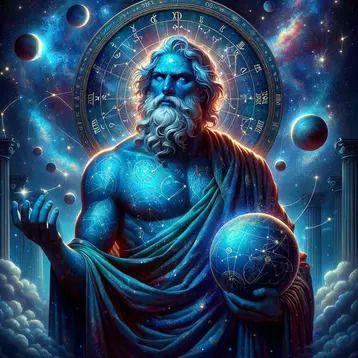
In Greek mythology, Crius is one of the Titans, a group of powerful deities who ruled during the legendary Golden Age. Crius is often associated with the constellation Aries and represents the measure of time. As a Titan, he is a descendant of Uranus (the sky) and Gaia (the earth). The Titans were known for their immense strength and were often in conflict with the younger gods known as the Olympians. Crius’s role in the myths is less prominent than some of his Titan siblings, but his contributions to the pantheon of Greek mythology are still significant.
Origins of Crius
Crius is the son of Uranus and Gaia, making him a brother to other notable Titans like Cronus, Hyperion, and Iapetus. Each of these Titans had distinct roles and attributes in mythology. Crius’s name is often linked to the concept of the ram, which is evident in his association with the constellation Aries. This connection signifies not only his identity but also the importance of celestial bodies in ancient Greek culture. The ancient Greeks closely observed the stars, using them for navigation, agriculture, and religious purposes.
 Cronus
The Titans, including Crius, were known for their conflicts with the Olympian gods. After being overthrown by the Olympians led by Zeus, many Titans were imprisoned in Tartarus, a deep abyss used as a dungeon of torment. Crius’s role in these events is less documented compared to his brother Cronus, who played a significant part in the overthrow of Uranus and later became the father of the Olympian gods. Despite this, Crius’s lineage and origins remain vital in understanding the family tree of Greek deities.
Crius in Mythology
Crius is not one of the most frequently mentioned Titans in Greek mythology, but he does have a few notable associations. He is often depicted as a strong and powerful figure, representing the strength of the cosmos. In some accounts, Crius is linked with the constellations and is said to embody the celestial order. His role is sometimes overshadowed by more prominent Titans, but his influence is still felt in various myths and legends.
One of the interesting aspects of Crius is his association with the element of time. In ancient Greece, the movement of celestial bodies was believed to influence time and seasons. Crius’s link to the constellation Aries symbolizes the beginning of spring, a time of renewal and rebirth. This association highlights the importance of the changing seasons and how they were integrated into the myths and rituals of the ancient Greeks.
 Cybele
The Role of Titans
- Powerful Deities: The Titans were the original gods who ruled before the Olympians.
- Symbolism: Each Titan represented different aspects of nature and the cosmos.
- Conflict: The Titans often faced conflicts with the younger generation of gods, leading to their downfall.
- Legacy: Despite their defeat, the Titans continue to influence modern interpretations of mythology.
The Titans were significant figures in Greek mythology, and their stories provide insight into ancient Greek beliefs about the universe. Crius, although not as prominent as some of his siblings, represents the ancient understanding of the cosmos and the power of nature. His character reminds us of the balance between strength and vulnerability that exists in all myths.
Symbolism of Crius
Crius’s symbolism is deeply rooted in the ancient Greek understanding of the cosmos. As a Titan, he represents the forces of nature and the celestial bodies that govern the world. The ram, associated with him, symbolizes strength, leadership, and determination. This animal is often seen as a protector, guiding people through challenges. The significance of the ram in Greek culture is also tied to agricultural practices, emphasizing the connection between mythology and daily life.
The constellation Aries, which is often linked to Crius, is one of the most recognizable in the night sky. It marks the beginning of the zodiac and heralds the arrival of spring. This connection to the changing seasons illustrates how the ancient Greeks intertwined their myths with the natural world. Crius’s role in this context highlights the importance of understanding the cycles of nature and how they affect human existence.
 Cyclopes
Connections to Other Myths
- Cronus: Crius’s brother, who is more well-known for his role in the Titanomachy.
- Gaia: Their mother, representing the Earth and fertility.
- Zeus: The leader of the Olympian gods who overthrew the Titans.
- Constellations: Crius’s association with Aries links him to the broader narrative of celestial myths.
The interconnections between Crius and other figures in Greek mythology reveal a rich tapestry of stories that have been passed down through generations. Each character plays a role in a larger narrative that explains the world around us. Crius’s position in this web of relationships emphasizes the importance of familial ties in mythology, where the actions of one deity can have far-reaching consequences for others.
Crius in Literature and Art
Crius may not be as frequently depicted in ancient literature as some of his Titan siblings, but he does appear in various works. The Theogony, written by the poet Hesiod, is one of the primary sources that mention Crius. In this epic poem, Hesiod outlines the genealogy of the gods and describes the significant events that shaped their world. Although Crius’s role is minimal, his inclusion in this work emphasizes the importance of the Titans in the overall narrative of Greek mythology.
In art, Crius is often represented symbolically rather than as a distinct figure. Artists may depict the ram or elements of the night sky to convey his essence. The connection to Aries allows for creative interpretations that celebrate the beauty of the cosmos. Through these artistic representations, Crius continues to inspire and captivate audiences, showcasing the enduring legacy of Greek mythology.
Influence on Modern Culture
- Literature: Modern authors often draw inspiration from Greek mythology, including characters like Crius.
- Film and Television: Adaptations of Greek myths frequently feature Titans and Olympians.
- Art: Contemporary artists explore themes from mythology, keeping figures like Crius relevant.
- Astrology: The zodiac continues to influence modern beliefs, with Aries representing qualities associated with Crius.
The influence of Crius and other Titans extends beyond ancient Greece into modern culture. Literature, film, and art often revisit these ancient stories, reinterpreting them for contemporary audiences. The themes of power, conflict, and the natural world remain relevant, allowing Crius to resonate with new generations. As society continues to explore its relationship with mythology, Crius serves as a reminder of the timelessness of these stories.
The Legacy of Crius
The legacy of Crius in Greek mythology is marked by his role as a Titan and his connections to celestial themes. While he may not be as prominent as other figures, his existence contributes to the understanding of the complex relationships among the deities. The Titans, including Crius, symbolize the primordial forces that shaped the world, and their stories are foundational to the Greek mythological tradition.
Furthermore, the ongoing fascination with Greek mythology in modern culture speaks to the enduring nature of these ancient tales. Crius, as a representation of strength and cosmic order, continues to be a source of inspiration for artists, writers, and thinkers. His story, though less told, is a vital part of the larger narrative that defines Greek mythology and its impact on human thought.
Lessons from Crius
- Understanding Nature: Crius teaches us about the importance of nature and its cycles.
- Strength and Resilience: His symbolism as a ram represents determination in facing challenges.
- Interconnectedness: The relationships among the Titans highlight the significance of family and community.
- Mythology’s Relevance: Crius’s story encourages us to explore the lessons found in ancient myths.
As we delve deeper into the myths surrounding Crius, we uncover valuable lessons that resonate with our lives today. His story serves as a reminder of the interconnectedness of all beings and the importance of understanding our place in the cosmos. The themes of strength, resilience, and the cyclical nature of life continue to be relevant, encouraging us to learn from the past as we navigate our own journeys.
While Crius may not be the most celebrated figure in Greek mythology, his contributions to the tapestry of stories and characters are undeniable. His connections to the cosmos, nature, and the themes of strength and resilience make him a significant part of the mythological narrative. As we continue to explore and interpret these ancient tales, Crius remains a symbol of the enduring legacy of the Titans and their influence on our understanding of the world.