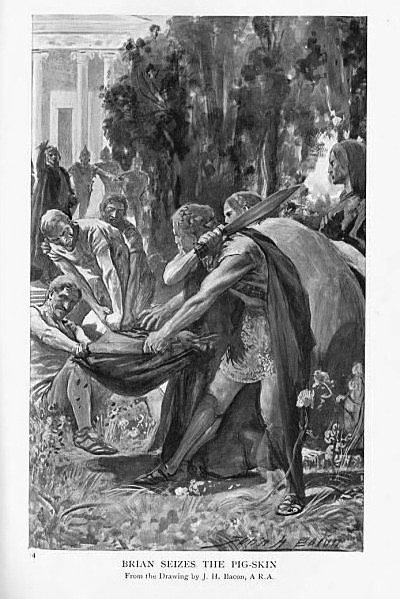
Brian Boru is a significant figure in Irish mythology and history, often regarded as one of the most famous kings of Ireland. He was born in the 10th century and is remembered for his remarkable leadership and military prowess. Brian Boru united various factions in Ireland and is best known for his role in the Battle of Clontarf in 1014, where he fought against Viking forces. His legacy is deeply intertwined with the stories of heroism, conflict, and the struggle for Irish sovereignty, making him a central character in the rich tapestry of Irish folklore and historical narrative.
Early Life of Brian Boru
Brian Boru was born into the Dál gCais tribe, a prominent family in County Clare. His early life was marked by the conflicts that plagued Ireland during this period. The country was divided into numerous kingdoms, each ruled by different chieftains. Brian’s family was known for their warrior skills, and from a young age, he was trained in the arts of combat and leadership. This training would prove essential as he navigated the treacherous political landscape of Ireland. His early experiences shaped his character and prepared him for the challenges he would face as a leader.
 Bres
BresAs a young man, Brian’s ambition and talent quickly became apparent. He sought to expand his influence and gain power, which was not uncommon among the young nobles of his time. Brian’s rise began when he became the king of the Dál gCais around the year 1000. This was a significant step, as it allowed him to consolidate power and begin his quest to unify Ireland under a single banner. His leadership qualities began to shine, and he quickly garnered a reputation as a formidable warrior and a wise ruler.
The Unification of Ireland
Brian Boru’s vision for a unified Ireland was ambitious and challenging. At the time, the country was fragmented, with various tribes and kingdoms often at war with one another. Brian understood that to achieve his goal, he needed to forge alliances and build a coalition of support among the different factions. He used a combination of diplomacy and military strength to gain the loyalty of other kings and chieftains. This process involved a delicate balance of negotiation and warfare, as he sought to bring the various groups together.
One of the critical strategies Brian employed was to offer protection to smaller kingdoms in exchange for their loyalty. By positioning himself as a defender against external threats, particularly the Viking invasions, he was able to gain the trust of many local leaders. This approach not only expanded his influence but also helped to establish a sense of unity among the disparate tribes of Ireland. Brian’s ability to bring together such a diverse group of people under his leadership was a testament to his skills as a ruler.
 Salmon Of Knowledge
The Battle of Clontarf
The Battle of Clontarf, fought on April 23, 1014, is perhaps the most famous event associated with Brian Boru. This battle was a culmination of years of conflict between the Irish kingdoms and Viking settlers. Brian, who was now the High King of Ireland, led a coalition of Irish forces against a large Viking army. The stakes were incredibly high, as the outcome of this battle would determine the future of Ireland. Brian’s forces were made up of various clans and tribes, united under his leadership.
The battle was fierce and bloody, with both sides suffering significant casualties. Brian’s strategic planning and the loyalty of his troops played a crucial role in the initial success of the Irish forces. However, despite their strong start, the battle took a tragic turn. Brian was ultimately killed during the conflict, which led to a shift in the momentum of the battle. His death was a profound loss for the Irish forces, but it also solidified his legacy as a martyr for the cause of Irish independence.
 Bobd Dearg
Aftermath of the Battle
The aftermath of the Battle of Clontarf had far-reaching consequences for Ireland. Although Brian Boru was killed, his legacy lived on. The battle marked a significant turning point in the ongoing struggle between the Irish and the Vikings. It is often viewed as a victory for the Irish, despite the loss of their leader. Following the battle, the Viking presence in Ireland began to diminish, and many settled into a more peaceful existence, integrating into Irish society.
- The battle showcased the resilience of the Irish people.
- It highlighted the importance of unity among the various clans.
- Brian Boru became a symbol of Irish nationalism and resistance.
In the years following the battle, Brian Boru’s descendants continued to hold significant power in Ireland. His legacy as a unifier and a warrior king became a source of inspiration for future generations. The stories of his life and the events of the Battle of Clontarf were passed down through oral tradition, becoming an integral part of Irish mythology. Brian’s name became synonymous with the struggle for Irish independence and sovereignty.
Brian Boru in Irish Mythology
In addition to his historical significance, Brian Boru occupies a prominent place in Irish mythology. His life and deeds have been romanticized and mythologized over the centuries. Tales of his bravery, wisdom, and leadership qualities have become legendary, often embellished with fantastical elements typical of folklore. Brian is frequently depicted as a larger-than-life figure, embodying the ideals of heroism and nobility.
Many stories focus on his divine ancestry, claiming that he was descended from the gods. This connection to the divine elevates his status in Irish mythology, positioning him as not just a king but a hero chosen by fate. These tales often include supernatural elements, such as prophetic dreams or encounters with mystical beings, which serve to enhance his heroic narrative. The blending of history and mythology has contributed to the enduring fascination with Brian Boru.
Folklore and Legends
Several legends have emerged around Brian Boru that illustrate his character and the values of the time. One popular story recounts how he was able to predict the outcome of battles through visions and dreams. This ability is often attributed to his connection with the supernatural. In these tales, Brian serves not only as a military leader but also as a spiritual guide for his people. Such narratives reflect the belief in the importance of divine favor in the success of leaders during this era.
- Stories often emphasize Brian’s bravery in battle.
- Legends depict his wisdom in governance.
- Many tales celebrate his role as a unifier of the Irish clans.
These stories have contributed to the cultural identity of Ireland, serving as a source of pride and inspiration for the Irish people. Brian Boru’s legacy continues to be celebrated in literature, music, and festivals, showcasing the deep connection between his historical significance and his mythological status. The blend of fact and folklore surrounding Brian has ensured that his story remains relevant in contemporary Irish culture.
Brian Boru’s Legacy
Brian Boru’s legacy is profound and multifaceted, impacting both Irish history and mythology. His role as a unifier of the Irish kingdoms is a central theme in his legacy. Brian’s vision for a united Ireland resonates with the ideals of national identity and sovereignty that continue to be significant in Irish culture today. His leadership during a tumultuous period in Irish history serves as a reminder of the importance of unity in the face of adversity.
Moreover, Brian’s story has inspired countless generations, becoming a symbol of resilience and strength. His life and deeds are often referenced in discussions about Irish nationalism and the ongoing struggle for independence. The tales of his bravery and wisdom serve as a source of motivation for those who seek to uphold the values of courage and leadership in their own lives. Brian Boru’s influence extends beyond his time, continuing to inspire the Irish people in their quest for identity and autonomy.
Cultural Representations
Brian Boru’s legacy is also evident in various cultural representations throughout Ireland. He is frequently celebrated in literature, poetry, and music, with many artists drawing inspiration from his life and the events surrounding him. His story is often recounted in traditional Irish ballads, which highlight his heroism and the significance of the Battle of Clontarf. These cultural expressions serve to keep his memory alive and ensure that future generations understand his importance in Irish history.
- Literature often portrays Brian as a heroic figure.
- Music celebrates his legacy and the themes of unity and strength.
- Festivals commemorate his life and the Battle of Clontarf.
Additionally, various monuments and memorials have been erected in his honor, further solidifying his status as a national hero. These sites serve as reminders of his contributions to Irish history and are visited by those seeking to connect with their heritage. Brian Boru’s legacy is not just a relic of the past; it is a living part of Irish culture that continues to evolve and inspire.
Brian Boru is a towering figure in both Irish history and mythology. His early life, leadership, and ultimate sacrifice at the Battle of Clontarf have left an indelible mark on the cultural landscape of Ireland. His legacy as a unifier and a symbol of resistance resonates with the Irish people to this day. The blend of historical fact and mythological embellishment surrounding his life has ensured that Brian Boru remains a celebrated and revered figure in Irish culture. His story continues to inspire those who seek to uphold the values of courage, unity, and national identity.