WORLD
WORLD
Wuluwait
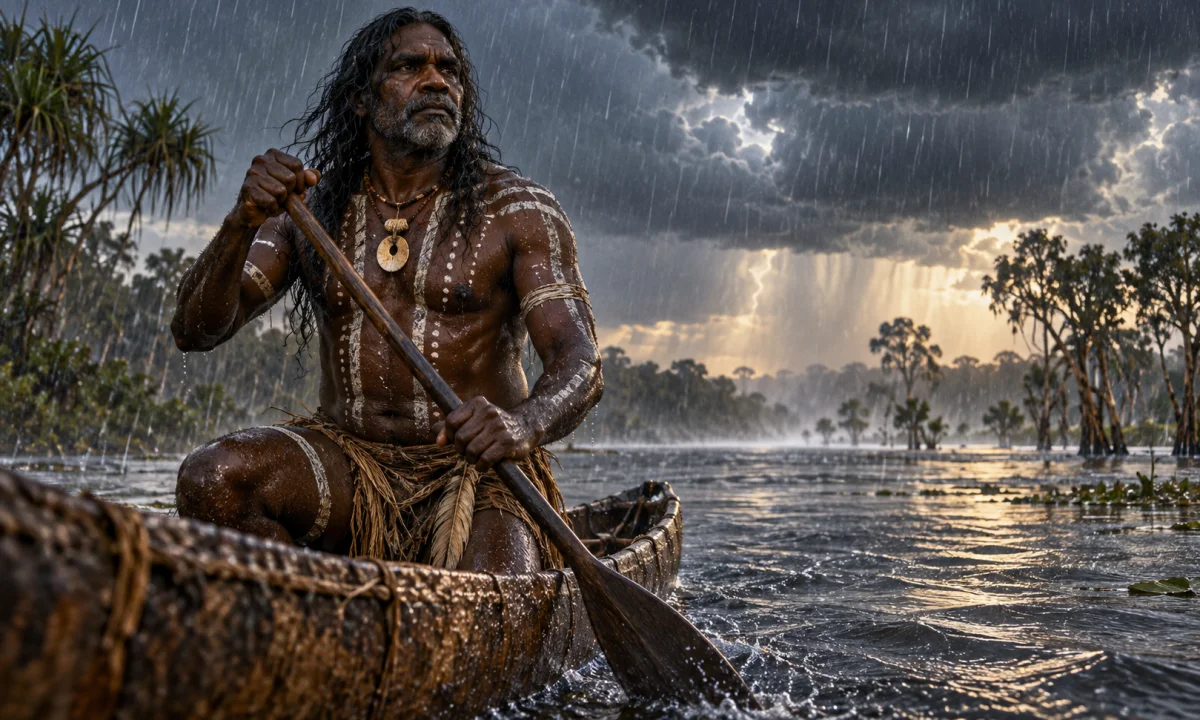
Wuluwait is a name associated in some modern accounts with Australian Aboriginal mythology, particularly with a spirit or supernatural being connected with rain, weather, or the sky. The identification is uncertain, however. Unlike better-documented figures such as Baiame, Bunjil, Daramulum, or the Rainbow Serpent traditions, Wuluwait does not have a single widely recognised profile supported across Aboriginal communities and published ethnographic records.
The name appears chiefly in general reference works, mythology lists, and modern summaries of Aboriginal supernatural beings. These sources often provide only a brief description, and their wording is not always traceable to a particular language group, community, story cycle, or recorded oral tradition. As a result, claims about Wuluwait should be treated cautiously. The figure may represent a local tradition that was recorded incompletely, a name whose spelling was altered in transmission, or a later compilation that combined information from different sources.
Cultural setting
“Australian Aboriginal mythology” is a broad modern label covering the religious traditions of hundreds of Aboriginal nations and language groups. These traditions are not one unified mythology. Their stories, sacred places, ancestral beings, ritual practices, and names vary widely between regions and communities.
Many Aboriginal religious traditions understand the world through relationships between people, ancestral powers, landforms, animals, plants, celestial bodies, and natural forces. English-language writers have often used words such as god, spirit, monster, or mythological being to describe figures that do not fit neatly into those categories. Such translations can be convenient, but they may also obscure important cultural distinctions.
In many communities, sacred narratives are connected to particular places and responsibilities. A story is not necessarily a free-floating tale that can be separated from its country, ceremonial context, custodians, or language. Some knowledge is also restricted according to age, gender, initiation, kinship, or community authority. The limited appearance of the name Wuluwait in general sources does not demonstrate that the figure was insignificant within the tradition from which the name may have come.
The name Wuluwait
The spelling Wuluwait should not automatically be assumed to represent a single standard Aboriginal word. Aboriginal languages were traditionally recorded through English spelling systems devised by outsiders, and the same sound could be written in several ways. Differences may arise from regional pronunciation, older orthographies, transcription practices, or errors made when a name was copied from one publication into another.
At present, the name is not associated with one universally accepted etymology. It is therefore unsafe to assign a precise translation without identifying the relevant language and the community that uses it. A spelling found in a mythology catalogue may preserve only an approximation of an original term.
There is also a broader problem with catalogue-style mythology. A short entry can make a local being appear to be a pan-Aboriginal deity, even when the original tradition was geographically specific. The absence of a clearly identified language group in many summaries of Wuluwait makes it difficult to determine whether the name belongs to a particular regional tradition or has been detached from its original context.
Identity and classification
Wuluwait is sometimes classified as a deity, but “deity” may be too definite a description. Some accounts treat the name as belonging to a weather-related supernatural being, while others use the more general term spirit. The available descriptions do not establish a consistent genealogy, gender, social role, or place within a complete cosmological system.
The most cautious description is that Wuluwait is a poorly documented Aboriginal mythological figure associated by some modern sources with atmospheric or weather phenomena. This association may include rain or the sky, but it should not be presented as a securely established belief shared by Aboriginal peoples throughout Australia.
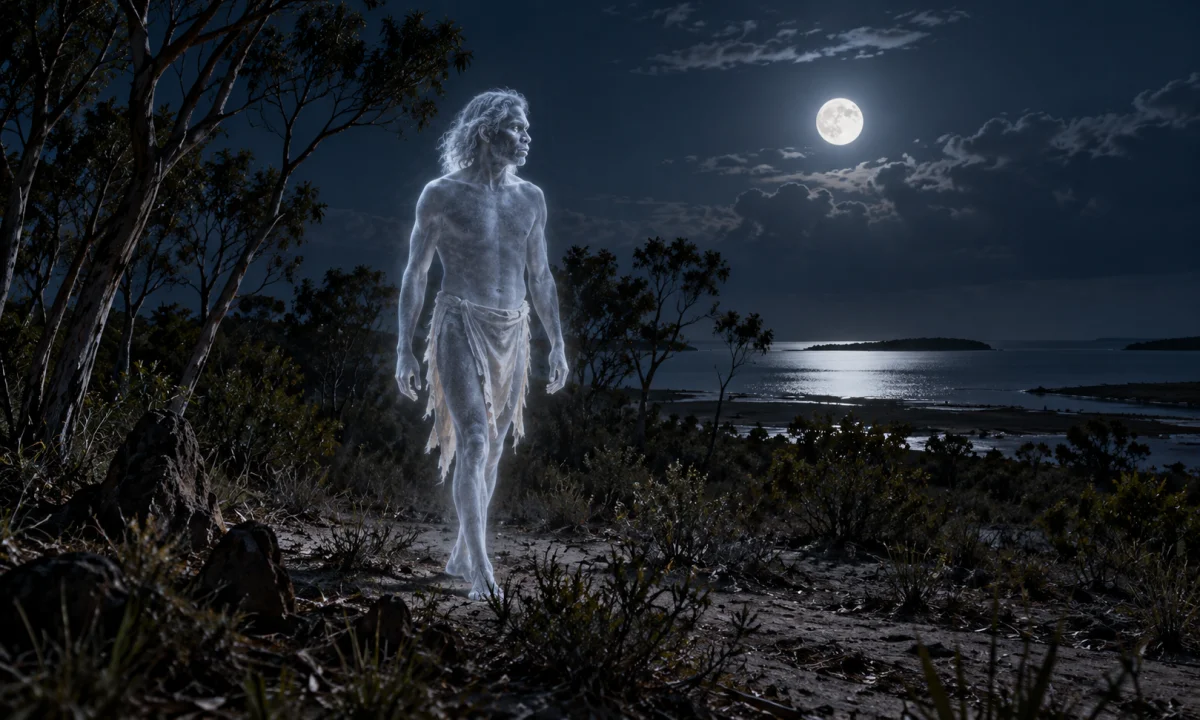
There is no reliable basis for giving Wuluwait a fixed appearance. Some popular lists may imply a human-like spirit, an invisible power, or a personification of weather, but these possibilities should not be confused with evidence for a traditional image. No widely attested set of physical features, sacred objects, animal form, dwelling place, or ritual emblem can be stated with confidence.
Possible connection with weather traditions
Weather has an important place in many Aboriginal religious and ecological traditions. Rain, storms, wind, lightning, clouds, and seasonal change can be understood through ancestral narratives and relationships with powerful beings. Rainmaking ceremonies, sacred water places, and stories about the origins of rivers and storms occur in different parts of Australia, although their meanings and practices vary considerably.
It is possible that the association of Wuluwait with rain or weather reflects one such regional tradition. It is equally possible that a modern compiler assigned a weather role to the name because the original explanation was brief, misunderstood, or translated through European categories. Without a securely identified story and cultural source, the connection remains provisional.
Wuluwait should therefore not be described automatically as the Australian equivalent of a thunder god, rain god, or storm deity from another mythology. Comparisons of this kind can be useful in a broad study of religious ideas, but they do not prove that the traditions themselves share the same concept. A being connected with rain may be an ancestor, creator, guardian, law-giver, place-spirit, or force of nature rather than a separate “god” in the classical European sense.
Stories and relationships
No single, widely transmitted cycle of stories about Wuluwait is securely established in the major English-language accounts of Aboriginal mythology. There is no dependable basis for assigning the figure a standard origin story, spouse, children, enemies, companions, or role in the creation of humanity.
Likewise, Wuluwait should not be given an invented relationship with the Rainbow Serpent, Baiame, Bunjil, Daramulum, or other prominent figures. Aboriginal traditions sometimes contain complex relationships among ancestral beings, but those relationships belong to specific cultural systems. Similar themes—rain, creation, law, initiation, animals, or the sky—do not by themselves show that two figures belong to the same tradition.
Some online summaries repeat short statements about Wuluwait without preserving the story, location, language, or circumstances in which the name was recorded. Such statements may be useful evidence that the name has circulated in modern mythology writing, but they are not equivalent to a complete traditional narrative. A responsible account must distinguish between a name appearing in a list and a documented body of community-held tradition.
Interpretation and cultural significance
The uncertainty surrounding Wuluwait illustrates a wider issue in the study of Indigenous religions. Early collectors and later compilers often selected individual names from oral traditions and presented them as entries in a universal catalogue of “gods and monsters.” This format can remove a figure from the land, language, kinship system, and ceremonial obligations that give the figure meaning.
It can also encourage readers to look for a single fixed attribute. A name may then become “the rain god” or “the sky spirit” in popular culture, even though the original tradition may have described a much more complex being or may have used the name only in a restricted local context.
For Aboriginal communities, stories are not simply entertainment or evidence of an ancient belief system. They can express law, identity, responsibilities to Country, ecological knowledge, relationships between generations, and obligations to sacred places. The meaning of a supernatural figure cannot always be separated from the people authorised to speak about that figure.
Consequently, the limited documentation for Wuluwait is not a reason to dismiss the name. It is a reason to avoid turning a fragmentary record into a complete mythology. The name may preserve a genuine regional tradition, but its significance can only be established through reliable cultural and linguistic context.
Distinction from other Aboriginal beings
Wuluwait should not be treated as another name for the Rainbow Serpent. Rainbow Serpent traditions occur under many different names and forms across Australia, but they are not one identical story. They are often associated with water, fertility, landscape formation, law, and ancestral power. A general connection with rain or water is not enough to identify Wuluwait with a Rainbow Serpent figure.
Nor should Wuluwait be merged with major creator or ancestral figures such as Baiame or Bunjil. Baiame is especially associated in some south-eastern traditions with creation, law, and the organisation of human society, while Bunjil is a major ancestral creator in several Victorian traditions. Their identities are themselves culturally specific, and they cannot be used as interchangeable examples of a generic Aboriginal god.
Wuluwait is also not securely identifiable with well-known beings such as Tiddalik, the water-hoarding frog from a widely circulated south-eastern story, or the Nargun, a powerful being associated with particular Victorian traditions. Similarities in a modern list do not establish a common origin.
Modern reception
Wuluwait has little established presence in internationally recognised literature, film, television, games, or popular fantasy. Most modern references appear to derive from mythology dictionaries, encyclopaedic lists, websites, or retellings rather than from a substantial contemporary artistic tradition.
When the name is used in modern fiction, creators may give Wuluwait a defined appearance, supernatural powers, or a place in a larger pantheon. Such inventions can be legitimate acts of storytelling, but they should be identified as adaptations rather than presented as traditional Aboriginal belief. In particular, a fictional character should not be used to fill gaps in the historical record.
The most accurate current understanding is therefore modest: Wuluwait is a name linked by some secondary sources with an Aboriginal supernatural being, possibly associated with rain or weather, but the figure’s language, community, stories, attributes, and cultural role remain uncertain. Any fuller account requires a clearly identified regional tradition and evidence from knowledgeable cultural custodians or dependable ethnographic documentation.