WORLD
WORLD
Wapiya

Wapiya is a name associated in some modern English-language accounts with an Aboriginal Australian spirit or deity of wind and storms. The identification is uncertain, however. Unlike widely documented figures such as the Rainbow Serpent, Baiame, Bunjil, or Daramulum, Wapiya is not supported by a single, clearly established body of stories shared across Aboriginal Australia. The name, spelling, cultural attribution, and supposed powers vary or remain unexplained in many surviving references.
Cultural setting
There is no single Aboriginal Australian mythology. Aboriginal peoples belong to many different nations and language groups, each with its own laws, ceremonial practices, ancestral beings, place-based histories, and systems of knowledge. Stories connected with weather, the sky, water, animals, and seasonal change therefore cannot automatically be treated as parts of one national pantheon.
The phrase Aboriginal mythology is useful as a broad comparative label, but it can also hide important differences. A being known in one region may have no equivalent in another, while similar responsibilities may be given to entirely different ancestral figures. Some traditions also distinguish between creator ancestors, spirits associated with particular places, powerful natural forces, and beings encountered in dreams or ritual life. English words such as “god,” “spirit,” “deity,” and “monster” do not always correspond precisely to the original categories.
Traditional knowledge was transmitted primarily through oral teaching, ceremony, song, dance, art, and relationships with Country. Many accounts were recorded by outsiders who did not speak the relevant language or understand the restrictions surrounding sacred information. Some material was never intended for public circulation. As a result, the absence of a detailed published story does not prove that a name had no significance; it may instead reflect incomplete recording, restricted knowledge, or later loss of context.
Name and identity
Wapiya is most commonly described in general reference material as an Aboriginal Australian wind spirit or wind deity. Some brief summaries extend this role to storms, but they usually provide little information about the community, language, region, or original narrative in which the name occurs. The lack of a securely identified regional setting makes it difficult to determine whether all references to Wapiya concern the same figure.
The name may also have been transmitted through inconsistent spelling. Aboriginal languages were written in many different ways by early observers, and older records often used English spelling systems that did not represent local sounds accurately. A name copied from one list to another can therefore acquire an appearance of certainty even when its original form and meaning are unclear. Wapiya should not automatically be treated as a standard spelling across Aboriginal languages.
There is no reliable basis for presenting Wapiya as a pan-Aboriginal supreme god, creator, or ruler of all weather. Those descriptions sometimes appear in simplified mythology catalogues, but they exceed what can safely be inferred from the limited information associated with the name. The most responsible description is that Wapiya is an uncertainly documented figure whom some secondary accounts connect with wind and storm phenomena.
Association with wind and storms
Where Wapiya is identified as a wind being, the association reflects the importance of weather in Aboriginal life. Wind affects travel, hunting, fire behaviour, fishing, ceremonies, and the availability of food and water. Changes in wind can announce the arrival of rain, a shift in season, or dangerous conditions. In many Aboriginal knowledge systems, such events are understood through close observation of Country as well as through ancestral and spiritual meanings.
A wind spirit need not be imagined as a human-like ruler who simply “controls” the weather. In a particular tradition, wind may be an expression of an ancestor’s movement, a sign of activity in a sacred landscape, or part of a broader network linking people, animals, plants, water, and sky. Without a surviving narrative tied to Wapiya, it is not possible to say whether the figure was regarded as benevolent, dangerous, unpredictable, or morally significant.
Modern descriptions sometimes give Wapiya the power to raise violent winds, summon storms, or produce thunder and lightning. These details should be treated cautiously. They may represent attempts to expand a short label such as “wind god” into a complete character profile, rather than information preserved from a particular oral tradition. No universally accepted account establishes Wapiya’s appearance, dwelling place, family relationships, sacred objects, or ritual obligations.
Appearance and powers
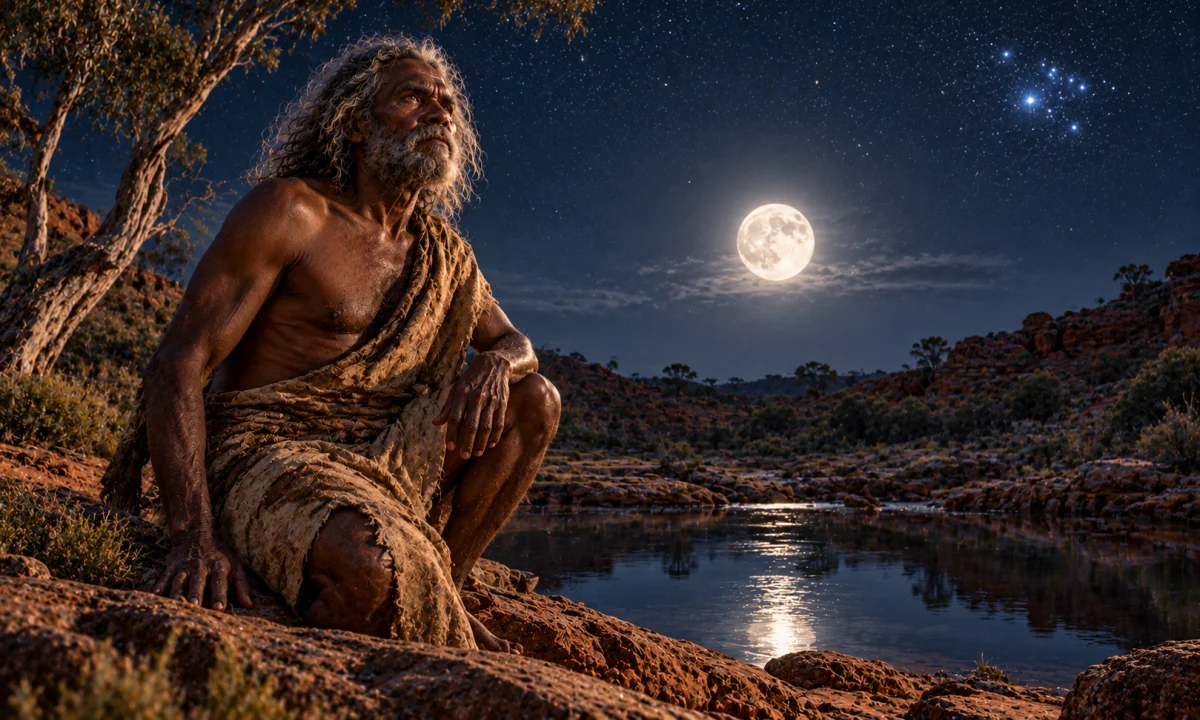
There is no consistently recorded physical form for Wapiya. Illustrations that portray the figure as a human warrior, a giant, an animal, a cloud-being, or a serpent are artistic interpretations rather than established traditional descriptions. The same caution applies to claims that Wapiya had a particular colour, weapon, body shape, or residence in the sky.
The powers most often attributed to Wapiya are:
- causing or directing wind;
- bringing or intensifying storms;
- possibly influencing thunder, rain, or other atmospheric changes; and
- acting as a spiritual explanation for dangerous or sudden weather.
Only the first of these associations appears consistently in short modern descriptions. The others are plausible extensions of a weather-related role, but they should not be presented as certain features of a documented Wapiya tradition. There is also no firm evidence that Wapiya was specifically a rainmaker, a sky creator, or a judge of human behaviour.
Stories and relationships
No single canonical myth of Wapiya is widely preserved in English. In particular, there is no securely established cycle describing the figure’s birth, creation of the world, marriage, conflict with another ancestral being, or defeat by a hero. Claims about such stories should be checked against the cultural community and language tradition from which they are said to come.
This lack of a narrative distinguishes Wapiya from some better-documented ancestral figures. Bunjil, for example, is associated with traditions among several south-eastern Aboriginal peoples, although the details and meanings vary between communities. Baiame is a major ancestral figure in a number of south-eastern traditions, again with regional differences and complex recording histories. Daramulum is connected with particular traditions in the Sydney region. None of these figures should be treated as simply another name for Wapiya.
It is equally unsafe to assume that Wapiya was a member of the same supernatural family as a regional creator or sky ancestor. A weather-related spirit may be independent, local, or part of a story cycle that has not been published. In Aboriginal traditions, relationships between beings are often tied to specific places, ceremonial knowledge, kinship systems, and responsibilities to Country. Removing a name from that setting can change its meaning substantially.
Wapiya and the Rainbow Serpent
Confusion with the Rainbow Serpent is especially likely because both may be loosely described in popular writing as powerful forces of nature. The Rainbow Serpent, however, is a broad English label applied to numerous distinct Aboriginal traditions involving ancestral beings associated, in different regions, with water, rivers, fertility, rain, landscape formation, law, and danger. There is no reason to assume that Wapiya is another name for the Rainbow Serpent.
Many Aboriginal communities use their own names for important serpent ancestors, and those names should be preserved rather than merged into a single generic character. A wind spirit and a water-associated serpent may both be linked with storms or rain while remaining entirely different beings within their respective traditions. Similar natural functions do not establish identity.
Evidence and interpretation
The evidence for Wapiya appears to be particularly dependent on short secondary descriptions rather than a substantial body of recorded traditional material. This creates several difficulties. A compiler may have misunderstood a local term, confused a spirit with a natural phenomenon, or removed a name from its cultural setting. Later writers may then repeat the same description without adding independent evidence.
Older ethnographic records also need to be read carefully. Early researchers frequently used broad labels such as “god” or “demon” for Aboriginal beings that had very different roles. They sometimes assumed that every community possessed a hierarchy resembling European or classical mythology. Such frameworks could turn a local ancestral presence into a universal “deity” or describe a powerful weather being as a god in the European sense.
For these reasons, statements about Wapiya should distinguish between levels of certainty:
- More cautiously supported: the name is associated in some English-language accounts with wind.
- Possible but not securely established: a connection with storms, thunder, rain, or dangerous weather.
- Unconfirmed: a fixed appearance, gender, genealogy, home, moral character, sacred story, or place in a universal Aboriginal pantheon.
This distinction is not merely academic. Aboriginal cultural knowledge belongs to living communities, and sacred material may have restrictions concerning who may hear, repeat, illustrate, or interpret it. Treating an uncertain name as an open fictional character can erase those boundaries and create a misleading picture of Aboriginal religious traditions.
Symbolism of wind in Aboriginal Australian traditions
Even when the specific identity of Wapiya cannot be established, the broader symbolism of wind can be understood through the environmental realities of Australia. Wind carries smoke from fires, spreads seeds, dries waterholes, changes the behaviour of animals, and signals shifts in weather. It can be welcomed as relief from heat or feared when it drives fire across Country. These practical observations may exist alongside spiritual interpretations rather than being opposed to them.
Wind can also represent movement between visible and invisible realms, though this meaning cannot be assigned automatically to Wapiya. In many Indigenous knowledge systems worldwide, air and weather are not separate from social and spiritual life. The important point is that interpretation must remain connected to the particular Aboriginal nation and tradition involved, rather than being reconstructed from universal symbols alone.
Later reception
Wapiya has had little clear presence in internationally known literature, film, television, or games. The name is more often encountered in modern lists of mythology than in widely distributed Aboriginal-authored retellings. Such lists can preserve a trace of a lesser-known name, but they can also exaggerate certainty by presenting a one-line description as though it were a complete mythological biography.
Modern artists, writers, and game designers may use Wapiya as inspiration for a storm or wind character. Any such portrayal belongs to contemporary creative culture unless it is explicitly grounded in the teachings of a relevant Aboriginal community. A fictional character with wings, armour, lightning powers, or a dramatic sky palace should not be mistaken for a traditional description of Wapiya.
The most accurate way to present Wapiya is therefore modest and specific: the name is linked by some modern accounts to an Aboriginal Australian wind spirit or storm-associated being, but the original community, language, narrative, and attributes are not sufficiently established to support a detailed, universal profile. Its uncertainty is part of the historical record and should be acknowledged rather than filled with invented mythology.