WORLD
WORLD
Walaganda
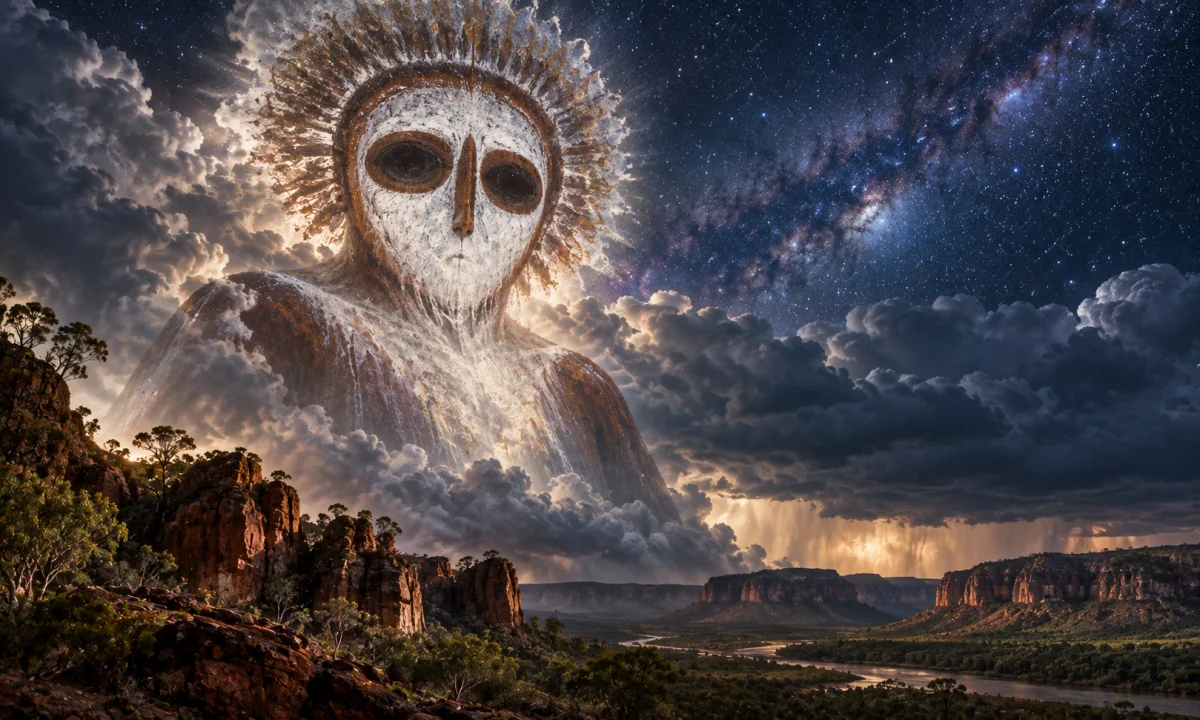
Walaganda is a name associated in some English-language accounts with an Aboriginal ancestral or sky being of northern Australia. The identity is not uniformly described, however. Australian Aboriginal peoples do not share one single mythology, and the name Walaganda does not have one universally accepted meaning, appearance or story. Some summaries present Walaganda as a powerful creator or sky ancestor, while other references provide little detail or use different spellings and classifications.
Cultural setting
Any discussion of Walaganda needs to begin with the diversity of Aboriginal Australian traditions. Hundreds of distinct peoples and language groups have their own laws, sacred histories, ancestral beings and ceremonial practices. These traditions are sometimes grouped together under broad labels such as “Aboriginal mythology”, but such labels can conceal important local differences.
Many Aboriginal religious traditions describe a formative period in which ancestral beings travelled through the land, shaped its physical features, established relationships between people and animals, created waterholes and defined rules for social and ceremonial life. English-language writers often call this period the Dreaming or Dreamtime. These terms are useful in some contexts, but they are not exact equivalents for every Indigenous concept, and “Dreaming” is not simply a distant mythological age. It can refer to continuing spiritual realities, ancestral law, places, songs, ceremonies and relationships between living people and country.
Walaganda is best approached within this wider framework. If the figure is described as a creator, the word should not automatically be understood in the same way as “creator god” in a European or Near Eastern theological system. An ancestral being may create, transform or name parts of the world while also remaining connected to particular places, kinship systems, ritual knowledge and moral obligations.
Name and identity
The spelling Walaganda appears mainly in broad English-language compilations of Aboriginal religious figures rather than in a single, widely available canonical text. Alternative forms, including versions written as two words, may occur in transliteration. Such variation is common when Indigenous names are recorded from oral languages using English spelling systems. It may reflect pronunciation, differences between languages, older orthographies or the choices of individual researchers.
The precise linguistic origin of the name is not securely established in the general record. It should therefore not be assigned a definite translation without identifying the relevant language, community and source. Likewise, the name should not be treated as the title of one pan-Aboriginal deity. A figure known by a similar name in one region may be unrelated to another figure whose name has been written in a comparable way.
General reference works sometimes classify Walaganda as a sky being, creator ancestor or high spiritual power. These classifications should be treated as descriptions made by later writers, not as evidence that Aboriginal communities themselves used a single category equivalent to “god”. The available public information is too limited to establish one definitive theological profile.
Attributes and sphere of influence
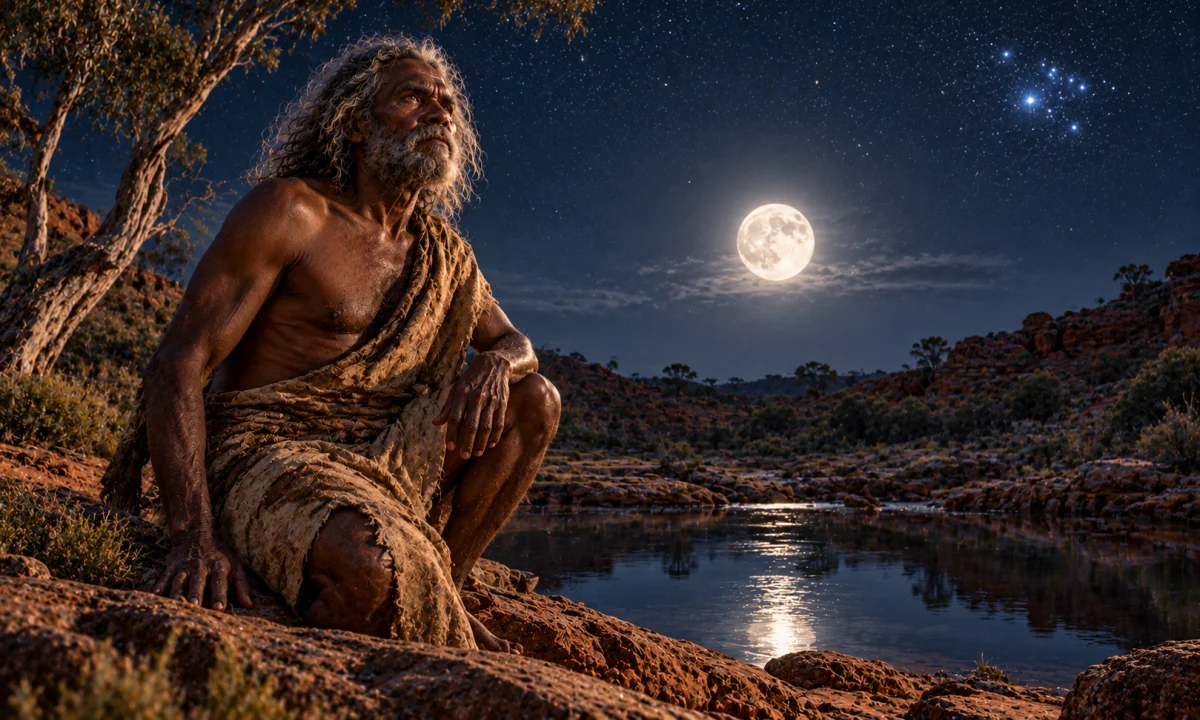
In the accounts that identify Walaganda as a sky-associated being, the figure is connected with the upper world or with the relationship between the sky and the earth. This has led some writers to describe Walaganda as a creator of the world or as an ancestral power responsible for the ordering of existence. Such descriptions are plausible within the general pattern of Australian ancestral traditions, but the surviving summaries do not provide a consistent set of actions that can confidently be attributed to Walaganda everywhere the name appears.
There is no securely documented universal appearance for Walaganda. Some modern lists may imply a human-like, supernatural or celestial form, but these categories should not be treated as established traditional facts. Aboriginal ancestral beings can appear in several forms, including human, animal, natural and composite forms, and their significance is not necessarily limited to a physical body. A being may be encountered through a landscape feature, a song, a ceremony, a celestial object or a story about ancestral travel.
Nor is there a reliable basis for assigning Walaganda a fixed set of powers such as controlling storms, creating particular animals or judging the dead. Those attributes are sometimes added to generalized descriptions of Aboriginal creator figures, but they should not be transferred from better-documented beings to Walaganda without evidence. The careful position is that Walaganda is associated in some records with creation and the sky, while many details remain uncertain or locally specific.
Creation and ancestral order
Where Walaganda is presented as a creator or ordering ancestor, the emphasis is likely to be on the establishment of a world that is both physical and social. In Aboriginal religious thought, the making of a river, hill or animal species may be inseparable from the creation of obligations concerning that place. A story about an ancestral being is therefore not merely an account of how something began. It can explain why a site is sacred, who has responsibilities there, which ceremonies belong to particular people and how human conduct should be regulated.
This is an important distinction from the idea of mythology as a collection of imaginative stories about the remote past. Dreaming narratives are often connected to living law. Country is not simply scenery, and an ancestral track is not merely a route taken by a character. It may be a network of rights, duties, songs, ritual authority and ecological knowledge.
Because much Indigenous knowledge is transmitted through oral teaching, performance, painting, dance and ceremonial practice, public written references usually preserve only fragments. Some knowledge is intended for particular custodians or initiated people and is not made public. A short description of Walaganda in an English-language list may therefore represent only a general outline, or may have been detached from the local context that gives it meaning.
Stories and regional variation
No single, widely attested cycle of Walaganda stories can be treated as definitive. Public accounts do not consistently agree about the being’s home region, relationships, deeds or eventual fate. This lack of agreement is not proof that the tradition is confused. It may result from the use of one spelling for names from different languages, the selective recording of oral traditions, the loss of contextual information or the fact that some teachings are not intended for unrestricted publication.
It is therefore safer to speak of reported traditions concerning Walaganda than to present an invented narrative as though it were shared across Aboriginal Australia. In particular, there is no sound basis for constructing a detailed biography, genealogy or sequence of adventures from the name alone.
Some accounts of Aboriginal sky beings describe the ancestor as withdrawing from the human world, ascending into the sky or continuing to exist among the stars. These patterns occur in a number of Indigenous traditions, but they should not automatically be assigned to Walaganda. A celestial interpretation may reflect a local tradition, an observer’s translation or a comparison made by a later writer. It does not by itself establish that Walaganda is a particular star, constellation or planet.
Religious and cultural significance
The significance of a powerful ancestor such as Walaganda would not be limited to a list of supernatural abilities. In the traditions where such figures are important, the ancestor’s authority is expressed through country, law and ceremony. Creation is often understood as an ongoing presence rather than a completed event. The world remains charged with the actions of ancestral beings, and people maintain their relationship with those beings by caring for country, observing customary obligations and participating in appropriate cultural practices.
This perspective also helps explain why the word “myth” can be misleading when used without qualification. In ordinary English, a myth may mean a fictional or unverified story. In the study of religion, mythology can mean a body of sacred narratives, but even that academic use does not capture the full role of Indigenous traditions. A Dreaming account may be historical in a cultural sense, legally significant, geographically grounded and ritually active at the same time.
Public information about Walaganda should consequently be handled with restraint. A brief online description cannot determine the status of the name within a particular community, nor can it replace the authority of Indigenous custodians. The absence of accessible detail is not an invitation to fill the gaps with familiar motifs such as a universal sky father, a rainbow serpent or a giant creator animal.
Distinguishing Walaganda from other figures
Walaganda should not be casually identified with Baiame, Bunjil, Daramulum, Rainbow Serpent traditions or other well-known Aboriginal beings. These figures belong to particular cultural and linguistic contexts, and their names, stories and ceremonial significance are not interchangeable. A broad comparison may be useful when discussing recurring themes such as ancestral creation or a connection with the sky, but thematic similarity does not establish identity.
Nor should Walaganda be confused with every Aboriginal being described in English as a “sky god”. That phrase has often been used by outsiders to impose a familiar hierarchy on diverse Indigenous concepts. One community’s ancestral creator, another community’s celestial ancestor and a third community’s law-giving figure may all be translated with the same English expression while having different religious roles.
Similar-looking spellings also require caution. A name recorded as Walaganda, Wala Ganda or in another form may represent an orthographic variant, a different pronunciation or an entirely separate word. Without information about the language and locality, it is not possible to assume that all such forms refer to one being.
Sources and transmission
Knowledge of Aboriginal traditions has been transmitted through generations by spoken narrative, song, dance, visual art, ritual and intimate teaching on country. Written records were often produced by missionaries, anthropologists, officials or other outsiders, whose vocabulary and assumptions could shape the way Indigenous concepts were translated. In some cases, names were written down without adequate explanation of pronunciation or cultural setting.
The record concerning Walaganda appears especially dependent on brief secondary descriptions. That makes it difficult to separate an Indigenous term, an early transcription and a later compiler’s interpretation. A responsible account should identify those limits rather than present an uncertain reconstruction as settled fact.
Modern readers should also remember that Aboriginal communities continue to maintain living traditions. They are not relics belonging only to the distant past. At the same time, not every sacred teaching is public, and cultural authority cannot be inferred from a name found in a general mythology database. Respectful treatment means preserving uncertainty where the evidence is uncertain and avoiding claims that a community has not publicly made.
Walaganda in modern reference culture
Walaganda has occasionally appeared in modern lists of Aboriginal gods, creator beings and mythological figures. These lists can make the figure seem more clearly defined than the available tradition permits. They may also group together names from widely separated peoples under a single category, often omitting language, locality and the distinction between an ancestral being and a god in the conventional Western sense.
There is no major, well-established body of popular fiction or mass entertainment devoted specifically to Walaganda. When the name appears in contemporary encyclopedic, fantasy or online material, it is important to distinguish creative reinterpretation from Aboriginal tradition. A modern depiction of Walaganda as a universal deity, monster, humanoid sky ruler or fantasy character should not be treated as evidence for the historical or religious meaning of the name.
The most accurate general description is therefore a limited one: Walaganda is a name associated in some records with an Aboriginal Australian ancestral or sky figure, sometimes described as a creator or ordering power. Its exact cultural origin, spelling, attributes and stories vary or remain insufficiently documented in widely available sources. Those uncertainties are part of the subject’s history and should be stated rather than concealed.