WORLD
WORLD
Wahini Hai
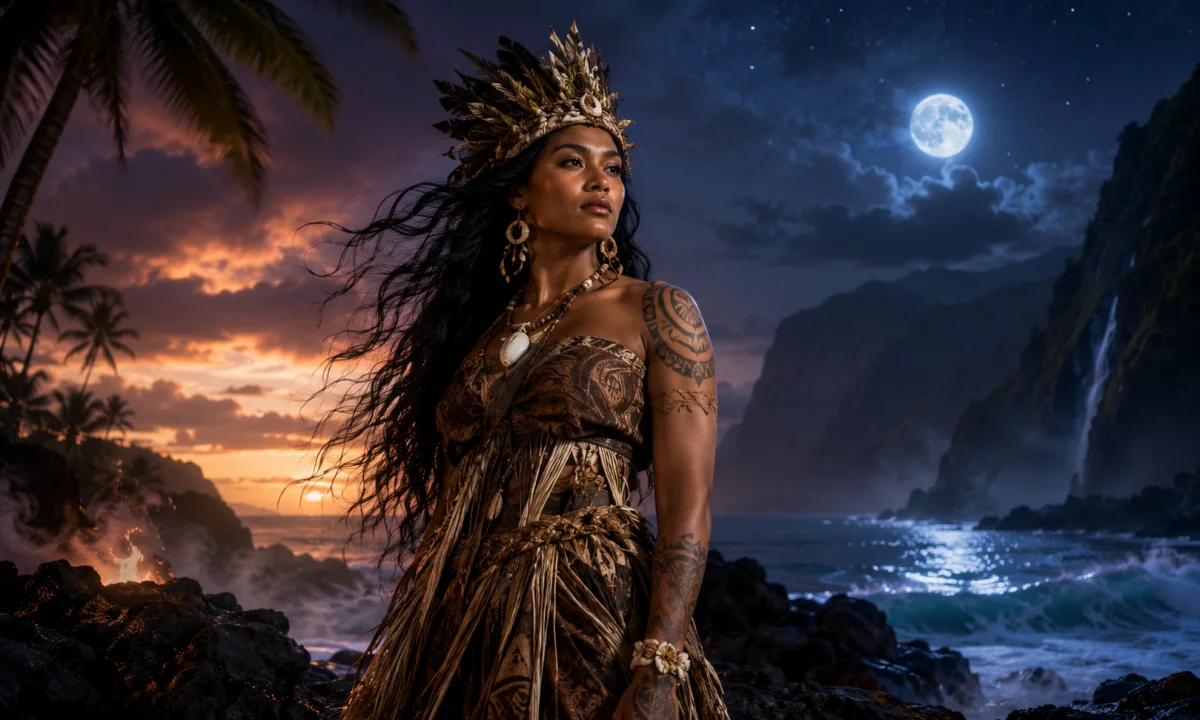
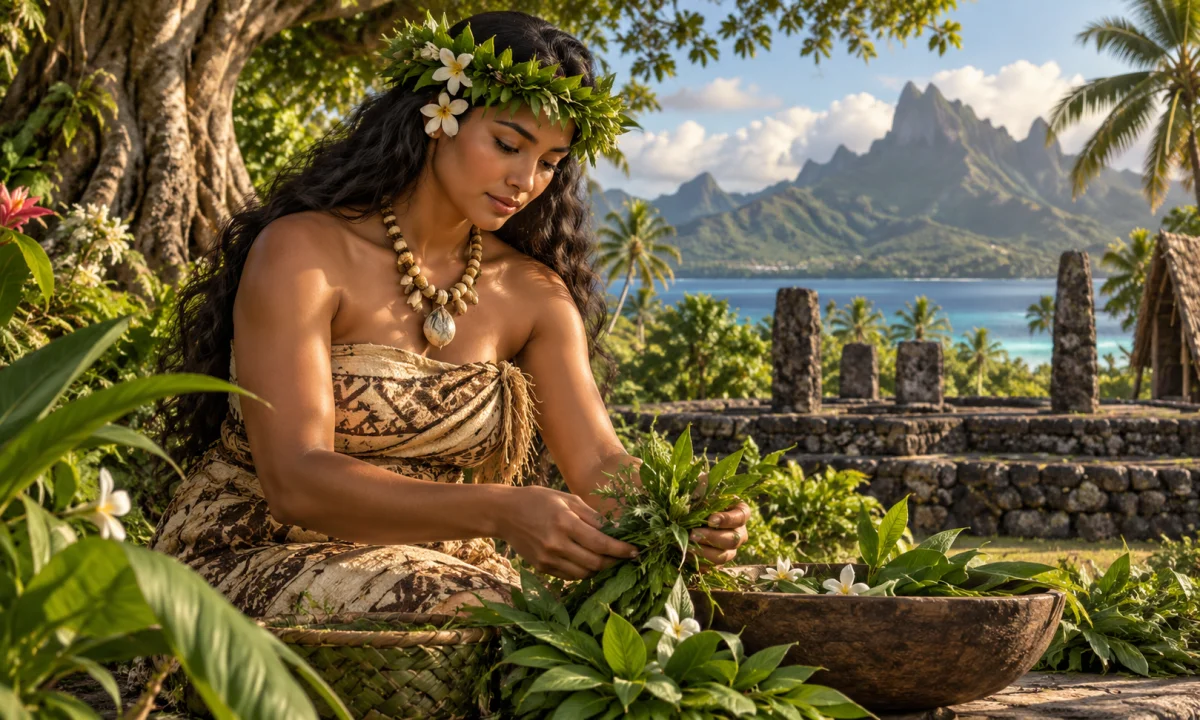
Wahini Hai is a name associated with Polynesian mythology, but its precise identity is not firmly established across widely available traditional sources. In some references, the name appears as a local or variant designation within island storytelling rather than as a pan-Polynesian deity or a universally recognised figure. Because Polynesian traditions were passed down primarily through oral transmission, names and characters can vary from island to island, and some survive only in fragmentary records or in later retellings.
That uncertainty matters. Polynesian mythology is not a single, uniform system, but a family of related traditions from across Oceania, including Hawaiʻi, Aotearoa New Zealand, Samoa, Tonga, Tahiti, Rapa Nui, and many smaller island cultures. A name such as Wahini Hai may belong to one local tradition, may be a spelling influenced by transcription, or may represent a figure whose original context is now difficult to reconstruct. In the absence of a stable, widely attested tradition, the safest approach is to treat Wahini Hai as a traditionally Polynesian name whose exact role, status, and stories remain uncertain in surviving material.
Tradition and cultural setting
Polynesian religious traditions often present a world alive with ancestral presences, divine powers, and beings linked to land, sea, sky, navigation, fertility, danger, and social order. Myths were not merely stories for entertainment; they helped explain origins, sacred genealogies, ritual practice, taboo, environmental knowledge, and community identity. A figure named in such traditions could be a god, a culture hero, an ancestor, a spirit, a place-being, or a character in a local legend whose significance was understood within a particular island or district.
For that reason, it is important not to force Wahini Hai into a category that the surviving evidence does not securely support. Some Polynesian names are preserved in missionary-era notes, in oral performances later written down, or in modern collections that may preserve only a small part of a larger story. Spellings also vary because early recorders tried to render Polynesian languages through English, French, or other orthographies. A name may therefore look fixed in print while actually reflecting a range of pronunciations or related forms.
In many Polynesian societies, women appear prominently in myth as creators, ancestors, guardians, lovers, tricksters, or sources of sacred power. The name Wahini itself resembles forms found across Polynesian languages for “woman” or “women,” though a name alone cannot establish meaning without context. The second element, Hai, is less secure and may be a personal name, descriptive element, or the result of variant spelling. Because of this, interpretations of Wahini Hai should remain cautious.
Name, identity, and uncertainty
The strongest statement that can be made about Wahini Hai is that the name belongs within the broad Polynesian cultural sphere. Beyond that, several possibilities exist:
- it may be a personal or ancestral name preserved in a local oral tradition;
- it may be a variant transcription of a name recorded differently elsewhere;
- it may refer to a being whose story was never widely published in English-language sources;
- it may appear in modern retellings that draw on traditional motifs but do not preserve a single canonical form.
Because of this uncertainty, it is not possible to confidently assign Wahini Hai a standard role such as goddess, demon, heroine, or sea spirit without risking invention. In studies of Polynesian religion, restraint is often more accurate than over-definition. A name can be culturally meaningful even when the surviving evidence does not allow a full reconstruction.
Where similar naming patterns occur in Polynesian languages, they can signal gender, kinship, or social position, but not necessarily divinity. Some mythic figures are known less by a fixed biography than by the actions attributed to them in a few local episodes. If Wahini Hai belongs to that type of tradition, then the surviving name may preserve only a trace of a much fuller narrative world.
Possible roles and symbolic associations
Without secure textual evidence, any discussion of Wahini Hai’s attributes must remain provisional. Even so, Polynesian myth commonly gives women and female-coded figures symbolic associations with several recurring themes:
- fertility and birth, including the continuing life of a community through genealogy;
- the sea and voyaging, especially where women are linked to navigation stories, shorelines, or island origins;
- land and cultivation, including growth, nourishment, and the proper ordering of life;
- spiritual authority, where a figure may be associated with sacred knowledge, ritual protection, or taboo;
- liminality, meaning movement between human and spirit worlds, or between home and wilderness.
If Wahini Hai belongs to one of these narrative patterns, those associations would fit well within wider Polynesian mythological language. However, no single symbolic profile can be treated as established for the figure without a clearer source tradition. It is better to say that Wahini Hai, as a Polynesian mythic name, sits within a cultural environment where women often embody both creative and dangerous forms of power.
In Polynesian thought, power is not always expressed through domination. It may appear as mana, a term often translated as spiritual potency, prestige, or efficacy, though the concept is broader and differs by culture. A mythic being may be remembered because they embody mana, transmit it, or lose it. If Wahini Hai is linked to sacred ancestry or local legend, her significance may rest in that kind of authority rather than in dramatic supernatural feats.
Stories and narrative context
No single, securely established cycle of stories about Wahini Hai is widely documented in the major general references to Polynesian mythology. That absence does not prove the figure was unimportant; it only shows that the evidence available in common circulation is limited. In many island traditions, the most meaningful stories are local, remembered within families, districts, or ceremonial communities rather than in broad published retellings.
When a name survives without a clear mythic biography, it can still point to several kinds of traditional memory:
- a place-name connected to an ancestral event;
- a chant or genealogical line in which the name occurs;
- a legend attached to an island, reef, spring, mountain, or grove;
- a family tradition preserved orally but not yet fully documented in print;
- a character in a story whose other details have been lost or altered over time.
If Wahini Hai is encountered in a particular text or oral tradition, the surrounding context will be crucial. In Polynesian storytelling, the meaning of a figure often emerges from kin relationships, performance setting, and place association rather than from a standalone myth. A name can mark ancestry, sacred status, or narrative function even when the plot is fragmentary.
Because of this, any attempt to describe “the story of Wahini Hai” in a fixed, universal form would be misleading. It is more accurate to say that the name survives within a mythological and folkloric environment where local versions may differ substantially, and where modern written forms may preserve only part of the original tradition.
Relationships and family connections
There is no secure basis for assigning Wahini Hai to a known divine family, spouse, parent, or sibling group across Polynesian mythology as a whole. Polynesian myths often emphasise genealogy, but genealogy itself can vary by island, by chanting tradition, and by the status of the reciter. A figure’s relatives may also change when stories are adapted to different audiences or when names are translated into European orthographies.
In some Polynesian traditions, female figures are tied to male counterparts, ancestral pairs, or island-origin couples; in others, they stand alone as teachers, guardians, or dangerous supernatural presences. Wahini Hai could belong to any of these broader narrative types, but the available information does not allow a confident assignment. If a particular regional tradition links her to a family line, that relationship should be treated as local rather than assumed to be pan-Polynesian.
This caution is especially important because similar names can conceal distinct figures. Two beings may share a comparable sound or spelling but belong to different islands, languages, or periods of recording. Careful comparison is necessary before merging them into one character.
Distinction from similar figures
Wahini Hai should not be casually conflated with other Polynesian female figures whose names may sound similar or whose roles may seem comparable. Polynesian traditions include many women who are creators, ancestors, sea-linked beings, or legendary heroines, but these are not interchangeable.
Common causes of confusion include:
- variant spellings produced by transliteration from oral speech into print;
- shared linguistic elements such as words meaning “woman,” “lady,” or “spirit”;
- local names for regional beings that are not equivalent across islands;
- modern reinterpretations that blend separate legends into a single character.
For example, a figure in one island tradition may be a protective ancestress, while a similarly named character elsewhere may be a dangerous spirit or simply a mortal woman remembered in folklore. In Polynesian studies, naming similarities alone are not enough to establish identity. Wahini Hai should therefore be treated on its own terms, without automatic merger into better-known figures.
Interpretation in Polynesian cultural history
Even with limited documentation, the name Wahini Hai is meaningful as part of the larger history of Polynesian oral culture. Many such names survive because communities remembered them in chant, narrative, and performance long after written records became fragmentary. Missionary contact, language loss, and shifts in cultural practice affected the survival of traditional material, and some names became detached from their broader narratives.
That historical process is important when reading any Polynesian mythic name from a printed source. A figure may appear obscure not because she was marginal in the original tradition, but because the channels of transmission were interrupted. Oral traditions are dynamic, and a surviving name can point to lost layers of knowledge about ancestry, ritual, land rights, social values, or cosmology.
Female figures in Polynesian myth often illuminate how communities understood balance: between sea and land, descent and marriage, vulnerability and authority, life-giving power and sacred danger. If Wahini Hai belonged to that broader pattern, her significance may have been less about a spectacular tale than about her place within a moral and cosmological order. In many island traditions, such figures function as reminders that the world is relational and that power must be approached with respect.
Modern reception
Wahini Hai does not appear to have a prominent place in widely known modern popular culture, and there is no well-established body of contemporary adaptations that can be described confidently here. That absence itself is telling: many Polynesian mythic names remain local, specialised, or underrepresented in global media. When they do appear in modern contexts, they are often filtered through generalised “Polynesian” imagery rather than through the specific tradition from which the name came.
When modern writers, artists, or game designers use Polynesian mythic material, they sometimes combine elements from different islands, which can blur distinctions between separate beings and traditions. If Wahini Hai is adapted in a contemporary setting, such use should be read carefully and distinguished from traditional material. A modern retelling may be inspired by Polynesian aesthetics or themes without preserving the original cultural context.
For that reason, the most responsible way to approach Wahini Hai is to keep the traditional evidence and later reception separate. The traditional name belongs to the world of Polynesian oral culture and whatever local story or memory preserved it. Modern appearances, if any, are secondary and should not be mistaken for the original form of the figure.
Why the name matters
Even a poorly documented mythic name can matter greatly. In Oceania, names often carry genealogy, place memory, and sacred resonance. A name like Wahini Hai may represent a local ancestor, a woman remembered in story, or a figure once embedded in ritual and social life. The lack of certainty is itself part of the historical reality of many oral traditions: survival is uneven, and knowledge can remain meaningful even when it is incomplete.
Where the evidence is thin, accuracy requires saying what is not known. Wahini Hai is best understood as a Polynesian mythological or folkloric name with uncertain classification and limited publicly accessible documentation. That uncertainty does not diminish the cultural value of the tradition in which the name appears; it simply marks the boundaries of what can responsibly be stated from surviving records.