WORLD

Valefor
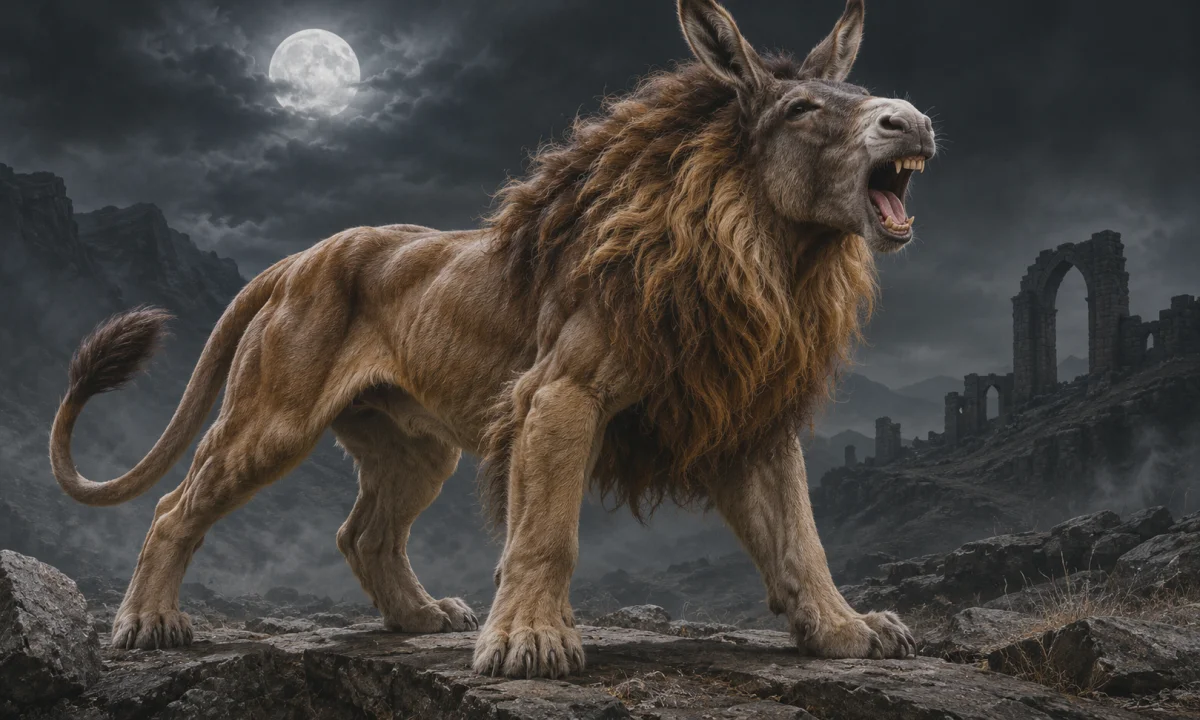
Valefor is a demon in the early modern grimoire tradition commonly associated with the Ars Goetia, the first section of the Lemegeton, or Lesser Key of Solomon. In that system, Valefor is described as a powerful duke who appears as a lion with the head of an ass. He is associated especially with theft and is said to serve as a familiar spirit to those who steal. The tradition assigns him thirty-six legions of spirits.
Valefor is not a figure from the Bible, nor is he a demon with a well-established independent tradition in ancient Jewish, Christian or Near Eastern religion. His identity belongs primarily to the learned magical literature of early modern Europe. Like many spirits in the Ars Goetia, he is presented within a Christian demonological framework that combines biblical language, medieval ideas about spirits, ceremonial magic and material drawn from earlier catalogues of demons.
Origins in Grimoire Tradition
The principal descriptions of Valefor come from European books of magic that classify and command spirits. One important predecessor is Johann Weyer’s Pseudomonarchia Daemonum, first published in 1577. Weyer’s catalogue contains a spirit whose name is usually rendered as Valefar or a closely related spelling. Later manuscripts and printed editions of the Ars Goetia commonly use the form Valefor.
The Ars Goetia presents seventy-two spirits, each with a rank, a visual form, abilities, a number of subordinate legions and a sigil. Its opening framework claims that these spirits were known to King Solomon and were confined by him, but this Solomonic attribution is part of the grimoire’s legendary and ritual presentation. It should not be treated as evidence that Valefor was known in the historical period of Solomon or that the figure belongs to ancient Israelite religion.
The surviving textual tradition is not completely uniform. Manuscripts differ in spelling, wording, arrangement and sometimes in the details of a spirit’s description. The boundaries between the Pseudomonarchia Daemonum, the Ars Goetia and related magical catalogues are also part of a long process of copying, editing and reprinting. For that reason, “Valefor” and “Valefar” are best understood as variant forms within a related grimoire tradition rather than as securely documented names from a single ancient myth.
Name and Classification
In the standard ordering of the Ars Goetia, Valefor is the sixth spirit. He is classified as a duke, one of the ranks used to organize the spirits of the catalogue. The hierarchy includes titles such as king, prince, duke, marquis, president and earl, although these ranks do not correspond to a consistent theology shared by all Christian traditions. They function mainly as part of the grimoire’s system of magical administration.
The name has no securely established etymology. Spellings such as Valefor, Valefar and Valefar may reflect the transmission of names through Latin, French, English and manuscript forms. Attempts to derive the name from a particular ancient deity, language or pre-Christian spirit are speculative unless supported by historical evidence. The safest interpretation is that the name belongs to the demonological catalogues in which the figure is recorded.
Valefor’s classification as a duke should also not be confused with the status of a demon in official Christian doctrine. The Ars Goetia is an occult manual, not a canonical religious text. Its ranks and descriptions represent the imaginative and ritual vocabulary of grimoire literature rather than a universally accepted Christian account of the demonic world.
Appearance
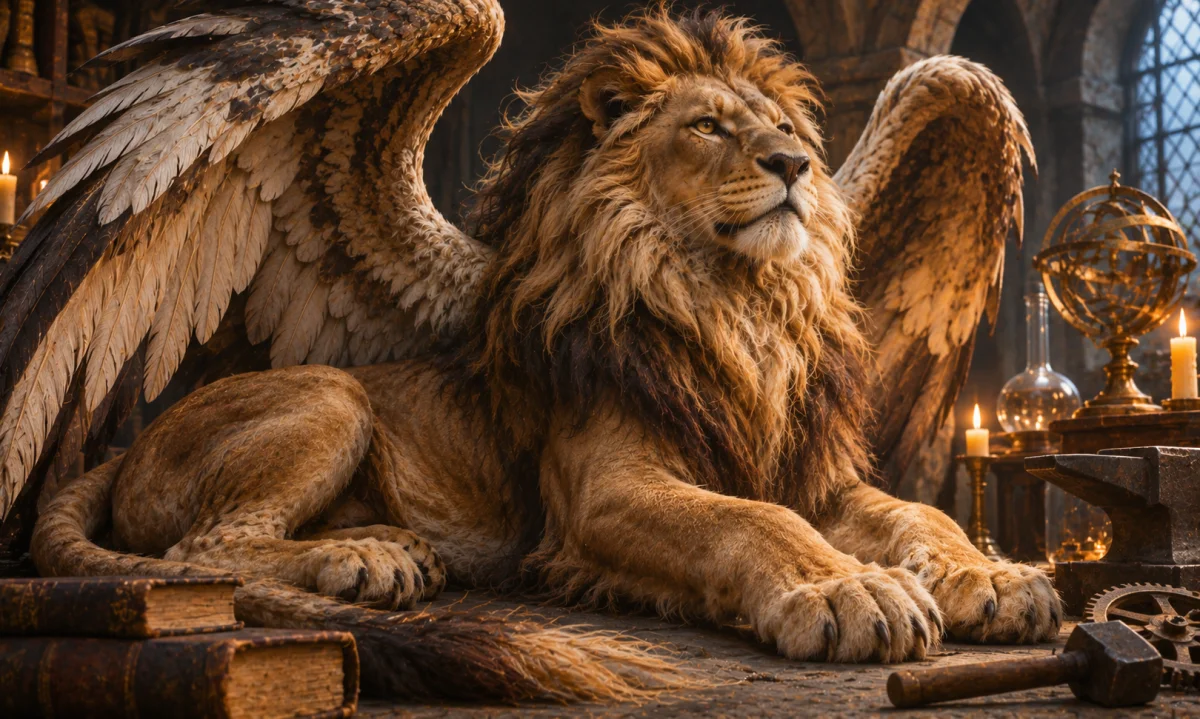
Valefor is said to appear as a lion with the head of an ass. This hybrid form is one of his most recognizable characteristics. The lion suggests strength, authority and ferocity, while the ass’s head introduces an element of strangeness, degradation or comic inversion. The combination is not explained in detail by the grimoire, so its symbolism cannot be assigned a single certain meaning.
Animal-headed beings are common in magical, religious and folkloric imagery, but Valefor’s form should not automatically be traced to a particular Egyptian god, classical monster or ancient animal cult. The presence of a lion and an ass in a single body may reflect the broader grimoire practice of giving spirits memorable composite forms. It may also evoke moral associations familiar to early modern readers: the lion as a creature of power and the ass as a figure sometimes connected with stubbornness, foolishness or humiliation.
Illustrations in later editions often give Valefor a dramatic bestial appearance, but these images are interpretations of the written description rather than ancient portraits. Artists may alter the proportions, facial features, posture or surrounding symbols. There is therefore no single canonical visual design beyond the basic description of a lion-like body combined with an ass’s head.
Abilities and Role
The central ability attributed to Valefor is knowledge of theft. The traditional description presents him as highly knowledgeable in stealing and as a “good familiar” to those who engage in theft. In the vocabulary of European magic, a familiar was a spirit believed to assist a magician or practitioner with particular tasks. The term could also carry associations with forbidden pacts, witchcraft and demonic service.
Valefor’s role is therefore more specific than that of a general spirit of wealth, trade or good fortune. The texts connect him with illicit acquisition rather than lawful prosperity. They do not provide a developed mythology explaining why he governs theft, nor do they record a narrative in which he steals a famous object or teaches a named hero. His function is presented as a catalogue entry: a spirit with a defined office, appearance and rank.
The statement that he is a familiar to thieves does not mean that all historical thieves worshipped Valefor, invoked him or recognized him as their patron. The claim belongs to the literature of demonological classification. Early modern authors frequently described demons according to the temptations, crimes or forms of knowledge they were believed to encourage. Such descriptions often reflect the moral concerns of the writers as much as any independent popular cult.
The Ars Goetia also assigns Valefor thirty-six legions of spirits. A legion is a military metaphor used throughout the catalogue to indicate the scale of a demon’s subordinate forces. The number is part of the system’s formal structure, but it does not represent a verifiable census of supernatural beings. Different catalogues and editions may vary in their wording or numerical details, so the figure should be read as a grimoire attribute rather than historical evidence.
Sigil and Ritual Setting
Like the other spirits in the Ars Goetia, Valefor is assigned a sigil, or magical emblem. In the ritual structure of the work, such a sigil is used as an identifying sign during an operation intended to summon, constrain or command a spirit. The grimoire also places its spirits within a broader procedure involving divine names, protective circles, ritual tools and formal commands.
These instructions belong to ceremonial magic and should not be confused with ordinary Christian prayer or with the practices of every historical magician. They show how the authors and compilers of the grimoires attempted to place demonic beings under ritual authority. The contradiction is significant: Valefor is represented as dangerous and morally corrupt, yet the magician is instructed to compel him through a carefully ordered rite invoking God and angelic or biblical authority.
The sigil itself does not provide an independent history for Valefor. Designs can change between manuscripts, engravings and modern occult reproductions. A particular symbol may be important within a modern magical system while having little evidence of use in earlier periods.
Relationships and Narrative Absence
Valefor has no substantial cycle of myths, family relationships or heroic encounters comparable to those of figures from Greek, Norse or Mesopotamian mythology. The grimoire literature does not give him a consort, parentage, birthplace or detailed personal history. His relationship to other spirits is mainly administrative: he is one member of the catalogue, holds the rank of duke and commands thirty-six legions.
The absence of narrative is important. Later writers may expand Valefor into a character with motives, allies, enemies or a distinctive personality, but those developments should not be presented as part of the original grimoire account. The traditional material is brief and functional. It identifies him, describes his appearance, names his area of activity and places him within the hierarchy of spirits.
Meaning and Interpretation
Valefor can be interpreted as an embodiment of illicit gain and the dangers associated with taking what belongs to others. In a Christian demonological context, theft was not merely a practical offence; it was also a moral violation connected with covetousness, deception and disregard for social and religious law. A demon who assists thieves fits a larger pattern in which spirits personify or promote forbidden behaviours.
His hybrid body reinforces this moral and intellectual ambiguity. The lion’s commanding presence can suggest power and predation, while the ass’s head may imply degradation or a distortion of proper human and animal order. Yet these interpretations remain possibilities rather than explicit explanations supplied by the source texts. The grimoires do not say that the lion represents one quality and the ass another.
Valefor also illustrates how early modern demonology transformed scattered names and attributes into ordered systems. By assigning each spirit a title, appearance, ability, sigil and number of legions, the grimoires made the supernatural world resemble a court or military bureaucracy. This organization helped give ritual texts an appearance of authority and completeness, even though the entries often preserve inconsistent names and traditions.
Distinctions from Similar Names
Valefar is the most important variant to distinguish from Valefor. The forms occur in related demonological texts and are commonly treated as versions of the same grimoire spirit. The spelling difference should not be used as evidence for two firmly separate beings unless a particular manuscript or author makes that distinction.
Valefor should not be confused with Valac, also spelled Volac, Valak or Ualac in different sources. Valac is another spirit in the Ars Goetia, traditionally described as a president who appears as a child with angelic wings riding a two-headed dragon and who reveals hidden treasures or serpents. The similar opening sound of the names has encouraged confusion, but the descriptions and functions are different.
Nor should Valefor be merged with Malphas, a separate spirit associated in the Ars Goetia with the appearance of a crow and with building towers or houses. Modern lists sometimes place many goetic names together without preserving their individual attributes, which can make distinct figures appear interchangeable. In the traditional catalogue, their entries are separate.
Later Occult and Popular Reception
Valefor has remained known primarily through editions, translations and adaptations of the Ars Goetia. Modern occult practitioners may treat him as an entity for ritual work, a symbolic representation of theft or transgression, or a figure within a personal system of demonology. These interpretations vary widely and are not evidence of a single continuous cult extending from antiquity to the present.
Contemporary fiction, games, illustrated demon encyclopedias and online occult communities may give Valefor additional powers, personality traits or visual features. Some adaptations portray him as a thief, a tempter, a guardian of forbidden wealth or a powerful animal-headed demon. Such portrayals draw inspiration from the grimoire description but are modern creative developments rather than established elements of the early sources.
The historically grounded image of Valefor remains comparatively concise: a duke of the goetic catalogue, appearing as a lion with an ass’s head, associated with theft, familiar service and thirty-six legions. Beyond those features, interpretations should be identified as later speculation, ritual usage or popular culture rather than as securely documented mythology.