WORLD
WORLD
Tangiia
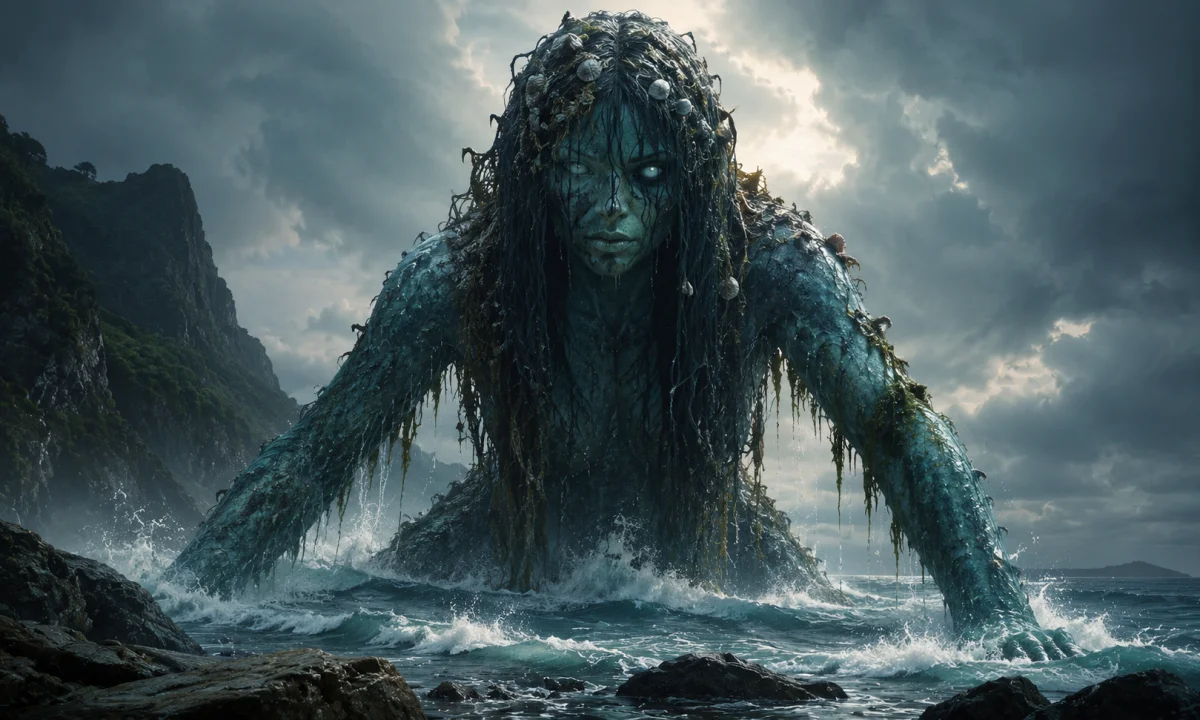
Tangiia, also known as Tangiia Nui, is a celebrated ancestral chief in the traditional histories of the Cook Islands, especially Rarotonga. He belongs to the Polynesian traditions of central Eastern Polynesia, but he is not generally understood as a god or supernatural being in the same sense as figures such as Tangaroa or Māui. Tangiia is primarily remembered as a founding ancestor, navigator and chiefly figure whose descendants became associated with important lines of authority on Rarotonga.
Stories about Tangiia survive through Cook Islands Māori oral traditions, genealogies, accounts of chiefly descent and descriptions of sacred places. These traditions are not a single fixed narrative. Details differ between island communities, families and later recordings, particularly concerning Tangiia’s homeland, his relationship with other chiefs and the sequence of events that brought him to Rarotonga. The accounts are therefore best treated as culturally significant ancestral histories rather than as a uniform biography.
Cultural setting
Rarotonga is the largest island in the Cook Islands, a group in central Polynesia. Like many Polynesian societies, it preserved knowledge of the past through genealogical recitation, chants, place traditions, ritual practice and stories about ocean voyages. Such traditions could explain the origins of chiefly houses, establish rights to land and authority, and connect living communities with ancestors and sacred sites.
Within this setting, Tangiia’s importance is both mythical and political. His story concerns more than a single heroic adventure. It helps explain the ancestry of prominent Rarotongan groups and the relationships among different chiefly lines. The narrative also belongs to a wider Polynesian pattern in which a founding ancestor crosses the ocean, arrives at an already inhabited island, forms alliances or conflicts with other leaders, and becomes part of a new social order.
Traditional genealogies often treat ancestry, migration and sacred history as connected rather than as separate subjects. A voyage attributed to Tangiia could therefore preserve memories of political expansion, inter-island contact or the establishment of a chiefly dynasty, while also expressing religious ideas about ancestral protection and the legitimacy of ritual places.
Name and identity
The name is commonly written Tangiia, with Tangiia Nui meaning “Great Tangiia” in common English renderings. Spelling and punctuation may vary in representations of Cook Islands Māori, including forms that mark the glottal stop. The exact linguistic interpretation of the personal name should not be assumed from the appearance of the word alone. In Polynesian languages, similar-looking elements can have different meanings depending on pronunciation, dialect and context.
Tangiia is sometimes placed under the broad label of “Polynesian mythology,” but that classification can be misleading if it suggests that he was a universally worshipped deity. His traditional status is closer to that of a culture hero and ancestral ariki, or high chief. Some stories give him extraordinary assistance or place his journey within a sacred framework, yet his central function is genealogical and chiefly rather than that of a god with a distinct sphere of cosmic power.
The title ariki refers to a high-ranking chief or chiefly authority in many Polynesian societies. Its exact implications varied from island to island. In traditions concerning Tangiia, the title reflects his position as a leader whose descendants and allies were important in the political history of Rarotonga.
The journey from the east
The most widely known traditions place Tangiia’s earlier life in Tahiti or in the wider Society Islands region. The precise location varies in different accounts, and some versions provide more elaborate genealogical details than others. He is commonly described as a powerful chief who left his homeland after a conflict with another leader, usually named Tutapu.
The reason for the conflict is not consistent across all tellings. It may be presented as a dispute within a chiefly family, a struggle over authority or a personal quarrel whose consequences became political. Tangiia and Tutapu are often described as relatives or members of connected chiefly lines, but the exact relationship differs in surviving versions. What remains constant is the image of rivalry followed by a dangerous ocean pursuit.
Tangiia’s departure is not simply a journey of discovery. It is an exile, escape or politically necessary migration. His canoe and his followers carry the authority of an established chiefly line into a new region. The ocean voyage consequently has both practical and symbolic meaning: it demonstrates the navigational skill required to move between Polynesian islands and marks the transfer of ancestral prestige to Rarotonga.
Some versions describe Tutapu pursuing Tangiia across the sea. The details of the chase, including the route, the timing and the events at sea, are not identical in every account. Rather than treating one version as universally authoritative, it is more accurate to recognise the pursuit as a central narrative theme whose elaboration reflects the tradition in which it was preserved.
Arrival at Rarotonga
Tangiia is traditionally associated with the settlement or reorganisation of Rarotonga, although the island was not necessarily portrayed as empty when he arrived. Polynesian foundation traditions frequently describe encounters between incoming voyagers and people already connected with the land. The resulting story may involve conquest, alliance, marriage, negotiated authority or a combination of these processes.
One of the most important figures linked with Tangiia is Karika. In many Rarotongan traditions, Karika is another major ancestor and chiefly founder, often associated with a western Polynesian origin such as Samoa. The relationship between Tangiia and Karika is described in different ways, but they are commonly remembered as leaders whose lines became central to the political organisation of Rarotonga.
Some accounts present Tangiia and Karika as separate voyagers who arrived at different times and later reached an agreement. Other versions give different details about their origins, encounters or respective claims to authority. Their stories should not be reduced to a simple account of two identical “founders,” because each figure has distinct genealogical associations. Together, however, they represent the joining of different ancestral and political traditions on Rarotonga.
Traditions concerning their alliance helped explain the distribution of chiefly power. They could also provide a framework for understanding why several ariki lines possessed recognised standing. In this sense, the story of Tangiia is not only about personal bravery but about the creation of relationships that continued through generations.
Relationship with Tutapu
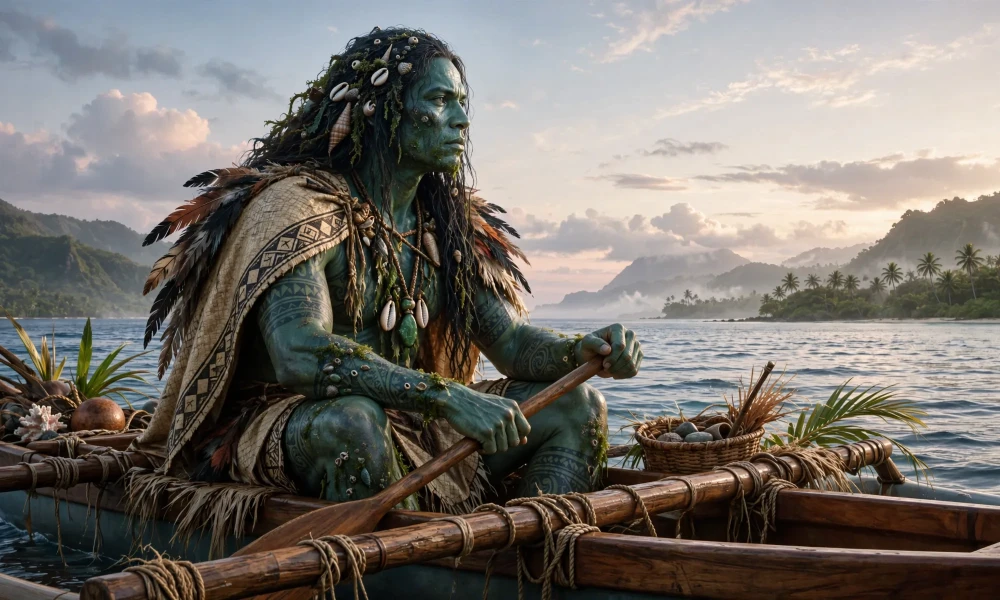
Tutapu functions in the tradition as Tangiia’s principal rival. He is not merely a monster or an impersonal force of nature. The conflict is generally presented as a dispute between human or chiefly figures, even when the narrative takes on legendary qualities. Their opposition gives the migration story its dramatic structure: Tangiia must leave his former home, survive pursuit and establish himself in a new political landscape.
The stories do not provide a single agreed account of Tutapu’s final fate or of every stage of the rivalry. In some tellings, the pursuit ends through battle or strategic escape; in others, the emphasis falls more heavily on Tangiia’s arrival and later settlement. Because the surviving material comes from oral traditions that were transmitted and recorded in different circumstances, apparent contradictions are part of the history of the tradition rather than evidence that one simple version must be correct.
The rivalry may also be read symbolically. Tangiia represents the establishment of a new chiefly order, while Tutapu embodies the unresolved danger associated with the old conflict. The narrative preserves the idea that political legitimacy is achieved through struggle, movement and the formation of alliances, not simply inherited without challenge.
Tangiia, sacred places and chiefly descent
Tangiia is strongly associated with the ancestral and ritual landscape of Rarotonga. The marae known as Arai-te-Tonga is especially important in traditions concerning the island’s ariki and the Tangiia line. A marae was a ceremonial site used for ritual, political and communal purposes. It was not merely a temple in the narrow European sense; its meaning included the surrounding social relationships, ancestral connections and rites conducted there.
Arai-te-Tonga’s association with Tangiia illustrates how a founding ancestor could be connected to a physical place that remained important for chiefly identity. Traditions about the site vary in detail, including the roles assigned to different ancestors and leaders. It is therefore safer to describe Tangiia as a major figure in its ancestral history than to attribute every feature of the marae to him personally.
Genealogies linked to Tangiia have historically supported claims to rank and authority. In Polynesian societies, genealogy was not simply a record of biological descent. It could express political relationships, ritual precedence, rights to land and obligations between groups. A genealogy might also be recited differently according to the purpose and audience of the occasion. Tangiia’s importance consequently lies partly in the continuing use of his ancestry within Rarotongan chiefly traditions.
Sources and historical interpretation
Knowledge of Tangiia comes principally from oral tradition and from later written records made by missionaries, local scholars, officials and ethnographers. These records are valuable, but they do not constitute a contemporary written biography from Tangiia’s lifetime. They were produced after generations of oral transmission and may reflect the vocabulary, assumptions and interests of the people who recorded them.
Different versions can preserve different kinds of information. Genealogical sequences may be important for chiefly identity even when the narrative surrounding them changes. Place names and ritual associations may retain memories of past political arrangements. Dramatic episodes, including the pursuit by Tutapu, may communicate cultural ideas about leadership and migration without functioning as straightforward chronological history.
Archaeology confirms that Polynesians settled and maintained extensive networks across the Pacific, and the settlement history of the Cook Islands belongs within that wider movement of skilled ocean navigation. Archaeological evidence, however, does not by itself identify a particular excavated object or settlement layer as belonging to the historical individual Tangiia. Nor does it establish every detail of the traditional genealogy. The connection between the legendary ancestor and a specific date remains uncertain.
For this reason, claims that assign Tangiia an exact historical date, a definitive place of birth or a fully documented itinerary should be treated cautiously unless they are explicitly presented as belonging to a particular tradition. The broad cultural importance of the story does not depend on proving every narrative detail as literal history.
Symbolism and cultural significance
Tangiia’s story reflects several themes that recur throughout Polynesian ancestral traditions:
- Voyaging: the ocean is a means of movement, connection and political transformation rather than an empty barrier.
- Founding ancestry: descent from a renowned voyager can explain the authority of a chiefly house and its relationship to land.
- Conflict and renewal: a crisis in one homeland leads to the creation of a new social order elsewhere.
- Alliance: the relationship with Karika expresses the joining of different lines and traditions.
- Sacred geography: ancestral events are connected with marae, settlements and named places that continue to organise collective memory.
These themes should not be separated from the political context of the Cook Islands. Stories of origin can validate authority, but they can also preserve the memory of negotiation between groups. The prominence of both Tangiia and Karika suggests that Rarotongan traditions valued more than one source of chiefly legitimacy. Their narratives gave communities a way to describe how different peoples and lines became part of a shared island society.
Distinguishing Tangiia from similar names
Tangiia should not automatically be identified with every Polynesian figure whose name contains tangi or resembles it in spelling. Across Polynesian languages, related words can refer to crying, lamentation, sound or other meanings, while similar personal names may belong to unrelated traditions. Tangiia is specifically associated with Cook Islands and Rarotongan ancestral history.
He is also distinct from Tangaroa, the widely known Polynesian ocean deity, despite the superficial similarity of their names. Tangaroa belongs to religious traditions concerning a god or ancestral divine power, whereas Tangiia is chiefly remembered as a human founding ancestor whose story centres on migration, descent and political authority.
Nor should Tangiia be treated as simply another version of Māui. Māui is a culture hero found in several Polynesian traditions and is associated with different feats, including fishing up islands, slowing the sun and seeking immortality. Tangiia’s traditional narrative has a different setting and purpose: it concerns the ancestral history of Rarotonga and the establishment of chiefly lines.
Continuing relevance
Tangiia remains relevant primarily through Cook Islands cultural identity, genealogy, historical memory and the interpretation of Rarotonga’s sacred and chiefly landscape. His name may appear in discussions of island origins, ancestral descent and the history of ariki lines. The story is also part of the wider cultural recognition of Polynesian navigation and the intellectual traditions that preserved knowledge across generations without relying originally on written records.
Tangiia has not become a major figure in global popular culture, and there is no single internationally standardised modern version of his story. Retellings for museums, schools, tourism and cultural presentation may simplify the relationship between Tangiia, Karika and Tutapu or present one local version as if it were universal. Such adaptations can introduce audiences to the tradition, but they should be distinguished from the varied oral histories in which Tangiia’s identity and significance were preserved.