WORLD

Tabaldak

Tabaldak is a creator figure in Abenaki traditional narratives, a body of Indigenous traditions from the northeastern woodlands of North America. The Abenaki are part of the wider Wabanaki cultural and linguistic world, which also includes the Mi’kmaq, Maliseet, Passamaquoddy and Penobscot peoples. Tabaldak is generally described as the being who made or ordered the world and who is connected with the origins of the culture hero Gluskabe and his counterpart Malsumis.
Descriptions of Tabaldak must be treated with care. Abenaki traditions were transmitted primarily through oral storytelling, and versions recorded by outsiders do not always preserve the original wording, context or sacred significance. Spellings differ between sources, and stories vary among communities and narrators. Some accounts portray Tabaldak as a personal creator; others give greater attention to the beings and events that arise from the act of creation than to Tabaldak himself.
Cultural setting
The Abenaki traditionally lived in what is now parts of New England and southern Quebec, especially in the region around the upper Connecticut River and Lake Champlain, while related Wabanaki peoples occupied much of the northeastern coast and the Maritime region. Their stories developed within a landscape of forests, rivers, mountains and changing seasons. Animals, plants, weather and geographical features are not merely decorative elements in these traditions: they are part of a living world in which human beings have obligations and in which nonhuman persons may possess knowledge, power and agency.
European descriptions often classified Indigenous sacred figures as “gods,” “spirits” or “mythological characters.” Such labels can be useful for comparison, but they may not correspond exactly to Abenaki categories. The word creator is therefore a practical English description rather than proof that Tabaldak had the same attributes as a creator deity in a European or classical religious system.
Traditional narratives also served several purposes at once. They explained beginnings, preserved teachings about conduct, connected communities to particular animals and places, and entertained listeners. A single story might therefore contain cosmological, ethical and social meanings without being intended as a literal account in the modern historical sense.
The name and identity of Tabaldak
Tabaldak is commonly identified as an Abenaki creator or maker of the world. The name is sometimes glossed in English with expressions such as “the creator,” “the maker” or “the one who made everything.” The exact linguistic analysis and spelling are not uniform across published accounts, however. Older transcriptions were often shaped by the orthographic habits of missionaries, ethnographers or other non-Abenaki writers, and related languages may use different forms.
Tabaldak should not automatically be treated as a single, fully standardized figure shared by every Wabanaki nation. Abenaki communities have their own histories and traditions, and stories about creation may differ from those told by neighboring peoples. Similar themes—an original creator, the emergence of a culture hero, the making of people and the ordering of the natural world—occur widely in Indigenous North America, but thematic resemblance does not establish that all such figures are the same being.
In many retellings, Tabaldak is especially important as the source or parent of two powerful figures: Gluskabe and Malsumis. The names of these figures also vary considerably in English spelling, including Glooskap, Gluskab, Kuloscap and other forms for Gluskabe, and Malsum or Malsumis for his counterpart. Their relationship is not presented identically in every tradition. Some narratives call them brothers, while others describe them in terms of complementary or opposing origins.
Creation and the first beings
One group of Abenaki creation narratives begins with Tabaldak making the world or bringing it into an ordered state. In versions known through later written accounts, Tabaldak is associated with the creation of the earth, its creatures and human beings. The stories do not always offer a systematic sequence comparable to a theological creed. Instead, they move between the making of the world, the appearance of its first persons and the actions through which the world becomes suitable for life.
A widely repeated pattern has Tabaldak producing two important beings from material associated with himself or with the earth. Some retellings say that Gluskabe and Malsumis emerged from dust, dirt or material gathered from Tabaldak’s body. Other accounts give different details or omit the episode entirely. Because the surviving records are not consistent, it is safer to describe these as variant motifs rather than as one fixed Abenaki doctrine.
The creation of the first humans is likewise reported in more than one form. In some versions, Tabaldak makes people directly. In others, the emergence of humanity is connected with the actions of Gluskabe, the ash tree or another act of transformation. These differences partly reflect the diversity of Wabanaki traditions and partly result from the way oral narratives were selected, translated and recorded. A story about Gluskabe creating or discovering human beings should not automatically be treated as a contradiction of Tabaldak’s role: the two figures may occupy different stages or levels of creation in a particular tradition.
The creation stories are not simply accounts of manufacture. They establish relationships between humans, animals, the land and the forces that shape life. Creation is often followed by the work of making the world habitable: regulating dangerous powers, distributing resources, teaching people how to live and correcting conditions that threaten balance.
Gluskabe and Malsumis
Tabaldak’s most important narrative connections are with Gluskabe and Malsumis. Gluskabe is a major Wabanaki culture hero whose stories are told across several northeastern Indigenous traditions. He is associated with transformation, the shaping of the land, the regulation of animals and the acquisition of knowledge useful to human beings. He is not simply a warrior or a benevolent “god”; depending on the story, he may be clever, powerful, vain, compassionate or in need of correction.
Malsumis is frequently presented as Gluskabe’s counterpart. In popular summaries, he is often called evil, but that word can flatten the complexity of the stories. Malsumis may represent destructive, antisocial or disordering forces, and some narratives describe him as deliberately working against Gluskabe. Yet the relationship is better understood as a narrative opposition between different principles or choices than as a precise equivalent of the Christian opposition between God and Satan.
In some versions, Tabaldak gives the two beings a role in shaping the world. Gluskabe seeks a world in which people and other beings can survive, while Malsumis introduces danger or difficulty. The details vary: one account may explain why an animal behaves in a particular way, another may account for death, hardship or rivalry, and another may focus on the brothers’ differing characters. These stories should be read within their own cultural setting rather than forced into a universal good-versus-evil framework.
The connection between Tabaldak and Gluskabe also illustrates the difference between a creator and a culture hero. Tabaldak is associated with origins and the existence of the world. Gluskabe acts within that world, changing its conditions and teaching or preparing it for human life. In some narratives the creator withdraws from the immediate events of the world, leaving Gluskabe to carry out work that affects ordinary existence.
Attributes and role
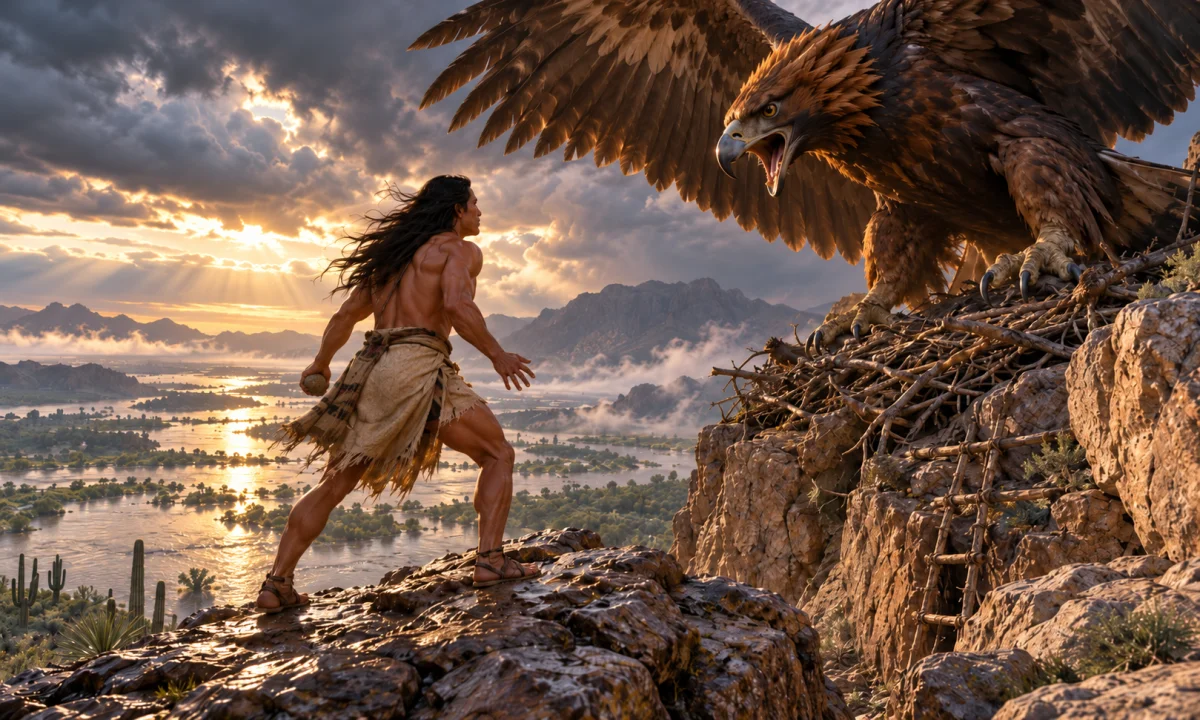
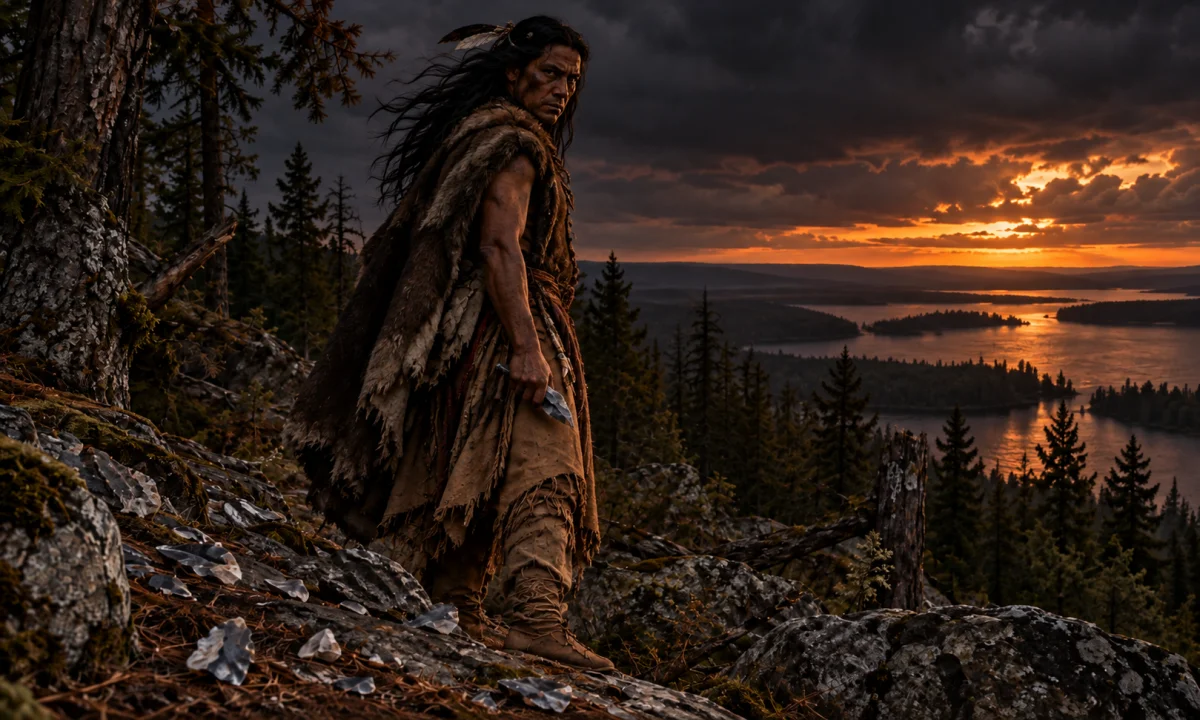
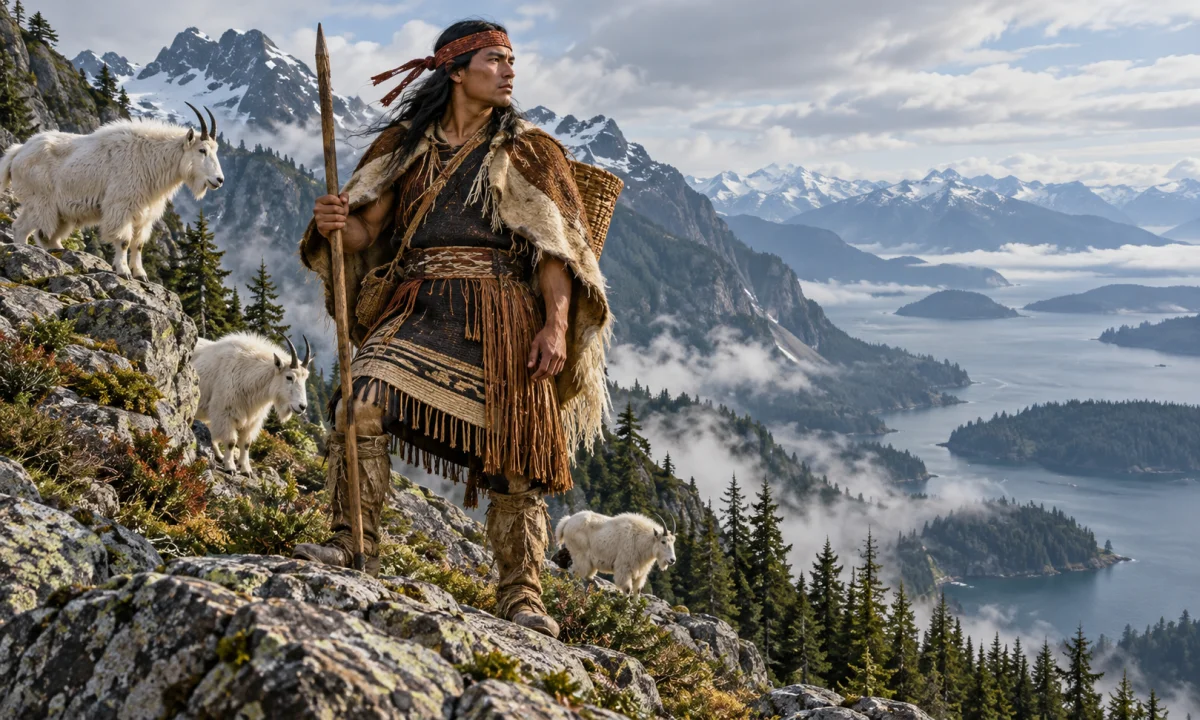
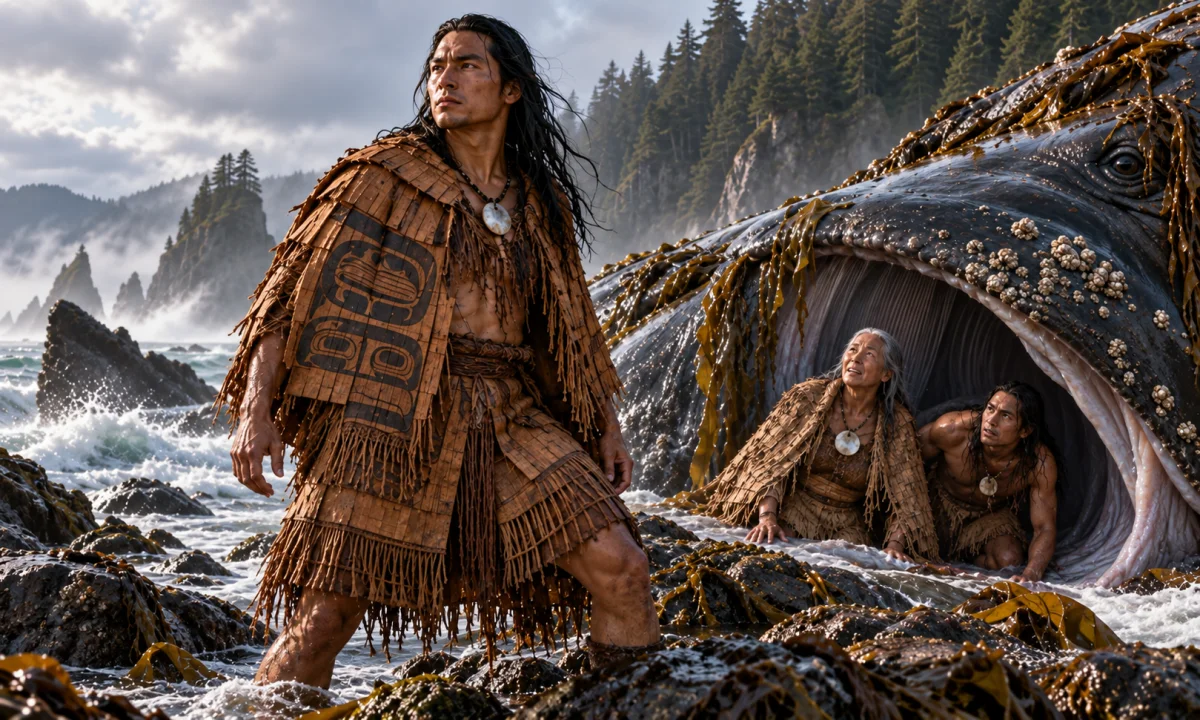
Tabaldak is generally characterized by creative power rather than by a detailed physical appearance. Traditional accounts do not provide a universally accepted portrait, costume or set of bodily features. Images that show Tabaldak with standardized clothing, weapons or supernatural anatomy usually belong to modern illustration, popular retelling or artistic interpretation rather than to a stable traditional iconography.
His principal attributes are the ability to bring beings into existence, establish the structure of the world and generate or authorize the powers that shape life. He may be portrayed as remote, wise or purposeful, but these qualities are not consistent in every account. The name and role are more stable than a detailed personality.
Tabaldak’s significance is therefore primarily cosmological. He stands at the beginning of relationships among humans, animals, land and other-than-human powers. The stories connected with him can be understood as asking how the world came to possess both order and danger, why beings have different capacities, and how human communities should behave within a world they did not create for themselves.
Oral tradition and written records
Knowledge of Tabaldak has reached modern readers through a mixture of oral tradition, Indigenous cultural transmission and written records made by outsiders. Missionaries, folklorists and ethnographers sometimes recorded Abenaki narratives in translation, but these records are not neutral transcripts. A narrator’s choices, the recorder’s questions, translation into English or French, and the expectations of the intended audience could all affect the resulting text.
Some early collectors also organized Indigenous stories according to categories borrowed from European mythology. They might label a figure a “god,” divide stories into “myths” and “legends,” or interpret a complex relationship as a simple struggle between good and evil. Such descriptions can preserve valuable information while still requiring critical reading.
For this reason, no single printed retelling should be treated as the complete or definitive account of Tabaldak. A version that emphasizes the creator’s loneliness, another that emphasizes the birth of Gluskabe and Malsumis, and another that gives Tabaldak only a brief opening role may all reflect different narrative contexts. Differences do not necessarily indicate that one version is authentic and all others are false.
Distinguishing Tabaldak from related figures
Tabaldak is sometimes confused with Gluskabe because both are associated with creation and the establishment of the human world. They are not interchangeable. Tabaldak is usually the originating creator or maker, while Gluskabe is the active culture hero who travels through the world and transforms it. Gluskabe’s stories are far more extensive in many Wabanaki traditions.
Tabaldak should also be distinguished from Gichi Manitou or other Algonquian creator and sacred-power terms. Algonquian-speaking peoples have related languages and sometimes share broad religious concepts, but they do not all use the same names or assign the same roles to them. Gichi Manitou is particularly associated with Anishinaabe traditions and should not be used as a generic translation for every Indigenous creator figure in northeastern North America.
Nor should Malsumis be treated as another name for Tabaldak. Malsumis is generally a younger or secondary figure in narratives involving Gluskabe, often associated with opposition or harmful action. The precise relationship among the three figures changes by tradition, but they represent distinct roles in the stories where all three appear.
Cultural significance
Tabaldak’s importance lies less in a large cycle of adventures than in the framework of origin that his name provides. The figure places Abenaki creation narratives within a world where existence is relational: humans depend on animals and plants, landscapes carry meaning, and knowledge is acquired through encounters with powerful beings. The stories also resist the idea that creation ends once the world is made. The world must be ordered, taught and maintained through continuing relationships.
Modern discussions should avoid presenting Tabaldak as a pan-Indigenous “Native American god.” He belongs most securely to Abenaki and related Wabanaki contexts, and even there the surviving accounts show variation. Respectful interpretation recognizes both the broad regional connections and the distinct identities of the nations that preserve these traditions.
Modern retellings
Tabaldak appears occasionally in educational materials, generalized mythology collections and contemporary retellings of Abenaki creation stories. These presentations often simplify the figure into a conventional all-powerful creator or reduce the relationship between Gluskabe and Malsumis to a straightforward battle between good and evil. Such versions may introduce readers to the names, but they should not be mistaken for a complete representation of Abenaki religious tradition.
Contemporary Indigenous writers, educators and cultural institutions may present these narratives with greater attention to language, community identity, land and the responsibilities involved in retelling sacred or traditional material. The most reliable understanding of Tabaldak therefore keeps the figure within Abenaki cultural history and acknowledges that oral traditions are living, varied and not exhausted by the versions preserved in older English-language collections.