WORLD

Muskrat
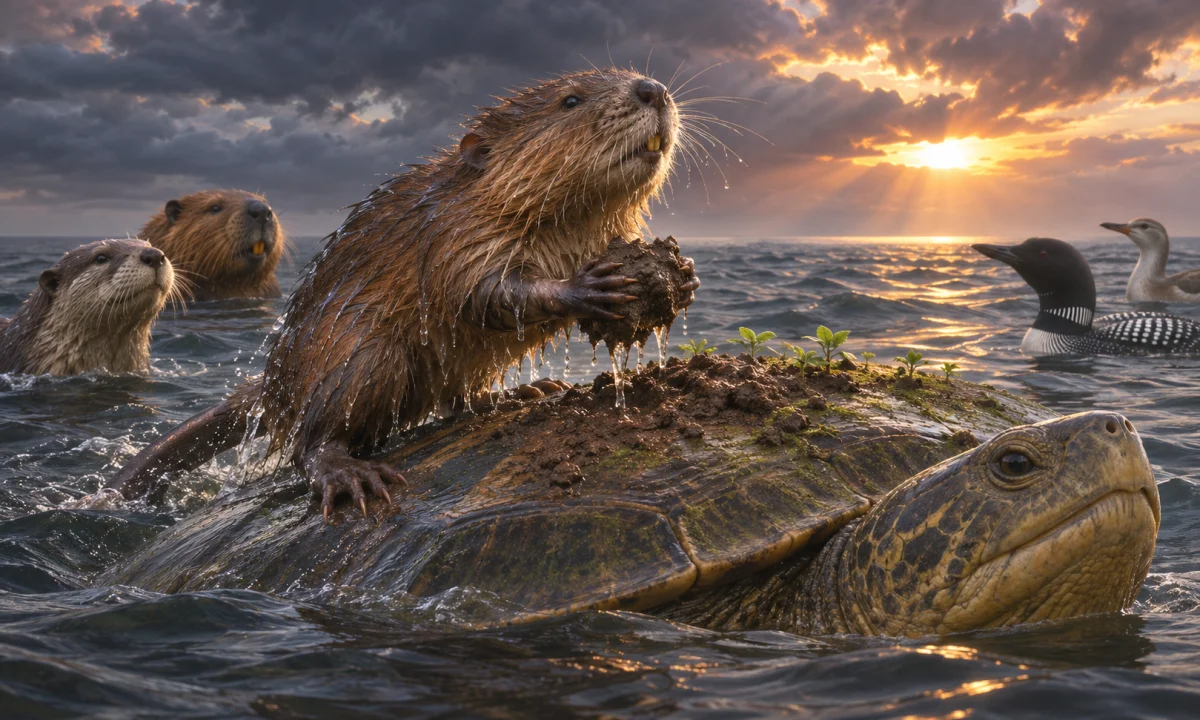
Muskrat is an important animal figure in several Indigenous traditions of North America, especially stories associated with the Great Lakes and the eastern woodlands. It is most widely known for its role in Earth-diver creation narratives: after a great flood covers the world, powerful animals dive beneath the water to recover a small amount of earth. In many versions, larger and stronger animals fail, while the muskrat succeeds. The mud gathered by the muskrat becomes the first land, often placed on the back of a turtle.
There is no single pan-Indigenous character called Muskrat. Indigenous nations have distinct languages, religious systems, narrative traditions and relationships with animals. Stories that feature the animal differ in details, meaning and ceremonial context. In some communities, Muskrat is a named helper in a creation story; in others, it is simply one participant in a tale about the formation of the earth. The animal should therefore not be treated as a universal deity or as one standardized figure shared by all Native American peoples.
The animal and its cultural setting
The muskrat is a semi-aquatic North American rodent scientifically known as Ondatra zibethicus. Despite its common name, it is not a true rat. It lives in wetlands, ponds, marshes, lakeshores and slow-moving waterways, where it swims, burrows and builds shelters from vegetation. Its ability to move between land and water makes it a natural participant in stories concerned with submerged worlds, creation, survival and the relationship between animals and human beings.
Many Indigenous communities have closely observed muskrats as part of their local environments. The animal is associated with water, mud, reeds, hidden entrances and persistent work. It is comparatively small and is not usually imagined as a powerful predator. These characteristics help explain why its success in Earth-diver stories is meaningful: the muskrat accomplishes a task that stronger animals cannot complete, not through violence but through endurance and willingness to attempt what others have failed to do.
Traditional narratives are preserved through oral transmission, family teaching, ceremonial speech, written records made by outsiders or Indigenous authors, and modern community-based retellings. A written version may represent only one community, one storyteller or one historical moment. Translations can also flatten distinctions between words that mean animal, spirit, helper, clan relation or sacred being. For that reason, the name “Muskrat” is useful in English discussion but does not identify one fixed figure across all traditions.
Muskrat in Earth-diver stories
The best-known role of Muskrat appears in stories about the creation or renewal of land after a flood. The narrative pattern varies, but a common sequence begins with the world covered by water. A culture hero, creator, or group of animals needs earth in order to make a place where life can continue. The animals take turns diving to the bottom of the water and bringing back soil.
In many retellings, birds or aquatic animals attempt the task first. Loon, duck, beaver, otter or other animals may appear, depending on the nation and the particular version. They dive deeply but return without earth, or they cannot remain underwater long enough to reach the bottom. Finally, the muskrat volunteers or is chosen to try. The muskrat disappears beneath the water and remains submerged for a long time. When it returns, it may be dead or exhausted, but a small quantity of mud is found in its paws or claws.
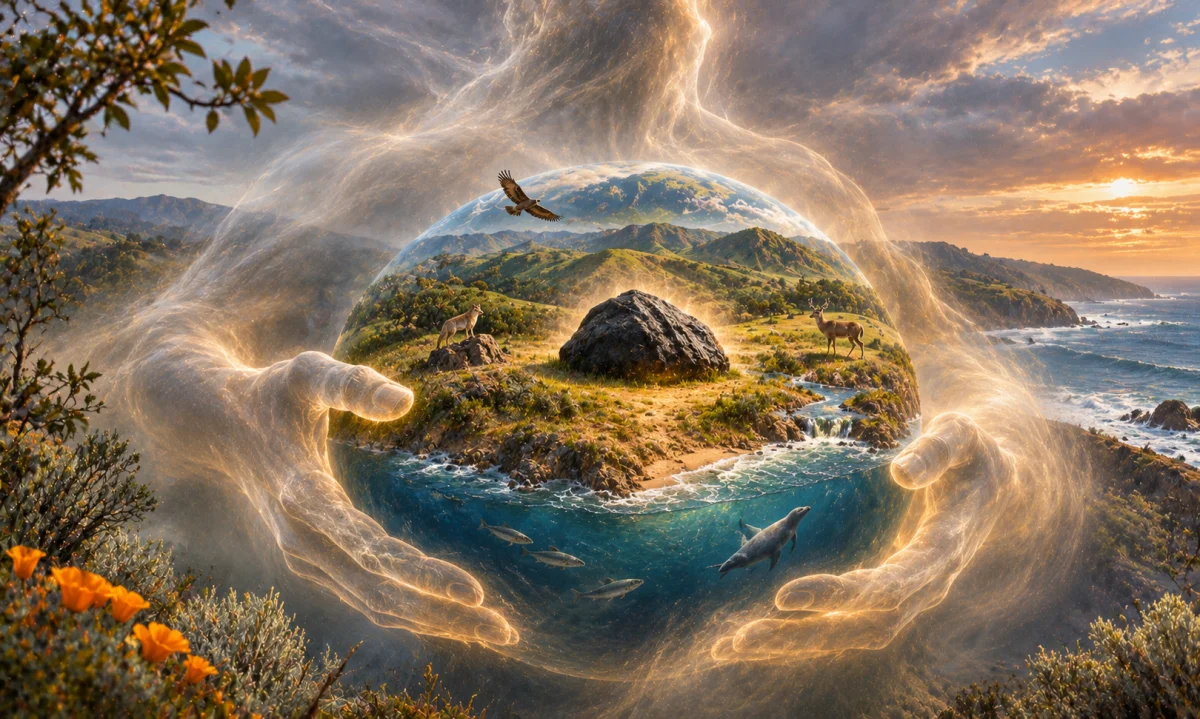
That tiny amount of earth is enough. The creator or the animals place it on a turtle’s back, and it expands into an island or the inhabited world. In English, this image is often described as Turtle Island. The expression is used in different Indigenous contexts and does not have exactly the same meaning everywhere. It should not be assumed that every Indigenous nation uses “Turtle Island” as its traditional name for the continent or for the earth.
The muskrat’s death in some versions gives the story a sacrificial dimension. The animal is small, but its effort makes future life possible. In other versions, the muskrat survives, and the emphasis falls on cooperation, persistence and the surprising usefulness of a creature that initially seems weak. These differences matter. A retelling that presents Muskrat simply as a comic underdog can miss the solemnity of a story about the origins of land and the obligations among living beings.
Regional variation
Earth-diver narratives are found in multiple Indigenous cultures of North America, but they are not identical. Muskrat is especially prominent in versions associated with Anishinaabe-speaking peoples, including Ojibwe-related traditions, and in some Haudenosaunee or Iroquoian accounts and other northeastern traditions. The exact role of the animal differs between communities, and the story may be connected with different creators, culture heroes, animals or teachings.
Some Anishinaabe creation narratives describe a world transformed by water and a sequence of animals attempting to retrieve the earth. The muskrat’s success helps establish land, while the turtle provides a foundation. In other Anishinaabe teachings, animals have particular relationships with humans and with the spiritual order of the world; the muskrat’s action can therefore be understood as part of a larger account of mutual dependence rather than as an isolated feat.
In northeastern traditions, including some Haudenosaunee versions, the formation of land may be connected with Sky Woman, the descent from the upper world and the animals’ efforts to create a place for her. Not every version includes Muskrat, and accounts can differ according to nation, storyteller and source. Some narratives feature other diving animals or place greater emphasis on the turtle, the water birds or a supernatural helper.
Similar flood and Earth-diver motifs also occur elsewhere in North America. The presence of a muskrat in one story does not prove that all versions derive from a single original myth. Communities living in wetland environments may independently recognize the animal’s diving and burrowing abilities as meaningful. Comparative scholars can identify recurring patterns, but broad comparisons should not erase the distinct histories and teachings of the peoples who preserve them.
Name and identity
“Muskrat” is an English common name, not the original name of the figure in the languages of the communities that tell these stories. Indigenous names vary widely and may contain information about habitat, behavior, appearance or spiritual relationship. A translated English title can also turn an animal’s name into a personal name when the original narrative treats it more flexibly.
The figure may be described as an animal, an animal-person, a helper or a being with unusual agency. English categories such as “god,” “spirit” and “mythological creature” do not always correspond neatly to Indigenous concepts. Calling Muskrat a god can therefore be misleading. In many stories, the animal is not an object of worship or a ruler of a supernatural realm. Its importance comes from its actions and its place within a network of relationships among animals, humans, water, earth and other sacred powers.
Some Indigenous traditions also organize social identity through clans or animal relationships. The existence of a muskrat clan or a community relationship with the animal should not automatically be treated as evidence that every Muskrat story has the same meaning. Clan systems, personal names, ritual roles and creation narratives belong to particular cultural settings and must be distinguished from one another.
Attributes and symbolic meanings
Muskrat is commonly associated with several qualities:
- Persistence: The animal continues its effort when larger animals have failed.
- Humility: Its small size contrasts with the enormous importance of its achievement.
- Connection with water and earth: The muskrat moves through the element that covers the world and retrieves the material from which land is formed.
- Cooperation: The creation of land is usually a collective undertaking rather than the accomplishment of one isolated hero.
- Sacrifice: In versions where the muskrat dies, its body and labor make future life possible.
- Hidden strength: The animal’s burrowing and diving suggest abilities that are not obvious from its appearance.
These meanings are interpretive rather than universal definitions. A particular storyteller may stress courage, generosity, obedience, ecological knowledge, respect for animal life or the importance of taking one’s turn. The muskrat’s role can also challenge assumptions that physical size or social rank determines worth. The smallest participant may carry out the decisive act.
The story can be understood ecologically as well as spiritually, although “ecological lesson” should not replace its religious and cultural dimensions. Wetlands are places where water, soil, plants, animals and human communities meet. A muskrat’s life depends on these relationships, and the narrative places the animal within a living world rather than outside it. The tale therefore encourages attention to interdependence, but its significance is not limited to modern environmental messaging.
Relationships with other animals
Muskrat is often connected with the turtle in Earth-diver stories. The turtle’s back provides a stable surface for the first earth, while Muskrat obtains the mud. Their roles are complementary: one offers support, and the other performs the dangerous descent. Neither animal should be assumed to have the same status in every tradition.
Beaver, otter, loon, duck and other water animals may also appear. Their presence reflects the local importance of waterways and the different abilities attributed to each species. Beaver may be associated with construction and dam building; water birds may travel between air and water; otter may be valued for swimming and agility. These are broad observations, not fixed symbolic dictionaries. A story can use an animal in a way that differs from modern expectations or from another nation’s tradition.
Muskrat should not be confused with Beaver, even though both animals live in wetlands and may be portrayed as builders or helpers. Nor should the figure be merged with generic “water spirits,” tricksters or creator beings from unrelated traditions. A muskrat appearing in a flood narrative is not automatically the same character as an animal in a hunting tale, a clan tradition or a modern children’s story.
Storytelling, respect and interpretation
Many Indigenous creation narratives are not merely fictional entertainment. Their use may depend on season, audience, family authority, ceremonial setting or community permission. Some versions have been published for general readers, while other teachings remain restricted or are shared only in particular contexts. A public retelling cannot represent everything a community understands by the story.
Older written records must also be approached carefully. Anthropologists, missionaries, government employees and other outsiders sometimes recorded Indigenous narratives through translation and personal interpretation. Their transcriptions may omit performance, gesture, sacred language or the storyteller’s explanation. Later writers have occasionally combined details from several nations and presented the result as a single “Native American myth.” That practice creates a false uniformity.
A responsible interpretation keeps the story connected to its community of origin whenever that information is known. It also distinguishes traditional material from scholarly comparison, educational retelling and personal symbolism. Muskrat can be read as a figure of perseverance, but that modern reading should not be presented as the sole or original meaning of every version.
Muskrat in modern retellings
Muskrat appears in contemporary books for children, classroom materials, museum programs, artwork and retellings about Turtle Island or the creation of land. These adaptations often simplify the cast, give the animal human speech and present the story as a general lesson about teamwork. Some are produced by Indigenous writers and educators who place the narrative within their own community’s language and teachings; others are created by outsiders and may blend details from different traditions.
Modern retellings are therefore not interchangeable with traditional accounts. A picture-book character named Muskrat may be inspired by an Earth-diver story without preserving its ceremonial context, regional identity or theological meaning. Popular culture has not established one authoritative appearance, personality or set of powers for Muskrat. The enduring significance of the figure lies in the diverse Indigenous traditions that place a small water animal at the beginning of the land on which life depends.