WORLD
WORLD
Surma
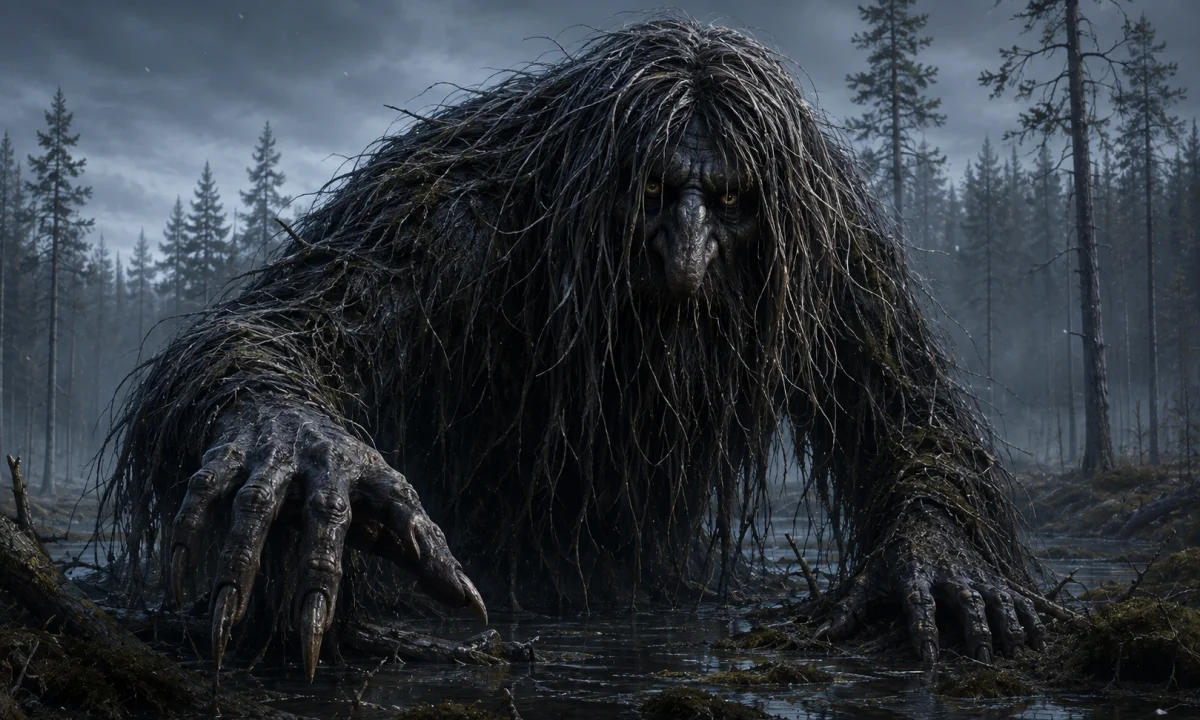
Surma is a name associated with Finnish mythology and folklore, but its identity is not fixed in a single canonical tradition. In Finnish and wider Finnic-language usage, the word can mean “death,” “end,” or “doom,” and in mythological contexts it is often understood as a personified or demonic force rather than a neatly defined deity. Because surviving evidence is limited and later folklore records vary, Surma is best approached as a name attached to a feared supernatural being, a poetic idea of fatality, or, in some interpretations, a specific monster-like figure linked to the wilderness.
The uncertainty around Surma is important. Unlike major figures from the Kalevala tradition, Surma does not appear as a universally consistent character with a stable biography. Instead, the name belongs to a broader layer of Finnish oral culture in which danger, death, and malevolent beings could be named with functional terms. In some cases Surma is discussed as a being that kills or brings about a person’s end; in others, the word is used more generally for “death” itself. This overlap between common noun and mythic figure is typical of many oral traditions, especially where the boundary between language, taboo, and supernatural belief is fluid.
Origins and cultural setting
Finnish mythology developed from pre-Christian Finno-Karelian beliefs, oral poetry, and local folklore recorded mostly in the 18th, 19th, and early 20th centuries. These traditions did not preserve a single authoritative scripture. Instead, knowledge of beings such as spirits, guardians, forest powers, and death figures survives in charms, songs, tales, and ethnographic notes. Surma belongs to that wider landscape of belief, where a name could function both as a description and as an invocation of fear.
In traditional Finnish culture, the forest was not simply a place of scenery or resources. It was a morally charged and spiritually populated space. Dangerous beings could lurk there, and misfortune often had a supernatural explanation. A figure called Surma fits well within this worldview. Whether imagined as a beast, a death-bringing spirit, or the embodied threat of violent ending, Surma represents the vulnerability of humans facing wild and uncertain environments.
Surma’s background may also reflect older Finno-Ugric ideas about death and hostile beings, but precise origins are difficult to reconstruct. The surviving material does not allow a confident statement that Surma was once worshipped, widely feared in a standardized form, or tied to a single myth cycle. What can be said with confidence is that the name was meaningful in Finnish-language tradition and could be used to express the reality of sudden death, predation, or supernatural attack.
Name and meaning
The Finnish word surma commonly means death, killing, or a fatal outcome. That basic meaning strongly shapes the mythological understanding of the name. In folklore, names with direct semantic force often became personified, especially when people spoke about harmful forces as though they were agents. This makes Surma less like a fully individualized character in the modern literary sense and more like a death-being whose essence is encoded in the name itself.
Because of this, Surma may be encountered in two overlapping ways:
- as an ordinary word for death or fatality;
- as a supernatural personification or monster-like being associated with killing.
That ambiguity creates interpretive difficulty. When a folklore text mentions Surma, context matters. In some settings the reference may be figurative, in others mythic, and in still others simply lexical. Later retellings and secondary discussions sometimes treat Surma as if it were a discrete creature with a fixed appearance, but the older evidence is much less uniform.
Classification in Finnish mythic tradition
Surma is not among the most clearly systematized beings of Finnish mythology, such as the forest spirit Tapio or the water spirit Ahti. Nor is Surma securely placed in the category of gods, ancestral spirits, or household protectors. It is better understood as a death-linked supernatural entity, possibly demonic in tone, with strong associations to destruction and fatal endings.
Scholarly discussion of Finnish folklore often distinguishes between:
- named deities or high mythic figures;
- local spirits and guardians;
- malevolent beings and personified dangers;
- poetic or symbolic personifications that may not have had a fixed cultic identity.
Surma fits most comfortably in the last two categories. Depending on the source, it may be treated as a being, an embodiment of death, or a symbolic adversary. That flexibility is not a weakness of the tradition; it is a normal feature of oral mythic culture, where meaning often depends on performance, locality, and context.
Appearance and traits
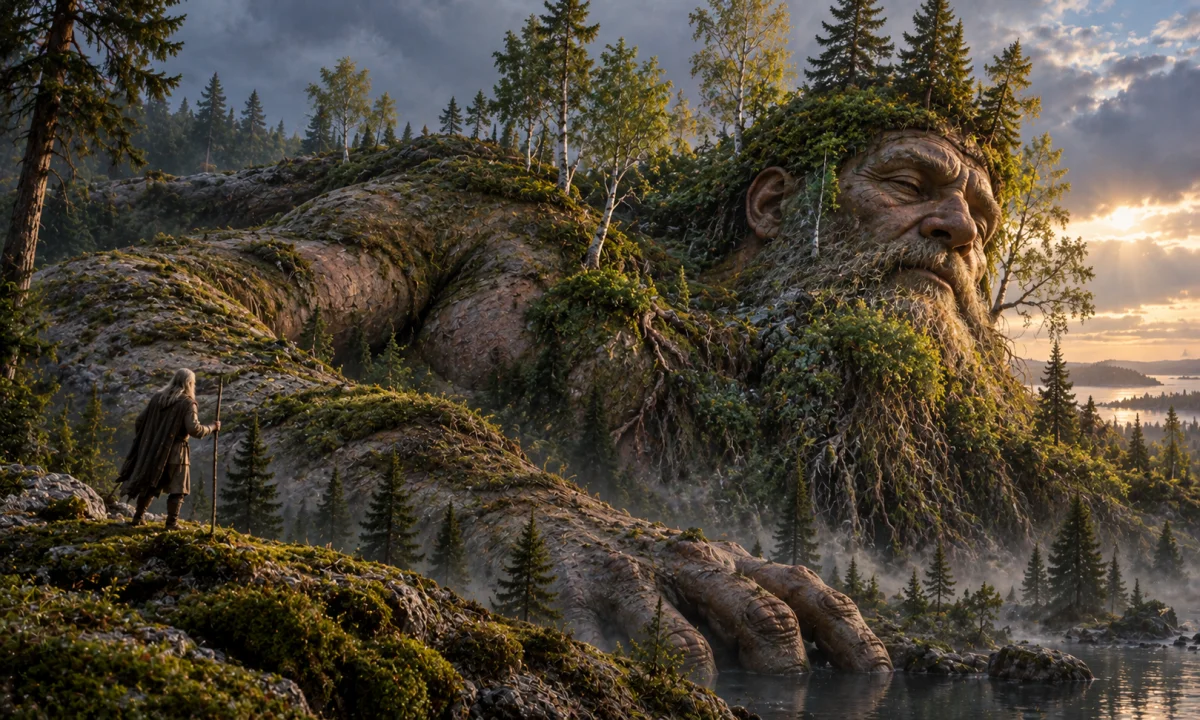
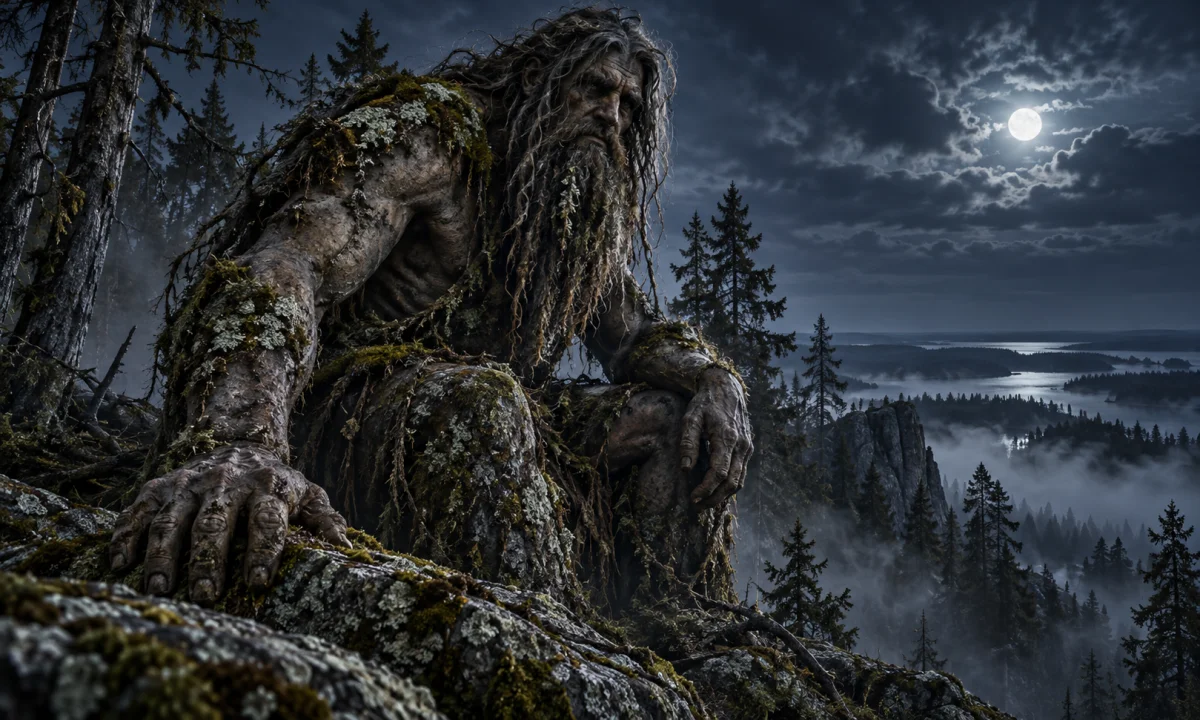
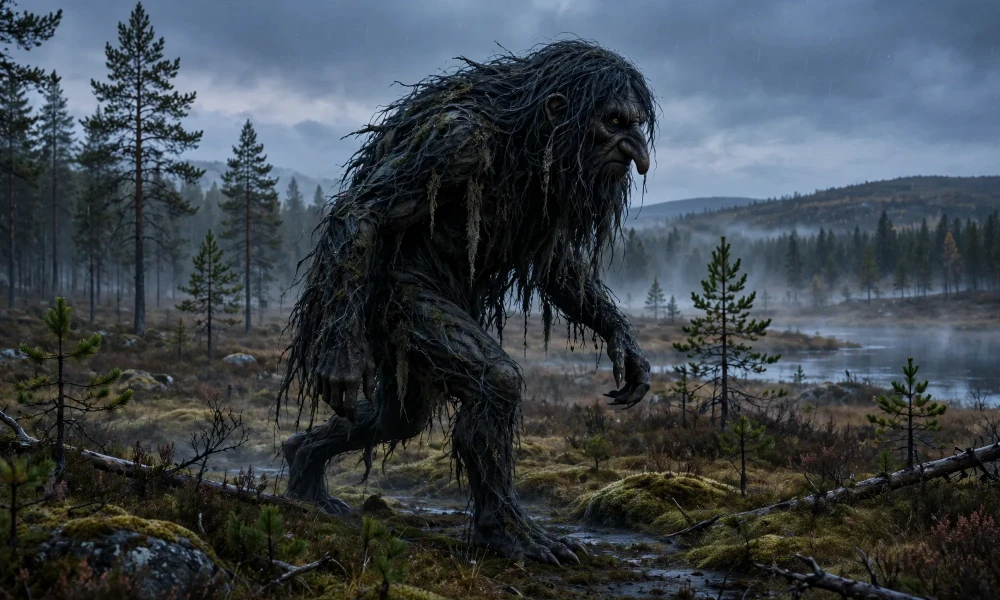
Descriptions of Surma are not consistent enough to support a single standard appearance. Some later references and folk interpretations imagine Surma as a fearsome creature associated with the wilderness, predation, or violent death. Other understandings are more abstract, treating Surma primarily as a force or destiny rather than a body with fixed features.
Where mythic beings in Finnish tradition are often linked to a particular environment, Surma is usually associated with danger rather than with a clearly defined habitat. It may be imagined at the edge of human life: in the forest, on the road, in moments of illness, or in contexts where death arrives unexpectedly. The essential trait is not physical beauty or animal form, but lethal effect.
Because the sources do not agree on a canonical image, any specific description should be treated cautiously. Claims that Surma always appears in one shape, has a precise gender, or belongs to a single species of being go beyond what the traditional evidence securely supports.
Roles and powers
Surma’s central role is tied to killing, fatality, and the end of life. In that sense, it functions as an agent of death. Depending on the tradition or interpretation, Surma may be understood as:
- a personification of death itself;
- a hostile spirit that causes death;
- a monster or demon-like being that attacks humans;
- a poetic name for the inevitability of an untimely end.
This range matters because Finnish folklore often expresses supernatural power through action rather than through rigid taxonomy. A being is known by what it does. Surma is therefore defined less by a biography than by its destructive function. If it appears in a story, the emphasis is usually on threat, danger, or the sudden cessation of life.
In folklore logic, such a being may also be linked to taboo speech and ritual protection. In many traditions, naming death can itself be dangerous, and euphemisms or indirect references become important. The semantic force of the word surma may have helped it operate in this way: a name that means “death” can also stand in for death as an active, almost personal power.
Stories, motifs and folklore context
The surviving tradition around Surma is fragmentary rather than epic. There is no single major cycle in which Surma plays a universally agreed role comparable to the central figures of the Kalevala poems. Instead, the name appears in broader folklore environments where death and malevolent forces are discussed. This makes it difficult to separate old belief from later interpretation in every case.
Finnish folklore does preserve many narrative patterns in which a person encounters a lethal force in the forest, on a journey, or in a liminal place. Surma belongs conceptually to that world, even when not always named in the same way. The figure stands near the boundary between living humans and the hidden forces that can end life abruptly. In oral culture, such figures often absorb local fears: wild animals, disease, violence, accidents, and spiritual peril can all be folded into one mythic image.
Some modern retellings and popular summaries speak as though Surma were a specific monster known for serving stronger beings, guarding places, or carrying out punishment. Those ideas should be treated carefully. They may reflect later synthesis, literary imagination, or confusion with other mythic creatures. Traditional material does not provide enough evidence to establish a universal narrative role of that kind.
Symbolic meaning
Surma is significant not because it is richly attested in a single tale, but because it reveals how Finnish tradition could turn an abstract reality into a mythic presence. Death in oral cultures is rarely just a biological event. It is also a social rupture, a spiritual danger, and a mystery that must be named. Surma embodies that convergence.
The figure’s symbolic power lies in several layers:
- Fatality: Surma names the end that cannot be avoided.
- Wilderness danger: it reflects the hazards of life outside settled domestic space.
- Personified doom: it turns an abstract event into an acting force.
- Linguistic taboo: the word itself carries the weight of death.
In this sense, Surma is not merely a character in mythology. It is also part of the way language itself encodes fear. That is one reason the name can appear in contexts that are hard to classify strictly as myth, magic, proverb, or ordinary speech.
Relationship to other Finnish mythic beings
Surma is sometimes discussed alongside other dark or dangerous beings from Finnish folklore, but direct identification with them is not always justified. Finnish tradition contains many supernatural figures associated with illness, wilderness, harm, or death, and similar themes can lead to confusion.
It is important not to merge Surma with beings that have distinct roles or names. For example, Finnish folklore also includes forest and water powers, house spirits, and other entities that do not simply function as death-bringers. Some beings may be hostile under certain conditions, but that does not make them Surma. Likewise, literary or folkloric monsters from neighboring traditions should not be folded into the same identity merely because they seem similar.
There is also a conceptual distinction between a mythic death-being and the personified Dead or underworld ruler found in other traditions. Surma is not securely established as a ruler of the dead, nor as a judge of souls, nor as a major cosmic deity. Any such reading needs to be marked as speculative if it appears at all.
Distinction from similar names and figures
Confusion is especially likely because the Finnish word surma is so close to an ordinary noun meaning death or killing. In folklore discussions, one may encounter the term used descriptively rather than as a proper name. That can lead readers to assume a stable mythological character where the source material is actually more fluid.
Surma should also not be conflated with unrelated beings from other mythological systems that happen to share a general association with death. Similarity in function does not mean identity in origin or tradition. When comparing mythologies, it is useful to preserve the local context: Surma belongs to Finnish-language cultural memory, not to a generic category of “death demons” detached from that setting.
Where modern encyclopedic or popular retellings standardize Surma into a single creature, they may be simplifying a much messier tradition. The safest interpretation is that Surma sits at the intersection of word, omen, and mythic personification.
Historical evidence and scholarly interpretation
Because Finnish mythic tradition was transmitted orally for centuries, the surviving evidence depends heavily on later documentation. Scholars therefore approach figures like Surma cautiously. A recorded mention does not necessarily prove a fixed ancient cult; it may preserve a local expression, a poetic term, or a brief folktale fragment.
Researchers of Finnish folklore often note that many supernatural names cannot be reduced to one origin story. Instead, they accumulate meaning through repeated use. Surma may have begun as a common noun and become mythic through personification, or it may have existed as a feared being whose name reinforced its association with death. The available evidence does not allow a single definitive answer.
What can be said with confidence is that Surma reflects a worldview in which death was not abstract. It was social, memorable, and potentially agentive. To name death was to treat it as something one might fear, evade, or encounter in story form. This gives Surma an important place in the study of Finnish mythic language even if its narrative profile remains incomplete.
Later reception and modern usage
In modern Finnish and in translations of folklore, Surma can appear in several ways: as a mythic name, as a poetic synonym for death, or as a folkloric monster in broad popular retellings. Contemporary fantasy, games, and online discussions sometimes amplify one interpretation and present Surma as a clearly defined creature. Those versions belong to modern culture, not to a single traditional source base.
Modern popularity can also obscure the older ambiguity of the term. A modern reader may expect a monster to have fixed anatomy, habitat, powers, and story role. Traditional Surma is not so easily pinned down. Its power comes partly from uncertainty: it is a name that feels heavy, ominous, and final precisely because it is close to the word for death itself.
As a result, later adaptations often emphasize atmosphere over textual fidelity. They may depict Surma as terrifying, spectral, beastlike, or demonic. Such portrayals can be imaginative and effective, but they should be recognized as contemporary interpretations rather than direct reflections of a single established myth.
Why Surma matters in Finnish mythology
Surma matters because it reveals how Finnish folklore handled one of the most universal human experiences: death. Rather than treating death only as an abstract end, the tradition could name it, fear it, and imagine it as an agent. That process transforms an idea into a presence. In Surma, language, belief, and imagination come together.
The figure also shows the limits of our evidence. Finnish mythology is not preserved in a neat system, and some names remain elusive. Surma stands at that edge of certainty: real in the tradition, but not always stable; meaningful, but not always fully describable. That is part of what makes it distinctive within the mythological landscape of Europe.