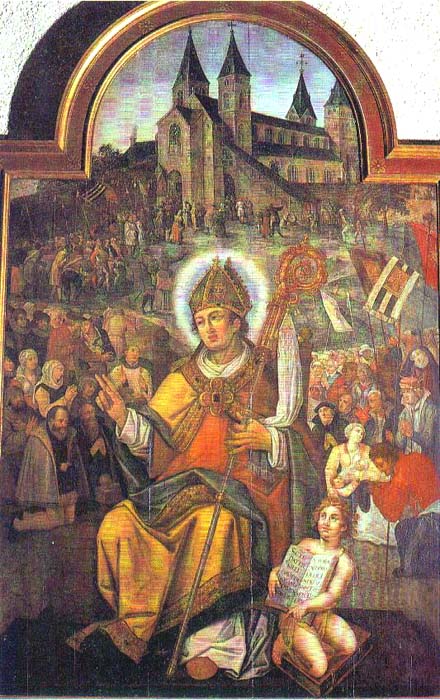
St. Willibrord is a significant figure in Christian mythology, especially in the context of the early spread of Christianity in Northern Europe. He was born around 658 AD in Northumbria, England. Willibrord was a member of the noble family and was inspired to dedicate his life to God from a young age. He became a monk at the monastery of Ripon, where he received a strong education in Christian teachings. His dedication to the faith led him to seek out opportunities to spread Christianity beyond the borders of England, particularly in the region that is now known as the Netherlands.
The Mission of St. Willibrord
St. Willibrord’s primary mission was to convert the Frisian people to Christianity. In 690 AD, he traveled to Frisia, which was a region that included parts of modern-day Netherlands and Germany. The Frisian people practiced their own pagan beliefs, and Willibrord faced numerous challenges as he attempted to introduce them to Christianity. His mission was not just about converting individuals; it was about establishing a Christian community that could thrive and grow. Willibrord was determined to spread the message of Christ and believed that the Frisian people could find hope and salvation through faith.
 St. Palladius
One of the remarkable aspects of St. Willibrord’s mission was his ability to connect with the local people. He understood that simply preaching the Christian faith was not enough. He needed to engage with the Frisian culture and traditions. Willibrord learned their language, customs, and beliefs, which allowed him to communicate effectively with the people. This approach made him a respected figure among the Frisians, and many began to listen to his teachings. Over time, he was able to establish a network of churches and convert many to Christianity.
The Role of the Church
As Willibrord’s mission progressed, the role of the church became increasingly important. He was not only focused on converting individuals but also on creating a structured church community. He established several churches in Frisia, which served as places of worship and education for the newly converted Christians. The churches became central to the community, providing a space for prayer, fellowship, and the sharing of Christian teachings. Willibrord believed that the church could serve as a foundation for a strong Christian society.
- Education: Willibrord emphasized the importance of educating the new converts about Christianity. He taught them the basics of the faith, including the teachings of Jesus and the significance of the sacraments.
- Community: The churches also fostered a sense of community among the believers. Willibrord encouraged the formation of bonds among the converts, creating a supportive network for them.
- Leadership: Willibrord appointed local leaders to help guide the new churches. This decentralized approach allowed the church to grow and adapt to the local culture.
In addition to establishing churches, St. Willibrord worked to secure the support of local rulers. He understood that gaining the favor of influential leaders could help strengthen the Christian community. By building alliances with local chieftains, he was able to ensure protection for the Christians and their places of worship. This strategic approach was crucial in the early days of the church in Frisia, as it provided a buffer against potential opposition from pagan leaders.
 St. Hyacinth
The Legacy of St. Willibrord
The legacy of St. Willibrord is profound and enduring. His efforts in Frisia laid the groundwork for the establishment of Christianity in the region. He is often referred to as the “Apostle of the Frisians” due to his significant contributions to the spread of the faith. Willibrord’s work was not only limited to his lifetime; it continued to influence the development of Christianity in Northern Europe long after his death. His commitment to evangelism and community-building became a model for future missionaries.
Willibrord’s influence can still be felt today. Many churches in the Netherlands honor him as their patron saint. His feast day is celebrated on November 7, and various religious institutions and organizations continue to commemorate his contributions to Christianity. The legacy of St. Willibrord serves as a reminder of the importance of cultural understanding and community in the spread of faith.
 St. Apollonius The Apologist
St. Willibrord and the Monastic Tradition
St. Willibrord’s journey was deeply rooted in the monastic tradition of his time. After his initial education at Ripon, he spent time studying at the monastery of Ystrad Fflur in Wales. This monastic experience shaped his spiritual life and his understanding of Christian teachings. Monasteries were centers of learning and spirituality during this period, and they played a crucial role in the spread of Christianity throughout Europe. Willibrord’s monastic background provided him with the tools and knowledge necessary to carry out his mission effectively.
Monasticism also emphasized the importance of community and service, values that Willibrord carried into his work in Frisia. He believed that living in community with others was essential for spiritual growth. This belief guided him as he established churches and encouraged believers to come together in worship and fellowship. The monastic ideal of a communal life devoted to God was reflected in the way he organized the Christian communities he founded.
Key Aspects of Monastic Influence
- Spiritual Discipline: Willibrord practiced and promoted a disciplined spiritual life, emphasizing prayer, fasting, and study of the Scriptures.
- Service to Others: He encouraged his followers to serve the needs of their communities, reflecting the monastic value of charity.
- Education: Willibrord valued education and sought to teach the new converts about the Christian faith, echoing the educational mission of monasteries.
The monastic tradition also provided Willibrord with a network of support. He corresponded with other monastic leaders and sought their guidance and assistance in his mission. This network was vital in providing resources, encouragement, and collaboration in the evangelization efforts. The monastic connections helped to ensure that Willibrord’s work in Frisia was part of a larger movement of Christian expansion across Europe.
St. Willibrord’s Canonization
St. Willibrord’s contributions to Christianity did not go unrecognized. He was canonized as a saint by the Catholic Church, which further solidified his legacy. The process of canonization typically involves a thorough examination of a person’s life, their contributions to the faith, and the miracles attributed to them after their death. Willibrord’s dedication to spreading Christianity and his role in establishing the church in Frisia were key factors in his eventual canonization.
His canonization also reflects the recognition of his impact on the Christian community. The church honors him as a model of faith and commitment to God’s mission. Many believers look to St. Willibrord as an example of how to live a life devoted to serving others and spreading the message of Christ. His canonization serves as a testament to the importance of missionary work in the history of Christianity.
St. Willibrord in Art and Literature
The life and mission of St. Willibrord have been celebrated in various forms of art and literature throughout the centuries. His story has inspired countless artists, writers, and musicians to depict his life and contributions to the Christian faith. In many churches, you can find stained glass windows and paintings that portray key moments in Willibrord’s life, such as his missionary journeys and the establishment of churches.
Literature about St. Willibrord often highlights his dedication to his mission and the challenges he faced. Various hagiographies, or biographies of saints, recount his life story and the miracles attributed to him. These texts not only serve as a source of inspiration for believers but also provide insight into the early days of Christianity in Northern Europe. Willibrord’s life is often depicted as a struggle against paganism, showcasing his unwavering faith and commitment to spreading the Gospel.
Examples of Artistic Representations
- Stained Glass Windows: Many churches feature stained glass windows that illustrate scenes from St. Willibrord’s life, depicting his missionary work and the conversion of the Frisian people.
- Statues and Icons: Statues of St. Willibrord can be found in various churches, often representing him with symbols of his mission, such as a cross or a book.
- Literary Works: Numerous books and articles have been written about St. Willibrord, detailing his life and contributions to Christianity.
Through these artistic and literary representations, St. Willibrord’s legacy continues to inspire new generations of Christians. His life serves as a reminder of the importance of faith, dedication, and the pursuit of a greater purpose. As people encounter his story through various mediums, they are encouraged to reflect on their own faith journeys and the ways in which they can contribute to their communities.
St. Willibrord’s Influence on Modern Christianity
The influence of St. Willibrord extends into modern Christianity, particularly in the regions where he worked. His legacy is evident in the way Christianity is practiced and celebrated in the Netherlands and surrounding areas. Many churches continue to honor his memory and teachings, reflecting the values he instilled in the communities he helped to establish. The principles of community, service, and education that he championed remain relevant today.
In contemporary society, St. Willibrord serves as a model for missionaries and those involved in evangelism. His approach to engaging with local cultures and building relationships is a guiding principle for modern missionary work. The emphasis on understanding and respecting different cultures while sharing the Christian faith is crucial in today’s diverse world. Willibrord’s example encourages believers to find common ground with others and to approach evangelism with compassion and humility.
Modern Celebrations of St. Willibrord
- Feast Day Celebrations: St. Willibrord’s feast day on November 7 is celebrated with special services and events in many churches.
- Community Service: Many communities engage in service projects in his honor, reflecting his commitment to serving others.
- Educational Initiatives: Some churches and organizations focus on educational programs that align with Willibrord’s emphasis on teaching the faith.
St. Willibrord’s life and mission continue to inspire countless individuals in their faith journeys. His legacy serves as a reminder of the transformative power of faith and the importance of community in living out that faith. Through his example, Christians are encouraged to be active participants in their communities, sharing the love of Christ with those around them.
The Significance of St. Willibrord in Christian History
St. Willibrord occupies a vital place in the history of Christianity. His efforts to spread the faith in Northern Europe were part of a larger movement that sought to evangelize the continent. His work helped to lay the foundation for Christianity in the Netherlands and beyond, influencing the development of the church in that region. The challenges he faced and the strategies he employed are reflective of the broader struggles and triumphs of early Christian missionaries.
Willibrord’s story also highlights the interconnectedness of different regions in the early medieval period. His travels between England, Wales, and Frisia illustrate the movement of ideas, people, and faith across borders. This interconnectedness was crucial in the spread of Christianity, as it allowed for the exchange of knowledge and resources among different communities. Willibrord’s legacy serves as a reminder of the global nature of the Christian faith and the ways in which it has been shaped by diverse cultures and histories.
Key Contributions to Christian History
- Establishment of Churches: Willibrord founded numerous churches in Frisia, creating a strong Christian presence in the region.
- Conversion of the Frisian People: His missionary work led to the conversion of many Frisian people, contributing to the growth of Christianity.
- Influence on Future Missionaries: Willibrord’s approach to evangelism served as a model for future missionaries in Europe and beyond.
St. Willibrord’s significance in Christian history cannot be overstated. His life and mission exemplify the dedication and perseverance of early Christian missionaries, whose efforts shaped the future of the church. His legacy continues to inspire believers today, reminding them of the importance of faith, community, and service in their spiritual journeys.