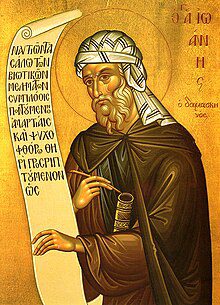
St. John of Damascus, also known as St. John Damascene, is a significant figure in Christian mythology, particularly within the Eastern Orthodox Church. He was born around 676 AD in Damascus, Syria, during a time when the region was under Muslim rule. His life and works have had a profound impact on Christian theology, especially in the area of iconography. St. John is often remembered for his staunch defense of the veneration of icons, which became a pivotal issue during the Byzantine iconoclast controversy. His writings and teachings have inspired countless believers and theologians throughout the centuries.
Early Life and Education
 St. John Climacus
St. John of Damascus was born into a well-to-do family, with his father serving as a high official in the Umayyad Caliphate. This privileged upbringing allowed him access to a broad education. He studied philosophy, theology, and law, which laid a strong foundation for his future writings. He was also well-versed in Greek literature and science, showcasing the rich cultural blend of his time. His education not only made him a learned man but also provided him with the tools to engage in the theological debates of his era.
As a young man, St. John was deeply influenced by his Christian faith. His mother was a devout Christian, and she played a crucial role in instilling the values and teachings of Christianity in him. This early exposure to faith would later shape his life’s work. He eventually became a monk at the Monastery of St. Sabas, located near Jerusalem. This monastery was known for its rigorous spiritual practices and commitment to the Orthodox Christian faith. Here, St. John dedicated himself to prayer and study, further solidifying his theological understanding.
Theological Contributions
St. John of Damascus is best known for his extensive writings, which include the famous “Exposition of the Orthodox Faith.” This work is a systematic presentation of Christian doctrine and has been influential in both Eastern and Western Christianity. In this text, he addresses various theological issues, including the nature of God, the Trinity, and the incarnation of Christ. His clarity and logical approach make complex theological concepts accessible to a broader audience.
 St. John Chrysostom
One of the key themes in St. John’s writings is the importance of tradition in understanding faith. He argued that Christian beliefs should be grounded in the teachings of the Church Fathers and the Scriptures. This emphasis on tradition became a cornerstone of Orthodox theology. He also highlighted the significance of the sacraments in the life of a believer, underscoring their role in spiritual growth and communion with God. St. John’s writings reflect a deep understanding of the human condition and the need for divine grace.
Defense of Icons
St. John of Damascus is perhaps most famous for his defense of the veneration of icons during the iconoclast controversy of the 8th century. This period was marked by intense debates over the use of religious images in worship. Iconoclasts argued that the veneration of icons was a form of idolatry, while iconodules, like St. John, defended the practice as a legitimate expression of faith. He articulated a theological basis for the use of icons, asserting that they serve as windows to the divine, helping believers to connect with the spiritual world.
In his treatise “On the Divine Images,” St. John outlined the distinction between veneration and worship. He argued that while worship is due to God alone, the veneration of icons is a way to honor the saints and the events depicted. This defense was crucial in shaping the Church’s position on icons and ultimately contributed to their acceptance in both Eastern and Western Christianity. His writings provided a robust theological framework that allowed believers to appreciate the beauty and significance of religious art.
 St. John Cassian
Key Points of St. John’s Defense of Icons
- Icons as a means of teaching the faith.
- The distinction between veneration and worship.
- Icons as representations of the incarnate Christ.
- The role of icons in the spiritual life of believers.
St. John’s arguments were not merely theoretical; they were deeply rooted in the lived experience of the Christian community. He understood that icons played a vital role in the worship and devotion of believers. His writings encouraged the faithful to embrace these images as tools for prayer and meditation. This perspective helped to foster a rich tradition of iconography in the Church, leading to the creation of many beloved and revered works of art that continue to inspire devotion today.
Legacy and Influence
The legacy of St. John of Damascus extends far beyond his lifetime. His works have been studied and revered by theologians, scholars, and laypeople alike. He is considered one of the last great Church Fathers and is often referred to as the “Doctor of the Church” for his significant contributions to Christian thought. His writings laid the groundwork for future theological discourse and continue to be a source of inspiration for those seeking to understand the depths of their faith.
St. John’s influence is particularly evident in the Eastern Orthodox Church, where he is honored as a saint. His feast day is celebrated on December 4th, and his writings are still read and studied in monastic communities and theological schools. The impact of his defense of icons can also be seen in the rich tradition of Orthodox iconography that flourished in the centuries following his death. Artists and theologians have drawn upon his insights to create a vibrant visual language that expresses the mysteries of faith.
Contemporary Relevance
In today’s world, the teachings of St. John of Damascus remain relevant for various reasons. His emphasis on the importance of tradition in understanding faith resonates with many Christians who seek to connect with the roots of their beliefs. In an era marked by rapid change and uncertainty, his writings provide a sense of stability and continuity. They remind believers of the richness of the Christian tradition and the significance of engaging with the teachings of the Church Fathers.
Moreover, the debate over the use of images in worship is still pertinent in some Christian communities. St. John’s defense of icons serves as a reminder of the importance of understanding the theological implications of religious art. His arguments encourage contemporary believers to consider how art can enhance their spiritual lives and deepen their connection to the divine. As discussions around worship and expression continue, St. John’s insights offer valuable guidance for navigating these complex issues.
St. John of Damascus in Art and Literature
Throughout history, St. John of Damascus has been depicted in various forms of art and literature. Artists have created icons and paintings that portray him as a learned theologian and a defender of the faith. These representations often emphasize his role as a bridge between the ancient traditions of the Church and the contemporary practices of worship. In many Eastern Orthodox churches, icons of St. John can be found, serving as a reminder of his contributions to the faith.
In literature, St. John’s works have been translated into numerous languages, making them accessible to a global audience. His writings have inspired countless theologians, scholars, and believers who seek to explore the depths of Christian doctrine. Many contemporary authors reference his ideas when discussing topics such as tradition, iconography, and the nature of God. This ongoing engagement with St. John’s thought demonstrates the enduring relevance of his contributions to Christian theology.
Conclusion: The Enduring Spirit of St. John of Damascus
St. John of Damascus remains a towering figure in Christian mythology, whose teachings continue to resonate with believers today. His defense of icons and emphasis on tradition have shaped the theological landscape of Christianity, particularly within the Eastern Orthodox tradition. As Christians navigate the complexities of faith in the modern world, the insights of St. John provide a guiding light, encouraging them to explore the richness of their heritage and the beauty of their beliefs.