
St. Eusebius of Vercelli was an important figure in early Christianity, particularly during the fourth century. He is known for his staunch opposition to Arianism, a theological doctrine that denied the full divinity of Jesus Christ. Born around the year 283 in Sardinia, Eusebius became the bishop of Vercelli, a city in northern Italy. His life and works are a testament to the struggles faced by early Christians as they navigated the complexities of faith, doctrine, and ecclesiastical politics. Throughout his life, Eusebius was deeply committed to the unity of the Church and the defense of orthodox Christian beliefs against various heretical movements.
Early Life and Education
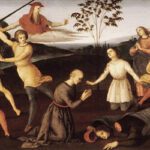 St. Eusebius Of Cremona
Eusebius was born into a Christian family, which played a significant role in shaping his faith and character. His early education was grounded in the teachings of the Church, where he learned about the Scriptures and the traditions of Christianity. As a young man, Eusebius was known for his intelligence and dedication to studying the theological works of the Church Fathers. This education would later prepare him for the challenges he would face as a bishop.
During his formative years, Eusebius was influenced by several key figures in early Christianity. He was particularly drawn to the teachings of St. Athanasius, who was a fierce opponent of Arianism. This theological conflict would become central to Eusebius’s life and work. The teachings of Athanasius emphasized the importance of understanding the nature of Christ as both fully divine and fully human, a belief that would guide Eusebius throughout his ministry.
As Eusebius grew older, he became more involved in church affairs. His passion for theology and his commitment to the Christian faith led him to seek ordination as a priest. He quickly gained a reputation for his eloquence and ability to articulate complex theological concepts. This reputation would eventually lead to his election as bishop of Vercelli, a position that would allow him to influence the direction of the Church in Italy.
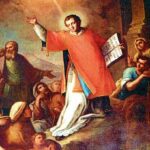 St. Euplius
Bishop of Vercelli
In the year 345, Eusebius was appointed as the bishop of Vercelli. This was a pivotal moment in his life, as it marked the beginning of his public ministry. As bishop, he took on the responsibility of shepherding his flock and ensuring that the teachings of the Church were upheld. His leadership style was characterized by a deep pastoral care for his congregation, as well as a strong commitment to defending orthodox Christian beliefs.
One of the first challenges Eusebius faced as bishop was the rise of Arianism. This heretical movement, which denied the divinity of Christ, was gaining traction in various regions of the Roman Empire. Eusebius recognized the threat posed by Arianism and took immediate action to counter it. He began preaching against Arian teachings and emphasized the importance of the Nicene Creed, which affirmed the belief in the full divinity of Christ.
Under Eusebius’s leadership, the Church in Vercelli became a stronghold of orthodox Christianity. He established a community of clergy and laity dedicated to upholding the teachings of the Church. Eusebius also played a crucial role in organizing local synods to address theological disputes and promote unity among Christians. His efforts were instrumental in solidifying the Church’s stance against Arianism and ensuring that the teachings of the Nicene Creed were upheld.
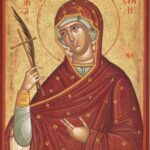 St. Euphrosyne
Opposition to Arianism
As a bishop, Eusebius’s most significant challenge was his unwavering opposition to Arianism. He believed that the denial of Christ’s divinity was a direct threat to the core beliefs of Christianity. To combat this heresy, Eusebius traveled extensively throughout Italy and beyond, preaching and teaching about the true nature of Christ. His sermons were passionate and persuasive, and he gained a significant following among both clergy and laity.
In addition to his preaching, Eusebius also engaged in theological debates with prominent Arian leaders. He was known for his sharp intellect and ability to articulate the orthodox position clearly. These debates were often heated, as Arianism had many supporters, including some influential bishops. However, Eusebius remained steadfast in his beliefs and continued to advocate for the Nicene Creed.
Eusebius’s efforts did not go unnoticed, and he soon became a target for Arian opposition. In 355, he was exiled by the Arian Emperor Constantius II, who sought to suppress orthodox Christianity. Despite the hardships of exile, Eusebius remained committed to his faith and continued to write letters and theological treatises defending the Nicene position. His resilience during this difficult time further solidified his reputation as a champion of orthodoxy.
Legacy and Influence
The legacy of St. Eusebius of Vercelli extends far beyond his lifetime. His steadfast opposition to Arianism and his commitment to the Nicene Creed played a crucial role in shaping the theological landscape of early Christianity. After his death, Eusebius was revered as a saint, and his feast day is celebrated on August 1st in the Roman Catholic Church.
One of the most significant aspects of Eusebius’s legacy is his contribution to the development of ecclesiastical governance. He was a strong advocate for the autonomy of local churches and believed in the importance of synodal decision-making. His efforts to convene local synods laid the groundwork for future councils that would address theological disputes and promote unity within the Church.
Furthermore, Eusebius’s writings have had a lasting impact on Christian theology. His letters and treatises continue to be studied by theologians and scholars today. He is often cited as an example of a bishop who was willing to stand firm in the face of adversity, and his life serves as an inspiration for many Christians seeking to uphold their faith in challenging times.
St. Eusebius of Vercelli’s life and work exemplify the struggles faced by early Christians as they sought to define their beliefs in the midst of theological conflicts. His unwavering commitment to orthodoxy and his opposition to Arianism played a crucial role in shaping the trajectory of the Church during the fourth century. Through his pastoral care, theological debates, and writings, Eusebius left an indelible mark on Christian history. Today, he is remembered not only as a saint but also as a key figure in the development of Christian doctrine and ecclesiastical governance.